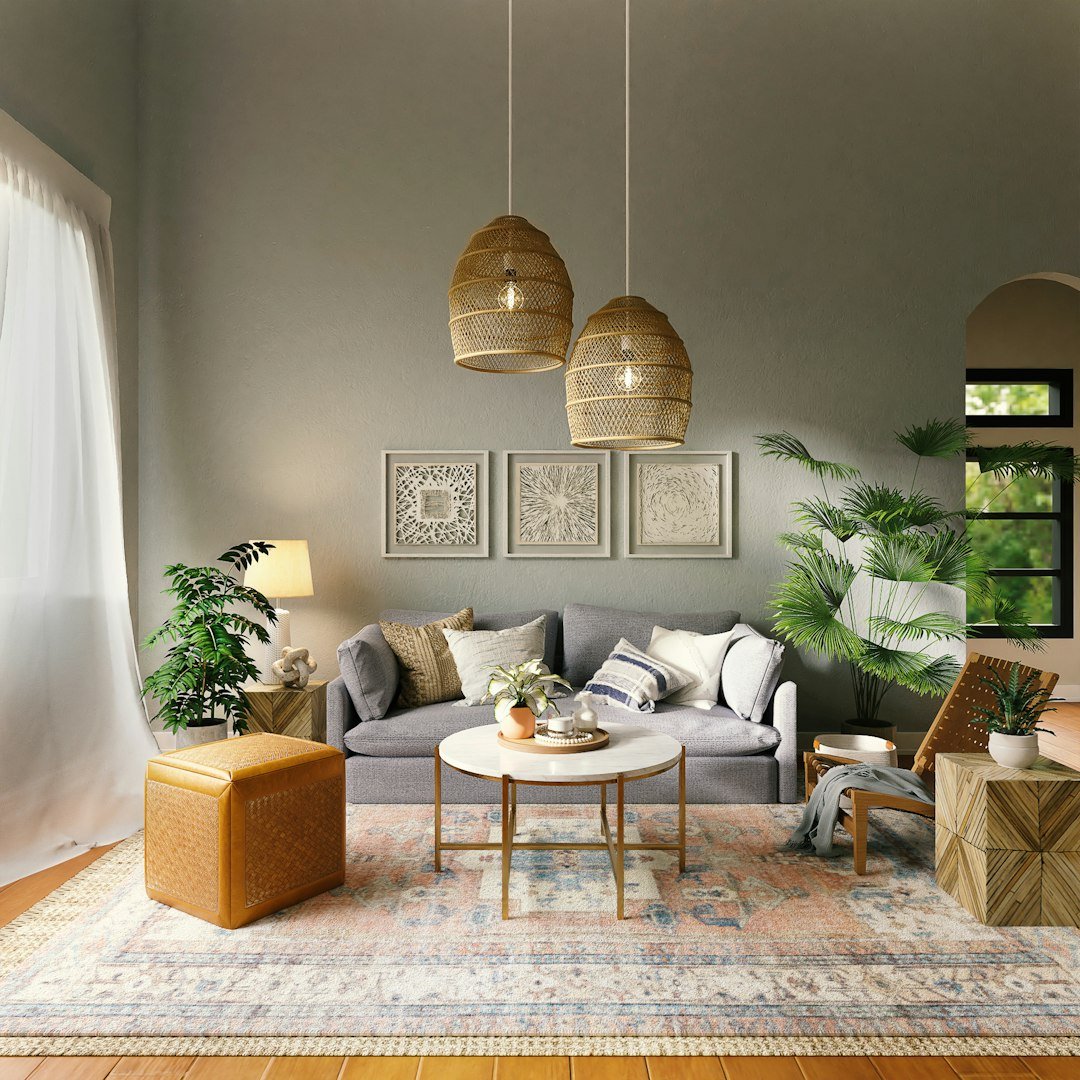
The best living room ideas change the way the room feels and works at the same time. Start with layout and scale, then use rugs, lighting, color, art and textiles to create warmth and personality. The goal is not to copy a finished room but to borrow a principle that solves something in your own.
If the room still needs a full plan, begin with the Living Room Design Guide. Use the ideas below when the basic layout is clear and you are ready to shape the atmosphere.
1. Build one confident seating group
Instead of pushing every piece to a wall, create a clear conversation zone. A sofa and two chairs often feel more intentional when they relate to one another and share a rug and central table.
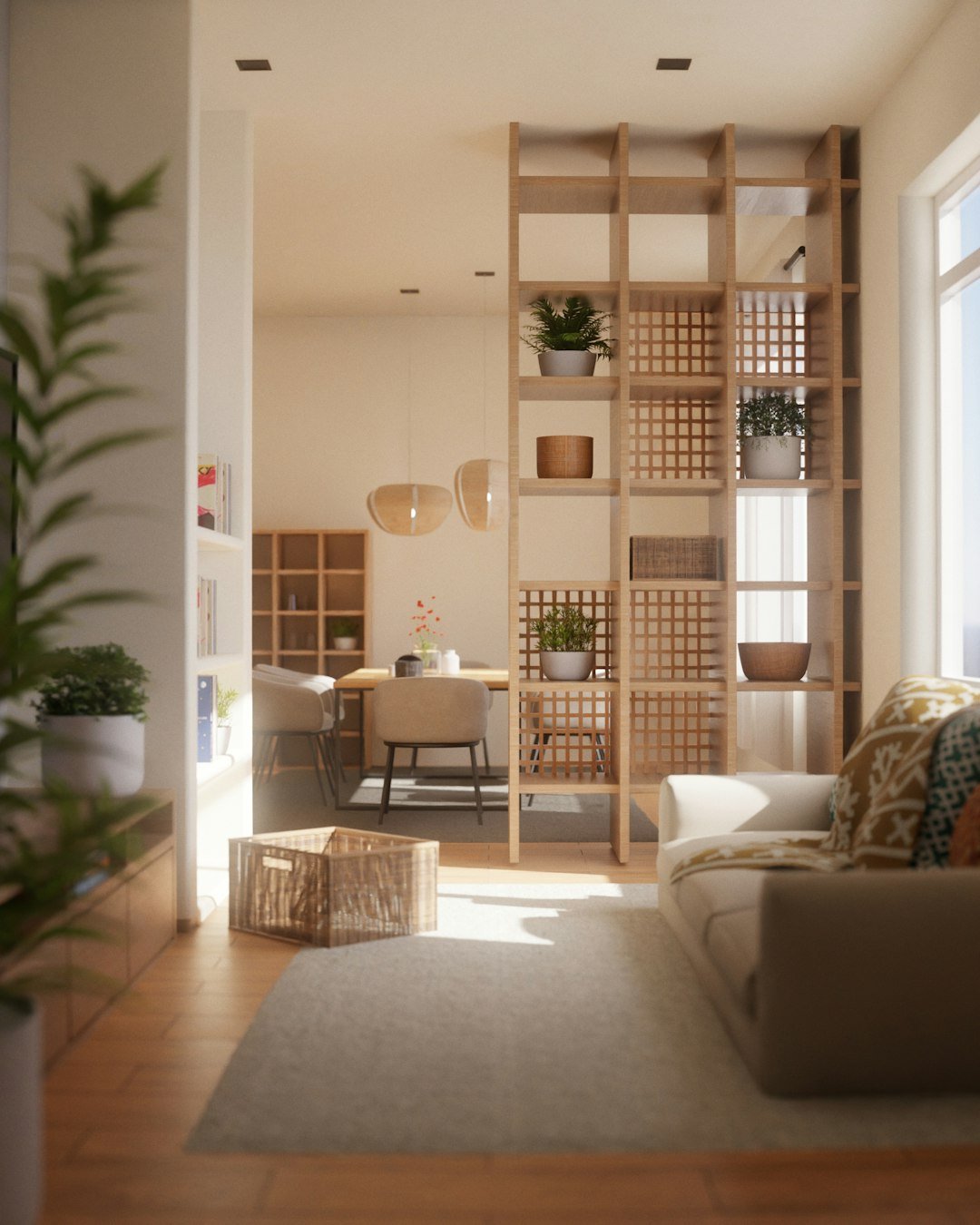
2. Use a larger rug to connect the furniture
A rug that reaches the seating usually makes the room feel more settled than one floating under the coffee table alone. Mark the proposed size with tape before buying.
Use the Rug Size Guide and Area Rug Guide.
3. Layer light at several heights
Combine general light with floor lamps, table lamps or wall lights near the activities that need them. Lower pools of light create more depth after dark than one bright ceiling fixture.
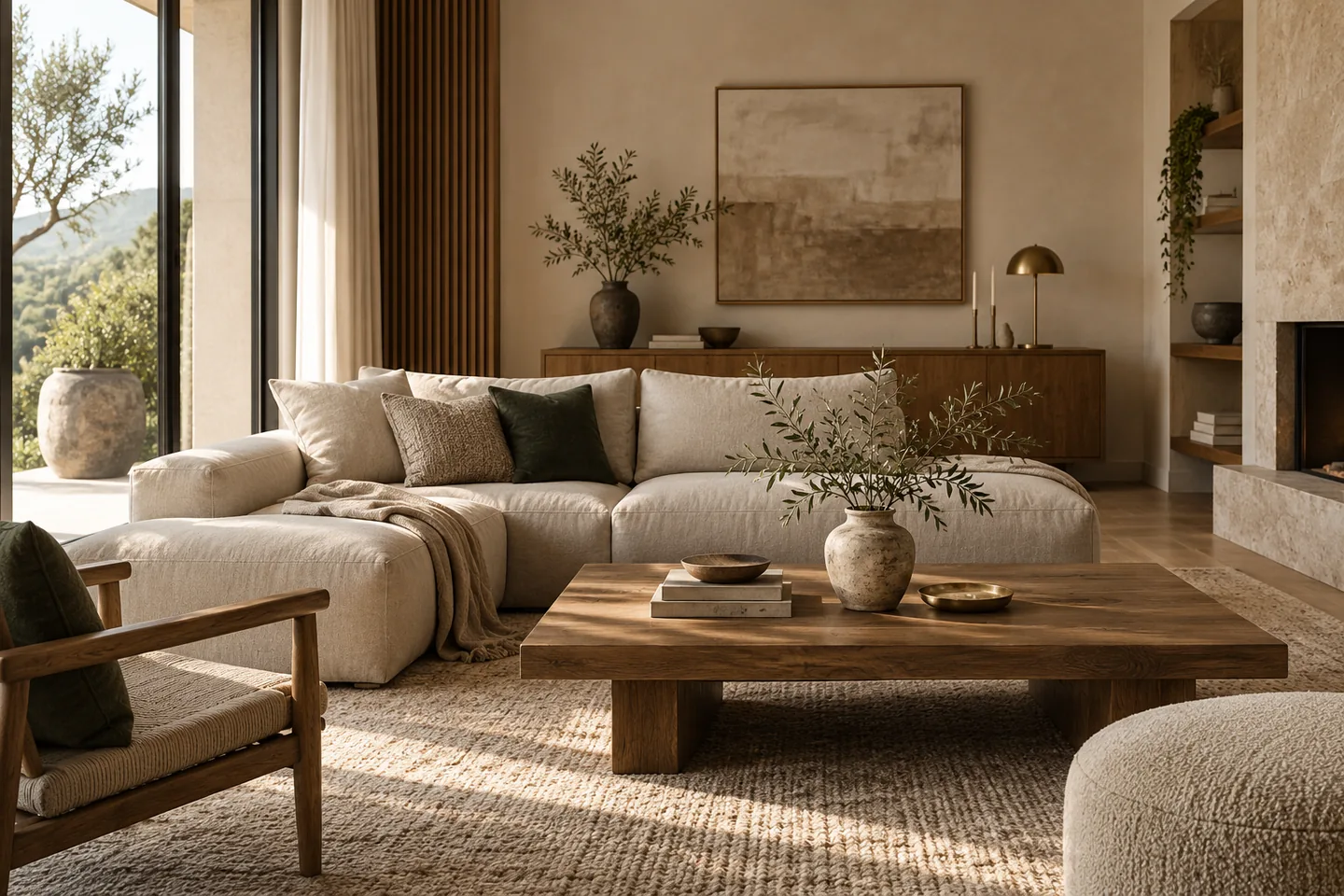
See the Home Lighting Guide.
4. Let one material repeat through the room
Repeating oak, walnut, brass-tone metal, blackened steel or another material in a few places can make unrelated furniture feel connected without buying a matching set.
5. Choose a color palette from what already exists
Pull the palette from flooring, a favorite rug, artwork or a major upholstered piece. Repeat the dominant and supporting colors in different materials rather than trying to match exact shades.
Use the Interior Color Palette Guide.
6. Make a dark room deliberately warm
A low-light living room does not need to be painted white in an attempt to imitate brightness. Deeper color, warm lamps, reflective accents and tactile textiles can turn the lower light into atmosphere.
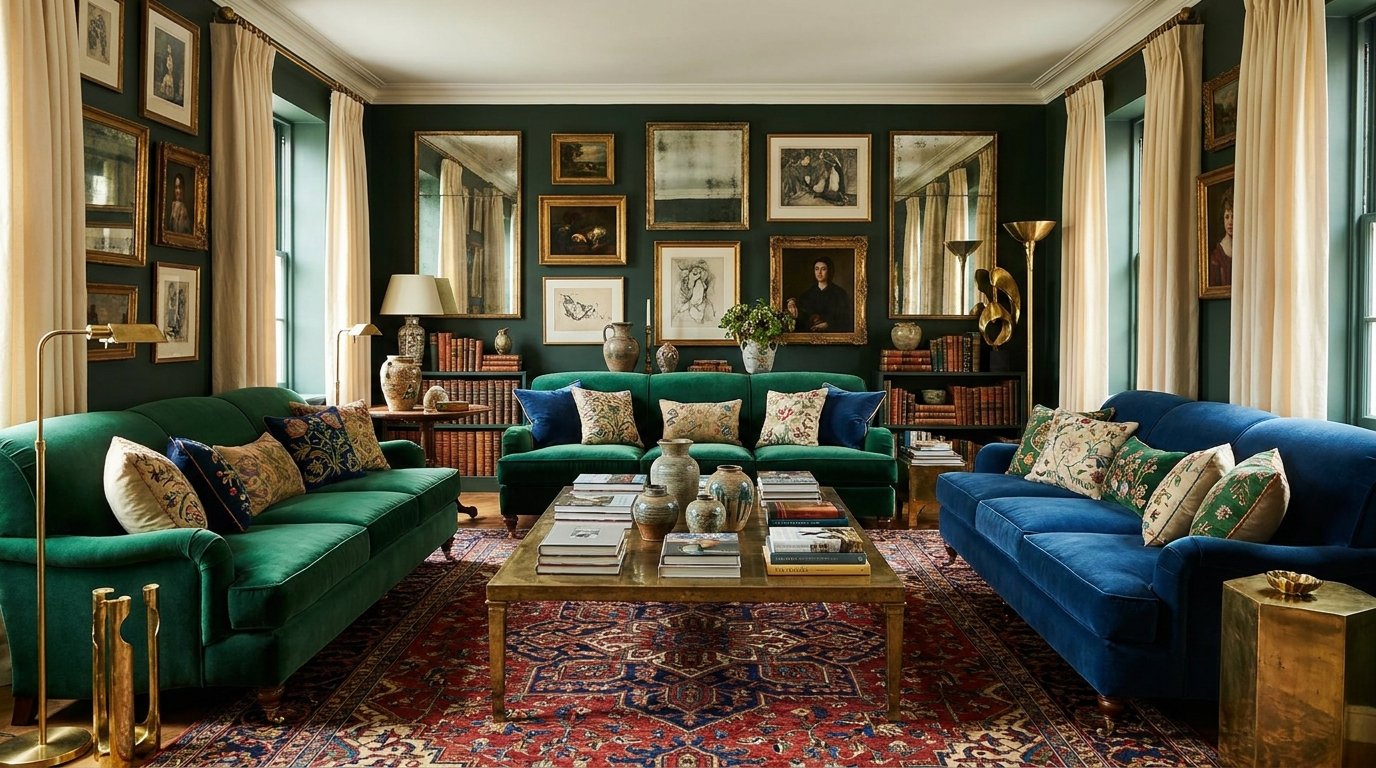
See how to make a dark room feel warm.
7. Use curtains to increase visual height
Long curtains placed in relation to the full wall can make the window feel larger and add a major vertical textile layer. Give the panels enough width to look full when closed.
Use the Curtain Size & Placement Guide.
8. Create one strong wall instead of decorating every wall
Choose the wall that deserves attention, then use one large artwork, a mirror or a gallery wall. Leaving another wall quieter often makes the focal wall stronger.
See the Wall Decor Guide and Gallery Wall Guide.
9. Mix old and new furniture
A vintage side table, older cabinet or inherited chair can keep a room from feeling like a showroom. Connect it to newer pieces through color, material or scale rather than forcing an exact style match.
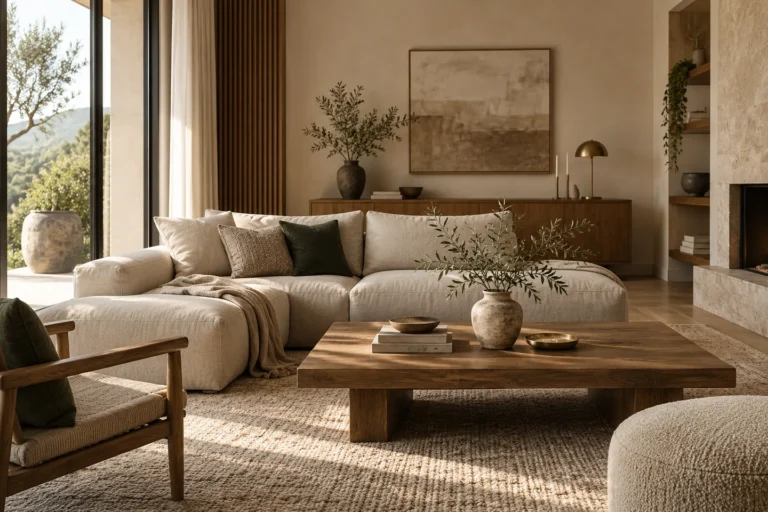
10. Use texture when the palette is quiet
Wool, linen, boucle, timber, woven fiber and matte ceramics can create depth even when the colors stay restrained. Texture is one of the easiest ways to make a neutral room feel finished rather than flat.
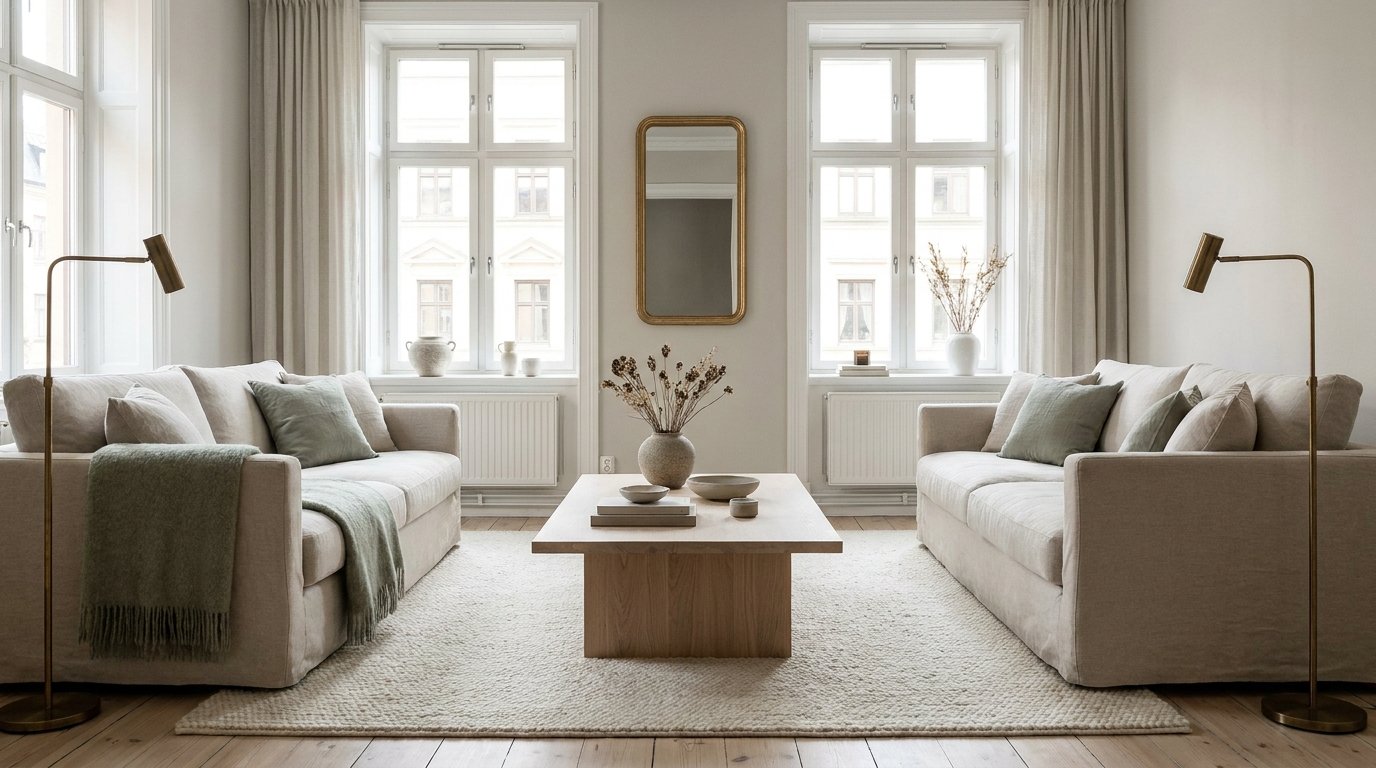
11. Give the coffee table a practical job
Choose a table that is easy to reach from the seating and does not block circulation. Then style it with enough empty surface that it can still hold a drink, book or tray.
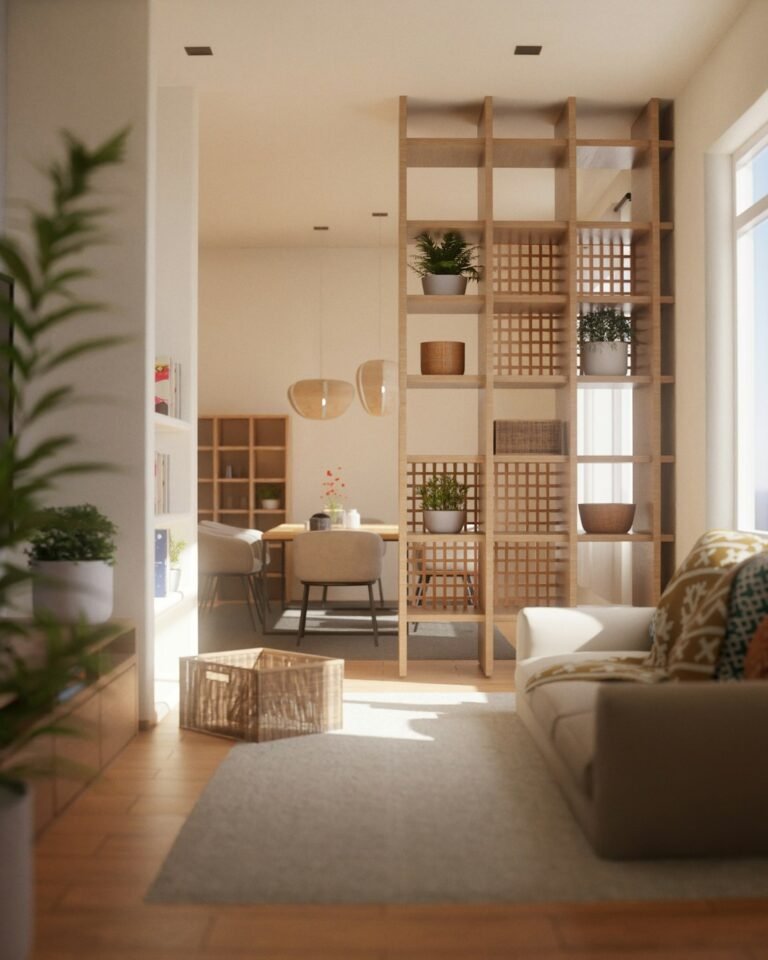
12. Add closed storage before adding more baskets
Mixed everyday objects usually look calmer behind doors or drawers. Use open baskets for categories that are easy to reset and closed storage for cables, toys, paperwork and visual clutter.
Use the Storage & Organization Guide.
13. Use a mirror where the reflection helps
A mirror can extend a sightline or redirect existing light, but its effect depends entirely on what it reflects. Place it where the duplicated view improves the room.
See the Mirror Guide.
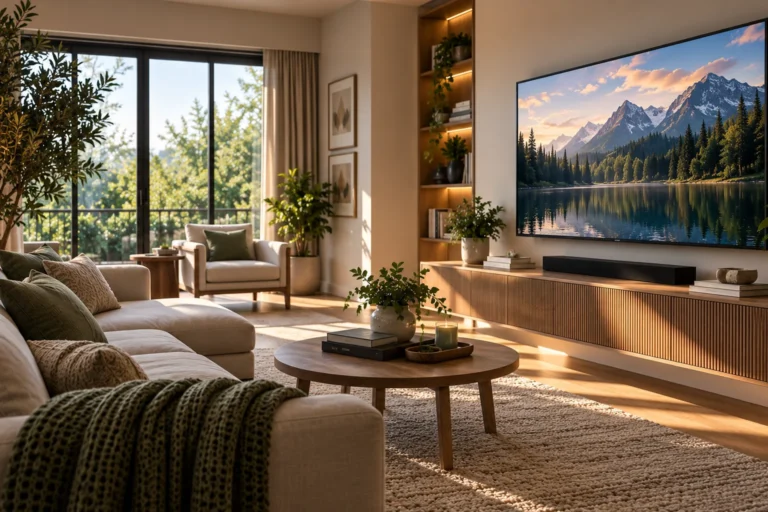
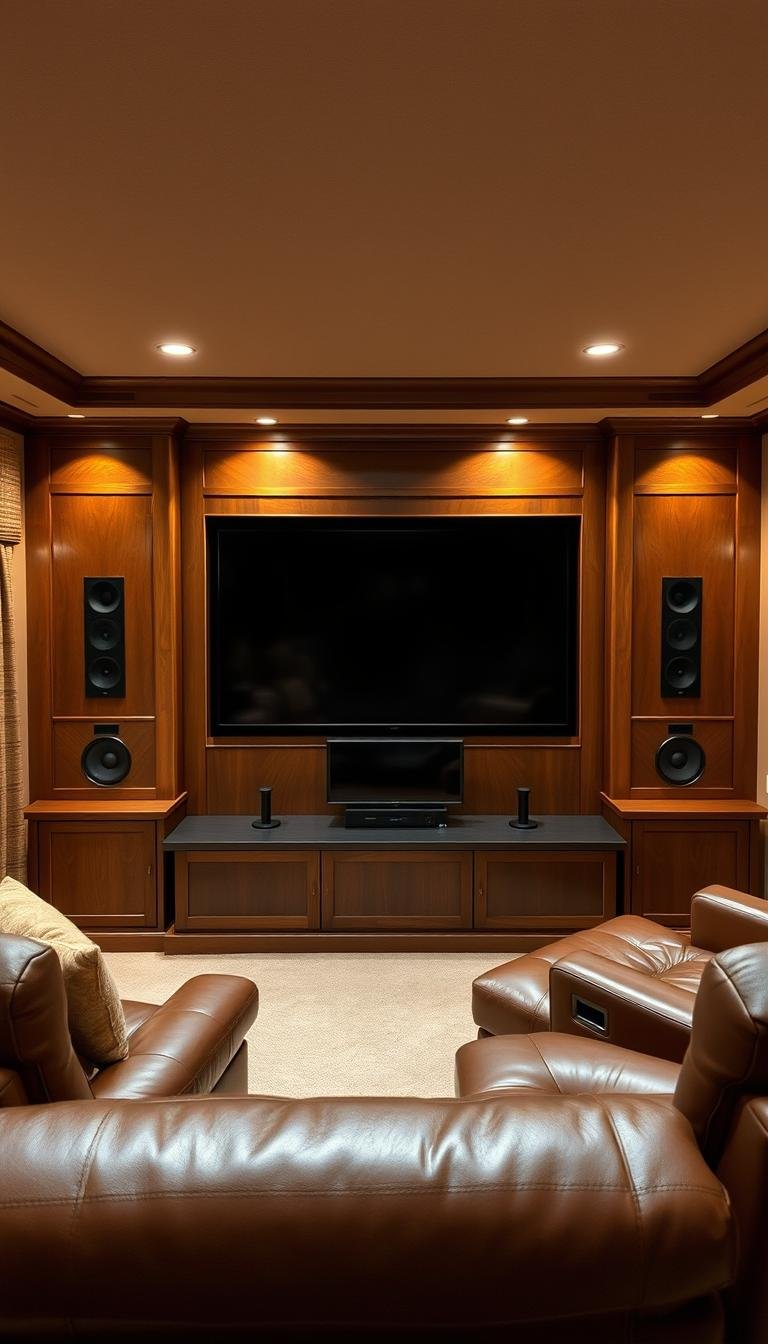
14. Keep the television in proportion to the room
If the television is a daily feature, design around it instead of pretending it is not there. Keep the seating relationship comfortable and use nearby cabinetry, art or wall color to integrate the screen into a broader composition.
15. Use a restrained modern farmhouse approach
Warm wood, comfortable upholstery and simple shapes can create the appealing part of modern farmhouse without relying on signs, themed objects or distressed finishes everywhere.
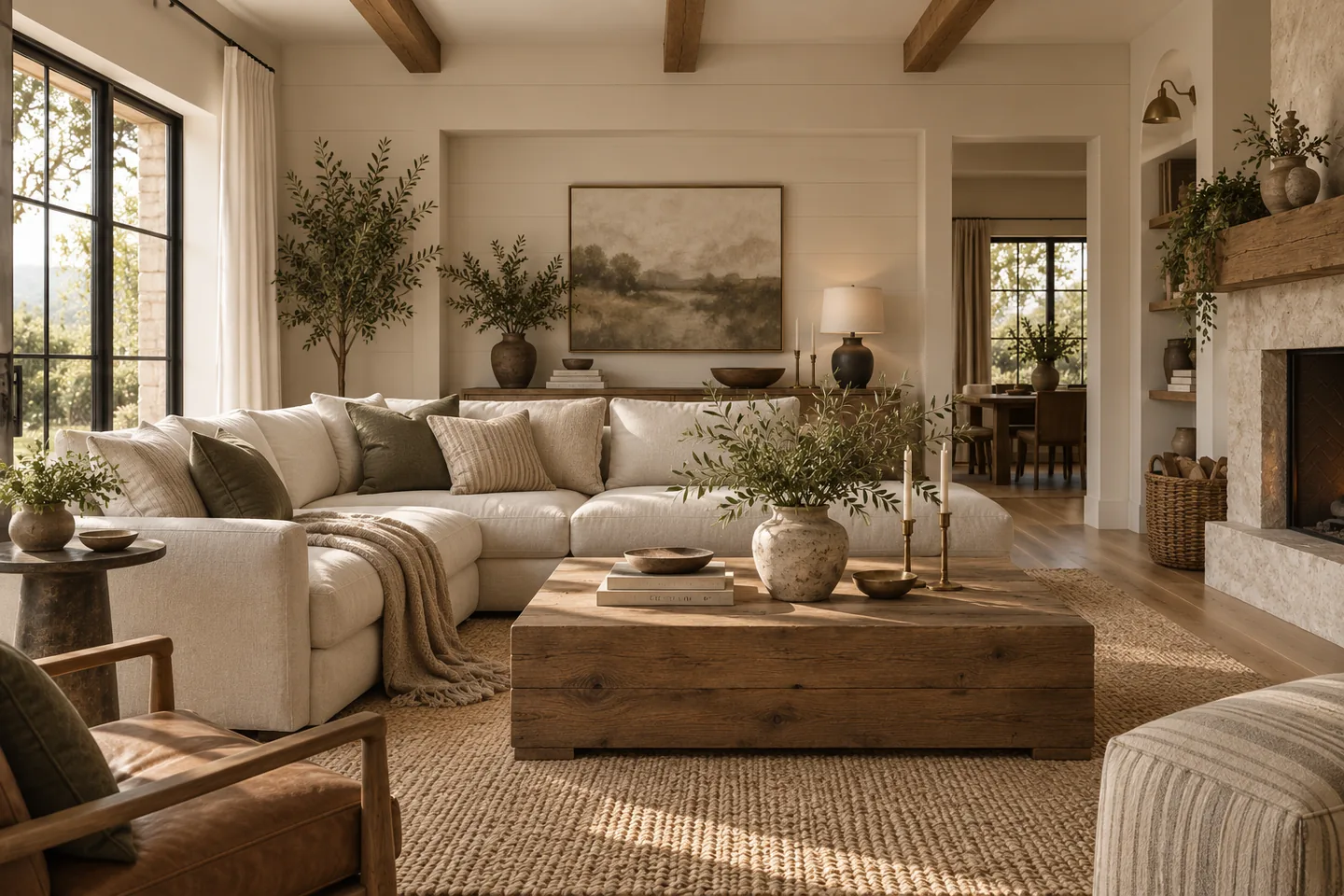
See Modern Farmhouse Living Room Ideas.
16. Make a small room feel edited rather than miniature
Use fewer pieces with the right scale instead of filling the room with undersized furniture. Slim arms, open bases and clear circulation often matter more than choosing the smallest product available.
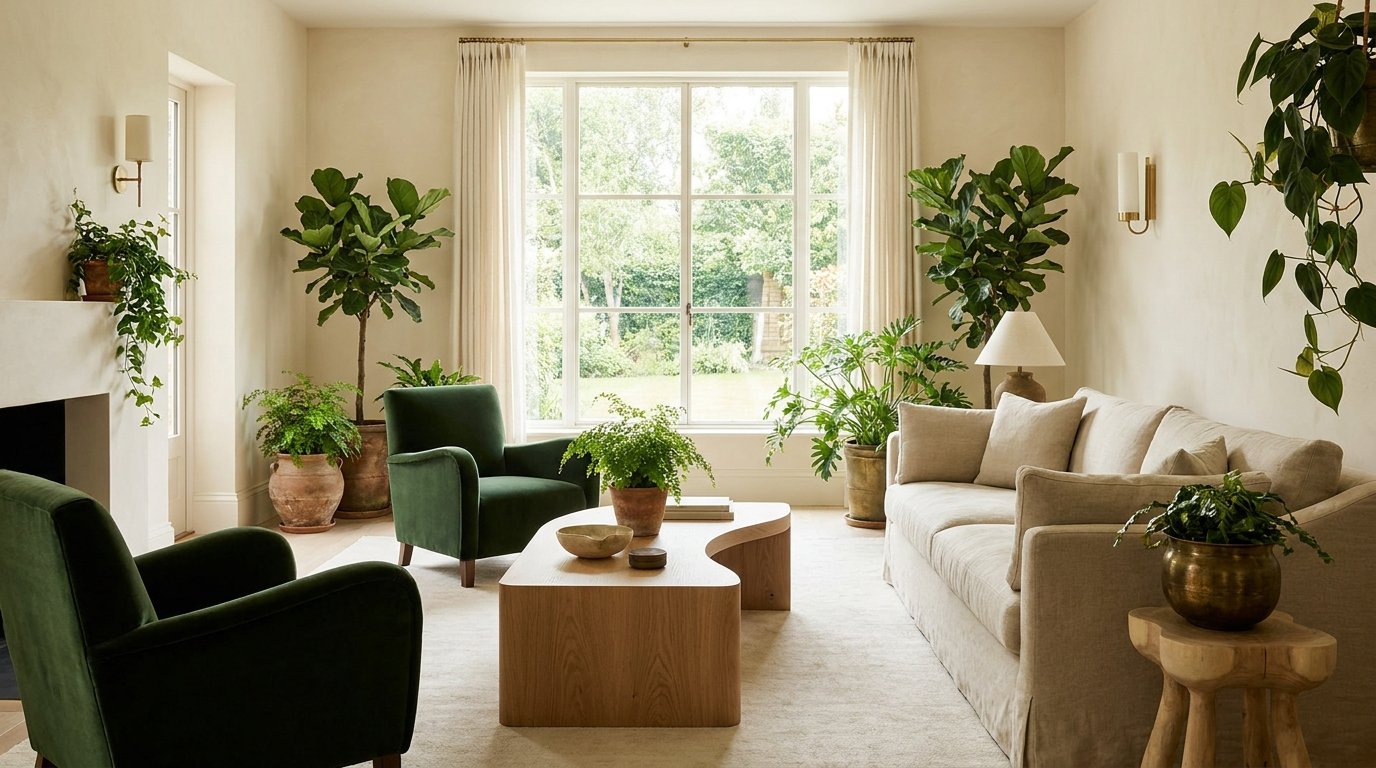
17. Let plants support the composition
One larger plant or a small intentional group can soften hard lines more effectively than many tiny pots scattered around the room. Choose plants for the actual light conditions available.
18. Finish by removing something
Once the room is styled, take one pass focused only on editing. Remove duplicate small objects, excess cushions or pieces that interrupt circulation. A collected room needs personality, but it also needs enough visual space for the important things to register.
Living room idea checklist
- The seating reads as one group.
- The rug relates to the furniture.
- Light comes from more than one height.
- The palette repeats through several materials.
- At least one wall has a clear visual role.
- Storage handles everyday clutter.
- The room still feels easy to move through.
Continue: use the Living Room Design Guide, Small Living Room Ideas or browse Living Rooms.