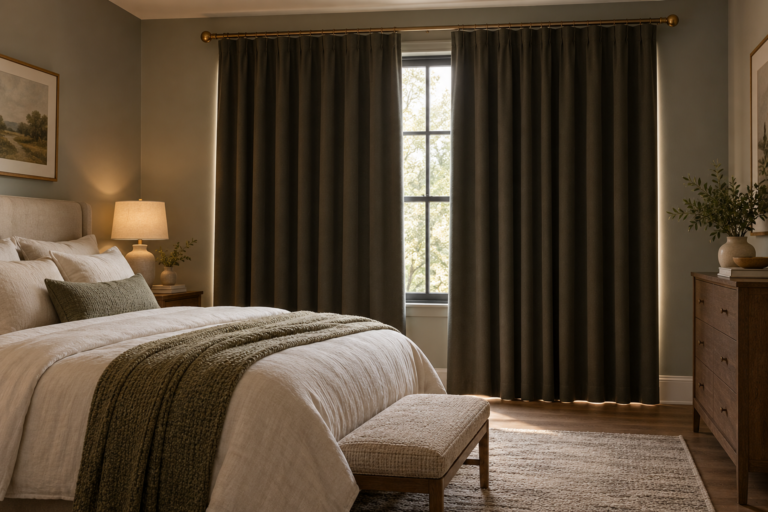

Pillow Scale
Choose throw-pillow size from the furniture depth and back height, then layer smaller shapes in front. A deep sectional can carry substantial square pillows; a slim sofa or shallow bed bench can look crowded by the same size. The goal is support and visual rhythm without sacrificing seating.
Measure furniture → choose largest anchor pillow → add medium layer → add lumbar/accent → test seat depth → balance both sides → remove anything that blocks use.
1. Measure the back and seat depth
Record the usable seat depth and the height from seat cushion to top of sofa back or headboard. Thick pillows consume depth and can push sitters forward.
A pillow that looks perfect upright may feel too bulky once someone leans against it.
2. Choose anchor pillows first
Place the largest square or Euro-style pillows at the outer corners or back layer. They establish scale and can provide useful support.
On a compact sofa, one anchor at each end may be enough; large sectionals can support more without looking overfilled.
3. Add a smaller second layer
Use medium squares or rectangles in front of the anchors. Change texture, pattern or tone so the layers are distinct without becoming busy.
Avoid reducing size by tiny increments; clearer differences usually create a more intentional composition.
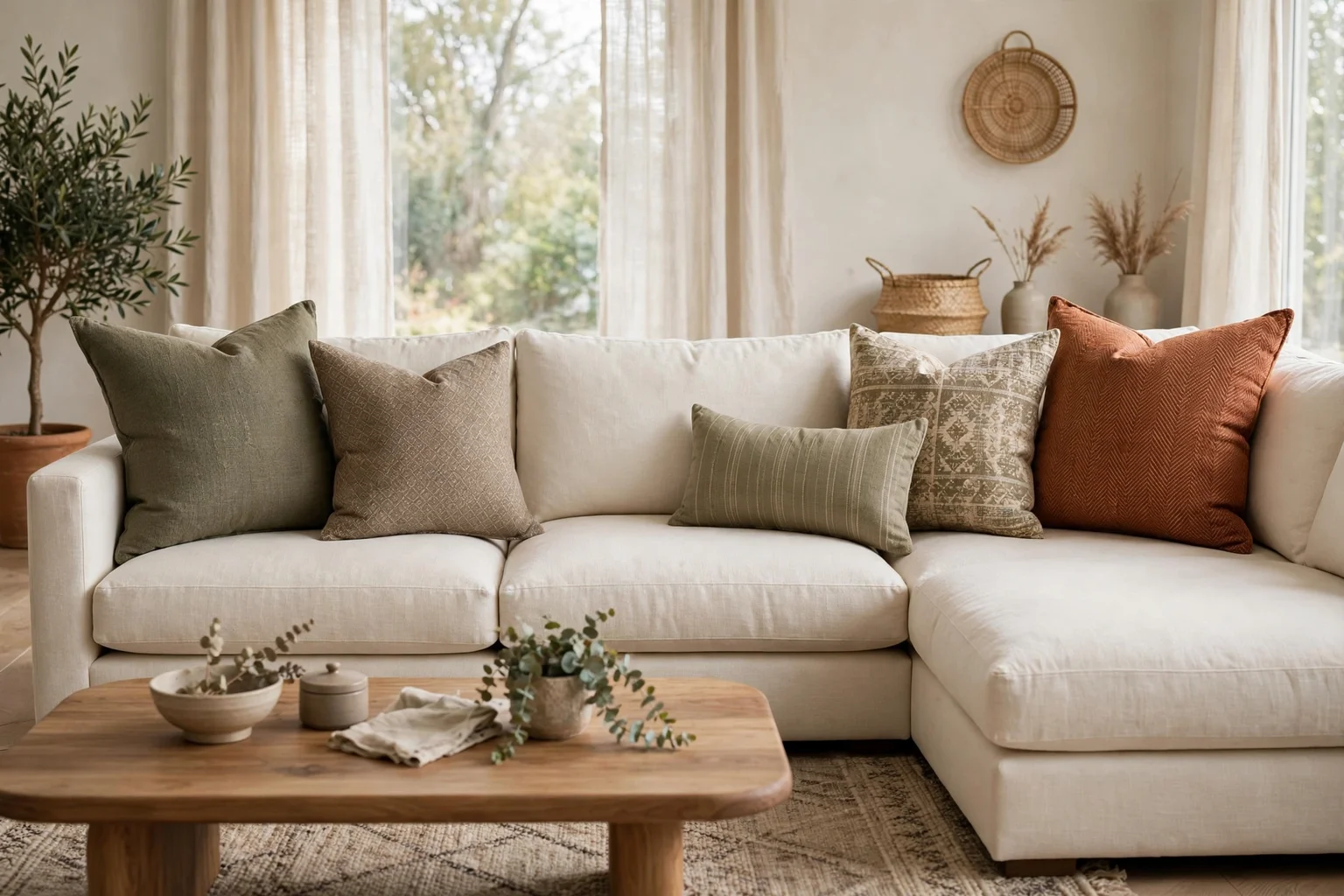
4. Use lumbar pillows where the shape helps
A lumbar can support the lower back, fill the center of a bed or break up a row of square pillows. Choose length from the seat or bed width rather than treating it as a decorative afterthought.
Very long lumbars can replace several small pillows and simplify the arrangement.
5. Account for insert fullness
A generously filled down-alternative or feather insert can appear larger and deeper than a flat foam-filled pillow with the same cover measurement.
Consider how much the pillow compresses under use, especially on shallow seating.
6. Keep enough seat available
Sit on the sofa with all pillows in place. If people immediately move half of them to the floor, the arrangement is too dense for daily life.
For guest rooms, leave somewhere obvious to place decorative pillows at night.
7. Balance rather than mirror perfectly
Pairs can create formal symmetry, but sectionals often look more natural with visual weight distributed according to the chaise, corner and open ends.
Repeat a color or fabric rather than forcing the same number of pillows on every section.
8. Use the room palette to edit choices
Pillows are easy places for seasonal color and pattern, but connect them to rugs, art, curtains or bedding so they do not feel random.
When several patterns are used, vary scale and keep at least one calmer solid or texture in the mix.
Planning table
| Check | What to test | Why it matters |
|---|---|---|
| Furniture | Seat depth and back height | Limits pillow bulk |
| Anchor | Largest usable pillow | Sets scale |
| Second layer | Clear step down in size | Creates depth |
| Lumbar | Seat/bed width and support need | Adds shape variation |
| Fill | Compression and loft | Changes real footprint |
Related Dwelanor guides
- Home Textiles Guide — choose fabric and fill
- Living Room Design Guide — coordinate sofa styling
- Bedroom Design Guide — coordinate bed pillows
- How to Layer a Bed — place pillows within bedding layers
- Small Living Room Ideas — avoid overcrowding compact sofas
- Interior Color Palette Guide — build a controlled color mix
Bottom line
Use throw pillows to support the furniture rather than cover it. Start with a scale appropriate to the sofa, sectional or bed, layer smaller shapes deliberately and stop before the arrangement steals usable space.