An outdoor room should be planned around climate, exposure and how people use it before furniture or decorative accessories are chosen. Sun, rain, wind, drainage and storage affect almost every decision, from seating materials to rugs and lighting.
The useful sequence is exposure → activity → circulation → shade → furniture → lighting → textiles → storage → planting and decor.
1. Map sun, rain and wind
Observe the space at different times of day and through typical weather. A west-facing balcony can become very hot in late afternoon. A covered patio may stay dry but still receive wind-driven rain. A pool area introduces splash and chemical exposure.
Product labels such as outdoor-ready are only a starting point. Check the manufacturer’s stated exposure, care and storage requirements.
2. Decide what the outdoor room needs to do
Dining, lounging, grilling, gardening and children’s play all require different layouts. Choose one primary use when the space is small. A compact balcony usually works better with one strong purpose than with undersized furniture for several competing activities.
3. Protect the route from indoors to outdoors
Keep doors, steps and the main walking route clear. Place large furniture so people do not have to squeeze around chair backs or table corners every time they enter the space.
On a balcony, also respect railings, drainage points and any building rules that affect furniture, screens or hanging objects.
4. Shade is part of comfort, not an accessory
Umbrellas, awnings, pergolas and planting can reduce direct sun when they are appropriate to the site. Their structure and anchoring must suit wind conditions and manufacturer requirements.
Do not improvise heavy overhead structures or anchors where building approval or structural assessment is needed.
5. Choose furniture materials for the exposure
| Material family | What to check |
|---|---|
| Powder-coated metal | Coating quality, corrosion resistance and care around scratches. |
| Aluminum | Finish durability, weight and wind exposure. |
| Timber | Species, finish, maintenance and weathering expectations. |
| Woven synthetics | UV resistance, frame construction and cleaning guidance. |
| Outdoor upholstery | Fabric performance, foam drainage, drying and storage needs. |
Do not assume a material is maintenance-free. Even durable outdoor furniture lasts longer when it can dry properly and is cared for according to its maker.
6. Size furniture around circulation
Use tape to mark the full footprint of sofas, chairs, tables and loungers. Include chair pull-back and reclining positions. Outdoor catalogs often show furniture in much larger spaces than typical patios and balconies.
Use the Furniture Sizing Guide for the same scale-first method indoors and out.
7. Outdoor rugs need drainage and drying
An outdoor rug can define a seating or dining group, but trapped moisture below furniture can encourage odor, staining or biological growth depending on climate and surface.
Choose a rug intended for the location, allow it to dry and keep the surface below clean. See how to reduce mildew under an outdoor rug.
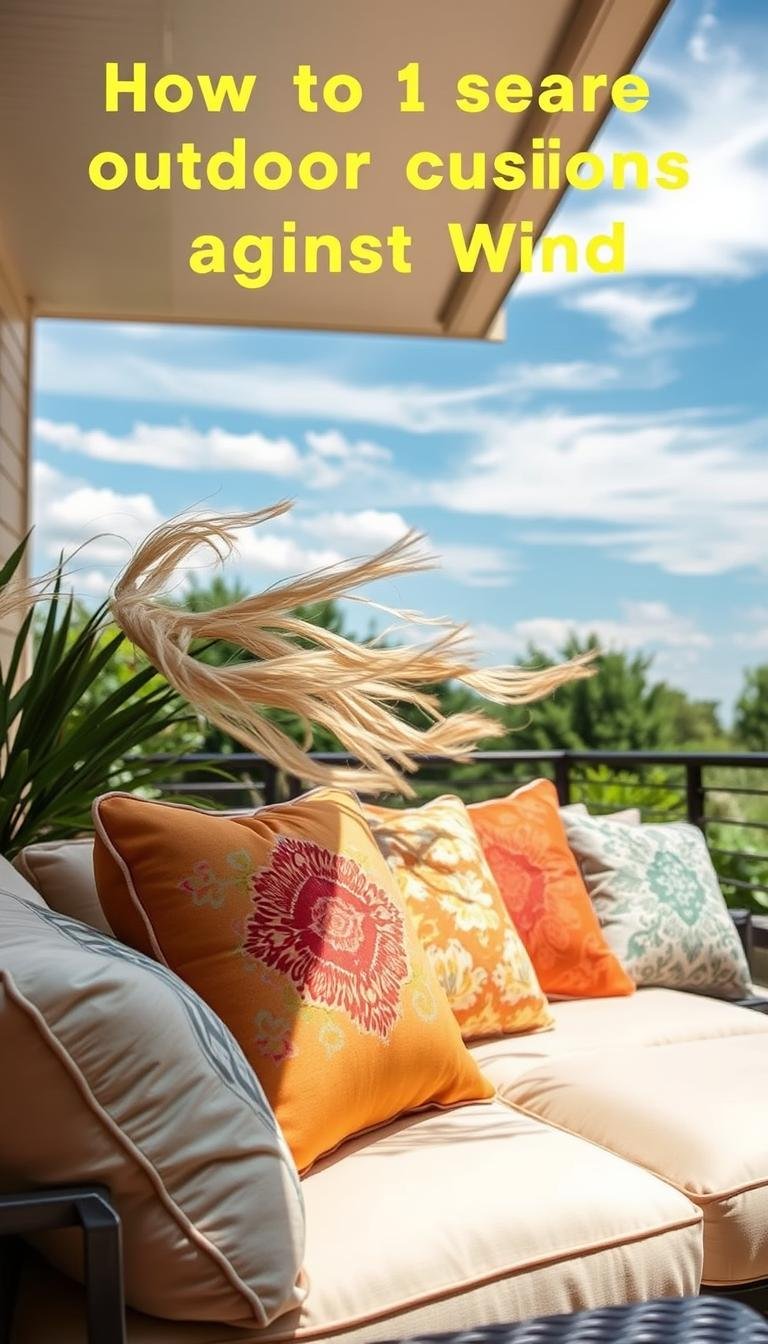
8. Cushions should be easy to secure and store
Loose cushions need a plan for wind and bad weather. Ties, fitted shapes and compatible storage can make the space easier to reset.
Use our outdoor cushion guide for windy locations.
9. Layer outdoor lighting carefully
Use enough light for steps, paths and dining while keeping the atmosphere softer around seating. Exterior fixtures and electrical components must be rated for their actual location and installed appropriately.
Solar path lights can help in suitable sunny locations, but runtime depends on charging conditions. See our solar path light guide and the broader Home Lighting Guide.
10. Small balconies need restraint
On a small balcony, keep furniture depth under control and use vertical planting only where it is secure and does not interfere with railings or neighbors. A café table, two comfortable seats and one or two planters may create a more usable result than filling the perimeter.
For a style-led example, see Parisian-style balcony ideas.
11. Plan storage before buying more accessories
Cushions, lanterns, toys, gardening tools and dining pieces need somewhere to go during bad weather or off-season periods. A storage bench can help when it also works as seating, but it should be appropriate for outdoor exposure and easy to access.
12. Use planting to support the architecture
Plants can create shade, privacy and softness, but choose species for the real light, climate and maintenance available. Keep containers within appropriate load and drainage limits, particularly on elevated balconies.
Outdoor living checklist
- Sun, rain and wind exposure are understood.
- The space has a clear primary use.
- Doors and circulation remain clear.
- Shade and shelter are planned safely.
- Furniture and textiles suit the actual weather.
- Lighting is appropriate for exterior use.
- Outdoor items have a storage plan.
- Planting suits the site rather than only the desired look.
Next: browse the Outdoor Living library, Area Rug Guide and Home Lighting Guide.