Good organization is not a collection of bins. It is a storage system that puts the right things in the right place with as little daily effort as possible. Start with what you own and where you use it, then choose storage that fits the objects and the room.
The useful sequence is edit → group → locate → measure → choose storage type → label where useful → maintain.
1. Organize around behavior
If shoes are always left by the door, the best storage is usually near the door. If mail lands on the kitchen counter, create a simple sorting point close to that natural drop zone rather than expecting everyone to carry it across the house.
Storage succeeds when it follows the household’s habits with only small improvements. Systems that require several extra steps are harder to maintain.
2. Separate visible and concealed storage
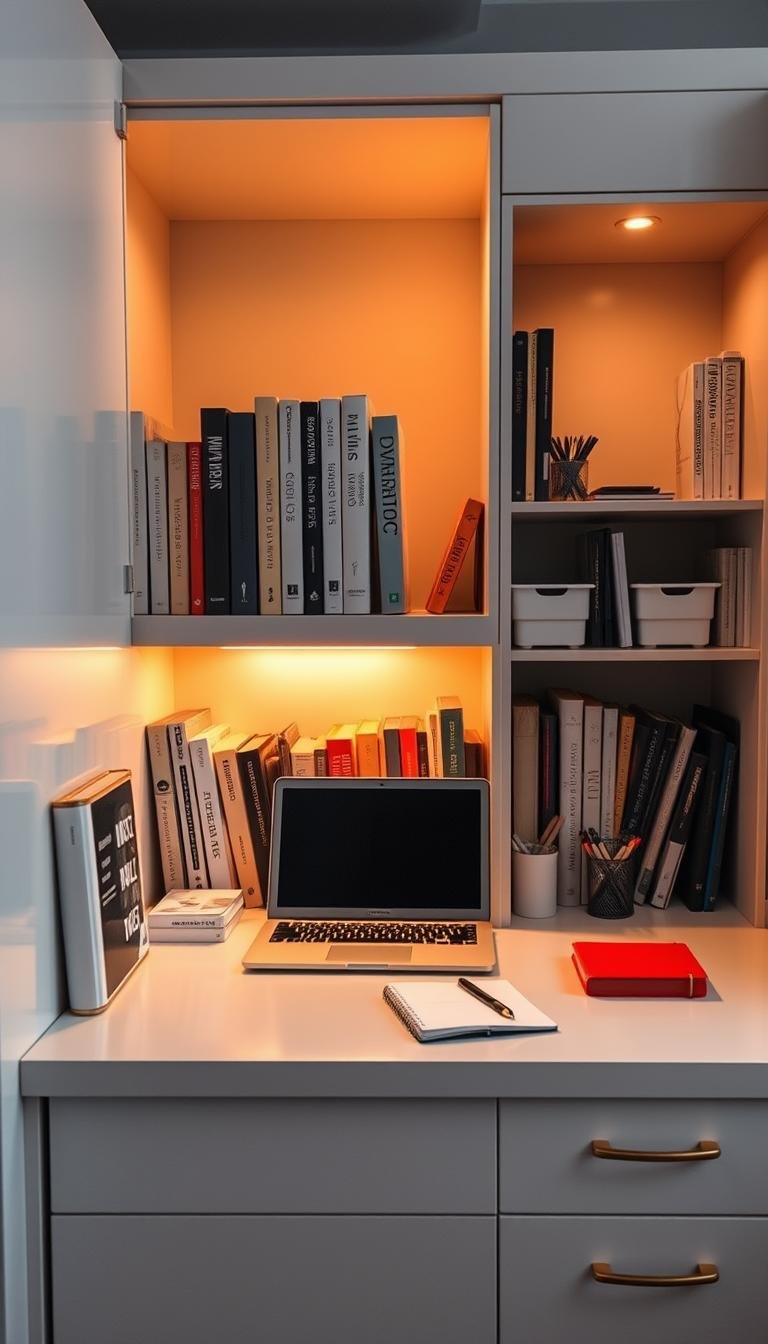
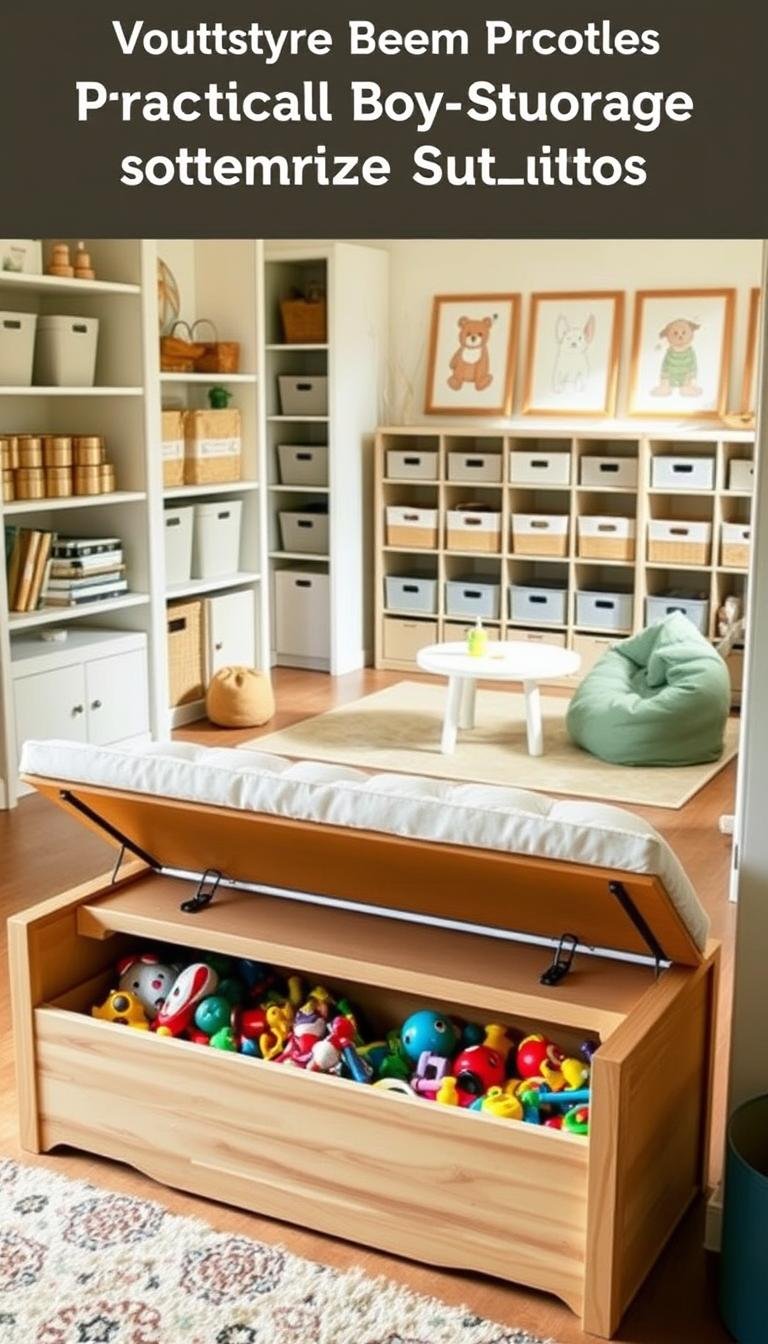
Open storage works well for books, attractive objects and frequently used items that remain visually calm. Closed storage is usually better for cables, toys, cleaning products, paperwork and mixed small objects.
A balanced room often needs both. Too much open shelving creates visual noise, while too much closed cabinetry can make everyday objects inconvenient to reach.
3. Measure the objects before the cabinet
Storage is only useful when the internal dimensions fit what goes inside. Measure baskets, shoes, folded linens, appliances, files or toys before choosing shelves and drawers.
Deep cabinets are not automatically better. Small items disappear in deep storage unless there is a drawer, pull-out or container system that brings them forward.
4. Put frequent-use items in the easiest zone
| Use frequency | Storage position |
|---|---|
| Daily | Easy reach, minimal steps, clear visibility where helpful. |
| Weekly | Accessible shelves, drawers or cabinets. |
| Seasonal | Higher shelves, under-bed storage or less convenient zones. |
| Rarely used | Ask whether the item needs to remain in the home at all. |
5. Use vertical storage selectively
Tall cabinets and shelves can increase capacity without taking more floor area, but high storage should be reserved for light and less frequently used objects. Do not place heavy or awkward items where they require unsafe reaching.
In small homes, vertical storage is especially valuable when it replaces several smaller pieces. Use the small-space design guide for the broader layout strategy.
6. Build an entryway drop zone
Entry storage should handle the objects that arrive with people: keys, bags, shoes, coats, mail and everyday accessories. A small wall shelf, hooks, shallow console or closed cabinet can work if it fits the traffic pattern.
See our front-door drop zone guide and browse Entry & Hallways.
7. Make bedroom storage easy to reset
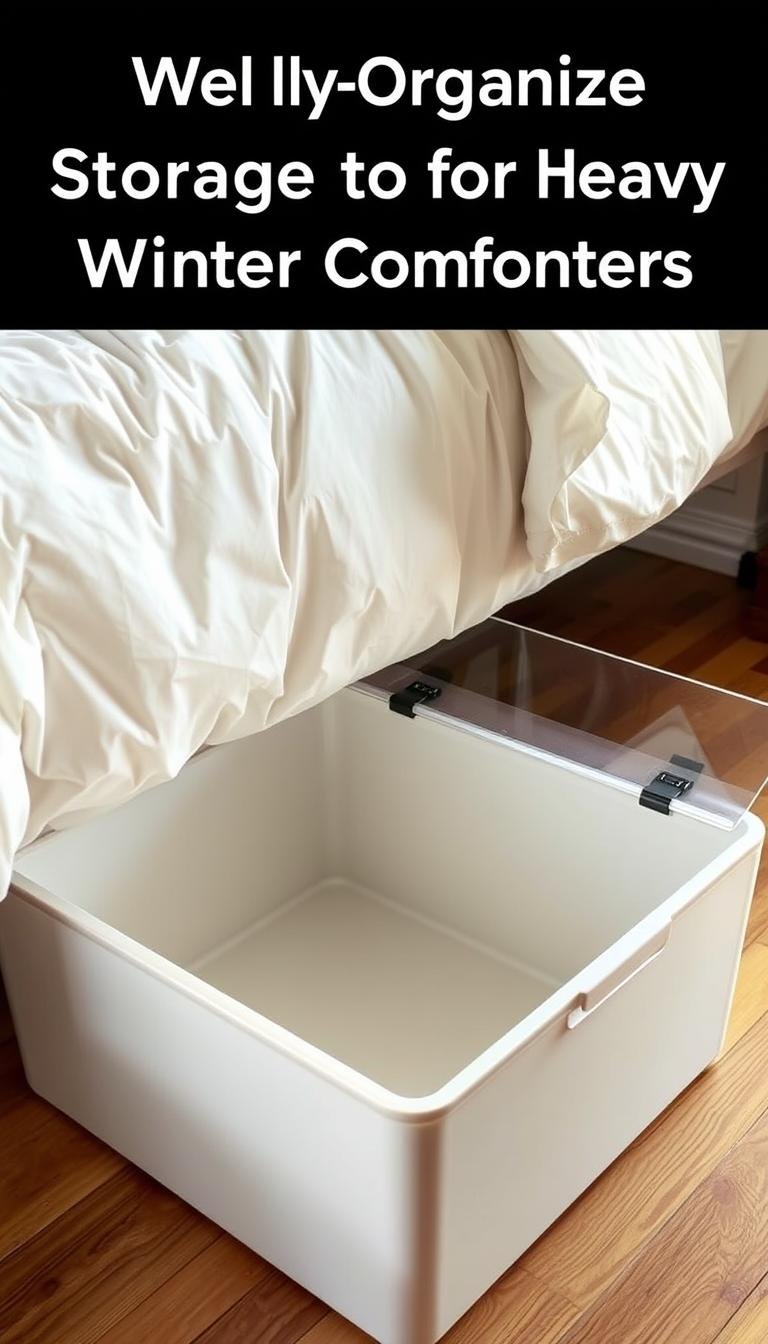
Bedrooms need storage for clothing, laundry, accessories and spare bedding. Put everyday clothing where it can be returned quickly. Under-bed storage is useful for bulky or seasonal items when the bed provides enough clearance and the containers remain accessible.
Continue with the bedroom design guide or our under-bed storage guide.
8. Design closets from the wardrobe inward
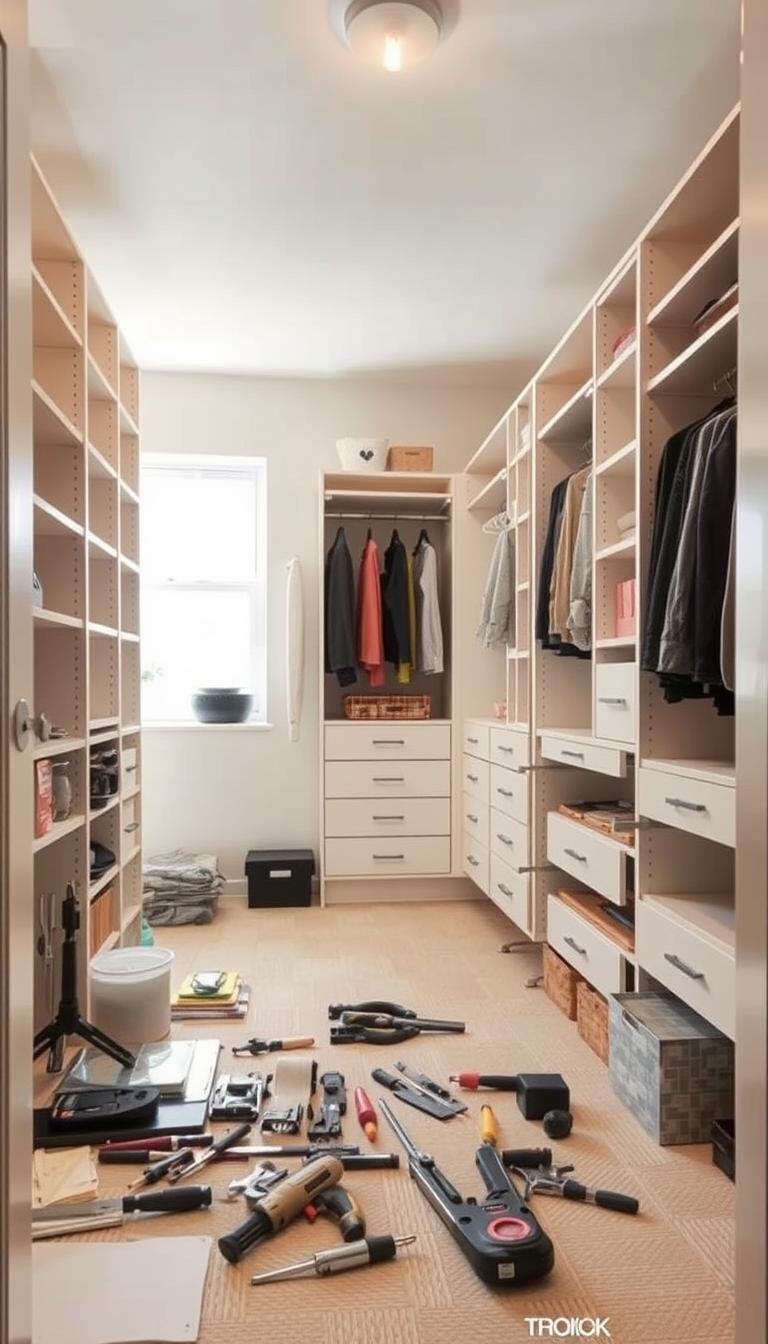
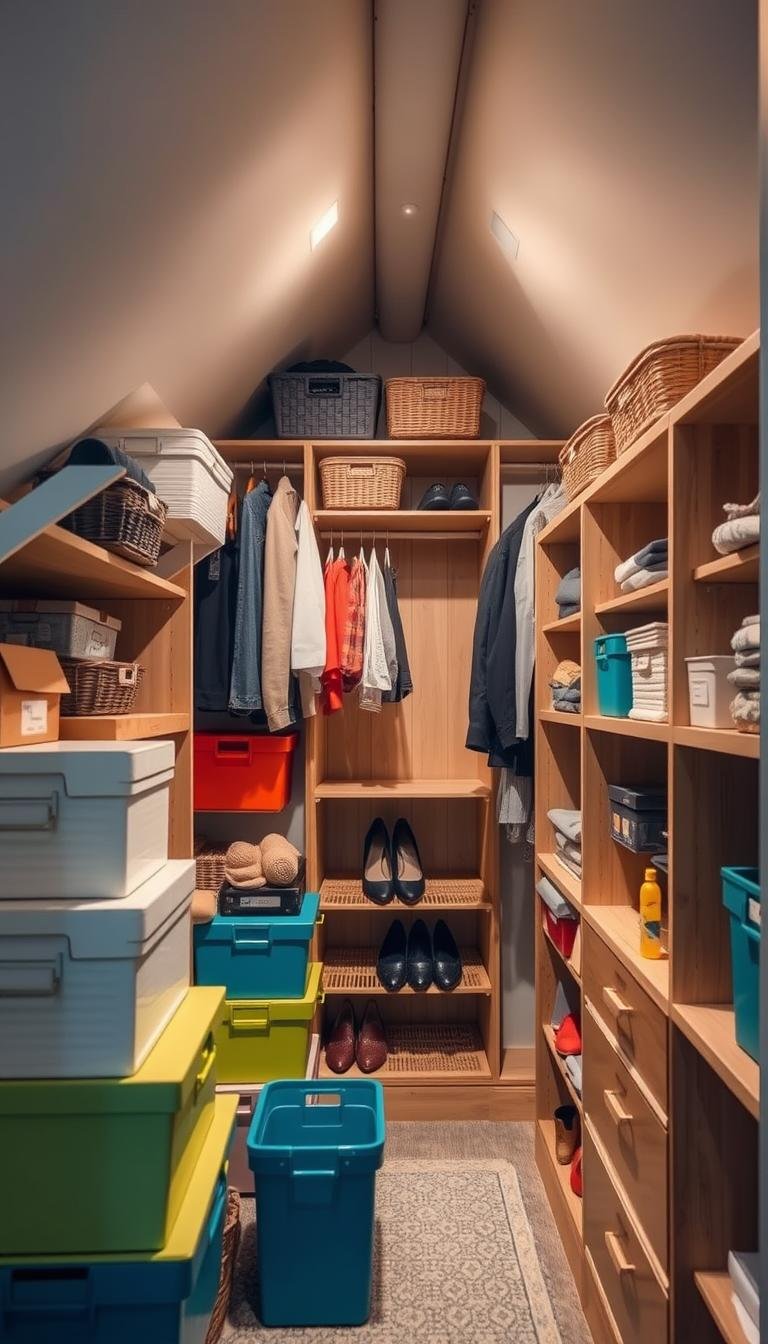
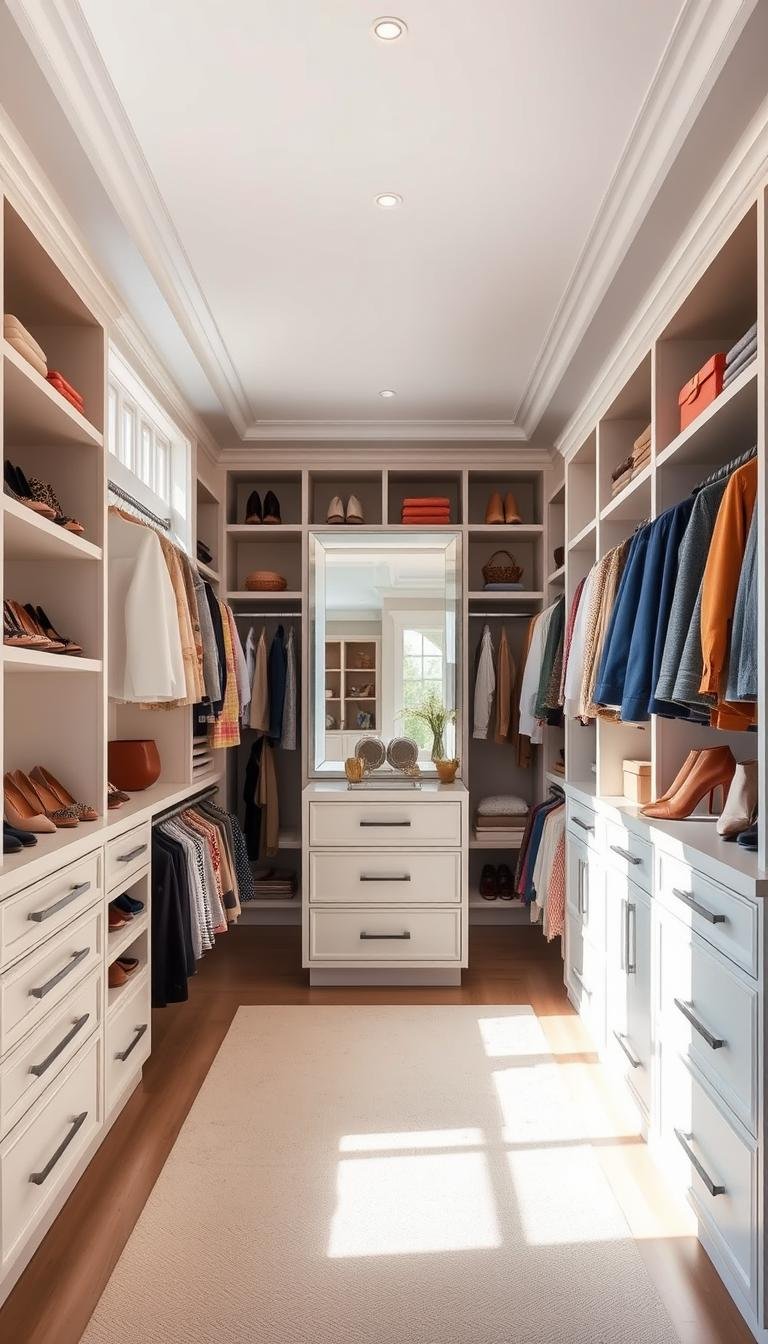
Count what needs hanging, folding, shelving and shoe storage before choosing a closet system. A beautiful array of equal shelves may waste space if most clothing needs hanging height.
Our walk-in closet organization guide covers the process in more detail.
9. Kitchen storage should support work zones
Store cooking tools near cooking, preparation tools near preparation and everyday dishes near the route between dishwasher and table when practical. The goal is to reduce unnecessary movement.
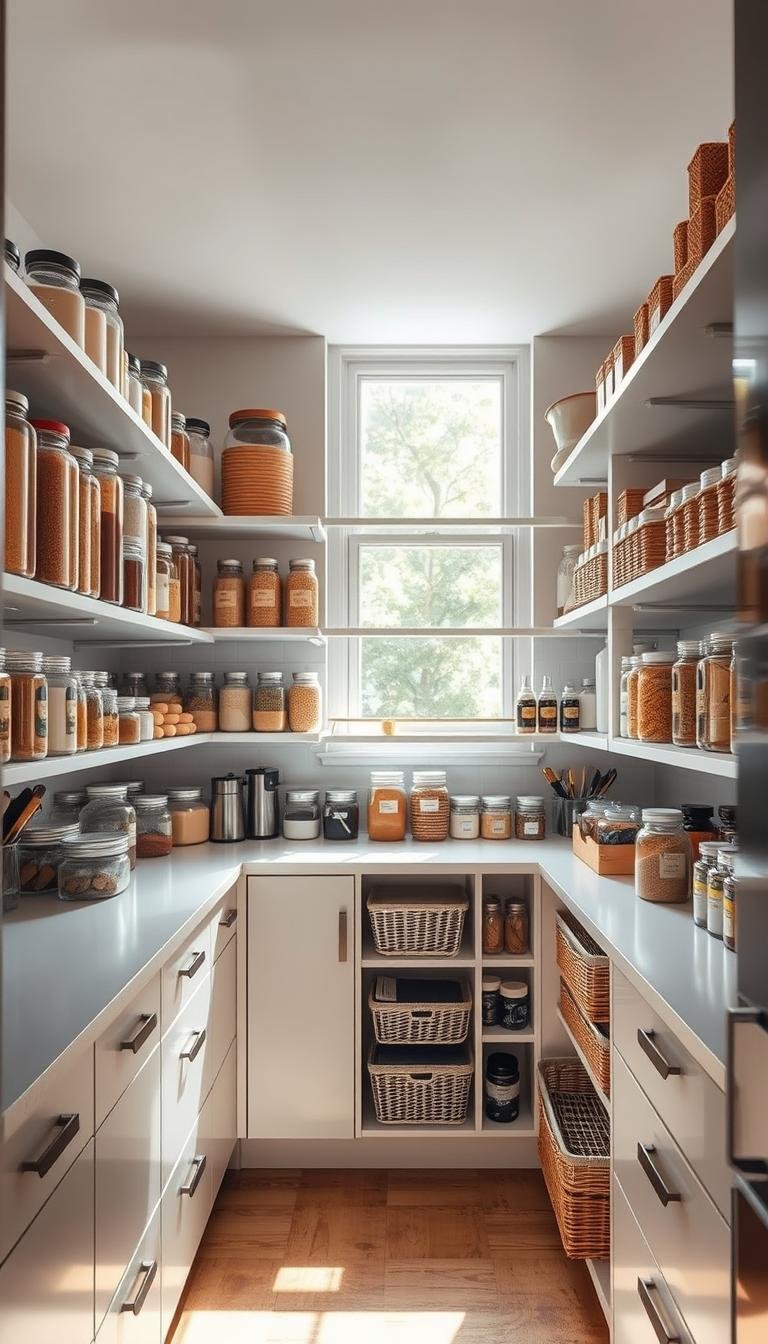
For pantry planning, see small pantry organization and pull-out pantry planning.
10. Bathroom storage needs moisture awareness
Keep daily products accessible without covering every surface. Backups can move into cabinets or another dry storage area. Medicines should be stored according to their label requirements rather than automatically kept in a humid bathroom.
See the bathroom design guide for vanity and shower storage planning.
11. Use baskets as tools, not decoration
Baskets are useful when they contain one clear category and fit the shelf or cabinet properly. They become clutter when they are used to hide unrelated objects without a retrieval system.
Choose washable or wipeable materials where dirt, food or moisture are likely. Labeling can help when several similar baskets sit together, but labels are not necessary when the contents are obvious.
12. Plan concealed storage for visually noisy categories
Toys, chargers, cables, paperwork and cleaning supplies often make a room feel calmer when hidden behind a door or drawer front. Concealed storage can also create a cleaner background for artwork and furniture.
Do not conceal equipment that needs ventilation, service access or safety clearance simply for appearance.
13. Avoid micro-storage everywhere
A home can become over-organized when every small problem produces another bin, cart, tray or rack. Each organizer consumes space too. Consolidate categories before adding containers.
One well-planned cabinet can be more useful than several freestanding organizers scattered around a room.
14. Make maintenance part of the system
Leave some spare capacity. Storage packed completely full is harder to use and harder to keep organized. A little open space lets categories change without forcing a full reorganization every time something new enters the home.
Review high-traffic storage periodically. If a system keeps failing, change the system rather than repeatedly blaming the people using it.
Home organization checklist
- Frequently used objects live near where they are used.
- Storage dimensions fit the actual items.
- Open storage is visually edited.
- Closed storage contains the categories that create visual noise.
- High shelves hold light, infrequent-use items.
- Entry, bedroom, kitchen and bathroom systems follow real routines.
- Containers serve a clear purpose.
- Service access and ventilation remain unobstructed.
- The system has some spare capacity.
Explore storage by room
Browse the Storage & Organization library for closets, pantries, entryways, small spaces and concealed storage. The goal is not perfect organization. It is a home that takes less effort to put back together.