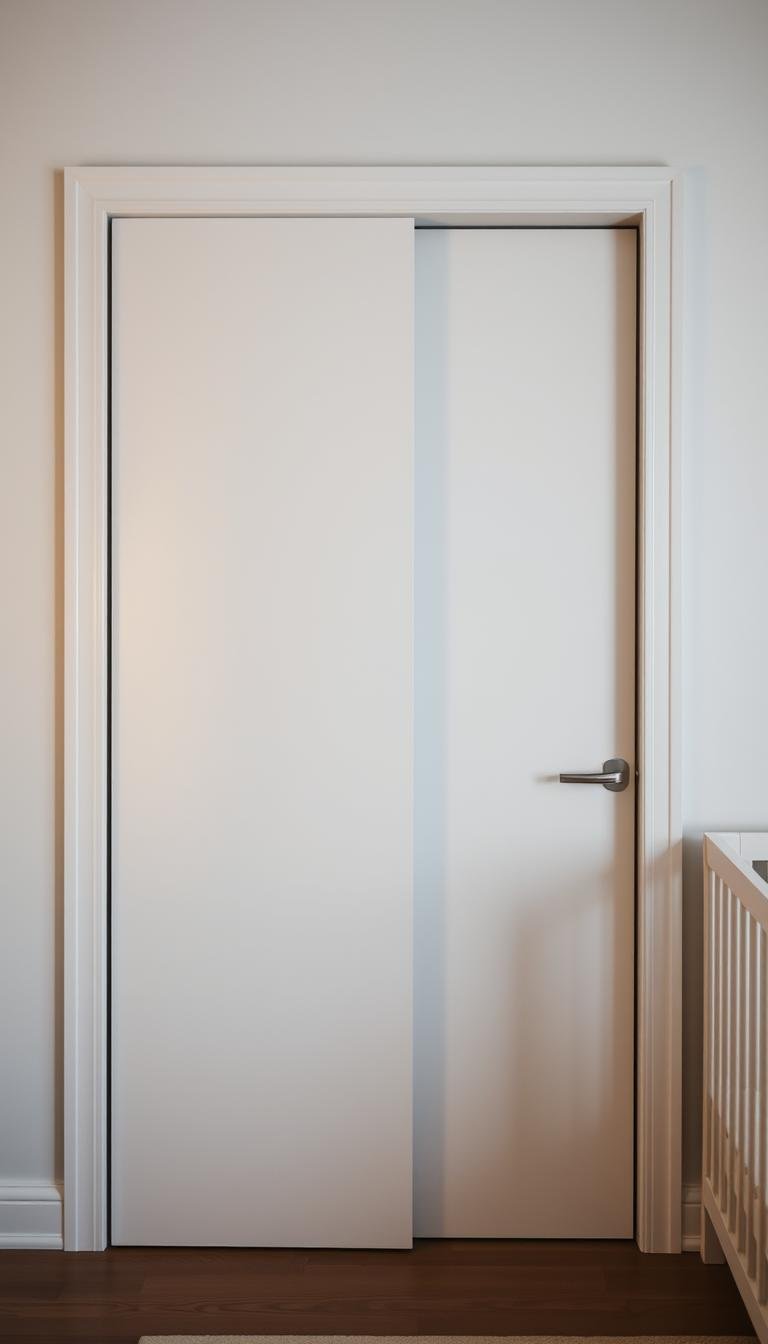
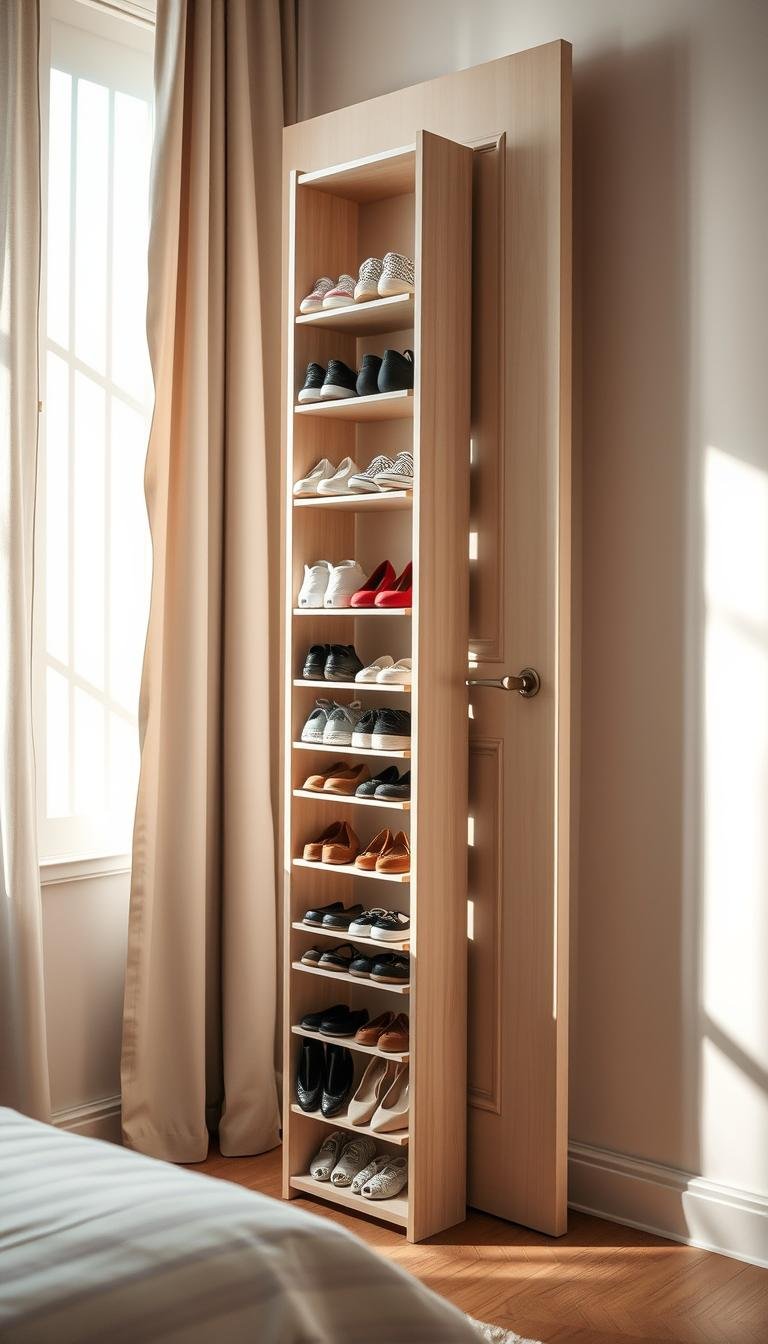
A shoe rack behind a bedroom door only works if the door can still open fully and the rack does not create a snag or tipping hazard. Start by measuring the actual clearance, then choose the storage style that matches the shoes you own.
Measure before you shop
Measure the usable wall or door area with the door open and closed. Check:
- distance between the door and wall or furniture;
- door thickness and top clearance if you want an over-door organizer;
- baseboard depth;
- the swing path of the handle;
- the height and depth of your largest shoes.
Do not assume a generic “slim” depth will fit. Even a shallow rack can interfere with a handle, hinge, or nearby furniture.
Choose the right storage type
| Type | Best for | Main tradeoff |
|---|---|---|
| Over-door pocket organizer | Flats, sandals, lightweight shoes | Can interfere with door closure or trim |
| Over-door metal rack | Sneakers and more structured shoes | Heavier and may rattle if poorly fitted |
| Slim freestanding rack | Mixed shoe sizes | Uses some floor space |
| Wall-mounted cabinet | Hidden storage in very shallow depth | Requires secure anchoring |
| Stackable narrow shelves | Closets or spaces beside the door | Needs stable stacking and enough height |
Capacity claims need context
Manufacturers often count capacity using small or average-size shoes. Boots, high-tops, wide men’s shoes, and chunky sneakers can reduce the real pair count substantially.
Use shelf dimensions rather than the advertised number of pairs when comparing products.
Over-the-door organizers
Over-door storage can be useful in rentals because it avoids drilling, but verify the hook thickness against the door and frame. The door should close normally without forcing the hinges or scraping the trim.
For fabric pocket organizers, check the pocket dimensions. Deep pockets are better for sneakers, while shallow clear pockets may work better for flats and accessories.
Slim freestanding racks
A narrow freestanding rack is often more versatile than an over-door system because it can hold heavier shoes and does not move with the door. Look for a stable base and a design that will not tip when only the upper shelves are loaded.
For tall, narrow units, follow the manufacturer’s anti-tip instructions. Wall anchoring is especially important around children or pets.
Closed shoe cabinets
Slim tilt-out cabinets can hide clutter while using relatively little depth. They work best when attached securely to the wall according to the manufacturer’s instructions.
Check interior compartment dimensions before buying; some tilt-out cabinets do not fit boots or large athletic shoes comfortably.
Materials and maintenance
Metal racks are usually easy to wipe clean and can support heavier footwear when properly designed. Plastic or resin can be lightweight and moisture-tolerant. Bamboo and wood can look more furniture-like but should be kept away from persistent dampness unless the manufacturer approves the finish for it.
Fabric organizers are light and flexible, but inspect the seams and hooks if you plan to store heavier shoes.
Keep the rack from becoming a door hazard
- Do not let shoes protrude into the door swing.
- Keep heavy footwear on lower shelves where possible.
- Make sure over-door hooks do not damage or bind the frame.
- Secure tall units to the wall when the manufacturer requires it.
- Leave enough clearance for the handle and hinges.
What to compare on current product pages
Prices and model lines change, so check current manufacturer or retailer information for:
- overall width, depth, and height;
- shelf spacing or pocket dimensions;
- weight limits;
- door-thickness compatibility;
- included mounting hardware;
- anti-tip requirements;
- return policy in case the rack does not fit your actual shoes.
Bottom line
The best slim shoe rack for behind a bedroom door is the one that fits the real clearance, stores your largest shoes without protruding, and remains stable during normal door use. For lightweight shoes, an over-door organizer can be efficient. For mixed or heavier footwear, a narrow freestanding rack or properly anchored slim cabinet is usually more flexible.
For more small-space storage ideas, see our Room Guides.