
A well-designed bedroom should make sleeping, getting dressed, storing everyday belongings and winding down feel easy. Start with the bed and circulation, then solve storage, lighting and window control before adding decorative layers.
The most useful order is bed placement → circulation → bedside function → storage → lighting → window treatments → rug → bedding → color and art. This sequence keeps the room practical while still leaving plenty of room for personality.
1. Start with the bed wall
The bed usually carries the most visual weight in a bedroom, so place it before deciding where the dresser, bench or accent chair should go. The strongest wall is often the one that lets the bed feel centered without blocking doors, wardrobes, windows or normal circulation.
Do not force symmetry when the room architecture does not support it. An off-center bed can still look intentional when the nightstands, lighting and artwork create a balanced composition.
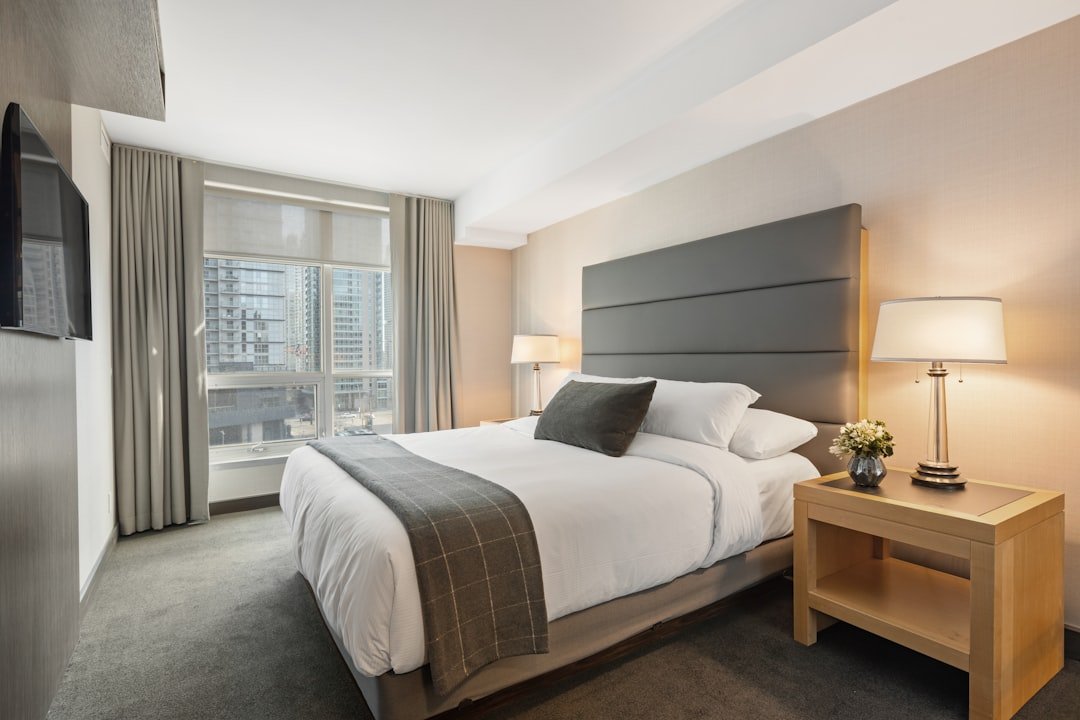
If a window sits low behind the bed, use our headboards for low windows guide before choosing a tall frame that blocks light or access.
2. Protect circulation around the bed
Measure the room and mark the actual bed footprint with painter’s tape. Then open wardrobes, drawers and doors while the tape is down. A layout can look generous on paper but fail once a dresser drawer meets the corner of the mattress.
Think in terms of movement rather than a universal clearance number. The routes you use every day should remain comfortable, especially between the doorway, bed, wardrobe and bathroom.
3. Plan nightstands around what happens at night
A nightstand is useful when it supports the things you actually reach for: a lamp, water, phone, book, glasses or medication. Choose the size around those tasks rather than around matching furniture sets.
Height should feel natural from bed. Test the proposed height with a box or stack of books if you are unsure. The same principle applies to bedside sconces. Their position should support reading and avoid glare rather than follow a decorative formula.
For wall-mounted lighting, see bedside sconce placement.
4. Treat storage as part of the architecture
Bedroom storage works best when frequently used items are easiest to reach. Before buying another chest or cabinet, list what does not currently have a home. Clothing, shoes, spare bedding, laundry, jewelry and seasonal items may need different storage types.
| Storage need | Useful approach |
|---|---|
| Daily clothing | Easy-access drawers, shelves or hanging space near the dressing route. |
| Bulky bedding | Deep under-bed containers, upper wardrobe storage or a dedicated linen zone. |
| Shoes | Low shelves, slim cabinets or closet systems sized to the actual pairs. |
| Small accessories | Shallow drawers, dividers and trays that keep categories visible. |
| Laundry | A hamper placed where clothing naturally comes off, not where it looks most decorative. |
Browse Storage & Organization for closet systems, under-bed storage and other room-specific solutions.
5. Build bedroom lighting in layers
A bedroom needs different light for getting dressed, reading and relaxing. One bright ceiling fixture usually creates an all-or-nothing result.
Use general ambient light for movement, bedside task light for reading, and softer accent light when you want the room to settle in the evening. Where switches and dimming are available, separate control of these layers makes the room far more flexible.
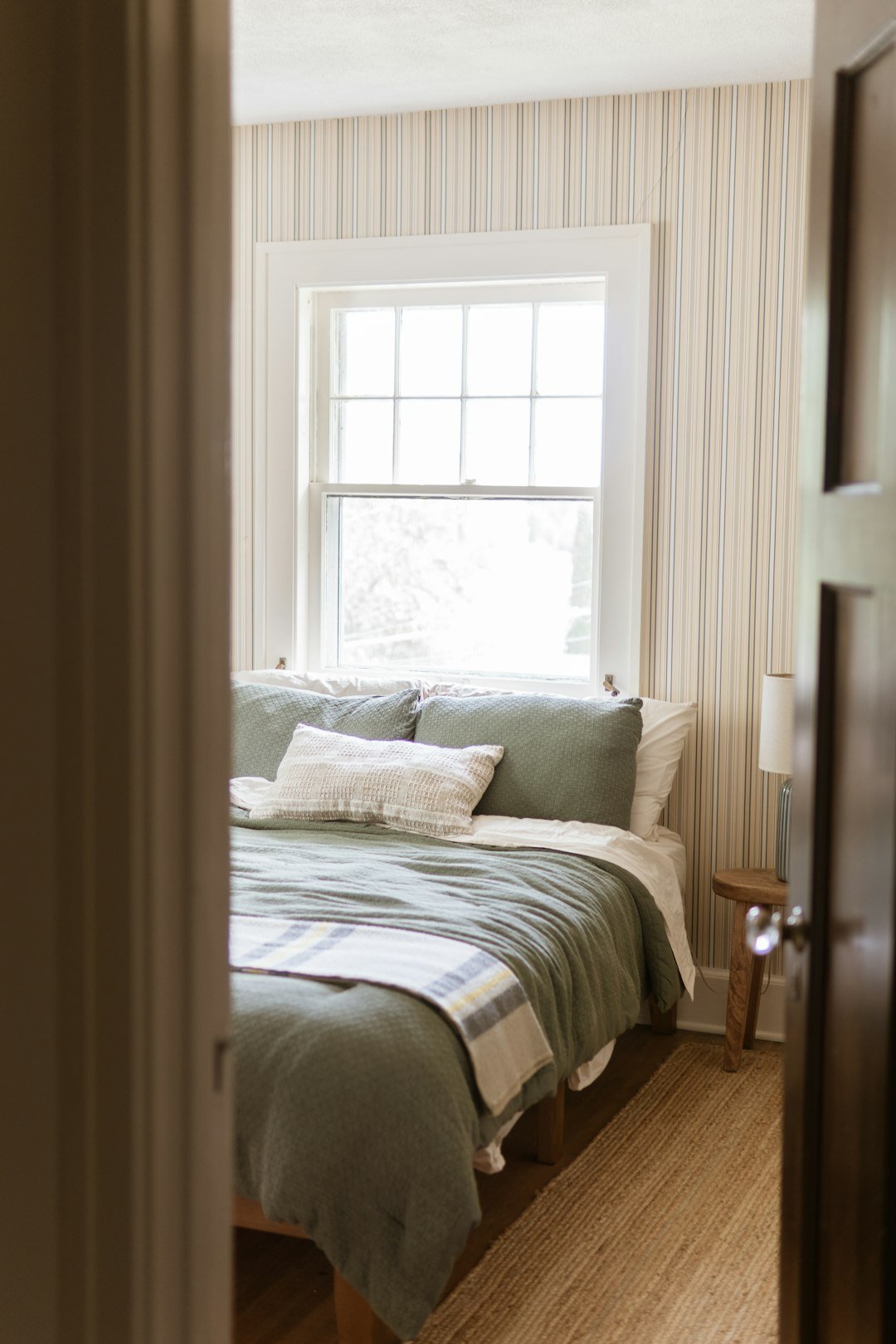
Color temperature, output and glare all matter. A lamp that looks beautiful but shines directly into your eyes from bed is not doing its job.
Explore the Dwelanor lighting library for fixture and placement guidance.
6. Solve daylight, privacy and darkness at the window
Window treatments should be chosen around the room’s real needs. A street-facing bedroom may need privacy throughout the day. A light sleeper may need stronger darkness at night. A sunny room may need glare or heat control.
Layering can be useful when one treatment cannot do everything. For example, a shade can handle privacy and light control while curtains add softness and improve visual scale.
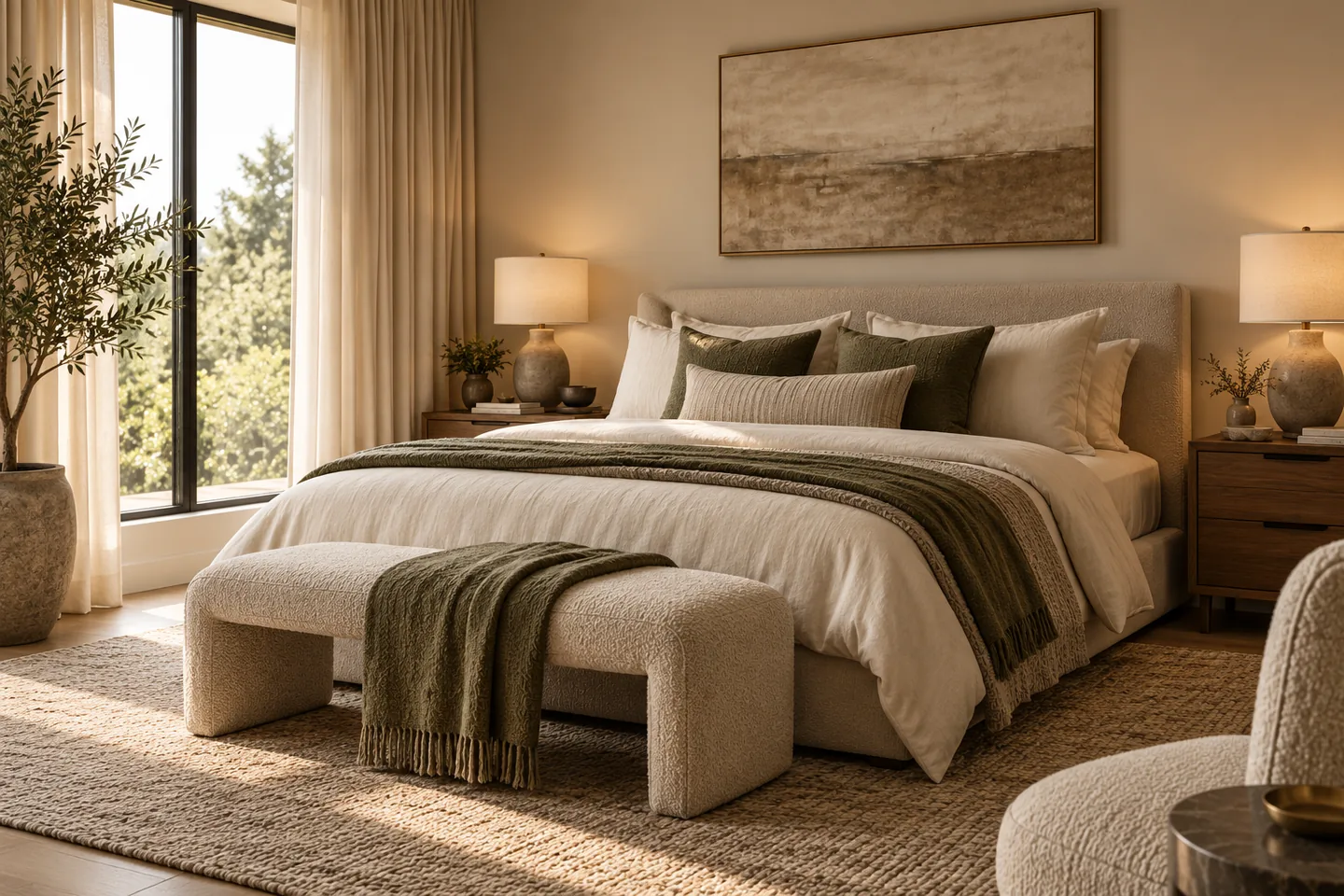
If darkness matters, compare blackout curtains that still look residential and browse the Window Treatments library.
7. Choose the rug after the bed and main furniture
Bedroom rugs should relate to the bed rather than float independently in the room. The right dimensions depend on bed size, nightstands, bench placement and how much soft landing you want around the sides.
Use painter’s tape to test likely rug sizes before ordering. For a king bed, see our king-bed rug sizing guide.
8. Build the bedding from function outward
Start with the sleep layer you actually prefer, then add visual texture without creating a bed that is frustrating to make every morning. Sheets, duvet or quilt, sleeping pillows and perhaps one or two decorative layers are enough for many rooms.
The bed looks more considered when the textiles share a restrained palette but vary in texture. Linen, cotton, wool, quilted surfaces and a soft throw can create depth without requiring multiple patterns.
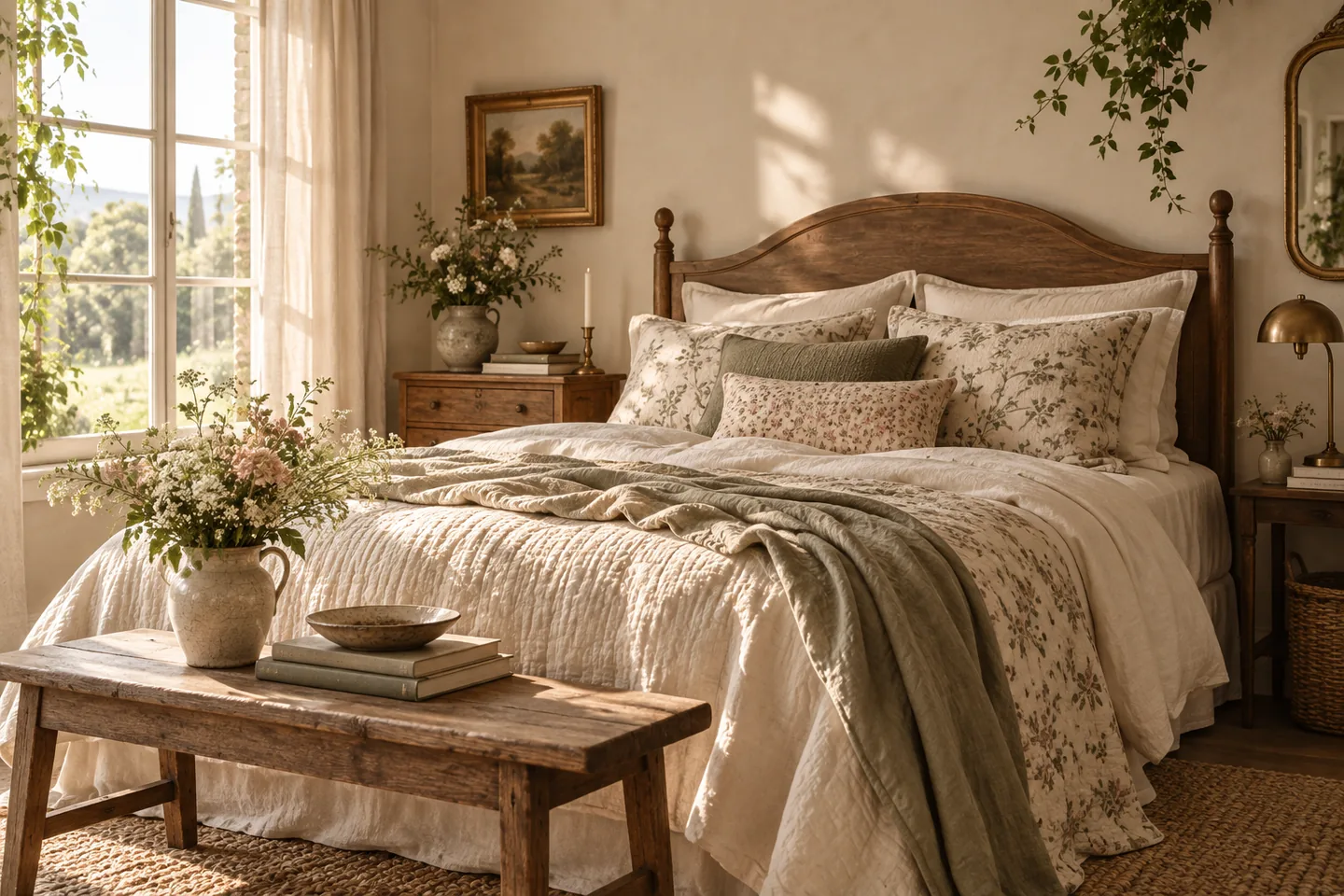
If you want a hotel-like result, use our luxury hotel bedroom guide. For duvet selection, see how to choose a duvet insert.
9. Use color to support the atmosphere you want
Bedroom color is not only about whether a shade is fashionable. Consider natural light, existing floors, furniture, bedding and the mood you want at night.
Warm whites, muted greens, soft blues, clay tones and deeper enveloping colors can all work. What matters is consistency. Repeat the main color family across a few different surfaces rather than introducing a new accent in every object.
10. Add art where it strengthens the room
The bed wall is a natural place for artwork because the bed already anchors the composition. One larger work, a pair or a compact group can all succeed when the scale relates to the headboard and wall.
Other useful art zones include above a dresser, beside a reading chair or on the wall seen from bed. Avoid filling every blank area. Negative space helps the room feel calmer.
11. Make small bedrooms work harder
In a compact room, every piece should justify its footprint. Wall-mounted bedside lighting can release table space. A storage bed can absorb bulky items. A small dresser can double as a nightstand when the layout allows it.
Do not solve a small bedroom by pushing furniture against every wall. A little breathing room around the main pieces can make the room feel more deliberate even when the total floor area is limited.
For rentals, see how to make a rental bedroom look more considered without permanent changes.
12. Edit the room before buying more decor
Bedrooms collect visual noise quickly because clothes, cables, beauty products, books and laundry all compete with decorative objects. Before adding accessories, remove or relocate anything that does not need to be visible.
Then add a small number of useful finishing pieces: a lamp, artwork, mirror, tray, plant or textile. The room should still feel easy to reset at the end of the day.
Bedroom checklist
- The bed sits on the strongest workable wall.
- Doors, drawers and wardrobes open without collisions.
- Both the sleeping and dressing routes are comfortable.
- Bedside surfaces support real nighttime needs.
- Lighting works for dressing, reading and relaxing.
- Window treatments address privacy and darkness.
- The rug relates to the bed and furniture group.
- Storage matches what you actually own.
- Bedding is comfortable first and decorative second.
- Color and artwork support one coherent mood.
Explore bedroom ideas by mood and style
Once the layout works, the style layer becomes much easier. Browse cottagecore bedroom ideas, hotel-inspired bedrooms, or start with Dwelanor’s style framework if you are still deciding what feels right.
Take the bedroom from plan to atmosphere

Use lighting, bedding, rugs, art and color to shape the mood after the layout works.
Make the room feel more finished with reversible lighting, textiles, curtains and furniture.
Build a calmer, more polished bedroom through order, lighting and layered bedding.