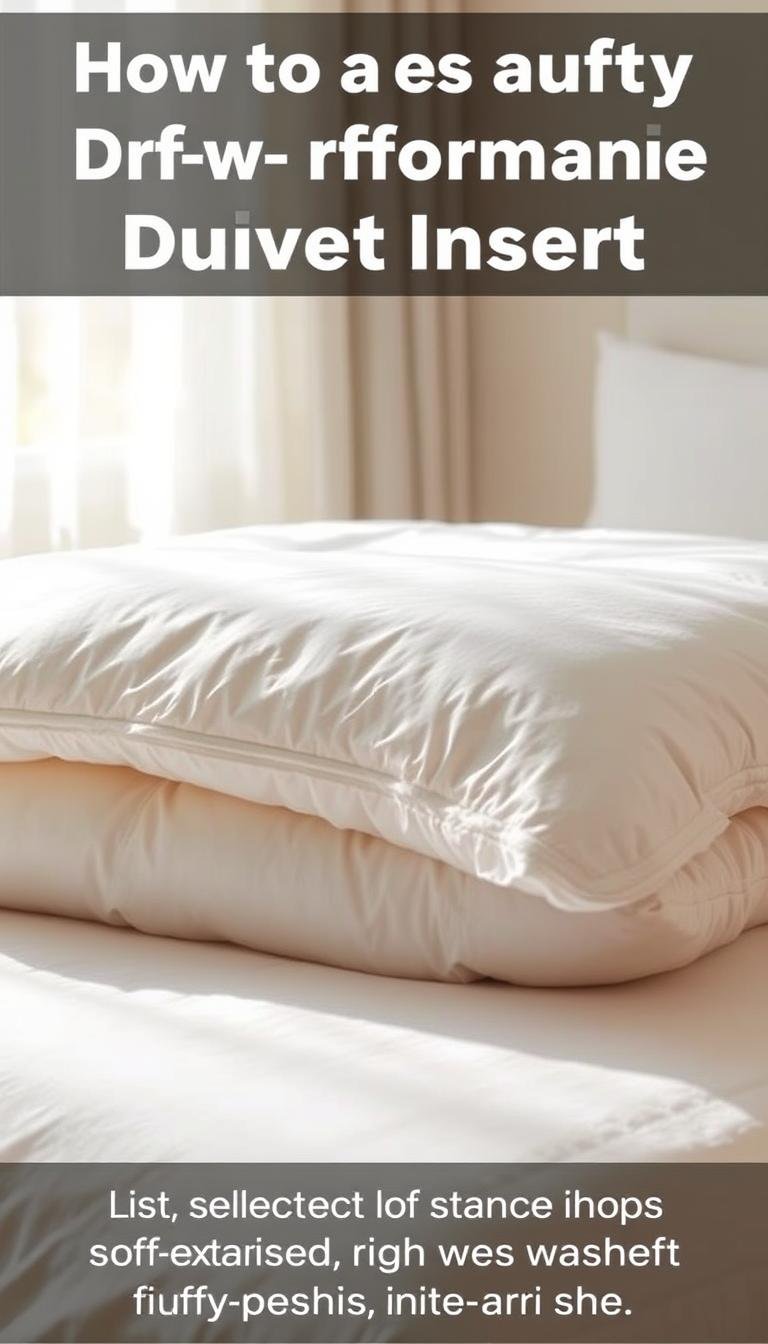
A duvet insert stays fluffy longer because of its fill quality, internal construction, shell fabric and care—not because any product can guarantee the same loft after an arbitrary number of washes. If you want bedding that still looks full after years of use, focus on those four things.
The most useful buying questions are simple: What is the fill? How is it contained? How breathable and durable is the shell? How easy is it to wash and dry completely?
What keeps a duvet insert from going flat?
1. Fill quality
Down can provide high loft with relatively little weight. Down-alternative fills can be easier to wash and may suit people who prefer synthetic materials. Wool and silk behave differently again, with more emphasis on temperature regulation than cloud-like loft.
No fill type is automatically “best.” What matters is whether it suits your room temperature, care habits and preferred feel.
2. Internal construction
Baffle-box construction creates internal compartments that give the fill room to loft while limiting migration. Sewn-through construction is lighter and often suitable for warmer climates or thinner inserts, but it usually creates flatter seams.
3. A durable shell
A tightly woven shell helps keep fill contained and protects the inside from abrasion. Cotton percale is crisp and breathable; cotton sateen feels smoother and slightly warmer. Blends can add durability and easier care.
4. Sensible care
A duvet cover reduces how often the insert itself needs washing. That matters because every wash and dry cycle adds mechanical wear. Follow the care label, use a machine large enough for the insert to move freely, and make sure it is completely dry before putting it back on the bed.
Baffle box vs. sewn-through
| Construction | Best suited to | Main trade-off |
|---|---|---|
| Baffle box | Loftier, warmer inserts | Usually heavier and more expensive |
| Sewn-through | Lighter inserts and warm rooms | Less loft at stitched seams |
If long-term loft is a priority, baffle construction is generally the more useful feature to compare. But stitching quality and fill distribution still matter more than the marketing name alone.
How to choose the fill
Down
Down can deliver a lot of loft for relatively little weight. Compare fill power, fill weight, sourcing information and construction rather than assuming a higher number always means a better duvet for every sleeper.
Down alternative
Polyester clusters and other synthetic fills can be practical for frequent washing and often cost less. Better versions use clustered or shaped fibers designed to resist matting.
Wool
Wool is naturally springy and useful for temperature regulation, but it does not create the same puffy visual effect as a high-loft down insert.
Silk and lightweight natural fills
These suit sleepers who prefer less bulk and a lighter feel. They are not the obvious choice if the goal is a thick hotel-style bed.
What hot sleepers should look for
Choose the lightest warmth level that still feels comfortable in your room. Shell breathability matters, and a heavily filled “all-season” duvet may simply be too warm if your bedroom runs hot.
Ignore vague “cooling” claims unless the manufacturer explains the materials and construction behind them.
How to get a hotel-style look
The polished hotel effect comes from even loft, good proportions and tidy bedding rather than one specific brand. A full-looking insert inside a properly sized cover, crisp edges and balanced overhang will do more for the appearance than a long list of luxury labels.
Size matters
Compare the actual insert dimensions with the duvet cover and mattress, because “queen” and “king” dimensions can vary between brands. A deeper mattress may look better with a slightly larger insert if you want more side drape.
For shared beds, a larger insert can also reduce tugging, but check that the cover matches the larger dimensions rather than forcing an oversized insert into a smaller shell.
Corner loops and tie points
Corner loops help keep the insert aligned inside the cover. On larger beds, extra side loops can reduce shifting even further. Reinforced attachment points are a small detail, but they make everyday use noticeably easier.
How to judge value without chasing a price cutoff
Price changes constantly. Construction quality is more durable information.
Compare:
- fill type and stated warmth level;
- baffle or stitch construction;
- shell fabric;
- corner loops or securement points;
- care instructions;
- return policy and warranty;
- current material or sourcing certifications where relevant.
This is also where future affiliate recommendations should live: as a replaceable product module based on current specifications, not as a permanent list of “winners.”
Care routine that protects loft
- Use a washable duvet cover so the insert needs less frequent cleaning.
- Follow the insert’s care label.
- Use a machine large enough for the insert to move freely.
- Use a gentle cycle and mild detergent where machine washing is allowed.
- Dry on the recommended heat setting and pause occasionally to redistribute the fill.
- Do not store the insert while any dampness remains.
For a bulky king-size insert, a commercial-size machine may be safer than overloading a home washer or dryer.
The simplest way to choose
If you want maximum loft, compare high-quality fill with baffle-box construction and a durable breathable shell. If you wash bedding frequently, prioritize realistic care instructions and a fill that handles that routine well.
There is no useful reason to promise “50 washes.” Buy the construction that suits your sleep habits, protect it with a cover, and care for it properly.
For more bedroom planning, see our guide to storing bulky comforters under the bed, the rental bedroom guide, luxury hotel bedroom guide, and the Dwelanor Room Guides.