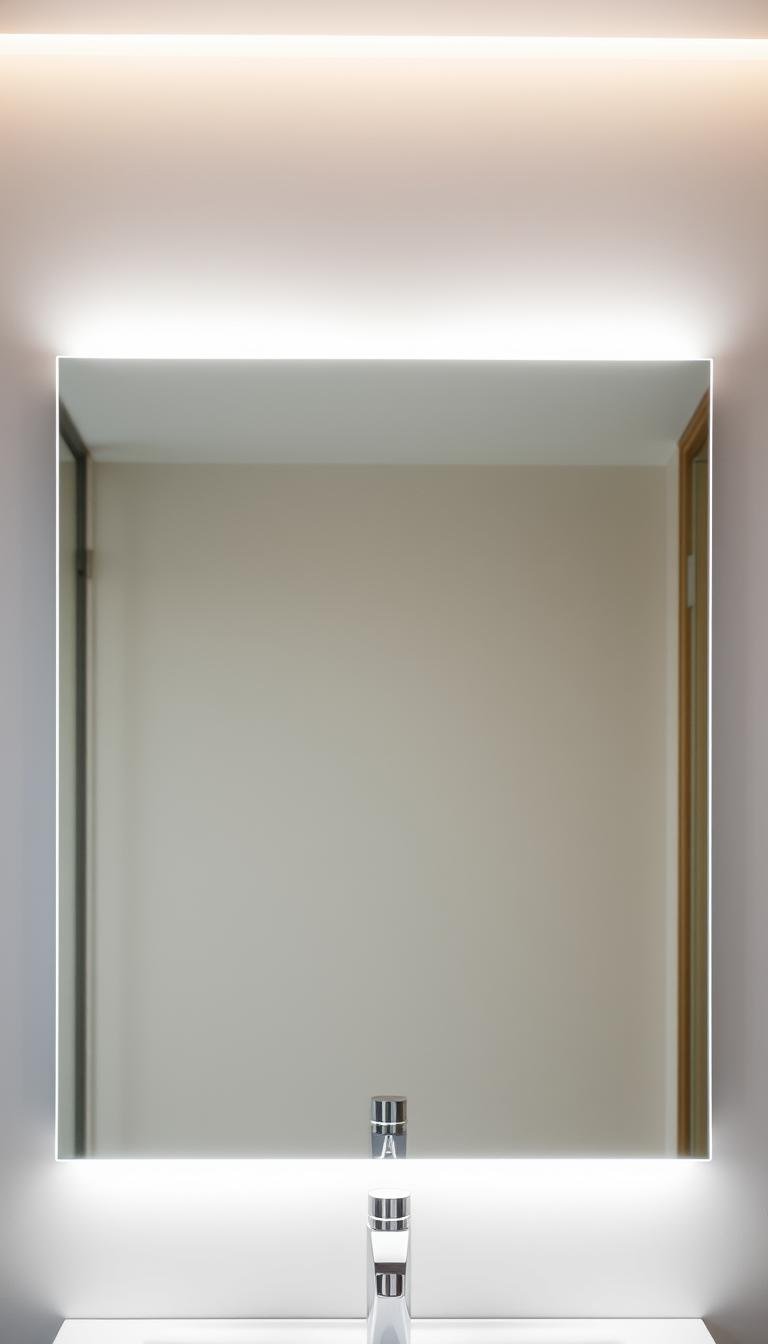
A good anti-fog smart mirror should be chosen first as a bathroom electrical fixture and second as a gadget. The useful features are straightforward: reliable defogging, even task lighting, controls you can understand, and installation that is approved for the mirror’s actual location.
Key takeaways
- Look for a built-in defogging system with clear operating instructions and an automatic shutoff if available.
- Choose lighting for grooming quality, not just brightness or decorative RGB effects.
- Verify the product’s electrical certification and manufacturer-approved bathroom location.
- Do not use a generic IP number as permission to install a mirror in a shower or splash zone; follow the product instructions and local electrical requirements.
- For hardwired mirrors, use a qualified electrician unless the manufacturer and local rules explicitly allow the work you plan to do.
How anti-fog mirrors work
Bathroom mirror fog forms when warm, humid air condenses on cooler glass. Many powered anti-fog mirrors use a heating element behind part of the glass to keep that area warm enough to reduce condensation. Some products use surface treatments instead.
The important comparison is not a claimed universal warm-up time. Check how large the heated area is, whether the defogger has a timer or separate control, and what the manufacturer says about continuous operation.
Lighting matters more than novelty features
For shaving, skin care and makeup, even illumination and useful color-temperature options are more valuable than speakers or decorative effects. Look for dimming that remains usable at low levels and lighting that does not create harsh shadows across the face.
If color accuracy matters, check whether the manufacturer publishes a color-rendering specification rather than relying on marketing language such as “true color.”
Smart controls: useful versus optional
Memory settings, separate light and defogger controls, and a clearly visible on/off state can make daily use easier. Bluetooth audio, app control and voice integration are optional conveniences, not reasons to compromise on electrical suitability or lighting quality.
Before buying an app-connected model, also check whether core functions still work from the mirror itself. A bathroom mirror should remain usable if an app, Wi-Fi connection or cloud service changes.
Installation and bathroom electrical safety
Powered mirrors vary widely: some are supplied with a plug, some are designed to be hardwired, and some support either method. Use only the installation method described by the manufacturer.
Do not choose a mounting location from a generic rule such as “IP44 near a sink” or “IP65 in a wet zone.” Bathroom electrical zones, receptacle protection and permitted fixture locations depend on the product, the installation, local electrical rules and the authority having jurisdiction.
- Check the exact model’s listing or certification information.
- Confirm required clearances from tubs, showers and other water sources.
- Plan the electrical connection before mounting so cords are not improvised around water.
- Do not recess a mirror until you know what plumbing, wiring or ventilation components are inside the wall.
- Use the supplied mounting system and respect the wall and fastener requirements for the mirror’s weight.
Choose the size from the vanity and sightline
There is no universal mounting height that works for every household. Start with the vanity width, faucet height, backsplash, lighting and the eye level of the people who use the room. Tape the outline on the wall before ordering if the proportions are uncertain.
For double vanities, one large mirror or two separate mirrors can both work. Choose based on sink spacing, lighting placement and the wall composition rather than a fixed design rule.
What to compare before buying
| Feature | What to verify |
|---|---|
| Defogging | Heated area, control method, timer/auto-off, manufacturer operating guidance |
| Lighting | Dimming range, color-temperature options, published color-rendering data if relevant |
| Electrical | Plug-in or hardwired method, certification/listing, approved installation location |
| Mounting | Weight, wall requirements, orientation, supplied brackets |
| Smart features | Whether essential functions still work without an app or network connection |
Bottom line
The best smart mirror is the one that fits the vanity, gives useful grooming light, clears the part of the glass you actually use, and can be installed exactly as its manufacturer intends. Treat speakers, RGB lighting and app control as extras after those fundamentals are satisfied.
How this fits into the bathroom system
The useful entities are mirror size, vanity width, defogger, LED lighting, color rendering, electrical connection, mounting hardware, bathroom location and user controls. Decide size and sightlines first, then compare powered features.
Continue with our 48-inch vanity mirror sizing guide, bathroom mirror style guide, tiny bathroom spa ideas, and the Dwelanor Room Guides.