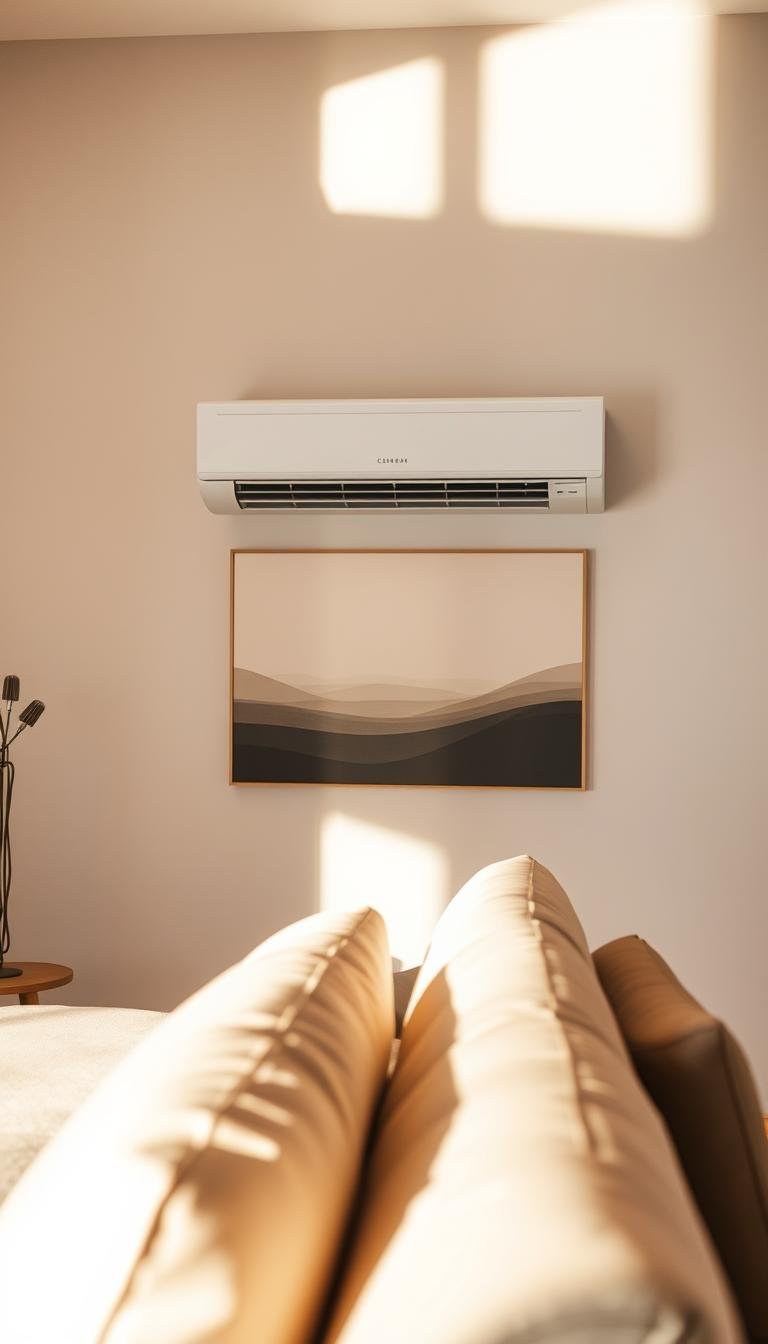
A wall-mounted mini-split should usually be disguised by styling the wall around it, not by placing artwork or a decorative box directly over the unit. The indoor head needs unobstructed intake and discharge airflow, filter access, sensors, and room for service.
Clearance requirements vary by manufacturer and model, so use the installation and service documentation for the exact unit on your wall. If a decorative element would sit in the airflow path or make the front panel harder to open, skip it.
The safest ways to make a mini-split less noticeable
- Build a gallery composition around it. Use artwork beside or below the unit so the eye reads the whole wall instead of the appliance alone.
- Reduce contrast. A wall color close to the unit casing can help it visually recede.
- Tidy the line set. Use a compatible line-set cover or raceway where appropriate.
- Add shelving outside the clearance zone. Shelves can balance the composition as long as they do not obstruct intake, discharge or service access.
- Use furniture and lighting to shift the focal point. A stronger visual feature elsewhere in the room can make the unit feel less dominant.
Why covering the unit is risky
The wall-mounted indoor head is part of the air path. It pulls room air through the intake and sends conditioned air back through the discharge louvers. A solid art panel, cabinet door, fabric cover or decorative screen can alter that flow even when it looks “open” enough.
Restricted airflow can reduce performance and may create operating problems. It can also make filter cleaning and service more difficult. Do not assume a slatted, perforated or hinged cover is safe simply because air can pass through it; use only arrangements specifically permitted by the equipment manufacturer.
Start with the exact model manual
Before changing the wall around the unit, find the model number and check:
- required clearances above, below and to each side;
- the intake and discharge locations;
- how the filter and front panel open;
- sensor locations;
- service access requirements;
- any manufacturer guidance about nearby shelves, cabinetry or decorative enclosures.
There is no universal “6-inch” or “8-inch” rule that applies to every mini-split. The exact documentation for the installed unit is the relevant source.
Use artwork around the mini-split, not over it
A gallery wall is one of the easiest visual fixes because it changes the composition without touching the equipment. Instead of centering one large artwork over the unit, arrange several pieces so the mini-split becomes one horizontal element among other shapes.
Keep every frame outside the required clearance and airflow zones. Leave enough room to remove the front panel and filters without taking down half the wall.
Make the layout feel deliberate
Align nearby frames with shelves, windows or furniture rather than trying to match the mini-split exactly. Repeating one frame finish or a restrained color palette helps the wall feel cohesive.
Reduce contrast with wall color
A bright white indoor unit can stand out strongly on a dark wall. If repainting fits the room, a lighter wall color closer to the casing can reduce that contrast without modifying the equipment.
Do not paint the mini-split housing unless the manufacturer specifically permits it. Paint can interfere with labels, seams, sensors, filters or service access.
Make the line set look intentional
Visible refrigerant and drain lines can attract more attention than the indoor head itself. A manufacturer-compatible or purpose-made line-set cover can create a cleaner vertical or horizontal run.
Do not conceal joints, drain problems or damaged insulation inside a decorative box simply to improve appearance. If the line set needs repair or rerouting, use a qualified HVAC technician.
Can shelving help?
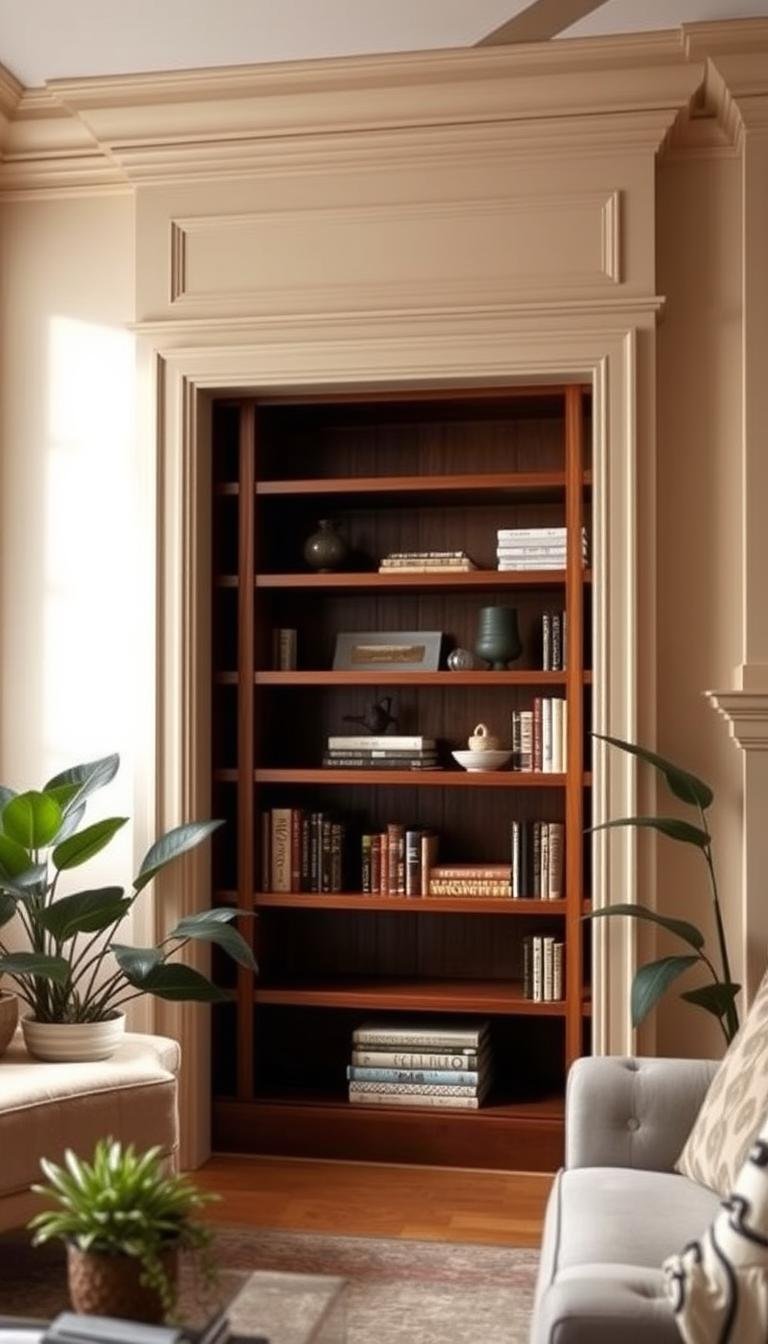
Yes, but only when the shelf sits outside the unit’s required clearances and discharge pattern. A shallow shelf well below the unit can visually anchor the wall, while a bookcase beside it can balance the composition.
Avoid shelves directly above an intake or directly in front of the discharge unless the manufacturer explicitly allows that placement. Also preserve access to the electrical disconnects, line set and any service points associated with the system.
What about plants?
Plants can soften the wall visually, but leaves should not drift into the intake or discharge. Avoid hanging plants where watering could expose the unit, electrical components or wall penetrations to moisture.
When a decorative panel might be acceptable
Only consider a movable panel, cabinet or screen if the exact mini-split manufacturer explicitly permits that arrangement and you can meet every stated clearance, airflow and service requirement.
Do not rely on a home test such as “the room still feels cool” or “the fan sounds normal.” That does not establish that the unit is operating within its intended conditions.
Service access matters
Filters need routine access, and technicians may need to open the front panel, remove the casing or reach the line connections. A decorative treatment that turns a simple service call into a carpentry project is a poor trade.
Plan the wall so the equipment remains easy to inspect and maintain. Removable artwork beside the unit is far easier to manage than a custom enclosure built around it.
A simple design plan
- Find the exact model number and read its clearance and service requirements.
- Mark the required clear zones lightly on the wall.
- Choose a visual strategy that stays outside those zones: gallery wall, paint, shelving or a stronger focal point elsewhere.
- Tidy visible line-set covers if needed.
- Check that filters and service panels remain fully accessible.
- Have an HVAC professional review the idea if you are unsure whether a nearby shelf or built-in affects airflow.
What to avoid
- Solid artwork directly over the indoor head.
- DIY slatted or perforated boxes without manufacturer approval.
- Universal clearance numbers copied from another mini-split model.
- Painting or wrapping the unit casing without explicit approval.
- Blocking the filter panel, sensors, intake or discharge.
- Using a decorative enclosure to hide a leak, drainage problem or damaged line insulation.
The simplest answer
If you want the mini-split to disappear visually, make the wall around it more intentional. A coordinated gallery composition, lower-contrast wall color, tidy line-set cover and carefully placed shelving can reduce its visual impact without interfering with the equipment.
Do not place art or a decorative cover directly over the unit unless the manufacturer specifically permits it. Airflow and service access come first.
How the mini-split fits into the wall composition
The useful entity chain is mini-split indoor head → intake/discharge → manufacturer clearances → service panel/filter → line set → wall color → artwork/shelving → room focal point. The décor should work around the equipment, never turn the equipment into a concealed cabinet.
For related wall planning, see our gallery-wall frame guide, cordless picture-light guide, home decor style guide, and small living room guide.