No peel-and-stick wallpaper can guarantee clean removal after five years on every wall. The result depends on the wallpaper adhesive, the paint underneath, how fully that paint cured, wall texture, humidity, heat and the way the material is removed.
If clean removal matters—especially in a rental—start with the wall, not the brand name. Check the maker’s approved surfaces, paint-cure requirements, installation instructions and removal method, then test a sample on the actual wall before covering a room.

What actually determines clean removal
Removable wallpaper performs best on smooth, sound, well-cured painted surfaces. The risk of paint lift, residue or poor adhesion rises when the wall is:
- freshly painted and not fully cured;
- chalky, peeling or poorly bonded;
- heavily textured;
- regularly damp or exposed to steam;
- very hot or in strong direct sun;
- finished with a paint or coating the wallpaper maker does not approve.
A small sample will not predict what happens after many years, but it can reveal immediate incompatibility before you spend on full rolls.
Compare the technical information, not the “renter-safe” label
Useful product pages should tell you:
- which wall finishes and substrates are approved;
- how long new paint should cure;
- whether primer is recommended;
- whether the material can be repositioned during installation;
- how it should be cleaned;
- how it should be removed;
- whether samples use the same material and adhesive as the full product.
If a company says only “removable” or “renter friendly” without explaining the surface requirements, treat that as a reason to be cautious.

Material thickness affects installation more than removal certainty
A thicker wallpaper can be easier to handle because it is less likely to fold onto itself or stretch while being positioned. That can make seams easier to manage, especially for a first project.
But thickness alone does not tell you whether it will peel cleanly later. Adhesive chemistry, paint condition and the wall surface matter more.
Choose a forgiving pattern if this is your first project
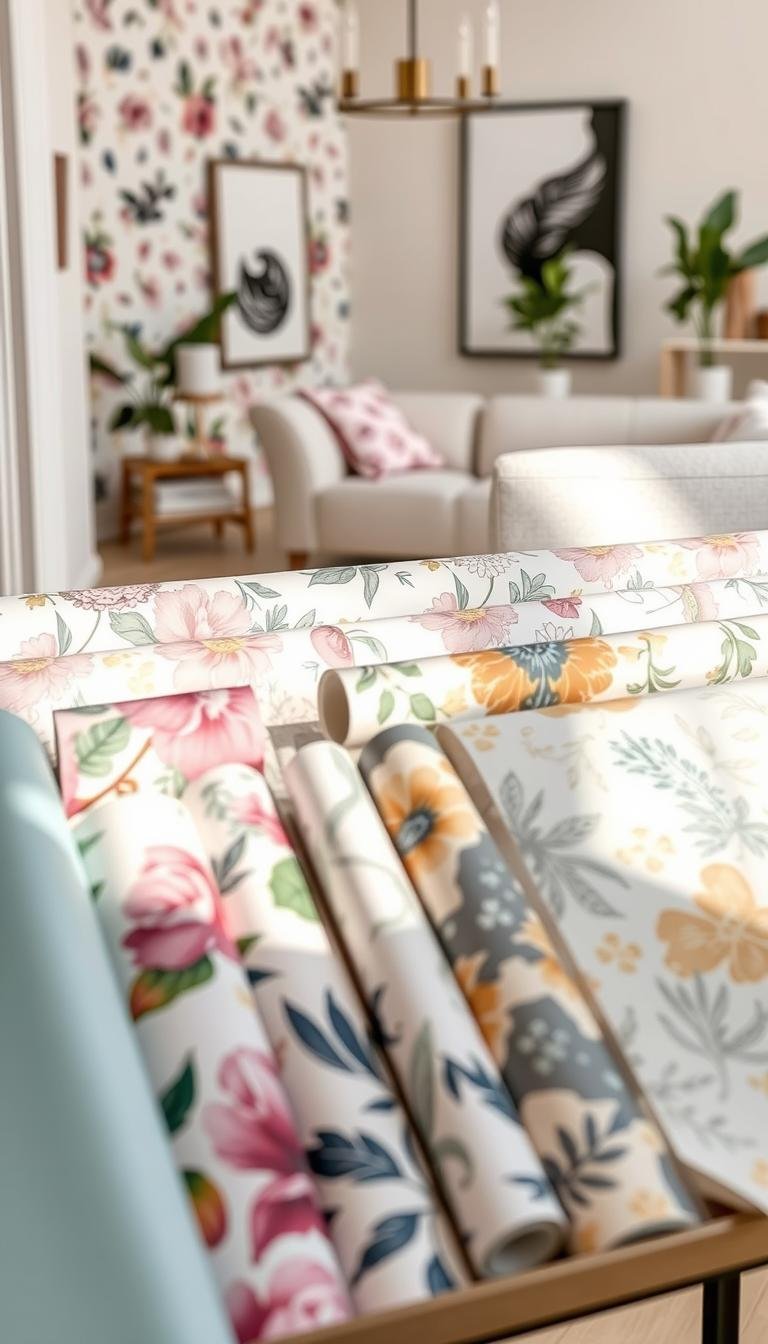
Loose florals, organic patterns, abstract motifs and irregular repeats are generally easier to install than stripes, grids and large geometrics. Tiny alignment errors are much less obvious when the pattern does not depend on perfectly straight continuous lines.
A dense or varied pattern can also disguise small wall imperfections better than a large pale field.

How much wallpaper should you order?
Measure the height and width of every wall section you plan to cover, then check the roll or panel dimensions and the pattern repeat.
Pattern matching creates waste, especially with large repeats. Instead of applying a universal percentage to every project, use the manufacturer’s calculator where available and add enough extra material for cuts, matching and a future repair.
Order all of the material for one wall at the same time so you reduce the chance of visible variation between production runs.
Wall preparation matters
Follow the wallpaper manufacturer’s preparation instructions rather than using a homemade universal cleaning or sanding routine.
In general:
- repair loose or damaged paint first;
- clean the wall using the method approved for the paint and wallpaper;
- allow the surface to dry completely;
- wait for new paint to cure for the period specified by the wallpaper maker;
- remove outlet and switch plates before installation where safe to do so;
- mark a level starting line so the first panel is straight.
Do not casually sand old painted walls without considering lead-paint risk in pre-1978 housing. If old paint may be disturbed, use lead-safe guidance or a qualified professional.
Installation: slower is usually better
Peel back only a manageable section of the backing, align the top and smooth the material gradually from the center toward the edges. Keeping most of the adhesive covered until you need it reduces the chance of the sheet folding onto itself.
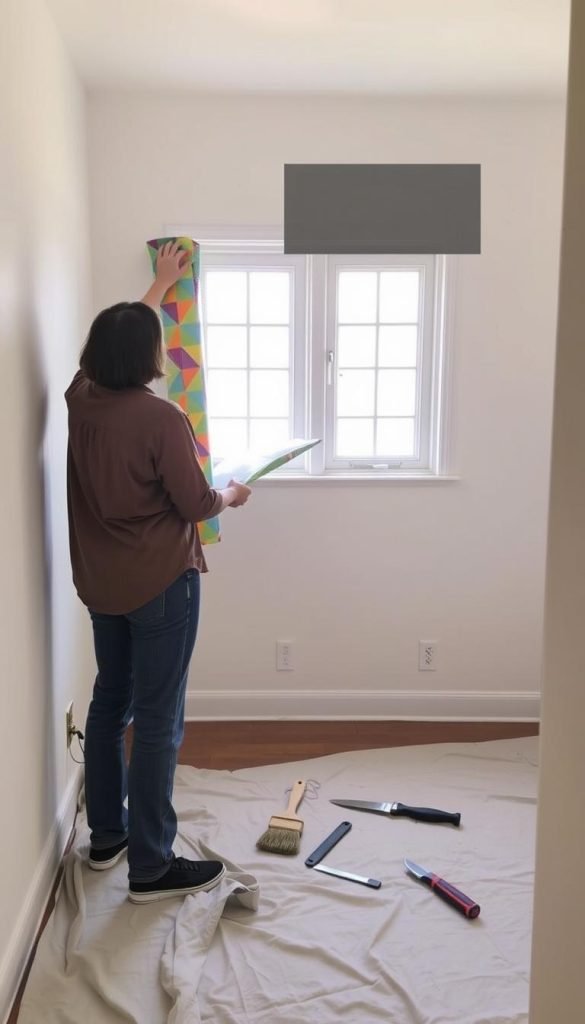
Use the smoothing tool recommended by the manufacturer and avoid adding water, extra adhesive or other installation aids unless the product instructions specifically allow them. Altering the adhesive system can change both adhesion and future removal.
Where peel-and-stick wallpaper makes the most sense
Bedrooms, living rooms, dining rooms and home offices are usually straightforward candidates when the paint is compatible and fully cured.
Bathrooms, kitchens and laundry rooms need more checking because humidity, splash and heat can change adhesive performance. Use the product only where the manufacturer approves those conditions.
Bookshelf backs and smooth furniture panels can also work well, but again, confirm the substrate is approved. Laminates and furniture finishes can react differently from painted drywall.
How to reduce risk in a rental
- Check the lease before installing any wall covering.
- Photograph the wall condition before installation.
- Test a sample in an inconspicuous area.
- Keep the manufacturer’s removal instructions.
- Remove slowly, at the angle and temperature the maker recommends.
- Stop if paint begins lifting rather than pulling harder.
“Removable” means the product is designed to come off more easily than traditional wallpaper. It does not mean every landlord, paint finish or wall will behave perfectly.
How future product recommendations should work
This article is a natural place for affiliate recommendations later, but products should be compared on current specifications: approved wall types, material, repositioning, sample availability, pattern repeat, cleaning guidance and removal instructions.
That lets the product section change as brands and formulas change while the core article remains accurate.
The safest way to choose
Start with the wall you actually have. Verify the paint condition and age, check the wallpaper manufacturer’s surface requirements, order a sample and test it.
Once compatibility looks good, choose the pattern, material and price point you prefer. Clean removal is the result of the substrate, paint film, primer, adhesive, wall texture, humidity and removal method working together—not a five-year guarantee printed on a product page.
How this fits into a wall-finish plan
Peel-and-stick wallpaper is one wall-finish option, not a substitute for sound paint or repaired drywall. The same wall may need different treatment depending on whether the priority is reversibility, stain concealment, moisture tolerance or long-term durability.
If the problem is everyday marks rather than future removal, compare our wallpaper guide for homes with kids. For renter-friendly rooms, see the rental bedroom guide; for wet-area surface decisions, compare the peel-and-stick bathroom tile guide; and use the Dwelanor Room Guides to move between related spaces.