
A rental can feel finished and personal without pretending that every surface is yours to alter. Start with the lease, then focus on high-impact reversible layers: furniture layout, rugs, lamps, curtains, textiles, art and storage.
The useful sequence is lease and constraints → layout → lighting → rugs → window treatments → textiles → wall decor → storage → temporary finishes.
1. Read the lease before planning changes
Check rules for drilling, painting, adhesive products, curtain hardware, electrical changes, balconies and alterations. Building rules can be stricter than the lease in apartments and managed properties.
Get written permission where a change requires it. A reversible product is not automatically landlord-approved or safe for every surface.
2. Fix the layout before buying decor
Rental rooms often come with awkward dimensions, limited outlets and fixed finishes. Use those constraints as the starting point. Protect circulation and place the largest furniture before adding small pieces.
Use the Small Space Design Guide and Furniture Sizing Guide when the floor plan is tight.
3. Portable lighting is one of the highest-impact changes
Floor lamps, table lamps and plug-in or rechargeable fixtures can create a much warmer room than relying on one ceiling light. Place light near the activities it supports and use several lower sources when possible.
Do not alter fixed wiring casually. If you need new electrical work, follow the lease and use qualified installation. See the Home Lighting Guide.
4. Use rugs to redefine floors you cannot change
A well-sized rug can cover unattractive flooring, define a seating zone and add softness. Choose the rug around the furniture arrangement, not simply the room dimensions.
Use the Rug Size Guide, Area Rug Guide and Rug Pad Guide. Check pad compatibility with the existing floor finish before use.
5. Treat curtains as movable architecture
Curtains can change the apparent scale of a window, soften a room and add privacy. When drilling is allowed, a properly installed rod often gives the most reliable result. When it is not, use a product designed for the opening and fabric weight rather than improvising heavy no-drill systems.
See the Curtain Size & Placement Guide and Window Treatment Guide.
6. Upgrade a bedroom through layers, not construction
Bedding, lamps, curtains, a rug and a well-placed mirror can transform a rental bedroom without touching fixed finishes. Start with the bed and lighting, then add textiles and art.
For a complete example, see how to make a rental bedroom feel more finished and the Bedroom Design Guide.
7. Hang art without overpromising adhesive systems
Removable strips and hooks can work on compatible surfaces within their published instructions, but wall paint, texture, preparation and load all matter. Do not assume an adhesive will remove cleanly from every painted wall.
Use the Wall Decor Guide and Gallery Wall Guide. For heavier frames, compare the exact hanging system and lease requirements.
8. Mirrors add scale without permanent construction
A large mirror can redirect existing light and create a stronger focal point. Freestanding and leaning mirrors avoid some wall work but still need stabilization according to the manufacturer’s instructions.
See the Mirror Guide.
9. Freestanding storage usually beats custom built-ins
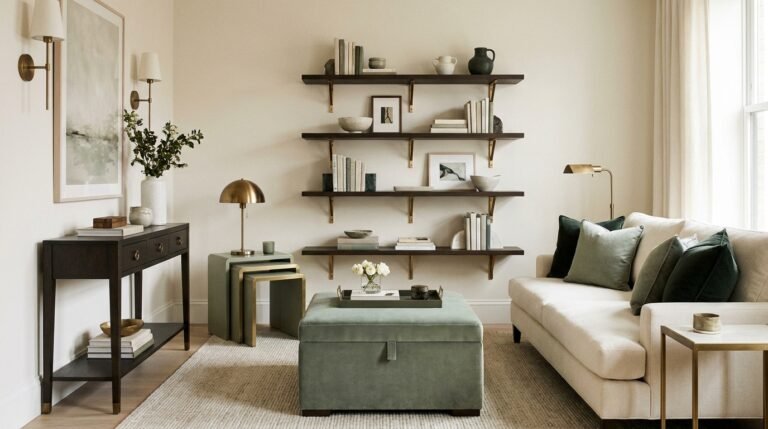
Bookcases, wardrobes, modular shelves, rolling carts and storage benches can solve real problems and move to the next home. Choose pieces by the objects they need to hold and the room’s circulation.
Use the Storage & Organization Guide.
10. Peel-and-stick products need surface testing
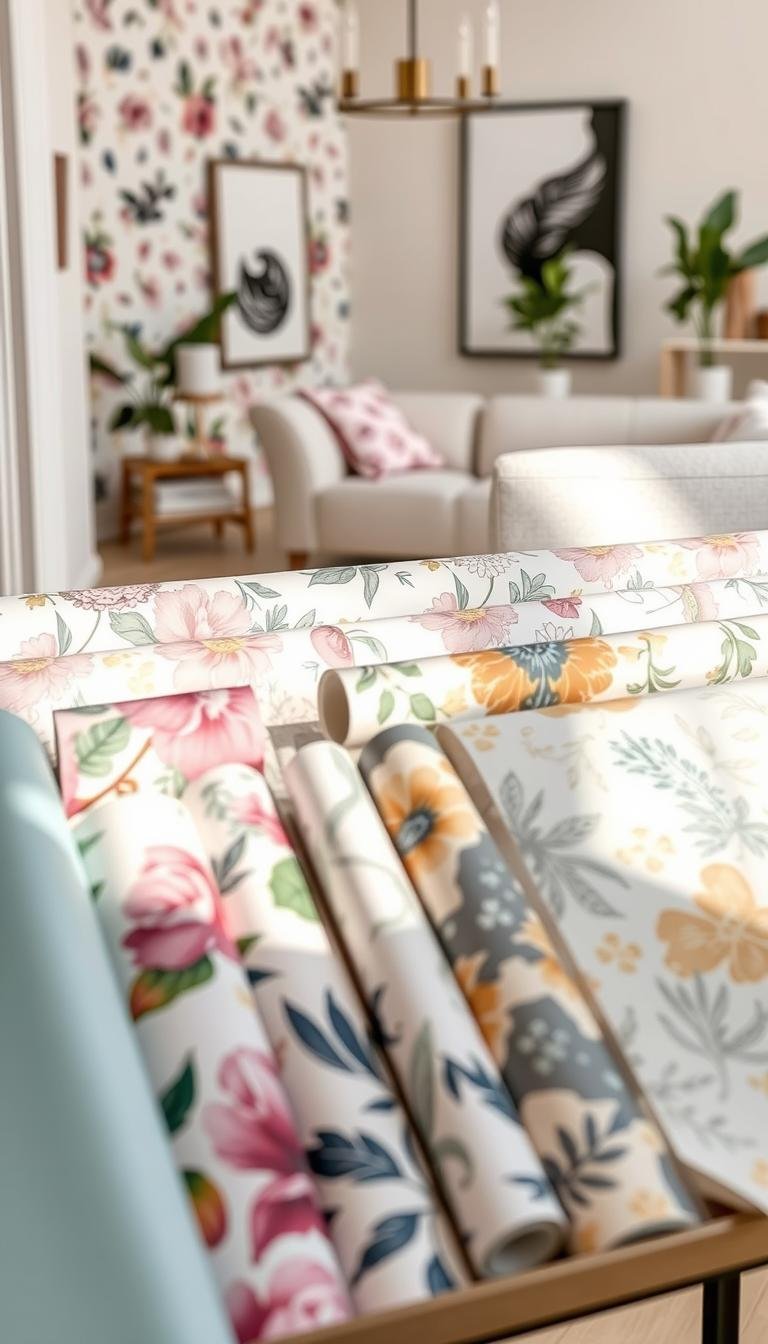
Removable wallpaper, tile films and adhesive products vary by manufacturer, surface condition and length of installation. A product marketed as removable can still damage weak paint, leave residue or behave differently in heat and humidity.
Test a sample in an inconspicuous area and follow the exact removal instructions. Avoid covering surfaces where moisture, heat or safety requirements make the product unsuitable.
11. Work with fixed kitchen and bathroom finishes
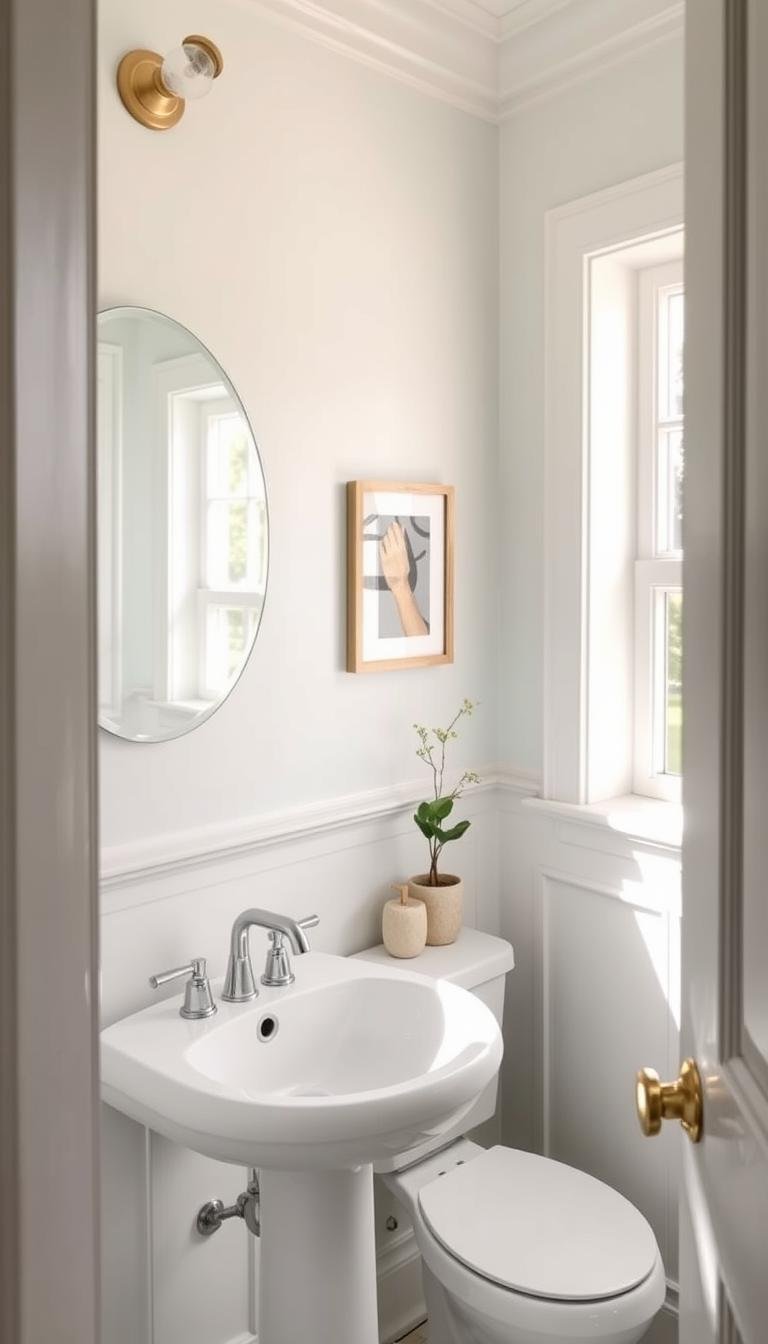
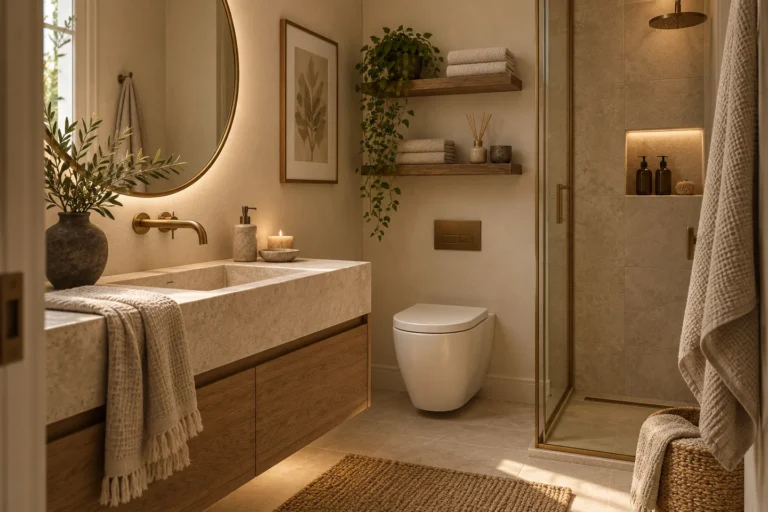
When cabinets, tile and worktops cannot change, coordinate the movable elements instead: runner rugs, towels, trays, stools, lamps, art and storage. Repeating a few colors or materials can make mismatched fixed finishes feel more intentional.
Use the Interior Color Palette Guide to build around what cannot be changed.
12. Buy fewer rental-specific products
The best purchases are usually the ones that remain useful after moving. A good lamp, rug, mirror, side table or piece of art can adapt to another home. Highly specific temporary gadgets often solve a smaller problem for less time.
Rental decorating checklist
- Lease and building rules have been checked.
- Layout works before decorative purchases begin.
- Most spending goes toward movable pieces.
- Lighting is layered with portable sources.
- Rugs and window treatments are sized correctly.
- Adhesive products are tested and used only as instructed.
- Heavy objects are mounted or stabilized safely.
- Fixed finishes are coordinated rather than fought.
Next: use the Small Space Design Guide, Rental Bedroom Guide and browse Small Spaces & Rentals.