Textiles make a room softer, quieter and more personal, but they should be chosen for use and maintenance before pattern. Bedding, cushions, throws, curtains and upholstery all add color and texture while also dealing with wear, washing, pets, sunlight and daily contact.
The useful sequence is use → fiber and construction → cleaning → texture → color → pattern → layering.
1. Fiber is only one part of performance
Cotton, linen, wool, polyester, acrylic, viscose and blended fabrics can all behave differently depending on construction and finish. A tightly woven upholstery fabric is not comparable to a loose decorative weave simply because the fiber name matches.
Look at abrasion guidance, cleaning code, weave density, backing, finish and the manufacturer’s care instructions when performance matters.
2. Bedding should work for sleep before styling
Choose sheets, duvet, quilt or blanket around comfort, climate and washing habits. The decorative layers come after the sleep system works.
A simple bed can still feel rich through texture: crisp cotton sheets, a linen-look duvet, a quilt and one soft throw may create more depth than a large number of decorative cushions.
For duvet selection, see how to choose a duvet insert. For the wider room plan, use our bedroom design guide.
3. Throw pillows need good inserts and useful covers
A cushion’s appearance depends on both the cover and insert. Compare the insert fill, dimensions and how much structure you want. Removable covers make cleaning and seasonal changes easier.
Instead of filling every seat, use enough pillows to add comfort and texture without making the furniture inconvenient to use.
4. Mix pillow sizes before mixing many patterns
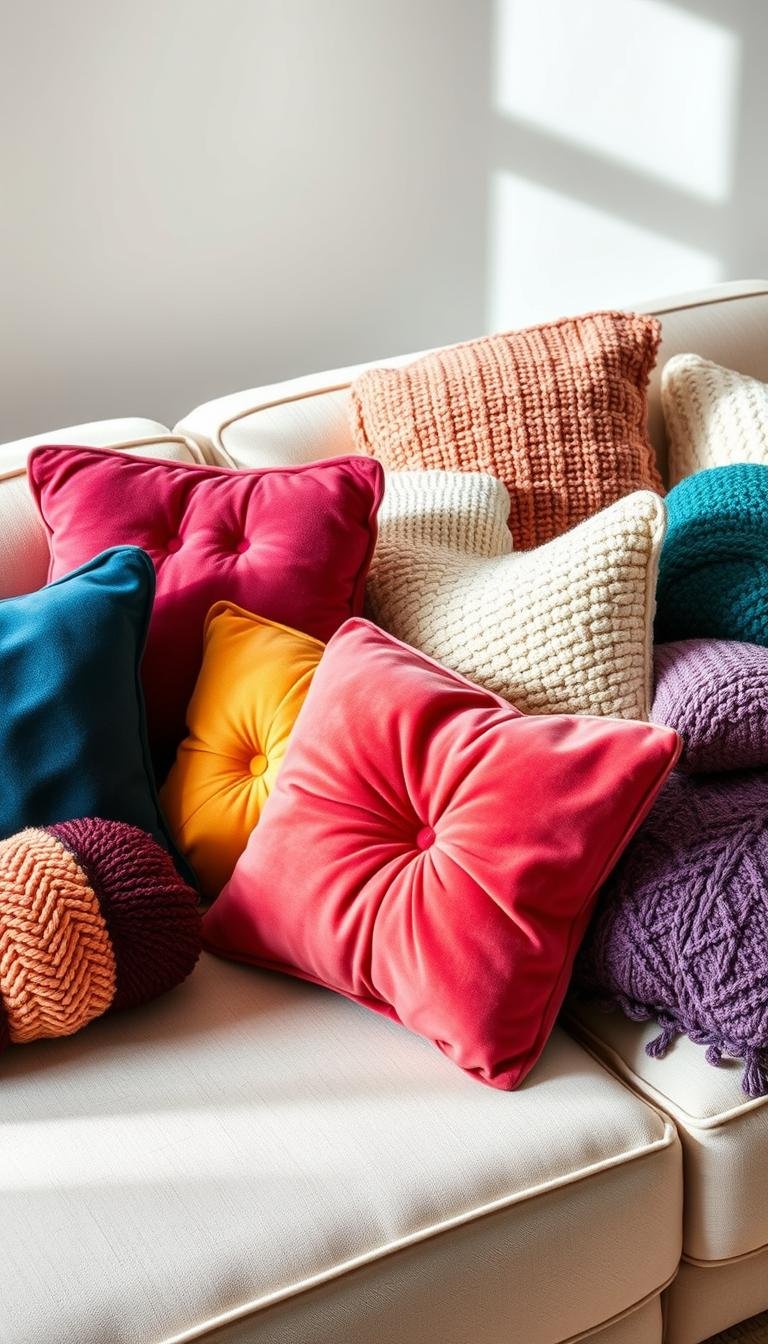
Variation in scale creates depth. A larger solid or textured cushion can sit behind a smaller patterned one. Repeating one color across different textures often feels more coherent than using several unrelated prints.
| Layer | Useful role |
|---|---|
| Large neutral cushion | Creates the base and visual weight. |
| Medium textured cushion | Adds depth without strong pattern. |
| Smaller patterned cushion | Adds contrast and personality. |
| Throw | Connects color and texture while remaining functional. |
5. Throws should be easy to use
A throw can add color and softness, but it should still be comfortable enough to use. Wool, cotton, fleece, acrylic and blends all have different feel and care needs.
If a throw constantly slides from leather seating, see our guide to keeping throws in place on leather.
6. Upholstery deserves more scrutiny than decorative fabric
Sofas and chairs receive repeated abrasion, body oils, spills and sunlight. Check the exact upholstery specifications rather than choosing only by hand-feel in a sample book.
Households with pets should consider snagging, visible hair, scratch behavior and cleaning. Our sofa fabrics for visible pet hair guide and upholstery fabrics when allergies are a concern cover two common use cases.
7. Use texture to create depth in a quiet palette
A neutral room can feel rich when the surfaces are varied. Combine smooth cotton, slubby linen, wool, boucle, velvet or woven fibers selectively rather than adding more colors.
Texture is especially useful when you want a calm room that does not feel flat.
8. Pattern works best with a hierarchy
If every textile carries a strong pattern, the room can become difficult to read. Choose one dominant pattern, then support it with smaller-scale or quieter motifs and solids.
Stripes, florals, checks and geometrics can mix successfully when they share enough color and vary in scale.
9. Curtains are textiles with architectural impact
Curtains influence how large a window feels, how daylight enters and how soft the room looks. Their material and fullness matter, but so do mounting position and stack-back.
Use the window treatment guide for curtains, shades, privacy and blackout planning.
10. Rugs belong to the textile story but need their own performance plan
Rugs experience foot traffic, dirt and furniture load in a way cushions and curtains do not. Choose rug fiber, construction, pile and pad around the room’s real workload.
See how to choose an area rug for the full decision sequence.
11. Consider sunlight before choosing delicate color
Direct sun can change some dyes and fibers over time. Check product guidance for light exposure, especially with valuable textiles or intense sunlight.
Window treatments can reduce exposure where needed, but the treatment itself must also be suitable for the window conditions.
12. Moisture changes the textile decision
Bathrooms, kitchens, entries and outdoor-adjacent rooms may need textiles that dry quickly and tolerate frequent washing. Avoid leaving absorbent fabrics damp for long periods.
For bathrooms, our bath mat guide focuses on drying and material considerations.
13. Buy for the cleaning routine you will actually follow
Dry-clean-only fabric can be perfectly reasonable on a low-use decorative item and frustrating on a family-room cushion. Washable covers may be worth prioritizing where spills are predictable.
Keep care labels and avoid assuming a home cleaning method is safe for every textile.
14. Layer textiles without hiding the furniture
Textiles should support the room’s shapes rather than bury them. If a sofa disappears under cushions and throws, remove a layer. If a bed takes several minutes to clear before sleep, the decorative setup may be working against the room.
Textile checklist
- The material suits the level of use.
- Cleaning instructions fit the household routine.
- Upholstery is chosen for wear, not only appearance.
- Bedding supports sleep before styling.
- Patterns vary in scale and share enough color.
- Texture adds depth without requiring clutter.
- Sun and moisture conditions are considered.
- Decorative layers do not make furniture harder to use.
Explore textiles and bedding
Browse Textiles & Bedding for duvet inserts, pillows, throws, upholstery and fabric problem-solving. Choose textiles that feel good to live with, then use them to make the room visually richer.