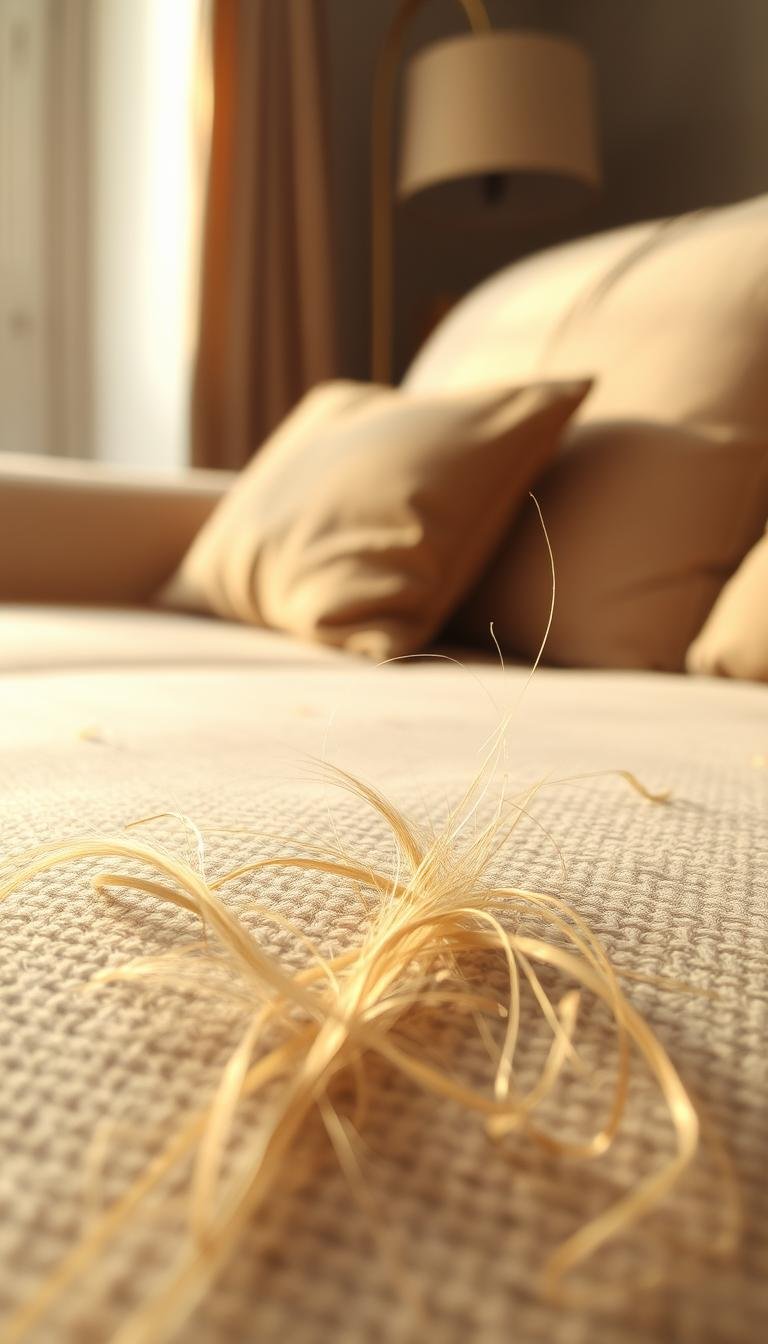
If you have a golden retriever, choose sofa upholstery that is tightly woven, easy to vacuum, and close enough in color to your dog’s coat that stray hair is less obvious between cleanings. The goal is not to find a fabric that magically repels fur; it is to choose one that makes hair easier to remove and less visible.
Start with weave and surface texture
Smooth, tightly woven fabrics are generally easier to maintain than loose, nubby, or high-pile textiles. Hair tends to sit closer to the surface instead of working deep into the weave.
When shopping, rub a fabric sample with your hand and inspect the weave closely. If the surface feels fuzzy, looped, or highly textured, expect more effort to remove embedded hair.
Good fabric categories to compare
- Microfiber and microsuede: dense surface, generally easy to vacuum or wipe.
- Performance polyester or olefin blends: often designed for abrasion and stain resistance; check the exact cleaning code and warranty.
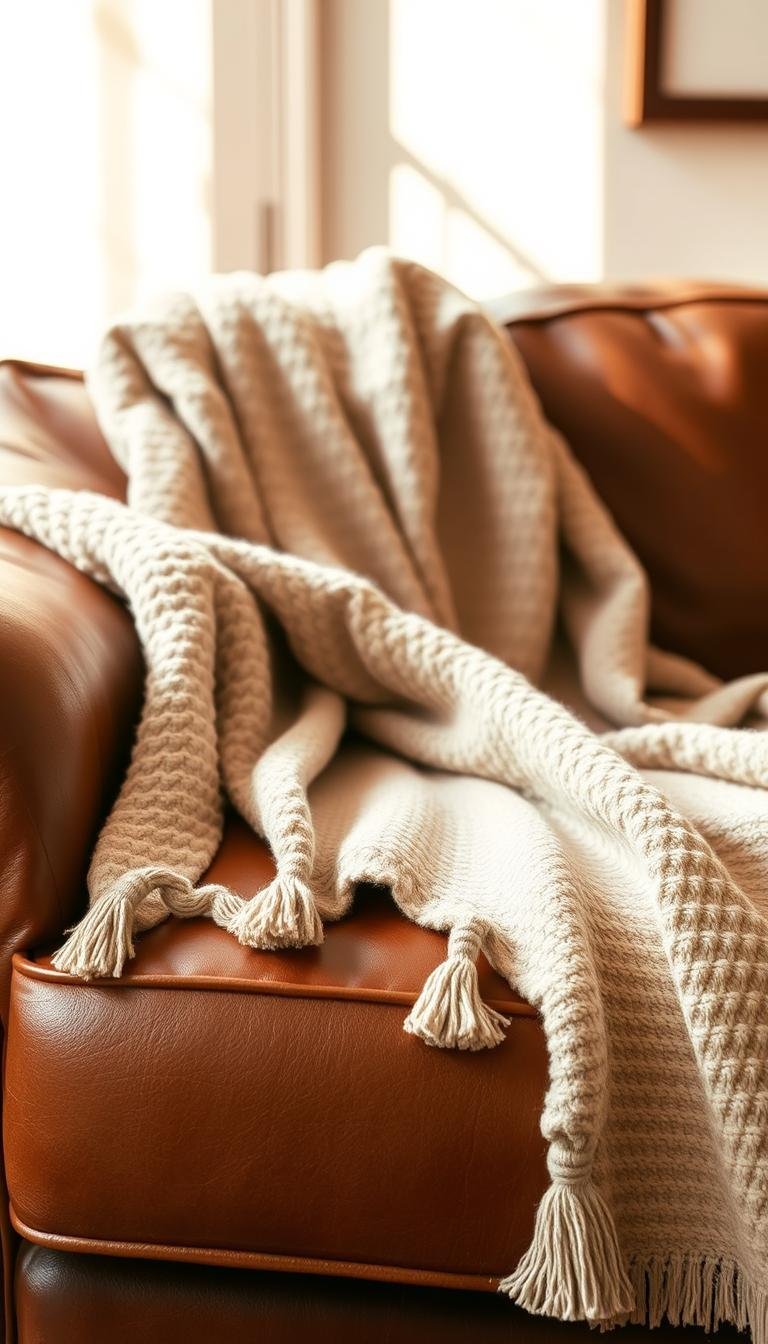
- Leather or coated leather: hair usually stays on the surface, but claws can mark it and care requirements vary.
- Tightly woven canvas-like fabrics: can work well when the weave is dense and the finish is easy to clean.
No material is automatically “pet-proof.” Compare the manufacturer’s abrasion rating, cleaning code, stain treatment, and warranty for the exact upholstery.
Fabrics that can be harder with shedding dogs
Loose weaves, deep texture, boucle, chenille, shaggy surfaces, and some velvets can hold hair more visibly or make vacuuming slower. That does not mean they are unusable, but they are a poor fit if low-maintenance cleaning is the priority.
Color can hide hair surprisingly well
Golden retriever hair usually disappears better on mid-tone warm neutrals than on very dark or very pale solids. Beige, taupe, warm gray, greige, camel, and heathered fabrics often disguise stray hairs better than black, navy, or crisp white.
A subtle heather, tweed, or mixed-color weave can also camouflage fur without looking busy.
Check the cleaning code before buying
Upholstery cleaning codes and care instructions matter more than generic “stain-resistant” marketing. Make sure the recommended cleaning method fits how you actually live.
- Look for removable cushion covers if that is important to you.
- Check whether professional cleaning is required.
- Confirm whether water-based or solvent-based cleaners are permitted.
- Ask whether the stain treatment is part of the fiber or a topical finish that may wear over time.
Durability: use the manufacturer’s abrasion data
Do not rely on a single universal rub-count threshold for every household. Different abrasion tests use different methods and fabrics can perform differently in real homes. Use the manufacturer’s stated test method and rating to compare options within the same system.
If your dog regularly jumps onto the sofa, also inspect seam construction, piping, cushion covers, and exposed corners. Those areas may show wear before the center of the seat does.
Try samples at home
Fabric swatches are more useful than showroom impressions. Put a sample near your dog’s usual resting area for a few days, then see how easily hair comes off with your normal vacuum, lint roller, or upholstery brush.
Also view the sample in your actual room lighting. A fabric that hides hair under showroom lights may look very different at home.
A practical cleaning routine
Regular light cleaning is easier than waiting for hair to become embedded. Vacuum with an upholstery attachment, rotate cushions if the sofa design allows it, and follow the manufacturer’s care instructions for spills.
Washable throws can protect a favorite dog spot without covering the entire sofa, and they are easier to clean frequently than fixed upholstery.
Quick comparison
| Priority | What to look for |
|---|---|
| Hair removal | Smooth, dense weave |
| Hair visibility | Warm mid-tone or heathered color |
| Durability | Published abrasion data and strong seams |
| Spill cleanup | Care code that fits your routine |
| Claw resistance | Tight weave with minimal loops or snag points |
Bottom line
For a home with a golden retriever, a tightly woven performance fabric or microfiber in a warm, mid-tone color is often the easiest combination to live with. Leather can also be easy to de-fur, but scratch tolerance and care are different.
Choose the exact fabric by testing a swatch, checking its care code and abrasion data, and deciding how much routine cleaning you are realistically willing to do.
For more living-room decisions, see our Room Guides.