Style Guide
You do not need to choose one design label and follow it faithfully. Most homes that feel personal borrow from several influences and become coherent through colour, material, scale and the tastes of the person who lives there.
If you save Japandi bedrooms, dark academia libraries, cottagecore details and coastal living rooms, that does not mean your taste is confused. It usually means there is a common feeling or set of materials you are responding to across several styles.
Start With Feelings, Not Labels
Look through rooms you have saved and ignore the style names for a moment. Ask what each image makes you feel: calm, warm, dramatic, airy, cosy, sophisticated, playful, grounded or something else.
Write down the words that repeat. Those repeated feelings are more useful than a label because they can guide choices across very different aesthetics.
Your style is often the feeling you keep chasing, not the category you keep saving.
Find the Visual Thread
Next, look for elements that appear repeatedly across the rooms you love.
- Colour: do you keep saving warm neutrals, deep colour, pale rooms or high contrast?
- Material: do timber, linen, brass, stone, leather, wicker or painted furniture keep appearing?
- Shape: are you drawn to clean lines, soft curves, traditional details or chunky forms?
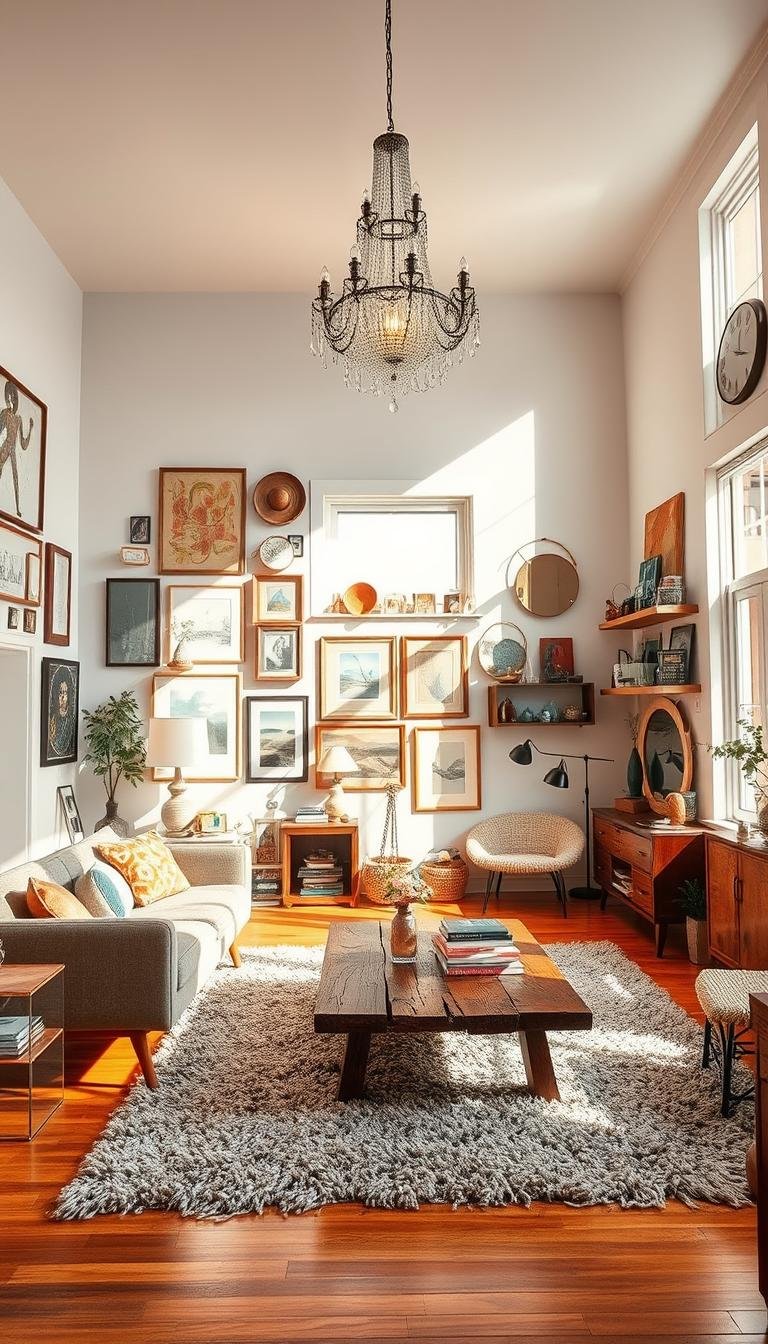
- Density: do you prefer edited rooms or layered rooms with art, books and objects?
- Light: are your favourite rooms bright and airy or low-lit and atmospheric?
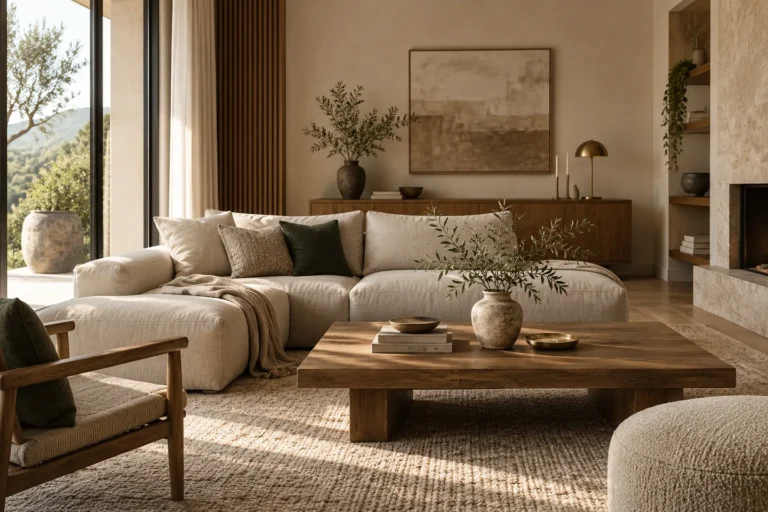
When two or three of these patterns repeat across otherwise different styles, you have found the backbone of your own look.
Define Your Non-Negotiables
Some elements matter more to you than any style label. They should be planned first.
Natural Light
If you consistently save bright rooms, protect the windows, use lighter window treatments and avoid tall furniture that blocks daylight.
Books
If rooms without books feel empty to you, plan proper shelving early instead of treating books as an afterthought.
Plants
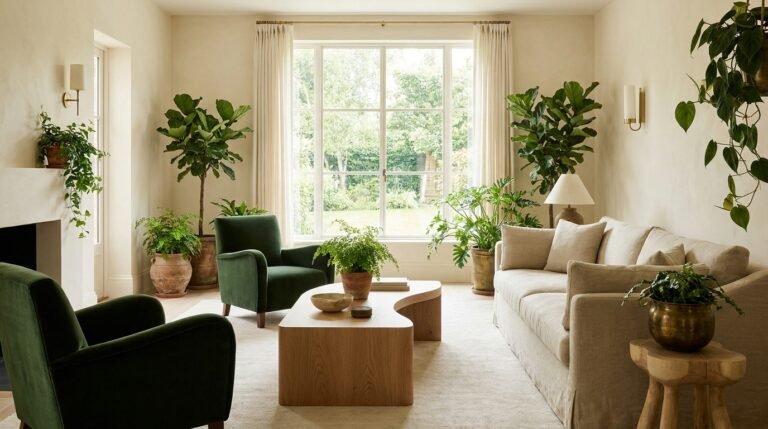
If greenery matters, choose plants for the real light and humidity in the room and make space for them in the layout.
Colour
If all-neutral rooms never feel like home, stop trying to force yourself into them. Choose a restrained palette with colour instead.
Texture
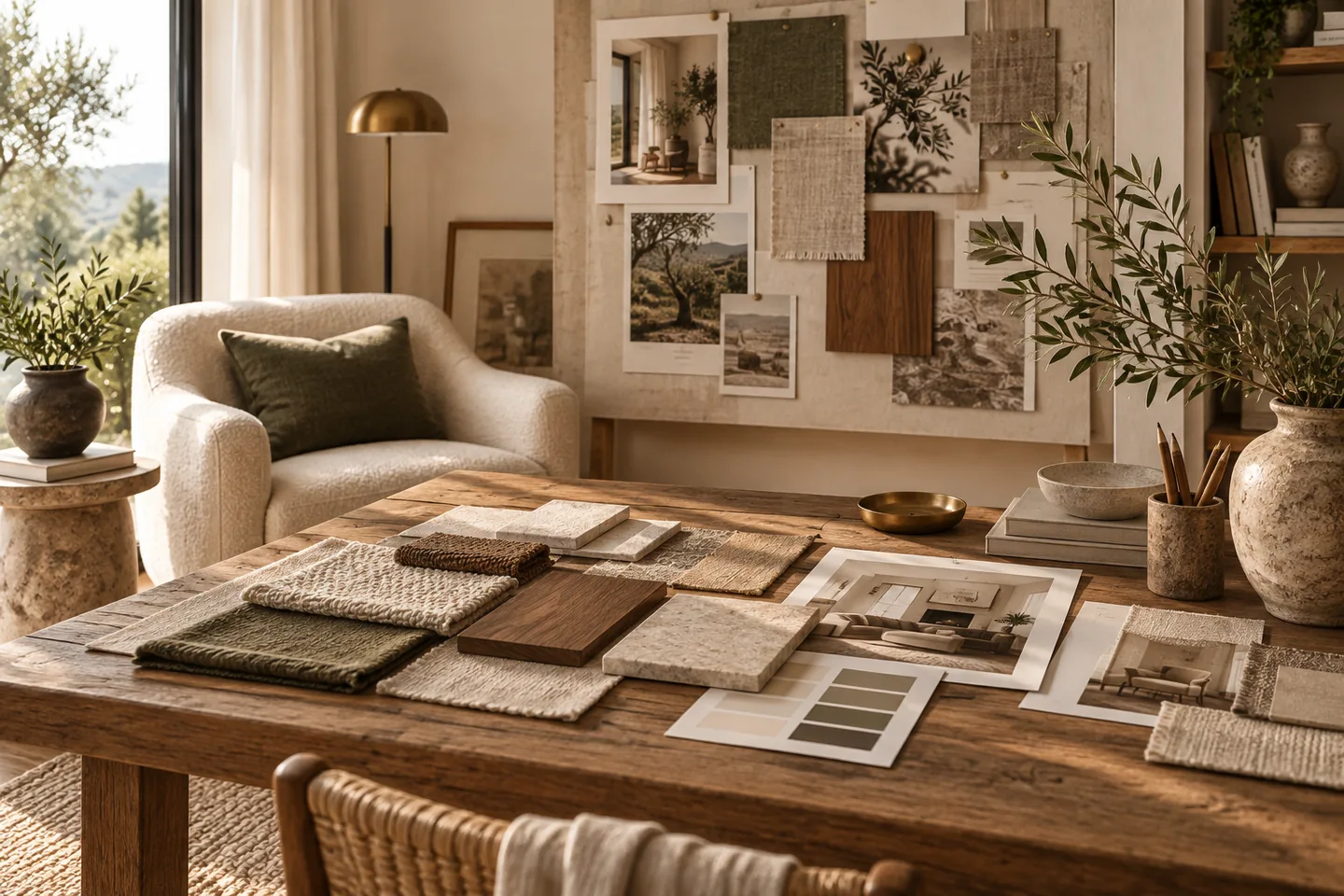
If you are drawn to tactile rooms, build in linen, timber, wool, woven fibres, stone or other materials before buying decorative accessories.
Use Style Categories as References, Not Rules
Style labels are useful because they give you a vocabulary. They can help you find examples and understand why certain combinations work.
Our Japandi guide, dark academia guide, cottagecore guide and coastal grandmother guide are useful references, but none needs to become a rulebook.
How to Mix Styles Without Creating Chaos
Keep the Colour World Consistent
A traditional chair and a contemporary sofa can sit together comfortably when they share related colours and undertones.
Repeat Materials
Repeating one or two materials—such as oak, brass or linen—helps unrelated pieces feel connected.
Watch Scale
Furniture from different periods can still look harmonious when the pieces have compatible visual weight and proportions.
Leave Breathing Room
Mixed styles become confusing when there is too much of everything. Negative space gives each piece enough room to make sense.
| If you repeatedly save… | Your underlying preference may be… |
|---|---|
| Japandi + Scandinavian | Calm, natural materials, simple shapes, warm restraint |
| Dark academia + traditional | Depth, books, craftsmanship, rich colour, atmosphere |
| Cottagecore + farmhouse | Warmth, natural texture, vintage influence, relaxed comfort |
| Coastal + minimal | Light, air, soft neutrals, uncluttered surfaces |
| Maximalist + eclectic | Colour, art, pattern, collected objects, visual energy |
Edit Before You Buy More
Stand in the room and look at what is already there. For each object, ask:
- Does it support the feeling I want in this room?
- Do I genuinely like it, or is it only filling space?
- Does it work with the colour and material direction I keep choosing?
You do not need to throw away everything that fails the test. Move pieces between rooms, store them temporarily or remove a few items and live with the room before making a permanent decision.
Build a Small Personal Style Formula
Instead of naming your style, write a short sentence that describes it. For example:
- Warm neutrals + dark timber + books + soft lighting
- Light rooms + linen + vintage pieces + muted green
- Natural wood + simple shapes + a little colour + handmade ceramics
This kind of formula is much easier to use when shopping than a broad label. It tells you what belongs in your home and what does not.
Test New Purchases Against the Formula
Before buying something, ask whether it strengthens the room’s colour, material, function or mood. If an object is beautiful but belongs to a completely different visual world, it may be better admired somewhere else than forced into the room.
That does not mean every piece must match. It means the differences should feel deliberate.
Frequently Asked Questions
How do I find my home decor style?
Look for repeated feelings, colours, materials, shapes and levels of visual density across rooms you already love. Those patterns usually reveal your preferences more clearly than a style quiz.
Can I mix interior design styles?
Yes. Keep the colour palette, material quality and furniture scale coherent, and leave enough space for different pieces to relate to one another.
What if I like several opposite styles?
Look for the common denominator. You may like the warm lighting in one style, the natural materials in another and the books or colour in a third. Build from those underlying preferences.
How do I know when a room is finished?
A room is usually close when it works comfortably, supports the feeling you wanted and no longer needs extra objects to make it feel complete.
Should every room in my home use the same style?
No. Rooms can vary in mood while still feeling related through repeated colours, finishes, materials or design details.