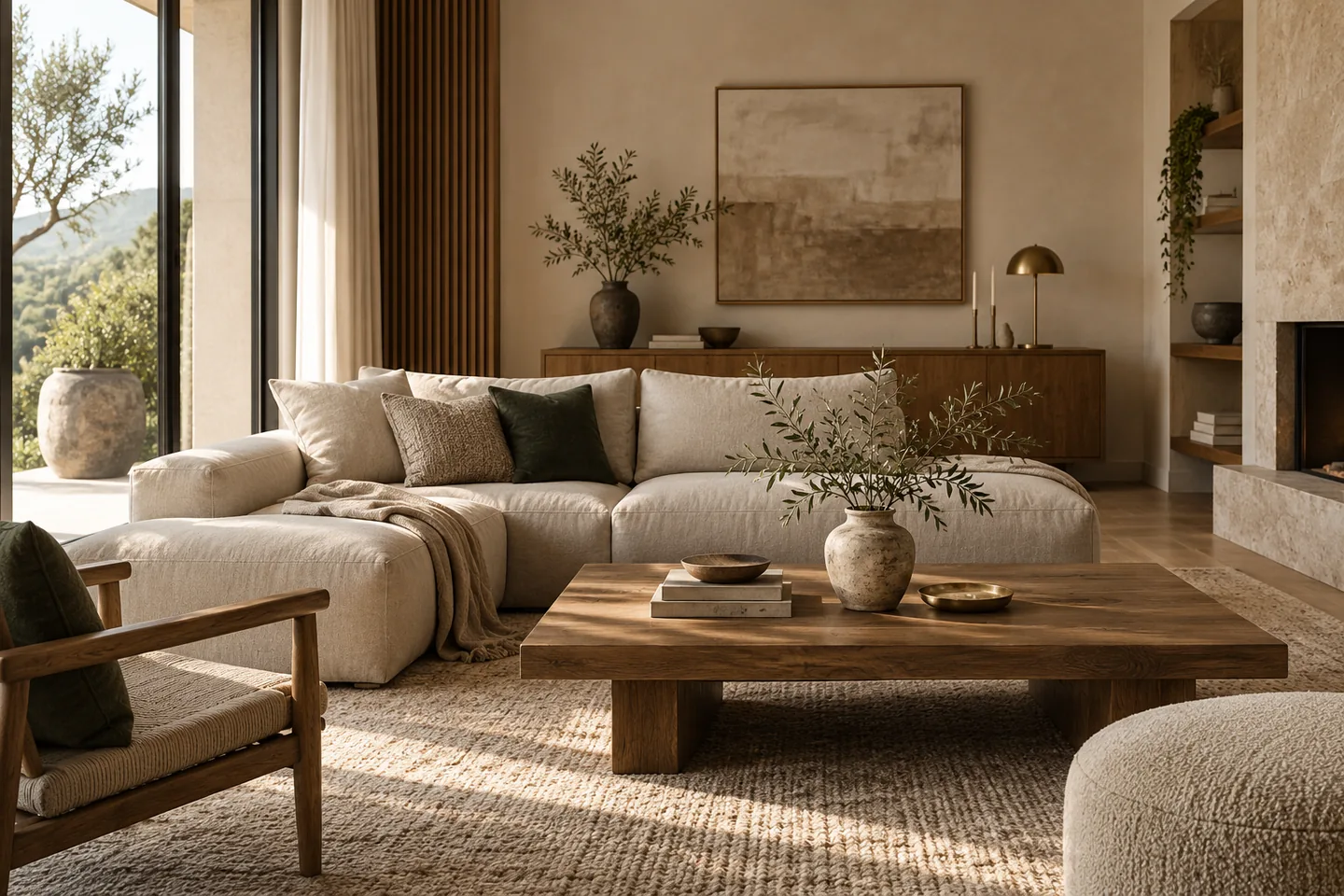
Style Guide
Japandi works because it is quiet without feeling empty. It combines the restraint and appreciation of imperfection associated with Japanese interiors with the warmth, comfort and natural materials common in Scandinavian design.
The result should feel calm, tactile and lived in: warm wood, soft neutrals, useful objects, gentle light and enough negative space for each element to breathe. The goal is not to make a room look sparse. It is to make it feel resolved.
If you are applying the look to a compact room, pair this guide with our small living room playbook. For bedrooms, our luxury hotel bedroom guide has useful ideas for layering texture without creating clutter.
What Japandi Actually Means
Japandi is less about copying a list of objects and more about using a consistent design filter. Materials should feel natural, the palette should stay warm, and every visible object should contribute either function, beauty or both.
- Warm rather than stark: cream, oatmeal, mushroom, warm grey, clay, muted sage and natural wood tones usually work better than bright white.
- Natural rather than glossy: wood, linen, wool, stone, ceramic, rattan and woven fibres bring the tactile quality the style needs.
- Edited rather than bare: leave breathing room, but keep enough texture and comfort that the room still feels inviting.
- Simple rather than anonymous: handmade, vintage and slightly irregular pieces can keep a restrained room from feeling generic.
Five Principles That Make the Style Work
1. Start With Warm Neutrals
Japandi rooms usually feel softer when the base has a little warmth. Instead of pure white, look at warm off-whites, putty, sand, taupe, pale mushroom and muted earthy greens. The exact shade should respond to the room’s daylight rather than a trend chart.
2. Let Materials Carry the Visual Interest
A restrained colour palette only works when the surfaces have character. Pair smooth plaster or painted walls with timber, linen, wool, woven baskets, ceramic and stone. The contrast between textures creates depth without requiring busy pattern.
3. Give Objects Space
Open surfaces are part of the composition. A single ceramic vessel, a small stack of books or one sculptural lamp can have more presence than a crowded shelf. Edit first; add only when a space genuinely feels unfinished.
4. Choose Shape Before Decoration
Low, simple silhouettes tend to work well because they keep the room visually quiet. Look for clean-lined sofas, straightforward tables, simple bed frames and storage that keeps everyday clutter out of sight. Curves can work beautifully too, especially when they soften otherwise rectilinear rooms.
5. Keep Comfort in the Plan
Japandi should not feel austere. A deep sofa, breathable bedding, a tactile rug, supportive dining chairs and warm pools of light matter more than achieving a perfectly minimal photograph.
A calm room is not an empty room. It is a room where the things you notice feel intentional.
Materials and Colour: The Easiest Place to Get It Right
Use the palette as a background for texture rather than as the main event. A practical combination is one warm wall colour, one dominant wood tone and a small number of secondary materials repeated throughout the room.
| Element | Good Japandi direction |
|---|---|
| Walls | Warm off-white, soft taupe, mushroom, clay or muted sage |
| Wood | Oak, ash, walnut or other natural-looking timber with a restrained finish |
| Textiles | Linen, cotton, wool, bouclé used sparingly, woven natural fibres |
| Hard surfaces | Stone, matte ceramic, plaster-like finishes, aged or brushed metal |
| Accent colours | Charcoal, forest green, rust, muted black, aged brass |
Before repainting an entire room, test large samples at different times of day. A colour that looks creamy in one room can turn grey or yellow in another.
Room by Room
Living Room
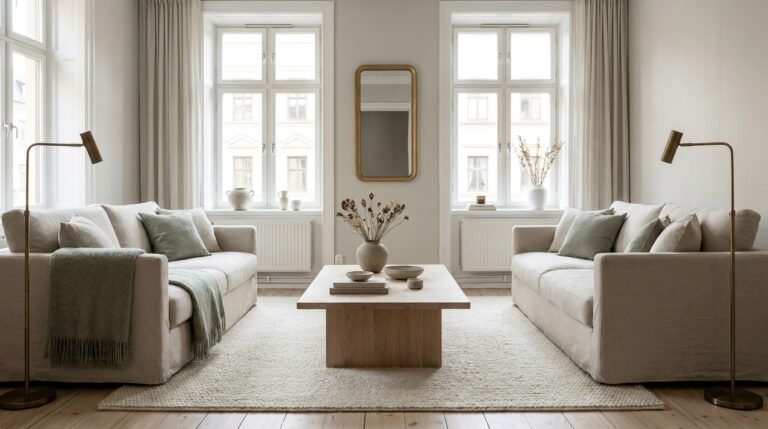
Begin with the largest shapes: sofa, rug, coffee table and lighting. A low-profile sofa in a warm neutral can work well, but the exact seat height matters less than proportion and comfort. Keep the coffee table visually simple and make sure there is enough circulation around it for the room to feel open rather than under-furnished.
Use one or two substantial lamps instead of relying only on a bright ceiling fixture. A paper, linen, ceramic or timber lamp can add atmosphere without becoming a decorative focal point that overwhelms the room.
- Choose one dominant wood tone and repeat it.
- Use a rug large enough to visually connect the seating group.
- Keep side tables and accessories limited to what is useful.
- Add one or two plants only where the actual light suits them.
Bedroom
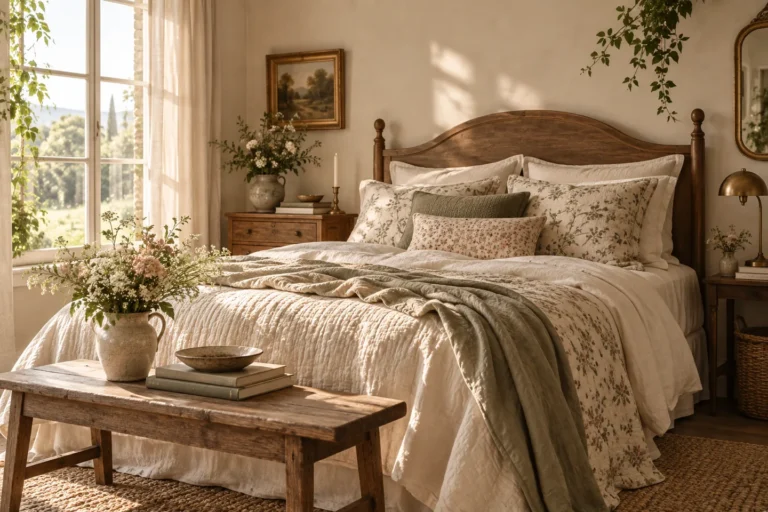
The bedroom is a natural fit for Japandi because the style already prioritizes calm and tactile materials. Start with simple bedding in warm white, oatmeal, stone or muted green. Layer different textures rather than many colours.
A timber or upholstered bed with a clean outline works well. Keep the bedside surface easy to use: lamp, book, water and perhaps one small object. If the room needs more visual interest, introduce it through a woven throw, linen curtains or an imperfect ceramic lamp rather than through lots of small décor.
Kitchen
In a kitchen, Japandi is mostly about reducing visual noise. Clear the counters of items that do not need to live there, group everyday tools deliberately and use closed storage for packaging and rarely used appliances.
If you are changing finishes, flat or lightly detailed cabinet fronts, natural wood, warm painted cabinetry and simple hardware can all work. If you are not renovating, a timber board, ceramic utensil vessel and a few carefully chosen everyday objects can shift the feel without replacing the kitchen.
Bathroom
A Japandi bathroom benefits from the same approach: fewer visible products, warm towels, simple storage and lighting that feels soft rather than clinical. Natural wood details can add warmth where moisture conditions allow, while ceramic, stone and textured towels carry the tactile side of the look.
If you want a more spa-like bathroom without renovating, see our small bathroom spa guide.
Lighting Matters More Than Most Décor
A calm palette can still feel flat under harsh lighting. Use warm-white bulbs appropriate to the fixture and layer light at more than one height: table lamp, floor lamp, wall light or pendant. The goal is not to eliminate ceiling lights; it is to avoid making one bright overhead source do all the work.
Dimmers can help where the fixture and bulb are compatible. In bedrooms and living rooms, softer evening light usually supports the relaxed quality people are trying to achieve with Japandi in the first place.
What to Buy First
Do not start with decorative accessories. Fix the room in this order:
- Lighting: make sure the room has warm, comfortable light and more than one source where practical.
- Large textiles: rug, curtains, bedding and throws have more visual impact than small décor.
- Storage: reduce visible clutter before adding objects.
- One or two natural-material accents: timber, ceramic, woven fibre or stone.
- Personal objects: books, art, handmade pieces or objects with meaning.
This order also prevents the common problem of buying a collection of beige accessories while the room’s scale, lighting and storage remain unresolved.
Common Japandi Mistakes
Making Everything Beige
Warm neutrals are the foundation, not the entire design. Use contrast through timber, charcoal, green, aged metal, stone and texture so the room still has definition.
Using Too Many Decorative Objects
If every shelf and surface has something on it, the style loses its sense of calm. Remove first, then return the strongest pieces.
Going So Minimal That the Room Feels Cold
If the room feels unfinished, add texture before adding more objects. A larger rug, fuller curtains, a wool throw or better lighting often solves the problem more effectively than extra decoration.
Buying Matching Sets
Japandi tends to look more convincing when pieces relate without matching exactly. Slight differences in wood tone, ceramic glaze and textile texture help a room feel collected rather than packaged.
Ignoring Real Life
A beautiful surface that has nowhere for keys, chargers, toys, toiletries or daily paperwork will not stay calm for long. Good storage is part of the aesthetic because it supports the way the room actually functions.
A Simple Test Before You Add Anything
Does this object make the room feel calmer, more useful or more personal?
If it does none of those things, it probably does not need to be there. That question is more useful than trying to match a photograph exactly.
If you want to apply the same thinking in a smaller dedicated area, our guide to creating a meditation corner in a busy household is a natural next step.
Frequently Asked Questions
What is Japandi style?
Japandi is an interior style that combines Japanese-influenced restraint, natural materials and appreciation of imperfection with Scandinavian warmth, comfort and practicality.
Which colours work best?
Warm off-whites, oatmeal, sand, mushroom, taupe, clay and muted greens are common starting points, usually balanced with natural timber and a few darker accents.
Is Japandi the same as minimalism?
No. Minimalism can be highly reductive; Japandi is usually warmer and more tactile. Comfort, craftsmanship and natural materials matter as much as visual restraint.
Can Japandi work in a small home?
Yes. The emphasis on editing, useful furniture and controlled visual clutter can work especially well in small rooms, provided the furniture is scaled to the space rather than chosen by style alone.
Do I need expensive furniture?
No. Scale, proportion, material and usefulness matter more than price. A simple second-hand timber table or handmade ceramic can suit the style better than a costly piece bought only because it is labelled Japandi.