
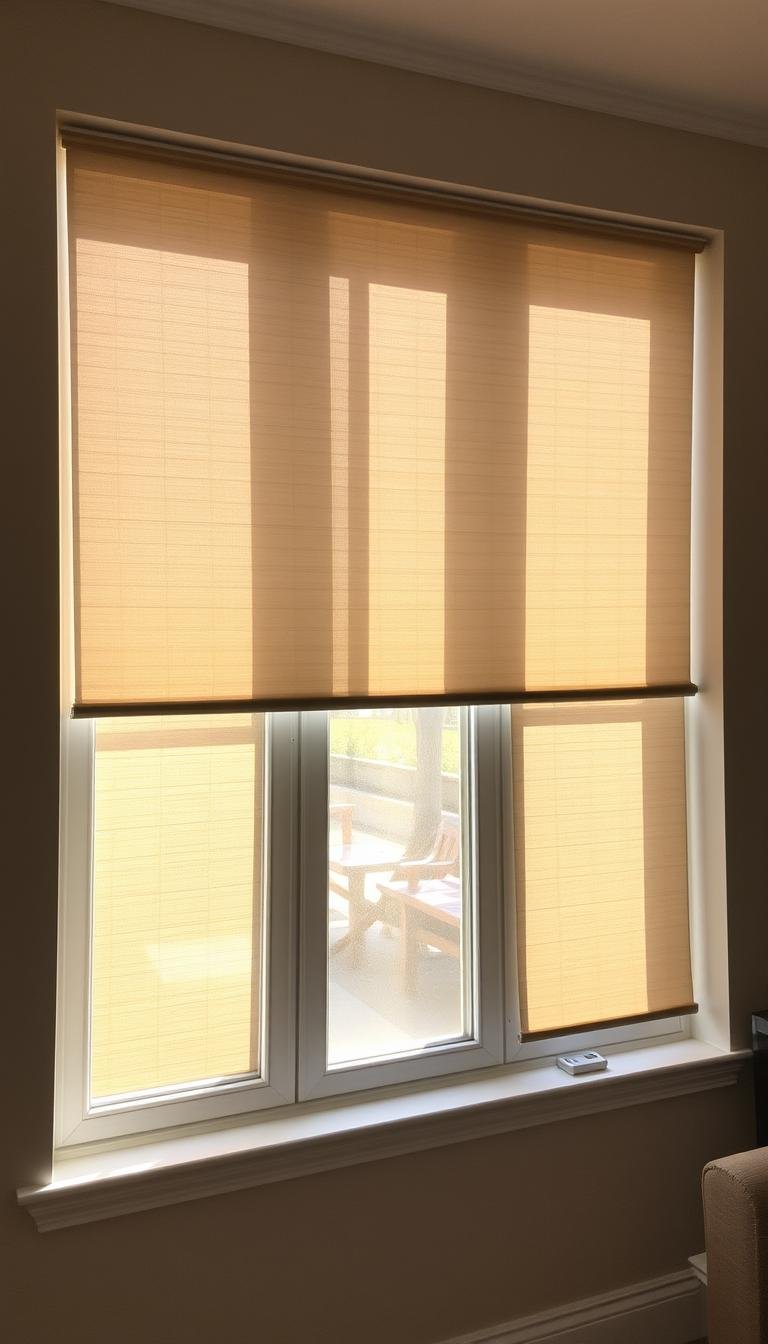
The right window treatment is chosen by privacy, light control, room use and the window itself before fabric color or style. Curtains, blinds and shades solve different problems. In many rooms, layering two treatments gives better control than asking one product to do everything.
The useful sequence is privacy → daylight → darkness or glare → window geometry → mounting method → treatment type → material and color → controls.
1. Decide how much privacy the room needs
A street-facing bedroom has different needs from an upper-floor living room. Some light-filtering fabrics provide daytime privacy but become more transparent at night when the room is brighter than outdoors.
Check the manufacturer’s privacy description and sample the material in the actual window when possible.
2. Understand light filtering, room darkening and blackout
These terms are not interchangeable. Light-filtering treatments soften daylight. Room-darkening treatments reduce more light. Blackout products are designed to block light through the material, but light can still enter around the edges of the installation.
If darkness matters for sleep, consider the complete system: fabric, mount, side gaps, top gap and any layering with curtains.
See blackout curtains that still look residential and cordless blackout shade planning.
3. Curtains add scale as well as light control
Curtains can make a window feel larger, soften hard surfaces and add color or texture. Their effect depends on panel fullness, length, heading style, rod placement and how much fabric can stack away from the glass.
Before ordering, decide whether the curtains are decorative, functional or both. Decorative side panels can be narrower, while curtains that close across the full opening need enough fabric and suitable hardware.
Our curtain placement guide explains why the wall and window proportions matter more than one universal hanging rule.
4. Roller shades are visually quiet
Roller shades can work well when you want a compact treatment with straightforward light control. Fabric ranges from sheer and light-filtering to room-darkening and blackout.
Compare texture and sheen as well as performance. Linen-look fabrics can soften the appearance, while smoother technical materials may suit more minimal rooms.
5. Roman shades add more textile presence
Roman shades bring fabric and folds into the window without requiring full curtain panels. They can work well in bedrooms, dining rooms and living spaces where you want softness with a contained footprint.
Check how much fabric stacks at the top when raised, especially on shorter windows where the stack could reduce the clear glass area.
6. Blinds provide adjustable directional control
Slatted blinds can adjust privacy and daylight without fully raising the treatment. Material, slat width, mechanism and finish affect both appearance and maintenance.
Dust and moisture conditions matter. A product that works in a dry bedroom may not be appropriate for a humid bathroom.
7. Inside mount versus outside mount
Inside mount places the treatment within the recess and keeps surrounding trim visible. It requires enough depth for the hardware and may leave side gaps.
Outside mount covers the opening and can provide more overlap for privacy or darkness. It needs enough suitable mounting surface around the window.
Follow the exact manufacturer’s measuring instructions because deductions, bracket depth and required clearances vary by product.
8. Measure every window separately
Windows that appear identical can differ slightly. Use a rigid tape measure, record each opening and follow the ordering method for the exact treatment.
For inside mounts, check width at more than one point and confirm recess depth. For outside mounts, decide how much overlap and wall coverage you want before measuring.
9. Bedroom window treatments
Bedrooms usually combine privacy, darkness and softness. A shade plus curtains can separate these jobs: the shade handles privacy or darkness, while curtains add visual scale and another layer of light control.
Use the bedroom design guide for the full room sequence.
10. Living room window treatments
Living rooms often need flexible daylight rather than complete darkness. Light-filtering shades, blinds or curtains can reduce glare while keeping the room connected to natural light.
Think about how the treatment looks both open and closed. A curtain that blocks a large portion of the window even when open can reduce daylight unnecessarily.
11. Small-space windows
In compact rooms, simple treatments can reduce visual clutter. Roller shades, Roman shades or curtains that stack neatly away from the glass can preserve light and wall clarity.
See the small-space design guide for the relationship between windows, furniture, mirrors and light.
12. Rental-friendly treatments
Check the lease before drilling. Tension rods, existing hardware or approved removable systems may work in some windows, but every product has limits.
Do not overload trim or adhesive systems beyond their stated use. Test removable products where appropriate and keep the original hardware for move-out.
13. Natural woven shades need moisture awareness
Bamboo, grasses and other natural woven materials add texture but can react to humidity and moisture. Use products suited to the room and follow care guidance.
For a common issue, see how to reduce warping in bamboo shades.
14. Choose controls with safety and reach in mind
Cordless systems can create a cleaner appearance and reduce loose cords. Motorization can help with high or hard-to-reach windows. Compare the product’s size limits, power source, controls and maintenance requirements.
Follow current product safety guidance, especially in homes with young children.
15. Coordinate window treatments across connected rooms
Open-plan homes do not require identical treatments everywhere, but repeating one material, color family or hardware finish can create continuity.
Bedrooms can use stronger blackout treatments while nearby living areas use lighter fabrics without making the home feel disjointed.
Window treatment checklist
- Privacy needs are defined for day and night.
- The desired level of light control is clear.
- The mount suits the window depth and surrounding wall.
- Every window has been measured individually.
- The treatment can open without sacrificing unnecessary daylight.
- Material suits humidity, sun and cleaning conditions.
- Controls are practical and safe for the household.
- The treatment connects with the room’s wider palette.
Explore curtains, blinds and shades
Continue through Window Treatments for blackout options, curtain placement, roller shades and problem-solving guides. Choose the treatment that solves the window first, then make it part of the room.