A mirror should be chosen for three things at once: what it needs to reflect, how it relates to the wall and furniture around it, and how it will be mounted safely. Size and placement matter more than treating a mirror as a generic way to make every room look bigger.
The useful sequence is purpose → reflected view → wall and furniture scale → mirror size → shape and frame → mounting method.
1. Decide the mirror’s primary job
A bathroom mirror has a practical viewing job. A full-length mirror needs enough clear sightline for dressing. An entry mirror may combine a quick final check with light reflection and decoration. A living room mirror may be almost entirely compositional.
Once the main purpose is clear, size and placement become easier to judge.
2. Check the reflected view
A mirror doubles whatever sits in front of it. That can be useful when it reflects a window, artwork, greenery or an attractive part of the room. It can be less successful when it reflects clutter, a bathroom door, a television or a visually busy utility zone.
Stand where people will normally view the mirror and check the reflection before drilling.
3. Scale the mirror to nearby furniture
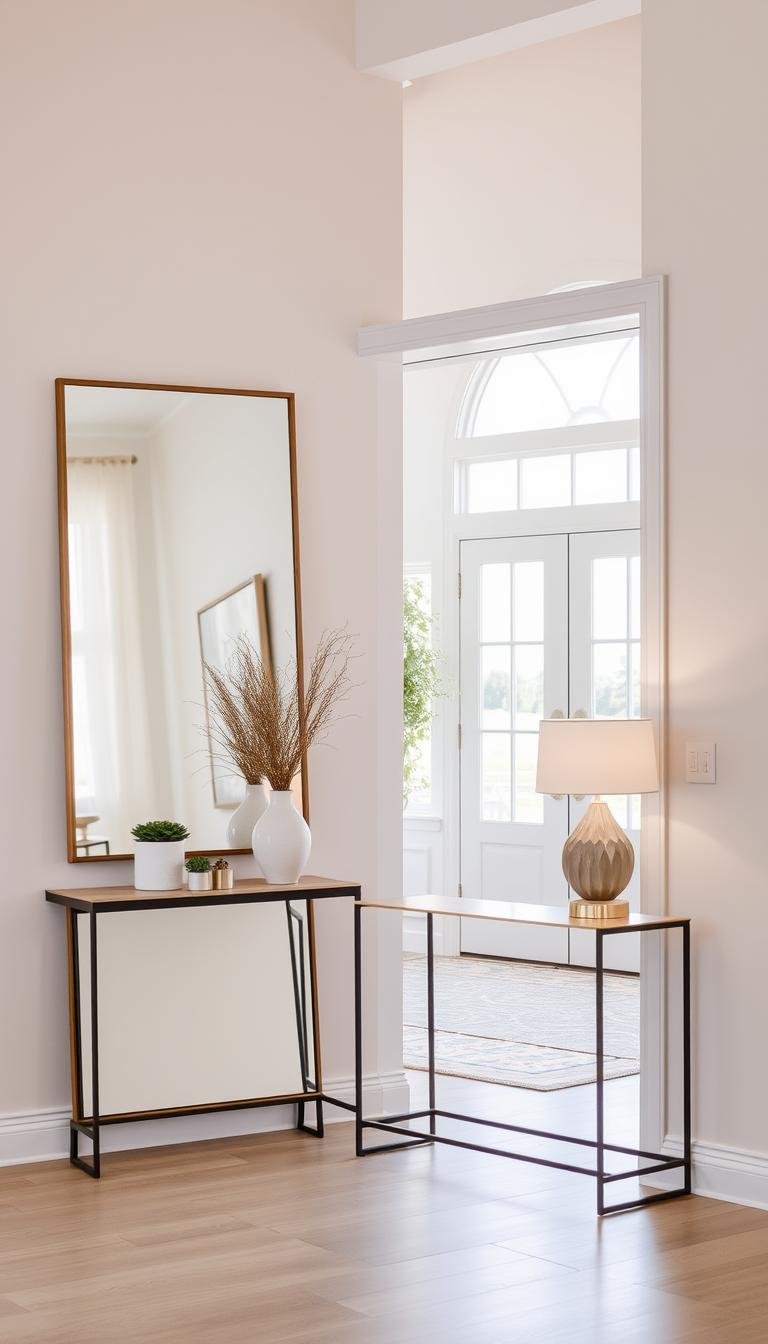
A mirror above a console, vanity or mantel should feel related to that element. A very narrow mirror above a broad piece of furniture can look stranded. A mirror that nearly touches surrounding trim or lighting can feel crowded.
Mock up the outer dimensions with painter’s tape. This is especially useful with large mirrors because size can be difficult to judge from product photography.
4. Bathroom vanity mirrors need to work with lighting
Plan the mirror and face lighting together. Vertical lights beside a mirror, a fixture above it or integrated mirror lighting all influence the usable mirror width and height.
For a common vanity size, see our 48-inch vanity mirror size guide. The broader bathroom design guide explains how the mirror fits into the vanity, lighting and storage plan.
5. Full-length mirrors need a useful sightline
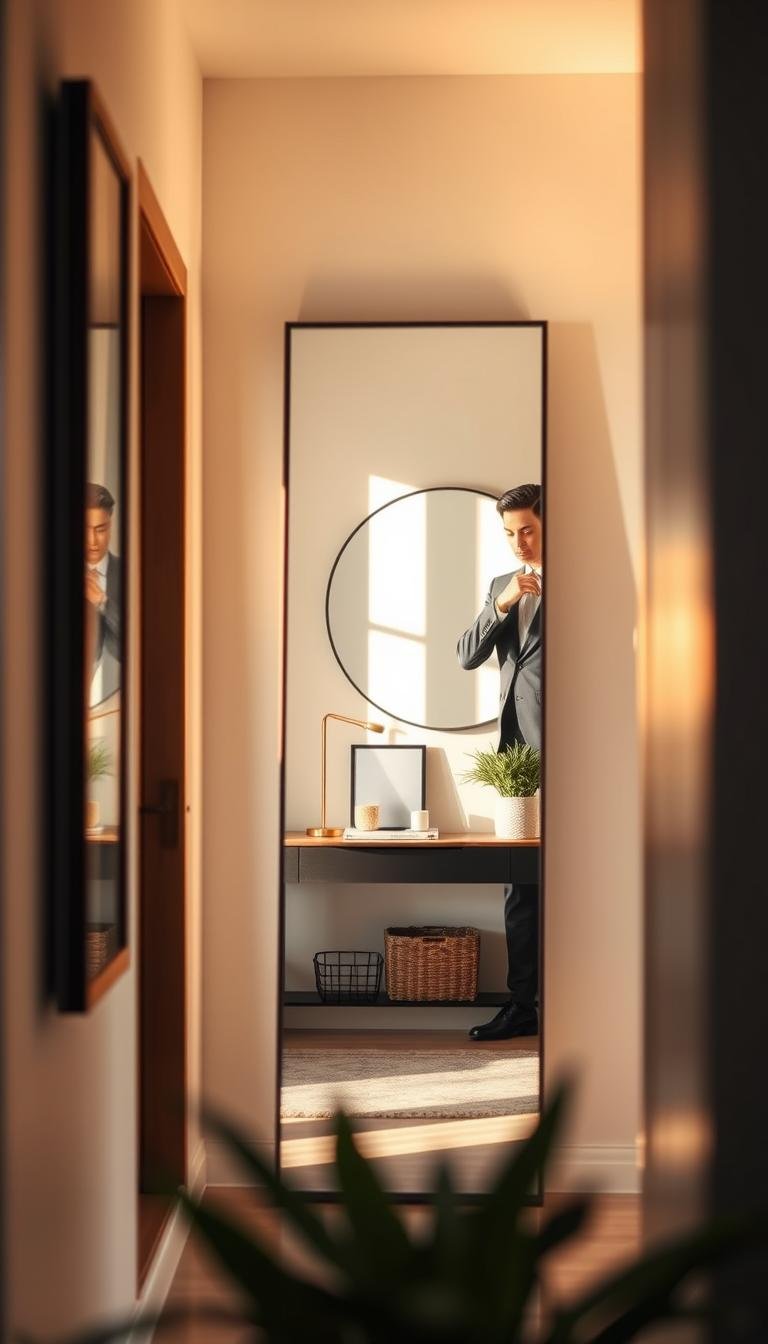
A full-length mirror is successful when the user can stand at a natural distance and see the intended amount of their body without furniture or doors blocking the view.
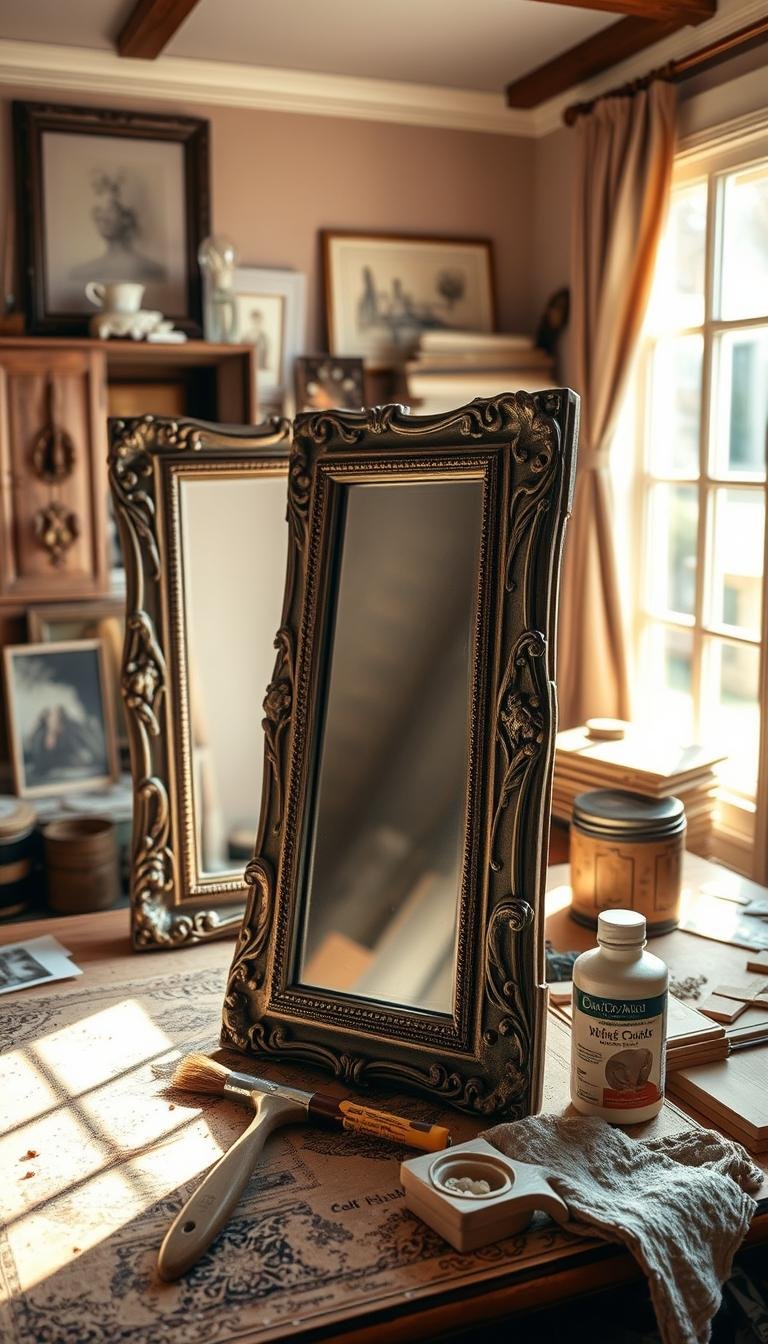
Wall-hung, leaning and freestanding mirrors each have different safety and space implications. Large leaning mirrors should be stabilized according to the manufacturer’s instructions rather than assumed to be secure because they feel heavy.
For entryways, see our full-length mirror placement guide.
6. Use mirrors to support light, not chase brightness
A mirror can redirect existing light, but it does not create light. Place it where reflected daylight or lamplight improves the room without creating uncomfortable glare.
In a dark room, a mirror may help one part of the lighting strategy, but it should not replace a layered plan. See how to make a dark room feel warm and the home lighting guide.
7. Choose shape in relation to the room
| Shape | What it can do |
|---|---|
| Round | Softens rooms with many straight lines and can work well over consoles or vanities. |
| Rectangular | Echoes architecture and furniture, and often provides the most practical viewing area. |
| Arched | Adds vertical emphasis and a stronger decorative silhouette. |
| Organic or irregular | Functions more like wall sculpture and needs enough surrounding negative space. |
8. Frame finish should connect, not necessarily match
Black, timber, brass-tone, painted and frameless mirrors can all work in the same home. Repeat enough material or color elsewhere that the mirror feels related to the room.
A warm timber frame can connect with furniture. A slim dark frame can echo window hardware. An aged metal finish can add contrast in a room dominated by soft materials.
9. Mirrors in small spaces
In a compact room, a mirror can extend a sightline and reflect useful light. Larger mirrors often feel calmer than clusters of many small ones because they create fewer visual breaks.
Use the small-space design guide for the broader relationship between mirrors, furniture, lighting and circulation.
10. Mirrors in entries and hallways
Entry mirrors work well above consoles, near drop zones or on walls that benefit from reflected light. Check the view from the front door so the mirror does not amplify clutter or create an awkward reflection.
In narrow hallways, keep the frame depth and projection in mind. Browse Entry & Hallways for room-specific ideas.
11. Heavy mirrors need structural planning
Large mirrors combine significant weight with fragile glass. Do not rely on a generic hook or a wall finish alone. Check the mirror manufacturer’s hanging method, the frame hardware, wall construction and the exact mounting system.
For a heavy example, see how to plan the hanging of a 60-pound mirror. If the mirror is awkward to lift or the structure is uncertain, use qualified installation help.
12. Bathroom moisture changes the material decision
In bathrooms, frame materials, backing, adhesives and hardware should be suitable for the room’s moisture conditions. A decorative finish that works perfectly in a dry hallway may age differently beside a shower.
Anti-fog features can be useful, but compare the exact product requirements, electrical connection and installation conditions. See our anti-fog bathroom mirror guide.
13. Use mirrors as part of wall decor, not as a separate afterthought
A mirror can anchor a wall on its own or sit within a larger arrangement. If it is part of a gallery composition, control the outer shape and visual weight just as you would with artwork.
Browse the wall decor guide for composition, scale and hanging principles.
14. Mirror checklist
- The mirror has a clear purpose.
- The reflected view improves the room.
- The size relates to nearby furniture or fixtures.
- Lighting and mirror placement do not conflict.
- The frame finish connects with the wider palette.
- Doors and circulation remain clear.
- The wall and mounting system suit the mirror’s weight.
- Bathroom products are appropriate for moisture conditions.
Explore the Dwelanor mirror library
Continue through Mirrors for bathroom sizing, entryway placement, heavy hanging and decorative ideas. Choose the mirror for the room it will actually reflect, not only for how it looks in isolation.