
Entryway Mirror Planning
Choose an entryway mirror from both the console and the reflection you want to see. A mirror can be beautifully proportioned to the furniture and still reflect a blank door edge, bright lamp or cluttered room. Size and placement should solve scale and function together.
Measure console → decide mirror orientation → choose outside frame width → set useful viewing height → inspect reflection → check lamps and door swings → tape the outline.
1. Measure the console as the anchor
Record the outside width and height of the console, including any projecting top or legs. The mirror should feel supported by the furniture rather than floating independently on the wall.
If there is no console, use the wall section, bench or entry storage as the primary visual reference instead.
2. Choose vertical or horizontal orientation
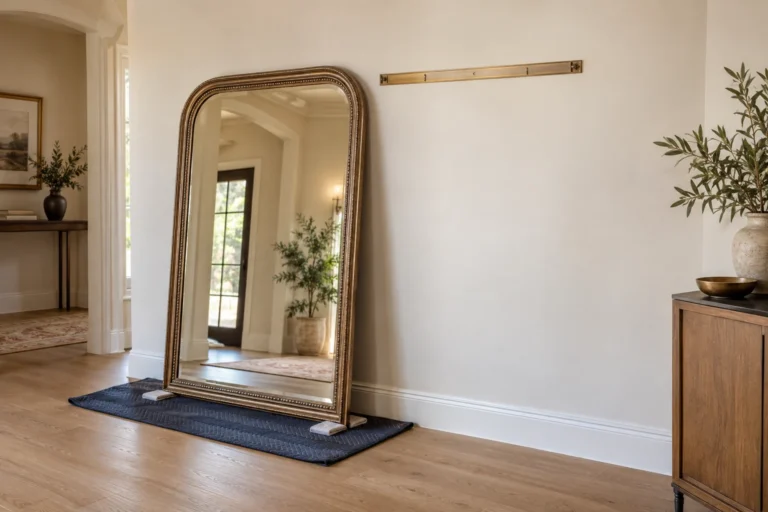
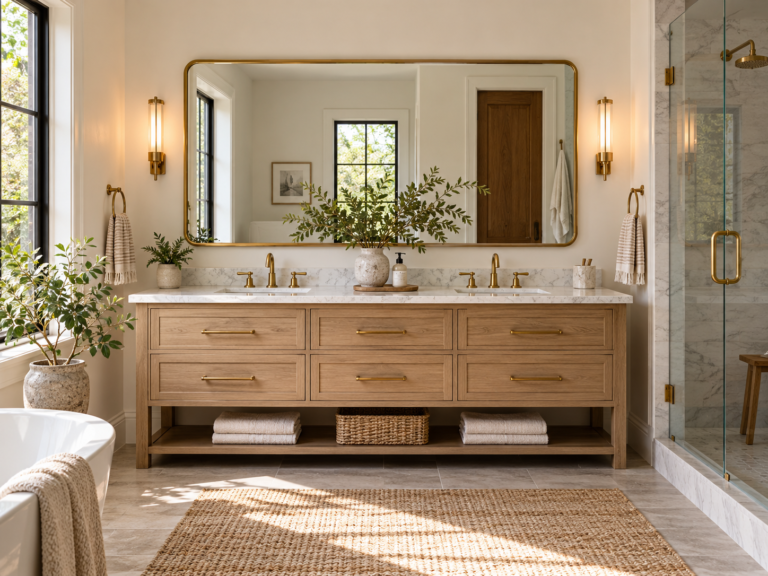
A tall mirror can provide a fuller body check and emphasize ceiling height. A horizontal mirror can relate strongly to a long console and widen the wall visually.
Let the available wall and desired reflection choose the orientation rather than assuming every console needs a landscape mirror.
3. Size from the outside frame
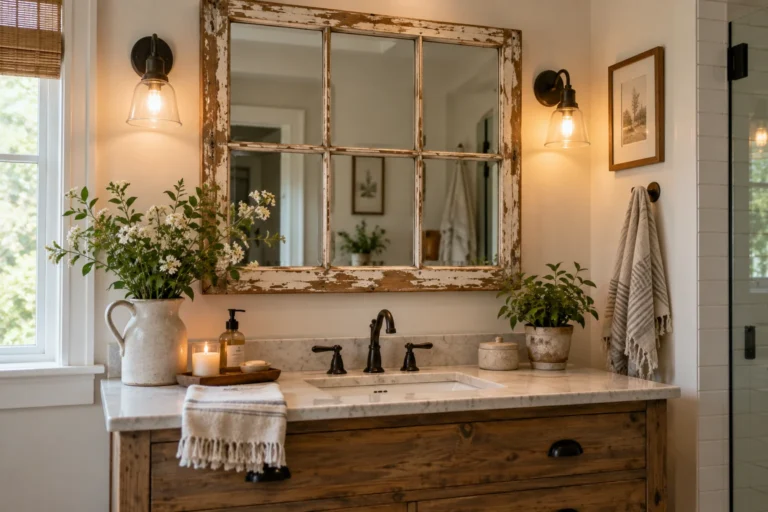
Decorative frames can add substantial width and visual weight. Use the finished outside dimensions when comparing mirror and console proportions.
A frameless mirror can use more of the same wall area for reflection but may feel lighter than a thick wood or metal frame.
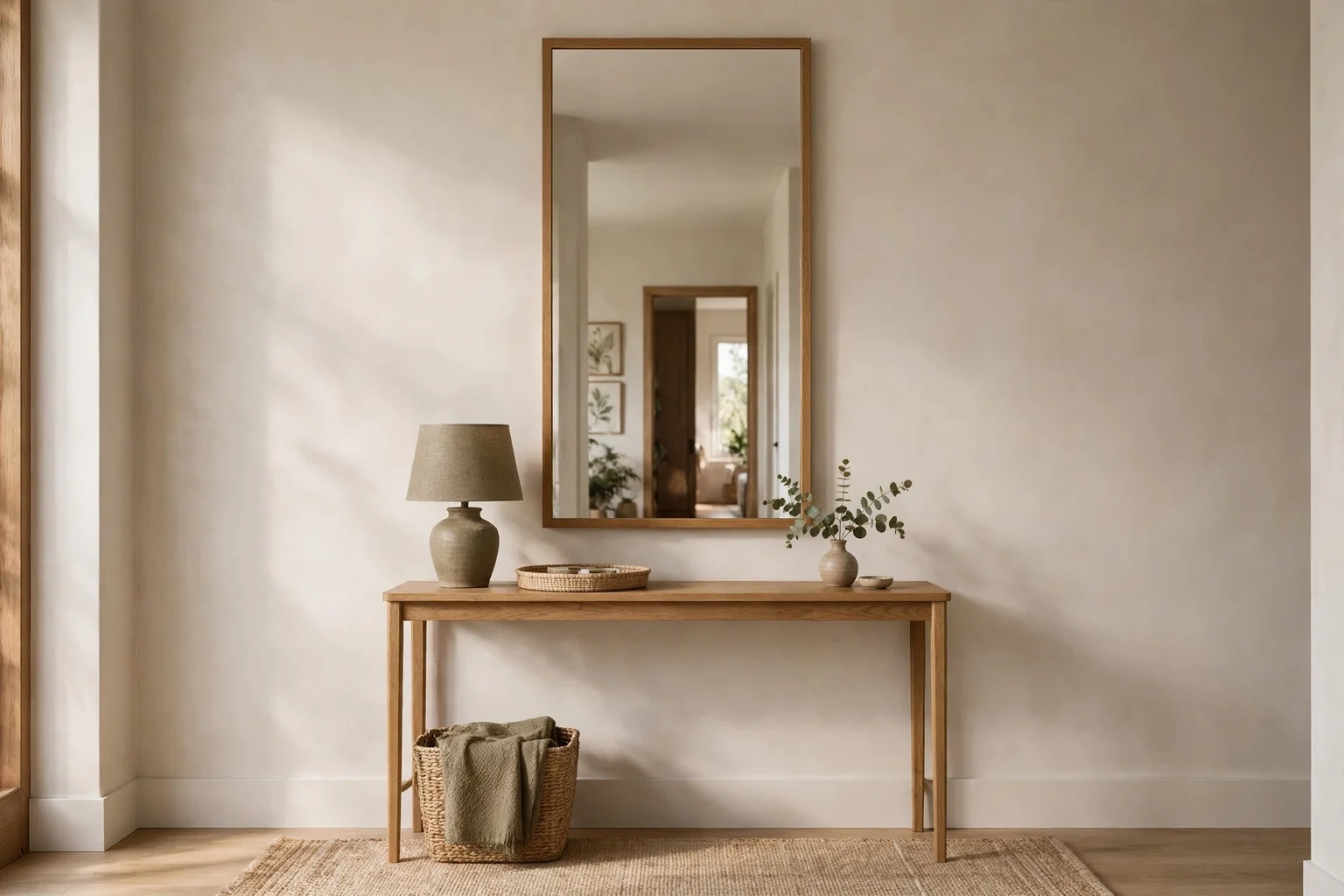
4. Set height from actual users
Stand where people naturally stop before leaving the house. Tape the mirror outline and check what the tallest and shortest regular users can see.
The useful position may differ from a purely decorative centerline, especially if the console is unusually high.
5. Inspect the reflection from several angles
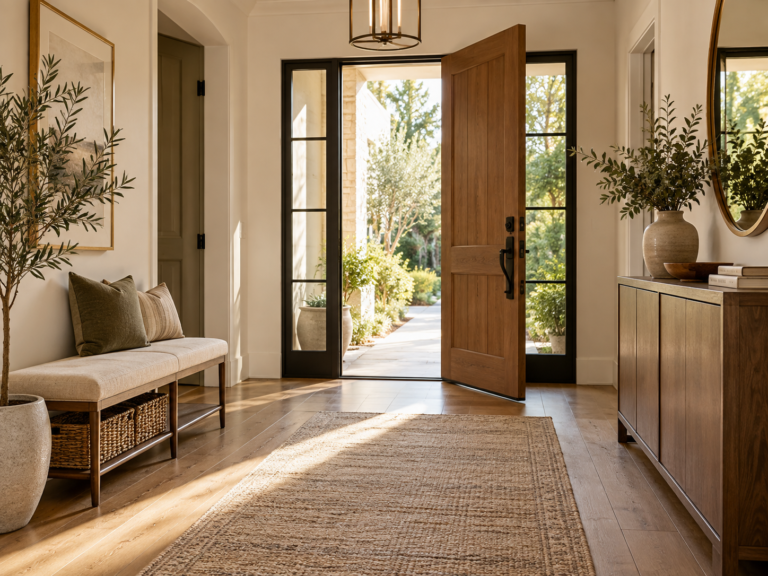
Stand at the front door, hallway and nearby room. Check whether the mirror reflects a pleasant open area or amplifies clutter, a glaring light source or an awkward door edge.
Small horizontal shifts can significantly improve the reflected view without changing mirror size.
6. Coordinate lamps and accessories
If a table lamp or tall vase sits on the console, make sure it does not cover a large part of the reflection or collide visually with the frame.
Keep enough surface free for keys, mail or the entry routine so styling does not defeat function.
7. Protect circulation and door movement
A mirror near the front door should not project into a tight path or interfere with the door, coat hooks or cabinet fronts. Check frame depth as well as width.
Use secure hanging hardware suited to the mirror weight and the wall construction, especially in a high-traffic entry.
8. Mock up the complete vignette
Tape the mirror outline, place the actual console and add approximate lamp or decor heights. Photograph the grouping from the door and from farther inside the home.
This lets you adjust proportion and reflection before committing to heavy hanging hardware.
Planning table
| Check | What to measure | Why it matters |
|---|---|---|
| Console | Outside width and height | Sets furniture reference |
| Mirror | Outside frame dimensions | Controls visual scale |
| Users | Eye/body viewing positions | Sets practical height |
| Reflection | View from door and hall | Affects perceived room |
| Circulation | Frame projection and door swing | Protects entry function |
Related Dwelanor guides
- Entryway & Hallway Design Guide — plan storage and circulation
- Mirror Guide — compare mirror shapes and placement
- Furniture Sizing Guide — coordinate console scale
- Slim Console Table Guide — fit narrow entries
- Wall Decor Guide — balance wall objects
- Home Lighting Guide — coordinate mirror and entry lighting
Bottom line
An entry mirror succeeds when it belongs visually to the console and works as a real mirror. Size the outside frame, set it for the people using it and inspect the reflection from the actual entry path before hanging.