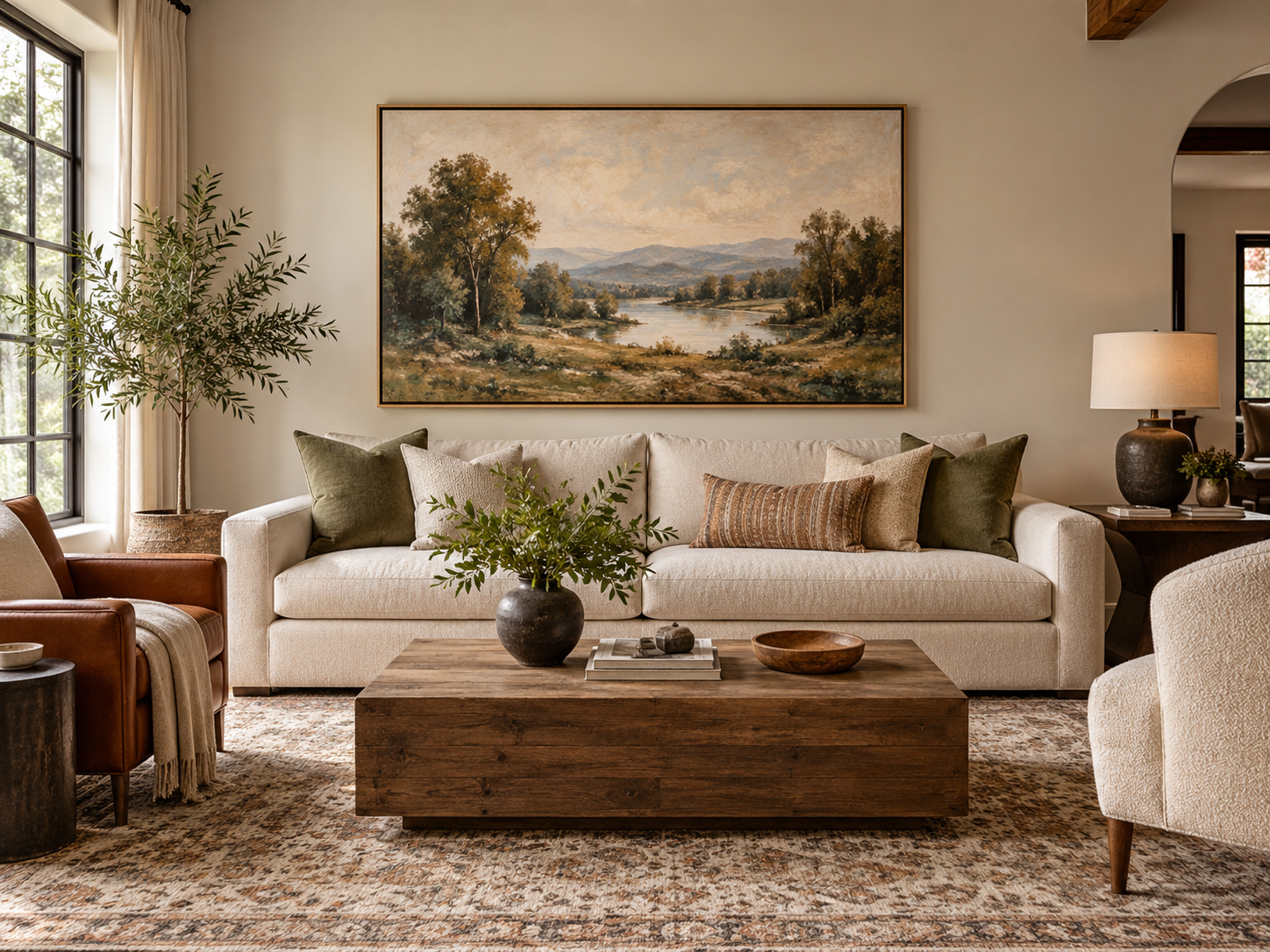
Wall Art Scale
Size art over a sofa from the sofa composition first, then adjust for the wall and frame. The most common visual problem is not a wrong wall measurement but a piece that feels disconnected from the furniture below it. Treat sofa and art as one vertical arrangement.
Measure sofa width → choose target visual width → include the frame → set gap above sofa → check ceiling and lamps → center to the furniture → mock up the full outline.
1. Measure the sofa composition
Measure the visible sofa width, then note side tables, floor lamps and chairs that visually join it. A sectional or asymmetrical chaise may have a different visual center from a straight sofa.
Decide whether the artwork is meant to relate only to the sofa or to the broader furniture group.
2. Use outside frame dimensions
Gallery listings may give image size and frame size separately. The outside frame is what the wall sees, so use that dimension for proportion and spacing.
A thick dark frame carries more visual weight than a frameless canvas of the same outside size.
3. Choose width before height
A piece that is broad enough to connect to the sofa usually feels more intentional than a narrow tall piece centered over a long seat. Once width works, choose height from the available wall.
For a pair or triptych, measure the entire group including gaps as one composition.
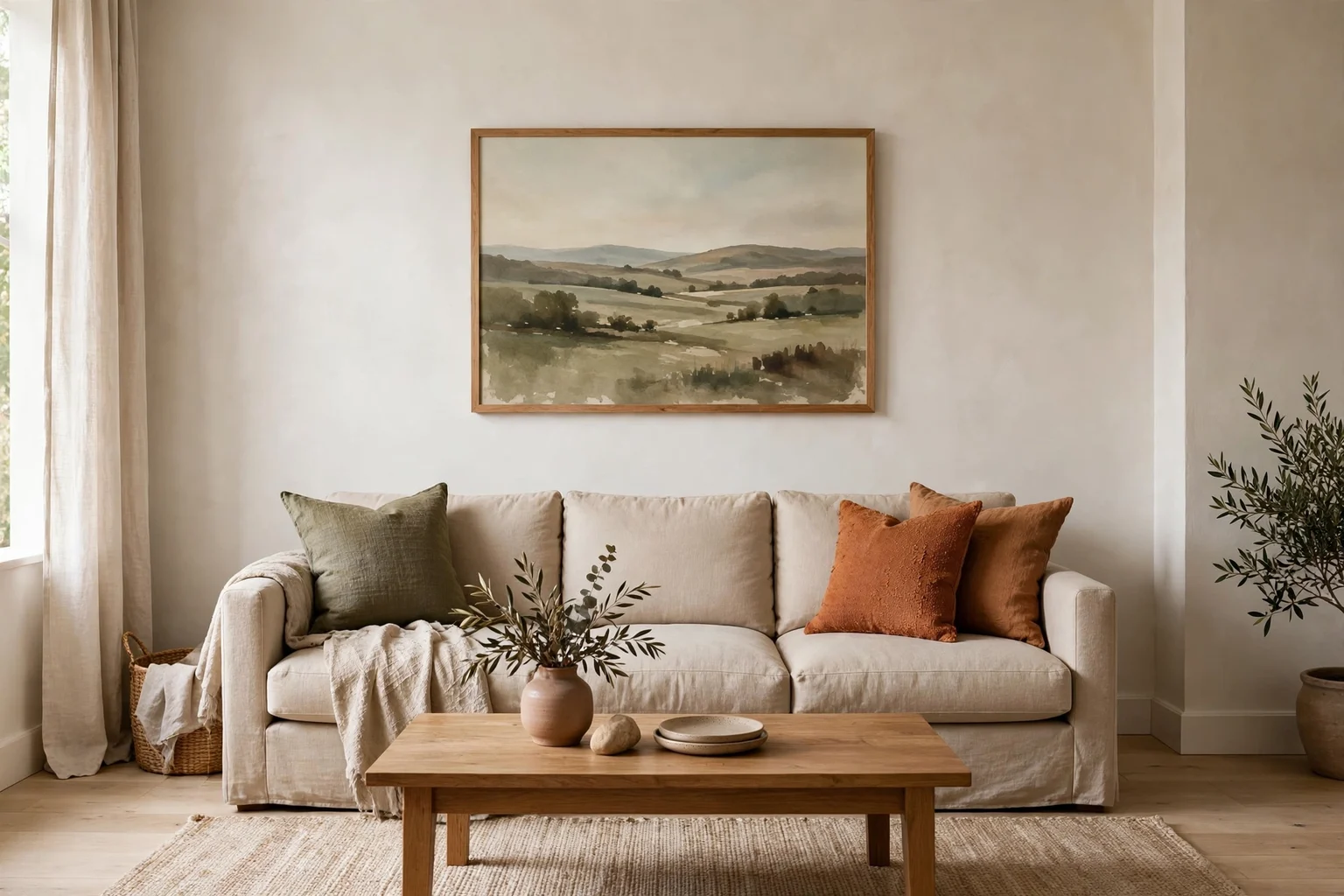
4. Set the gap above the sofa
Keep the art close enough that it reads with the furniture rather than floating toward the ceiling. Tape several gaps and judge them from across the room.
High sofa backs, loose cushions and picture lights can all affect the visible gap.
5. Center to the furniture where appropriate
If the sofa is intentionally offset on the wall, centering art to the wall can make the two elements look unrelated. In many arrangements, the sofa is the stronger reference.
A nearby architectural feature may justify a different alignment, so evaluate the entire wall rather than applying a rigid centerline.
6. Check lamps and head clearance
Tall table lamps or floor lamps can overlap the art visually. Make sure frames are not placed where people sitting or standing behind the sofa could strike them.
For heavy frames, use hanging hardware and wall anchoring appropriate to the actual weight and wall construction.
7. Compare one large piece with a group
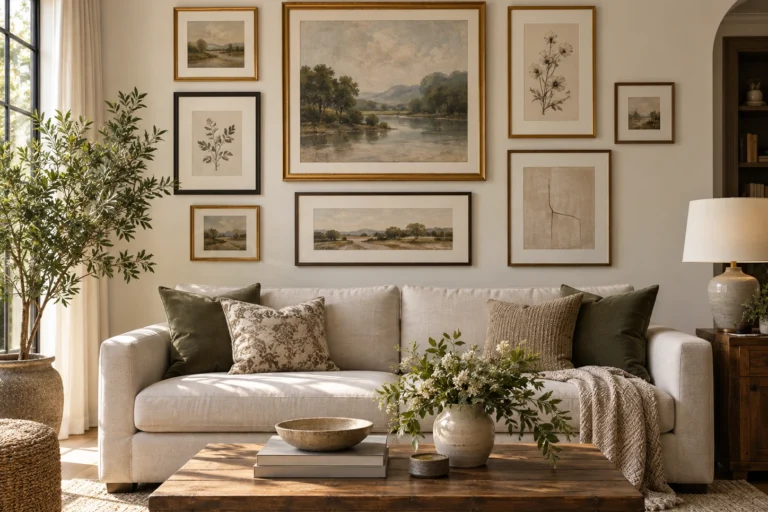
Two or three coordinated frames can create the needed visual width when one large artwork is impractical. Treat the outside edges of the whole arrangement as the art footprint.
Keep internal gaps consistent enough that the pieces read as one group.
8. Mock up at full size
Tape the exact outside frame or group outline to the wall. Sit on the sofa, stand at the main doorway and photograph the wall.
Small art often looks adequate when viewed close up but undersized from the room entrance, which is why a full-size mock-up matters.
Planning table
| Check | What to measure | Why it matters |
|---|---|---|
| Sofa | Visible furniture width | Sets primary reference |
| Artwork | Outside frame/group width | Controls visual relationship |
| Gap | Sofa back to frame bottom | Connects art to furniture |
| Wall height | Available vertical zone | Limits tall pieces |
| Nearby objects | Lamp and side-table outlines | Prevents visual collisions |
Related Dwelanor guides
- Wall Decor Guide — plan art scale and placement
- Gallery Wall Guide — build multi-frame compositions
- Living Room Design Guide — coordinate the full furniture wall
- Gallery Wall Frame Spacing Formula — set group gaps
- Picture Light Guide — add dedicated art lighting
- Picture Hanging Strips Guide — understand limits of removable hanging hardware
Bottom line
Art above a sofa should be sized as part of the furniture composition. Start from sofa width, include the frame or group gaps, keep the piece visually connected to the seat below and mock it up at full size before hanging.