Wall decor works best when it is scaled to the wall and furniture around it, then edited so the room has a clear focal hierarchy. Start with the largest blank walls and the furniture they relate to. Choose art, mirrors or collections only after deciding what each wall needs to do.
The useful sequence is wall role → furniture relationship → scale → composition → frame and material → hanging method → finishing details.
1. Scale the art to the composition, not the empty wall
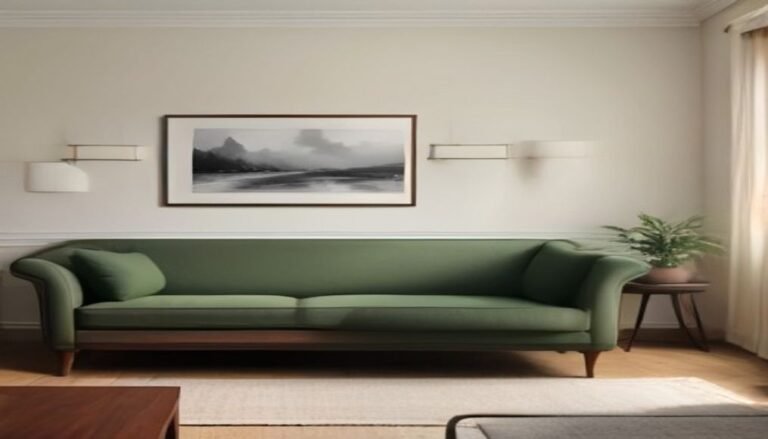
A piece can look large in isolation and still feel too small once it hangs above a broad sofa or sideboard. Judge the artwork together with the furniture below it. One larger piece, a pair or a compact group often creates more visual confidence than several small frames spread across a wide wall.
Mock up the outer dimensions with painter’s tape or paper before buying. This quickly shows whether the proposed art occupies enough visual area.
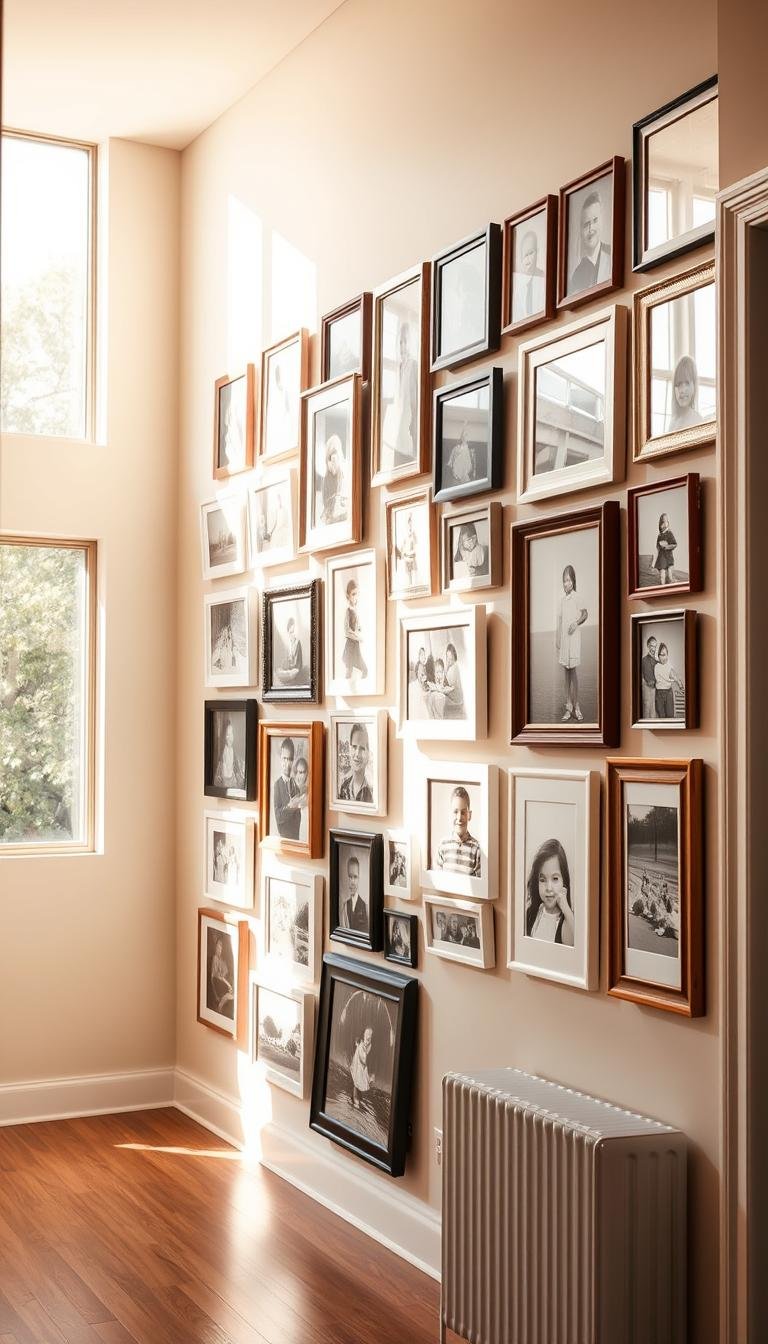
2. Treat gallery walls as one large shape
A gallery wall succeeds when the entire group reads as a single composition. Decide the outside boundary first, then arrange the individual pieces inside it.
Lay frames on the floor or create paper templates on the wall. Balance visual weight rather than making every gap mathematically identical. A large dark frame carries more visual weight than a small pale one even if their physical dimensions are similar.
For frames that shift after hanging, see how to keep gallery wall frames straight.
3. Choose a framing strategy
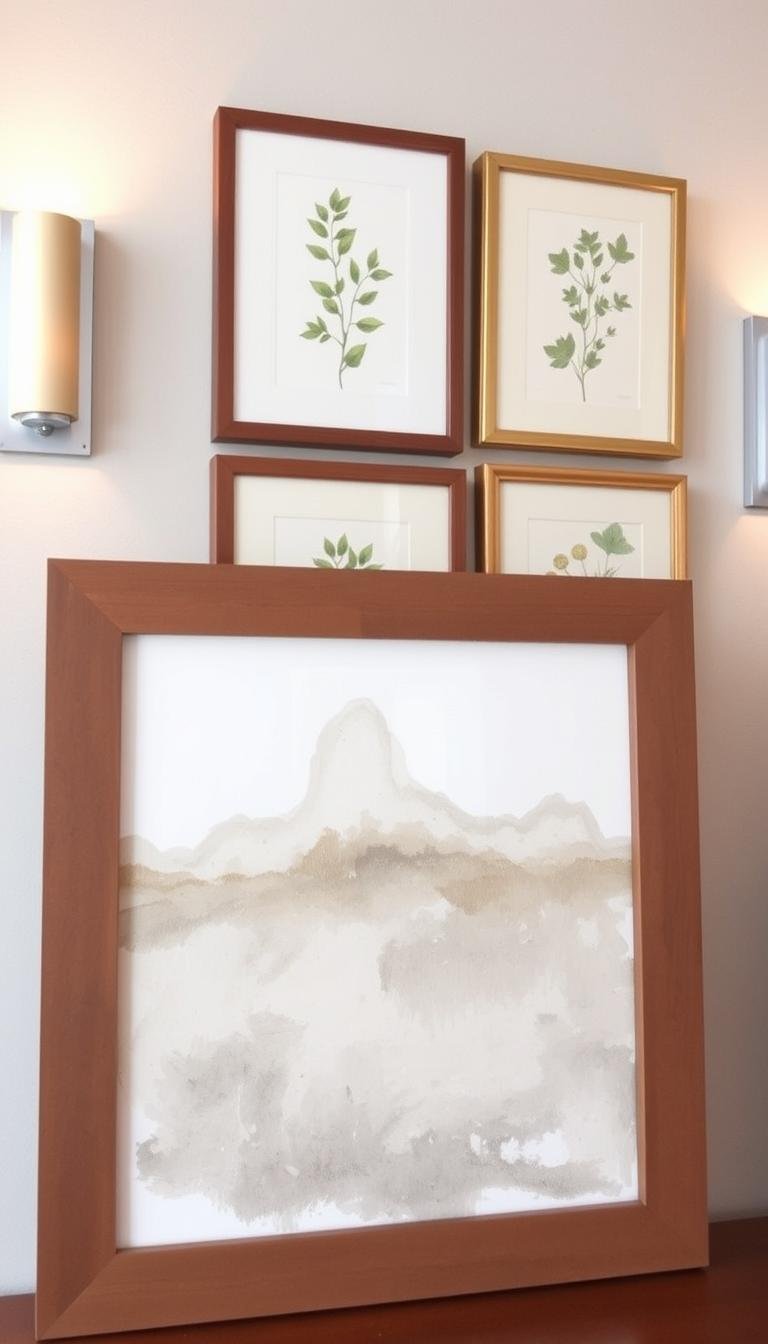
Frames do not have to match exactly. A collected room can combine wood, black, brass-tone or painted frames if there is enough repetition to create a relationship.
A simple approach is to repeat one element across the group: similar mat color, related frame thickness, one metal finish, or a consistent artwork palette.
4. Use matting to control scale and breathing room
A mat can make smaller artwork feel more substantial and can create visual separation between the image and frame. Wider matting often feels calmer, while narrow mats can make the image and frame read as one tighter object.
Choose archival materials when preservation matters and follow framing guidance appropriate to the artwork.
5. Plan placement from normal viewing positions
Art should feel connected to the room when viewed from where people actually stand or sit. Test the composition from the doorway, sofa, dining table or bed rather than only from directly in front of the wall.
When art sits above furniture, the visual relationship between the two matters more than following one universal hanging-height formula.
6. Use wall decor to support room architecture
Long hallways can benefit from a sequence of related pieces. A tall narrow wall may suit a vertical work. A broad sideboard can support a wide landscape or grouped composition. Staircases can use repeated pieces to follow the movement of the space.
Browse Entry & Hallways for corridor and entryway planning.
7. Mix artwork types without making the wall chaotic
Photography, prints, paintings, textiles, drawings and sculptural wall objects can work together when the palette, subject matter or framing creates enough connection.
Do not add variety for its own sake. A group becomes more coherent when at least one attribute repeats.
| Mix | How to connect it |
|---|---|
| Different frame finishes | Repeat mat color or artwork palette. |
| Different art styles | Keep frame family or dominant colors related. |
| Photos and illustrations | Use consistent scale or a clear grid. |
| Art and objects | Control the outer shape and leave enough space between forms. |
8. Treat mirrors as their own design element
A mirror can function like wall decor, but it also reflects light, views and movement. Choose its placement by considering what it will reflect as well as how it fills the wall.
Browse the Mirrors library for sizing and placement.
9. Renter-friendly wall decor needs a surface-aware plan
Removable strips and hooks can be useful, but their performance depends on the exact product, wall finish, load and installation conditions. Follow the manufacturer’s rating and preparation instructions and test where appropriate.
For heavier frames, see our adhesive picture-hanging guide and removable wall hanger guide. Heavy mirrors require a different level of planning.
10. Heavy mirrors and art need structural thinking
Do not treat a heavy mirror or framed work like a lightweight print. Verify the object’s hanging hardware, wall construction and the mounting system’s published requirements.
Our heavy mirror hanging guide explains why the wall, frame and hardware all matter.
11. Use wall color as part of the composition
Artwork does not exist independently of the wall behind it. High-contrast art can become a strong focal point on a pale wall. Tonal artwork on a darker wall can create a quieter, layered effect.
If the room already contains strong pattern through rugs, upholstery or wallpaper, a simpler wall composition may create better balance.
12. Wallpaper and art need visual hierarchy
Artwork can sit over wallpaper, but the pattern and art should not compete at the same intensity. On a strong mural or large-scale botanical, fewer and larger artworks often feel more intentional than many small frames.
For bedroom applications, see our bedroom wallpaper guide.
13. Use negative space deliberately
Not every wall needs decoration. An empty area can make nearby artwork, architecture or furniture feel more important. When a room feels busy, removing one wall grouping can improve the whole composition more than adding another piece.
14. Build a personal collection slowly
Wall decor feels more convincing when it reflects real interests, places, people and visual preferences. Combine original art, prints, family photographs, vintage pieces and inexpensive finds when they genuinely belong together.
The goal is not for every wall to look professionally staged. It is for the room to feel considered and specific to the people who live there.
Wall decor checklist
- The wall has a clear role in the room.
- Art is scaled to nearby furniture and architecture.
- Gallery groups read as one composition.
- Frames repeat enough attributes to feel related.
- Hanging methods suit the object and wall.
- Mirrors reflect something useful or attractive.
- Wallpaper and art have a clear visual hierarchy.
- Some negative space remains.
Explore wall decor by room and format
Continue through Wall Decor & Art for gallery walls, hanging methods, family photos and renter-friendly solutions. Start with scale and composition, then let the individual artwork provide the personality.