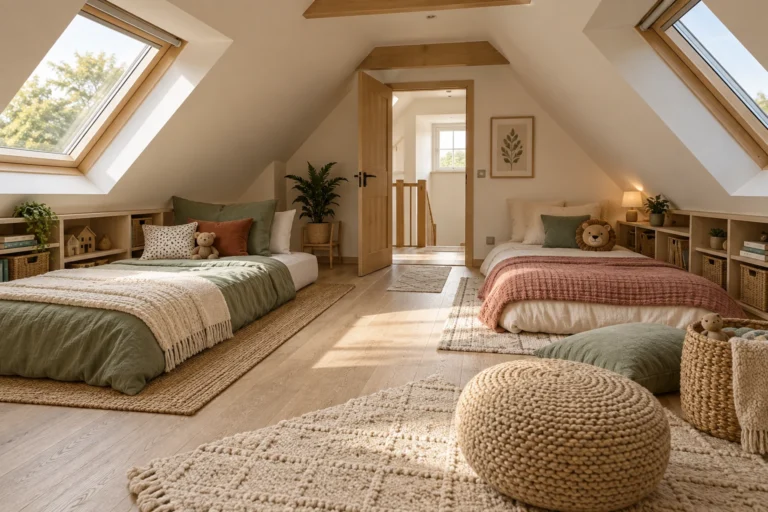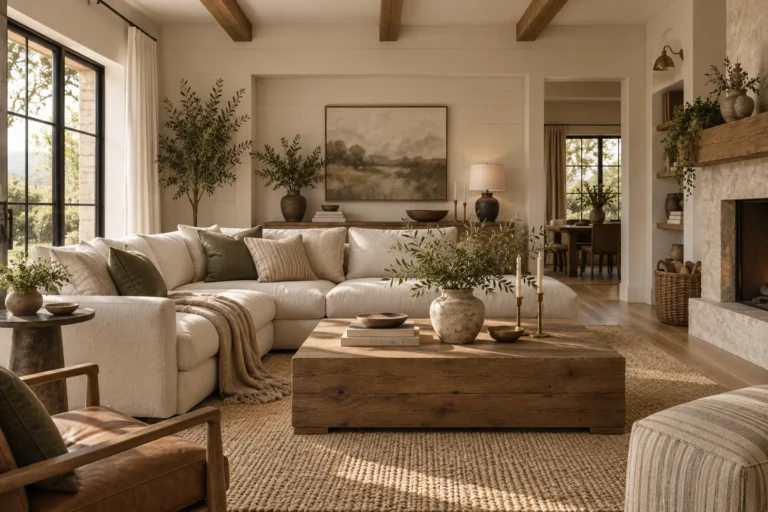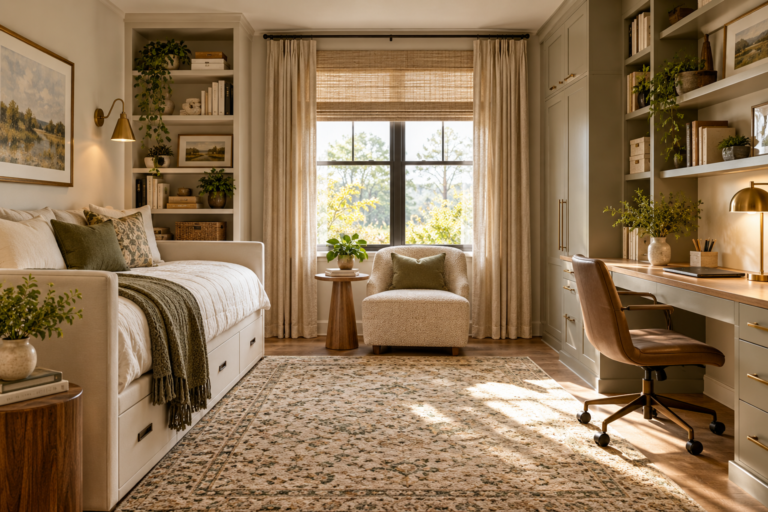
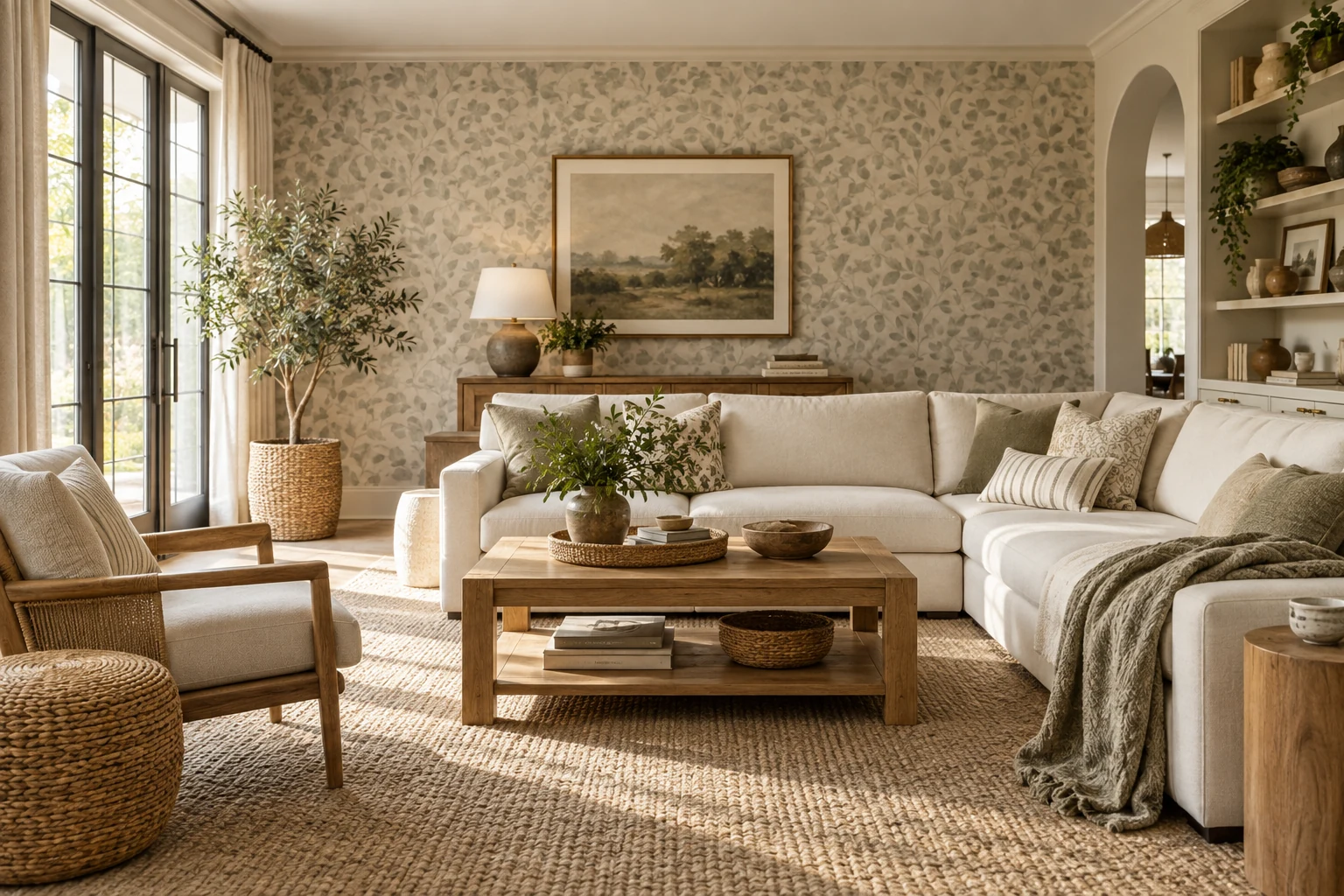
Bedroom wallpaper works best when the pattern, scale, placement, wall condition and surrounding finishes are planned together. The goal is not to chase a yearly trend. It is to choose a wall treatment that supports the room’s mood, works with the bed and windows, and remains practical to live with.
A useful decision chain is room size → wall condition → wallpaper type → pattern scale → placement → lighting → bedding and furniture.
Bed wall, full room or ceiling?
The bed wall is usually the simplest place to start because the bed already gives the room a visual anchor. A strong botanical, mural, stripe or textured paper can frame the headboard without competing with every other surface.
Full-room wallpaper creates a more immersive result. It works especially well with lower-contrast patterns, small repeats, tonal textures and restrained color palettes. The surrounding furniture should then stay calmer so the room does not become visually crowded.
A wallpapered ceiling can make a bedroom feel more layered, particularly in rooms with simple wall architecture. Before committing, check ceiling condition, light fixtures, vents and the direction of the pattern. Ceiling installation is less forgiving than a straightforward wall and may be better handled by a professional installer.
How pattern scale changes the room
Large motifs create fewer, bolder shapes across the wall. Small repeats create more visual activity. Neither is automatically better for a small bedroom.
A large botanical or scenic pattern can actually feel calm in a compact room when the background is restrained and the repeat is not overly busy. A tiny high-contrast print can feel much more energetic even though each motif is small.
| Pattern type | Visual effect | Useful starting point |
|---|---|---|
| Large botanical | Strong focal point, organic movement | Bed wall or one uninterrupted wall |
| Small repeat | More texture and visual rhythm | Full-room wrap or smaller wall sections |
| Vertical stripe | Emphasizes height | Rooms with simple wall lines |
| Horizontal or wide geometry | Emphasizes width | Long wall or low furniture composition |
| Scenic mural | Creates one large visual story | Wall with few interruptions |
| Textured or linen-look paper | Adds depth without a strong motif | Bedrooms that need quiet visual interest |
Botanical wallpaper
Botanicals can range from tiny vintage florals to oversized leaves and painterly branches. The important attributes are background color, motif scale, contrast and repeat.
For a calmer bedroom, let the wallpaper provide the pattern and keep bedding more tonal. Pull one or two colors from the wall into cushions, a throw, lamp base or rug rather than matching every color in the print.
Quiet Japandi and natural textures
For a restrained bedroom, consider linen-look, plaster-look, grasscloth-inspired or soft abstract papers in warm neutrals. These can add depth without creating a dominant focal point.
Pair them with pale wood, linen, matte ceramics and simple lighting. If you like this direction, our Japandi home guide develops the wider palette and material relationships.
Cottagecore and romantic patterns
Small florals, trailing vines, checks and vintage-inspired motifs can support a cottagecore bedroom without making the room feel themed. The easiest way to keep the look collected is to mix the wallpaper with plain linens, simple wood furniture and a few older or handmade-looking pieces.
For a fuller room plan, continue with our cottagecore bedroom ideas.
Geometric and retro patterns
Arcs, grids, blocks and waves add stronger rhythm. They work best when the rest of the room repeats one or two shapes or colors from the wallpaper instead of introducing many unrelated motifs.
Before ordering, tape a sample at eye level and another behind the pillows. Look at it from the doorway and from bed. Geometry that seems subtle in a sample book can become much louder across an entire wall.
Scenic and city murals
A mural acts more like oversized artwork than repeating wallpaper. Choose the wall based on where the scene will be viewed from, then check whether doors, windows, sconces or headboards cut through important parts of the image.
For a bedroom, scenes with a clear focal point often work best when that focal point is not hidden behind the tallest part of the headboard.
Dark wallpaper in a bedroom
Dark wallpaper can make a room feel intimate rather than gloomy when the lighting and textiles are balanced around it. Deep green, navy, charcoal, chocolate and muted plum can all work when there is enough layered light and contrast from bedding, trim or furniture.
If the room already receives little daylight, test a large sample first. Use the Home Lighting Guide to plan layered light, then compare the wallpaper against the room’s actual evening conditions.
Peel-and-stick versus pasted wallpaper
Peel-and-stick wallpaper can be useful for renters and shorter-term projects, but removal is not automatically damage-free. Results depend on the wall paint, curing time, surface texture, humidity, adhesive and how long the material remains installed.
Traditional pasted wallpaper can provide a more permanent finish and may offer a broader range of papers and textures. Installation quality depends on proper wall preparation, seam alignment and the exact adhesive system.
For removable products, use our clean-removal wallpaper guide before assuming any product will peel away perfectly.
Wall condition matters more than people expect
Wallpaper does not hide every wall defect. Raised texture, loose paint, moisture damage, cracks and uneven repairs can telegraph through or interfere with adhesion.
Inspect the wall first. Repair underlying moisture problems before covering the surface. Follow the wallpaper manufacturer’s preparation, primer and adhesive instructions for the exact wall condition.
Coordinate wallpaper with the headboard
The headboard and wallpaper occupy the same visual zone, so plan them together.
- A quiet upholstered headboard works well against a stronger mural or botanical.
- An open cane or spindle headboard can let more of the pattern remain visible.
- A highly sculptural headboard usually benefits from a quieter wallpaper behind it.
- A low headboard can preserve more of a mural or window relationship.
If a low window sits behind the bed, see our headboards for low windows guide.
Lighting changes wallpaper color
Wallpaper should be judged in the actual room, not only under showroom or screen lighting. Warm lamps can make creams, reds and woods feel richer. Cooler daylight can make blue and green undertones more obvious.
Place a sample on the intended wall and check it in morning light, afternoon light and with the evening lamps on. Metallic and embossed surfaces should also be viewed from an angle because grazing light can emphasize shine and texture.
Coordinate bedding after the wallpaper
If wallpaper is the main pattern, let the largest bedding pieces stay quieter. A useful sequence is:
- Choose wallpaper.
- Pick one dominant neutral from the pattern for sheets or duvet.
- Repeat one secondary color in a throw or cushion.
- Add texture through linen, wool, quilting or boucle rather than another competing print.
- Use furniture finishes that connect to the wallpaper’s warm or cool undertone.
What to do in a rental
Confirm what the lease permits before installing wallpaper. A removable product may still pull weak paint or leave adhesive residue.
Test a sample in an inconspicuous area, follow the manufacturer’s surface requirements and avoid applying adhesive material over damaged or uncured paint.
How to choose a bedroom wallpaper sample
Order the largest sample available rather than judging a tiny swatch. Tape it in several positions around the room. If the wallpaper has a large repeat, also review a full-room image from the manufacturer so you understand how often the motif appears.
Check the sample beside:
- the headboard;
- curtains or shades;
- flooring;
- bedside lighting;
- the rug;
- major wood or metal finishes.