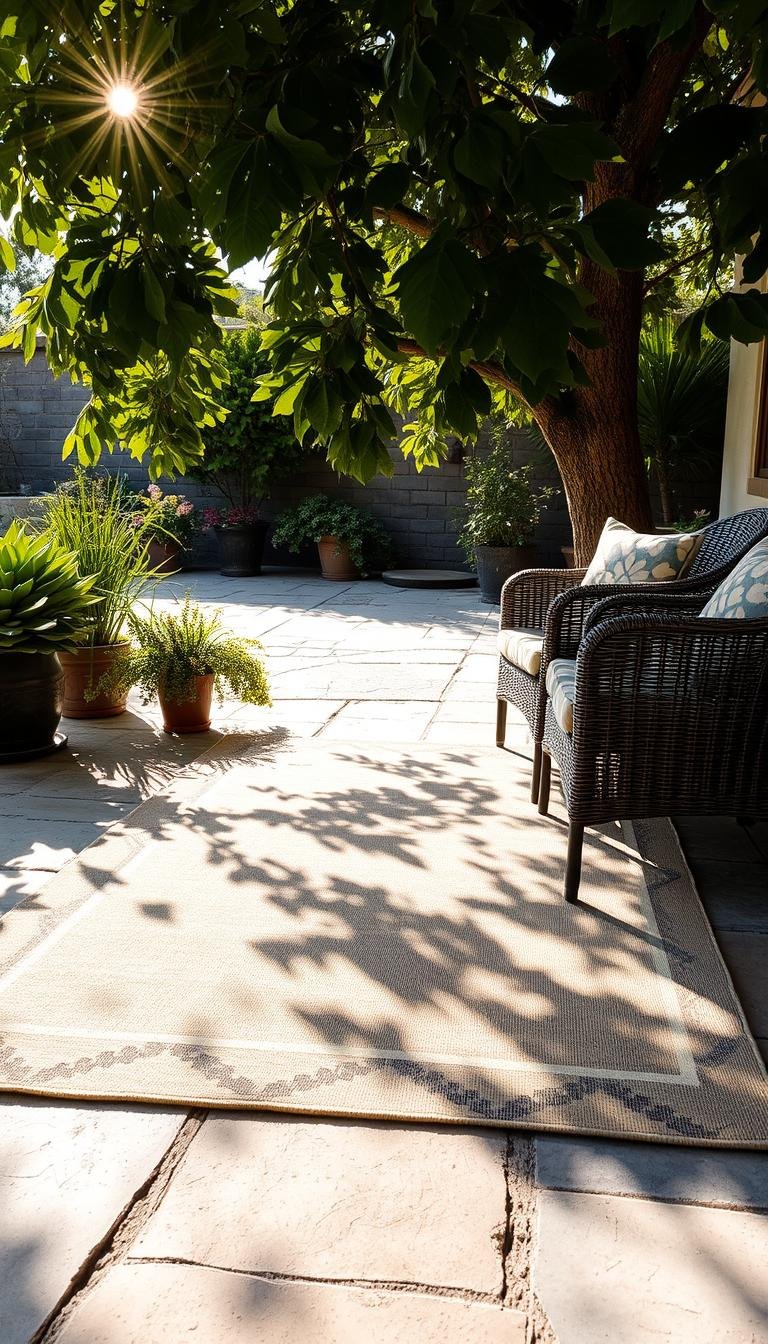
Outdoor rugs mildew when moisture stays trapped against the rug or patio surface long enough for mold to grow. The most reliable prevention is simple: improve airflow, remove standing water quickly, keep dirt from building up, and let the rug dry completely after rain or cleaning.
Why mildew forms under patio furniture
Heavy furniture can block sun and airflow, especially where chair or table bases press the rug against a damp surface. Dirt and organic debris can make the problem worse by holding moisture in the fibers and backing.
- Shade slows evaporation.
- Furniture blocks airflow.
- Dense or absorbent backing can hold water.
- Dirt and leaf debris keep damp areas wet longer.
What to do after rain
Move or lift furniture enough to expose the damp area and let air reach both the rug and the patio beneath it. If water has pooled, remove it with a squeegee, towels, or a wet/dry vacuum if appropriate for the rug.
Flip or raise part of the rug so the underside can dry too. Do not roll or store the rug while it is still damp.
Choose a rug made for outdoor conditions
Check the manufacturer’s care and placement guidance before buying. Synthetic outdoor rugs are often easier to dry than absorbent natural-fiber rugs, but no material is mildew-proof if it stays wet and dirty.
Pay attention to the backing as well as the face fiber. A rug that sheds water and dries quickly is generally easier to manage in a humid or rainy climate.
Use an outdoor-rated rug pad only if it helps drainage
If you use a pad, choose one specifically approved for outdoor use and for the surface underneath. A dense indoor pad can trap moisture instead of helping. The pad should not interfere with drainage or create a sealed wet layer under the rug.
Routine cleaning
Vacuum, sweep, or shake out loose dirt regularly. For washing, follow the rug manufacturer’s instructions for detergent, brushing, rinsing, and drying.
Avoid universal cleaning recipes. Bleach, vinegar, solvents, pressure washing, or strong cleaners can discolor fibers, weaken backing, or damage the patio surface beneath the rug. Use only methods the manufacturer allows.
If you already see mildew
Move the rug to a well-ventilated area, let it dry, and remove loose debris before cleaning. Then use the manufacturer-approved mildew or stain treatment for that material.
If the rug has widespread growth, persistent odor, deteriorating backing, or mold that returns quickly after cleaning, replacement may be more practical than repeated treatment.
Furniture setup matters
Furniture with open or slatted bases usually allows more airflow than broad solid bases. You can also rotate or reposition pieces occasionally so the same damp area is not covered continuously.
After prolonged rain, temporarily moving lightweight furniture off the rug can speed drying considerably.
Storage
Clean the rug and let it dry completely before seasonal storage. Store it in a dry location according to the manufacturer’s instructions. Avoid sealing a rug in plastic while any moisture remains inside.
Simple prevention checklist
| Problem | Best response |
|---|---|
| Water after rain | Remove pooling and expose both sides to airflow |
| Damp area under furniture | Move or lift furniture temporarily |
| Dirt buildup | Vacuum or sweep both rug and patio surface |
| Slow drying | Raise, flip, or move the rug to a breezier location |
| Recurring mildew | Review rug material, backing, drainage and placement |
Bottom line
The best way to stop an outdoor rug from mildewing is to keep water from staying trapped underneath it. Prioritize drainage and airflow, dry both sides after wet weather, keep the rug and patio clean, and follow the care instructions for the exact rug material.
For more outdoor-space planning, see our Room Guides.