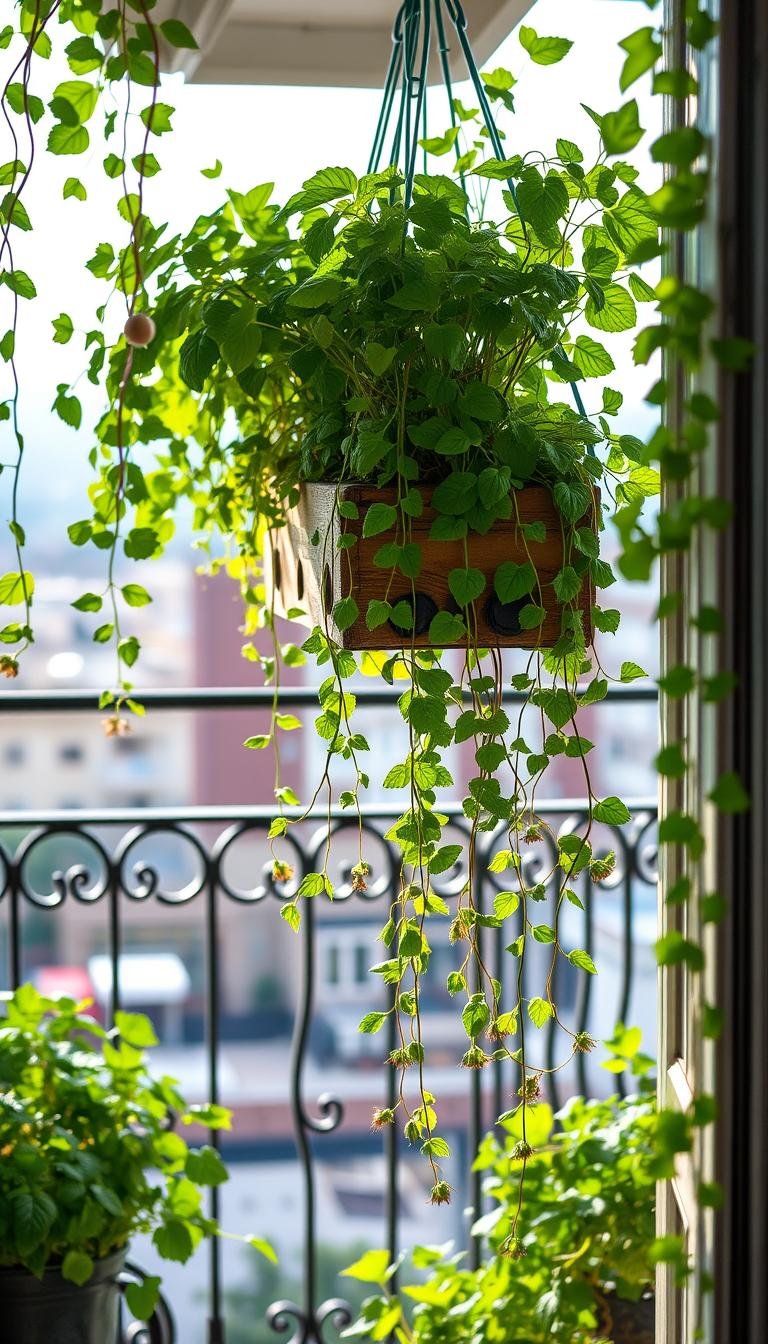
A balcony herb garden works best when the containers match the light, railing and building rules—not when the setup is forced into a generic DIY plan. Start by checking how much direct sun the balcony actually gets, then choose compact herbs that suit those conditions.
For the railing itself, use planters or brackets designed for that railing profile and load. Keep heavy containers on the inside of the guard where possible, and do not drill, clamp or hang anything from a balcony railing if your lease, building rules or manufacturer instructions prohibit it.
Drainage matters just as much as sunlight. Use containers with proper drainage holes and a potting mix intended for containers, and make sure runoff will not drip onto balconies, sidewalks or property below.
My plan for turning a small balcony into a productive herb garden
I mapped every inch so each plant would have sun, soil depth, and space to grow. I grouped sun‑loving Mediterranean herbs like basil, rosemary, thyme, and oregano on the brightest rail span to capture six-plus hours of light. Shade‑tolerant herbs such as mint, parsley, chives, and lemon balm stayed in slightly indirect spots.
Planter choices mattered. I aimed for railing planters with 6–8 inches of soil, plus hanging pots or a vertical garden wall if I needed more room. Drainage holes were nonnegotiable to avoid root rot, and I considered self‑watering models for hot spells.
To keep the small balcony feeling tidy, I matched pot colors and kept consistent mounts. Adjustable brackets and over‑the‑rail fittings that fit 2×4 or 2×6 rails secured everything against wind. I grouped thirsty plants together and kept woody Mediterranean types separate so I wouldn’t overdo the water.

| Herb group | Light | Soil depth | Best planter option |
|---|---|---|---|
| Basil, rosemary, thyme | Full sun (6+ hrs) | 6–8 in | Railing planter |
| Mint, parsley, chives | Partial sun/indirect | 6–8 in | Hanging pot |
| Oregano, sage, lavender | Full sun | 6–8 in | Vertical wall option |
| Flowers (accent) | Varies | 4–6 in | Small pots or tiered stack |
How to use the railing safely
The simplest setup is usually a purpose-made railing planter with an adjustable bracket or clamp specified for the rail width and shape. Choose a product with a published load limit, and count the weight of wet soil—not just the empty pot.
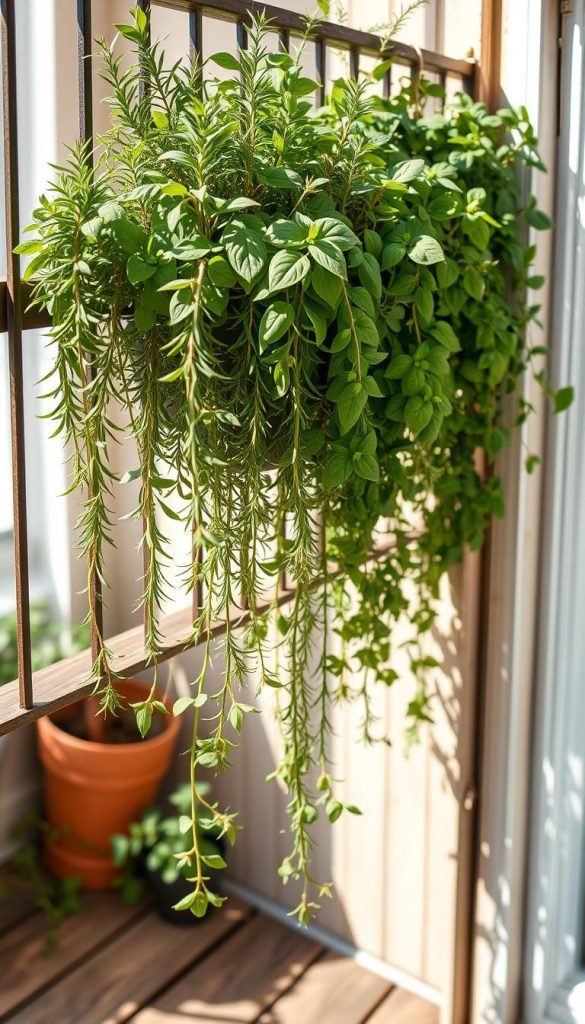
Avoid homemade rope shelves, improvised hooks and other attachments that rely on knots or friction alone, especially on upper-floor balconies. Wind, saturated soil and repeated watering can add more movement and weight than the setup appears to carry when dry.
- Prefer inside-mounted planters so a failure does not send a container outward.
- Keep the guardrail itself unobstructed and do not create a climbable step for children.
- Do not block required drainage paths, exits or access to the railing.
- Recheck brackets after storms and whenever a planter is repotted into a larger container.
Planting, watering, and caring for my hanging herb garden
I set up each pot with enough depth and fresh mix so roots could spread without compacting. I always used potting soil, never garden soil, to keep the growing medium light and pest‑free.
Potting up correctly: I repotted nursery starts into containers with real drainage holes and 6–8 inches of depth. That depth let roots develop and kept plants from stalling midseason. For woody, sun‑loving herbs like rosemary and lavender I used a well‑draining mix. Leafy types such as parsley and mint got slightly moister spots.

Watering without soggy soil
I checked the top inch of soil with my finger and lifted pots to judge weight. If the pot felt light or the top inch was dry, I watered until runoff appeared from the drainage hole. Then I emptied any saucer so roots never sat in standing water.
Pruning, pinching, and feeding
Regular pinching kept plants bushy; I removed basil flowers to keep flavor strong. I used slow‑release or balanced liquid fertilizer when leaves yellowed or showed a purple tint. I pruned woody herbs once a year outside their toughest growth period to rejuvenate stems.
| Task | Method | Why it matters |
|---|---|---|
| Pot depth & soil | 6–8 in; fresh potting mix | Roots spread; soil stays light and well‑aerated |
| Drainage | Open holes; empty saucers | Prevents root rot and soggy soil |
| Watering cue | Top‑inch test + lift pot | Avoids under- or overwatering |
| Fertilizing | Slow‑release or balanced liquid | Fixes yellowing or purple tints in leaves |
- I grouped thirstier plants like mint and parsley together to simplify watering.
- I sheltered delicate pots behind sturdier ones to reduce wind stress and water loss.
- I inspected the lineup weekly for crowding, pests, or soggy spots and adjusted as needed.
Wind, water and balcony safety
Balcony planters have to stay secure when the weather changes. A container that feels stable when the soil is dry can become much heavier after rain, and wind can turn a loosely mounted box into a lever.
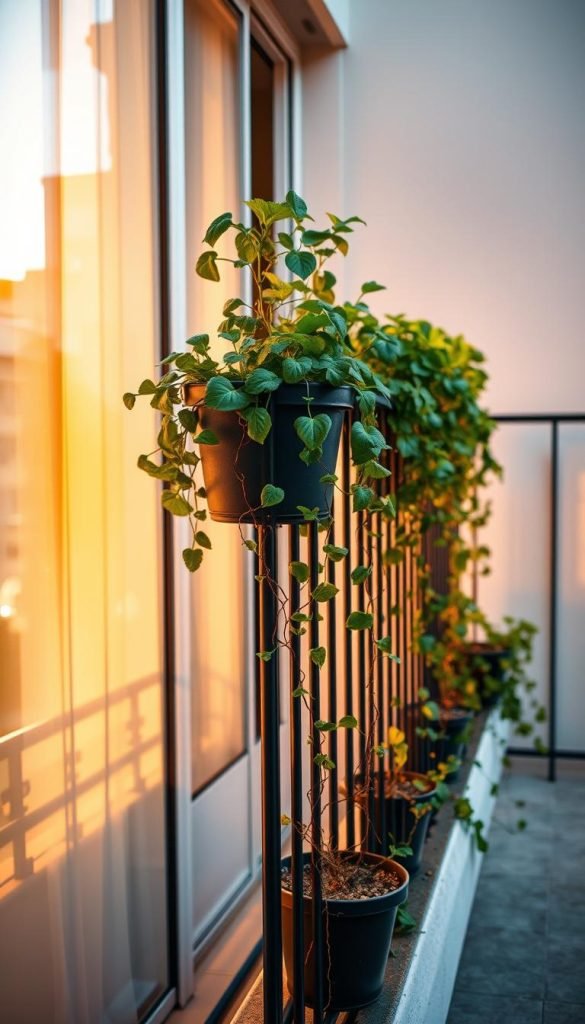
Use the planter manufacturer’s brackets and stated load limits, keep drainage clear, and bring vulnerable pots inside during severe weather if the product instructions call for it. A floor-standing vertical planter can be a better choice when the railing is glass, unusually shaped, historic, or not approved for attachments.
The simplest setup
Match the herbs to the light, use container potting mix with open drainage, and choose railing planters designed for the exact rail you have. If you cannot verify that the attachment is permitted and securely rated for wet soil and wind, keep the garden on the balcony floor instead of hanging it over the edge.