A teen bunk bed feels more grown-up when the structure is simple, the proportions are comfortable, and each sleeper gets real privacy, lighting and storage. The safest improvements are usually visual and functional, not structural modifications to the bed itself.
The useful planning chain is room size → bunk configuration → manufacturer mattress limits → guardrails and access → ceiling clearance → lighting → privacy → storage → teen style.
Current U.S. Consumer Product Safety Commission rules require guardrails on both sides of the upper bunk, and the top of the guardrail must remain at least 5 inches above the top of the mattress. That is why mattress thickness is a safety dimension, not a styling preference. See the CPSC bunk-bed guidance.
Why teens often dislike bunk beds
Most objections fall into a few practical categories:
- the upper bunk feels cramped;
- the ladder feels awkward;
- the room looks childish;
- there is not enough privacy;
- personal items have nowhere to go;
- the lower sleeper feels boxed in;
- the bed dominates the whole room.
Those problems are better solved through layout, furniture selection, lighting, textiles and storage than by altering guardrails or adding untested structural features.
Twin-over-full often feels less juvenile
A twin-over-full configuration can make the lower level feel more like a conventional bed while retaining the vertical efficiency of a bunk.
Before choosing one, compare the full footprint with the room. The lower mattress is wider, so desk clearance, closet doors, nightstands and circulation may become tighter.
Check the manufacturer’s listed mattress sizes and thickness limits for both levels rather than assuming any twin or full mattress will fit safely.
Low-profile bunk beds can make the room feel calmer
A lower overall frame can reduce the tower effect that some teens dislike. It can also improve the visual relationship between the bed and a low ceiling.
Low-profile does not mean altering a standard bunk or lowering its guardrails. Choose a model designed that way and follow its assembly instructions.
Loft beds are useful when the lower area has a real job
A loft can work well for a teen who wants a desk, reading chair, dresser or lounge area underneath the bed rather than a second sleeping position.
Measure seated headroom below the loft and usable headroom above the mattress. Also check desk depth, monitor position, chair movement and access to outlets.
Keep electrical cords routed away from the ladder, sleep area and moving chair path. Do not attach power strips, chargers or lamps to the bunk unless the product and bed instructions specifically allow it.
Stairs versus ladders
| Access type | Main advantage | Main tradeoff |
|---|---|---|
| Integrated ladder | Uses less floor space | More vertical climbing |
| Angled ladder | Can feel easier to climb | Projects farther into the room |
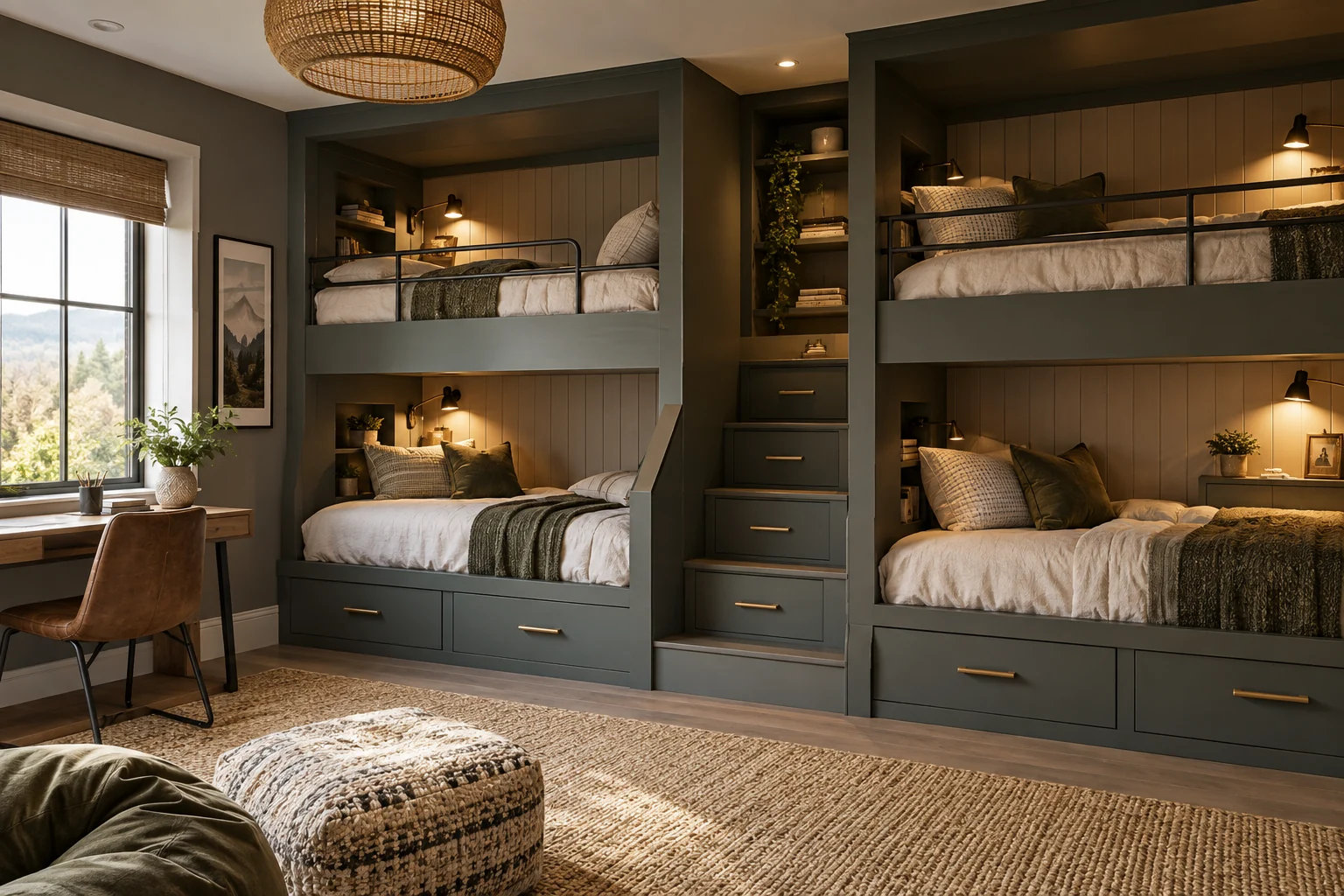
| Built-in stairs | Broader steps and possible storage | Uses more floor area |
Use the access system supplied or approved for the bed. A custom stair or ladder changes how the bed is entered and can affect the structure, so it should be engineered as part of the bed rather than attached casually.
Give each sleeper a personal zone
A bunk feels more mature when each level has a few independent functions:
- a reading light;
- a small shelf or cubby;
- a place for glasses or a book;
- an individual bedding palette;
- privacy that does not compromise safe access or ventilation.
Keep personal storage within easy reach so items do not accumulate on ladders, stairs or the upper mattress edge.
Use privacy curtains carefully
Curtains can make a shared bunk feel more private, but they should not create entanglement, block access or interfere with the bed’s guardrail system.
If the bed manufacturer offers a compatible privacy accessory, use that system. Otherwise, place a room-level curtain outside the bed structure rather than tying or wrapping fabric around guardrails, ladders or posts.
Reading lights should stay clear of bedding
Use a listed light intended for the location and mount it according to its instructions. Keep hot surfaces, cords and plugs away from pillows and blankets.
A wall-mounted or headboard-adjacent reading light can provide individual control without attaching hardware to the bunk frame.
Storage can make the bunk feel like built-in furniture
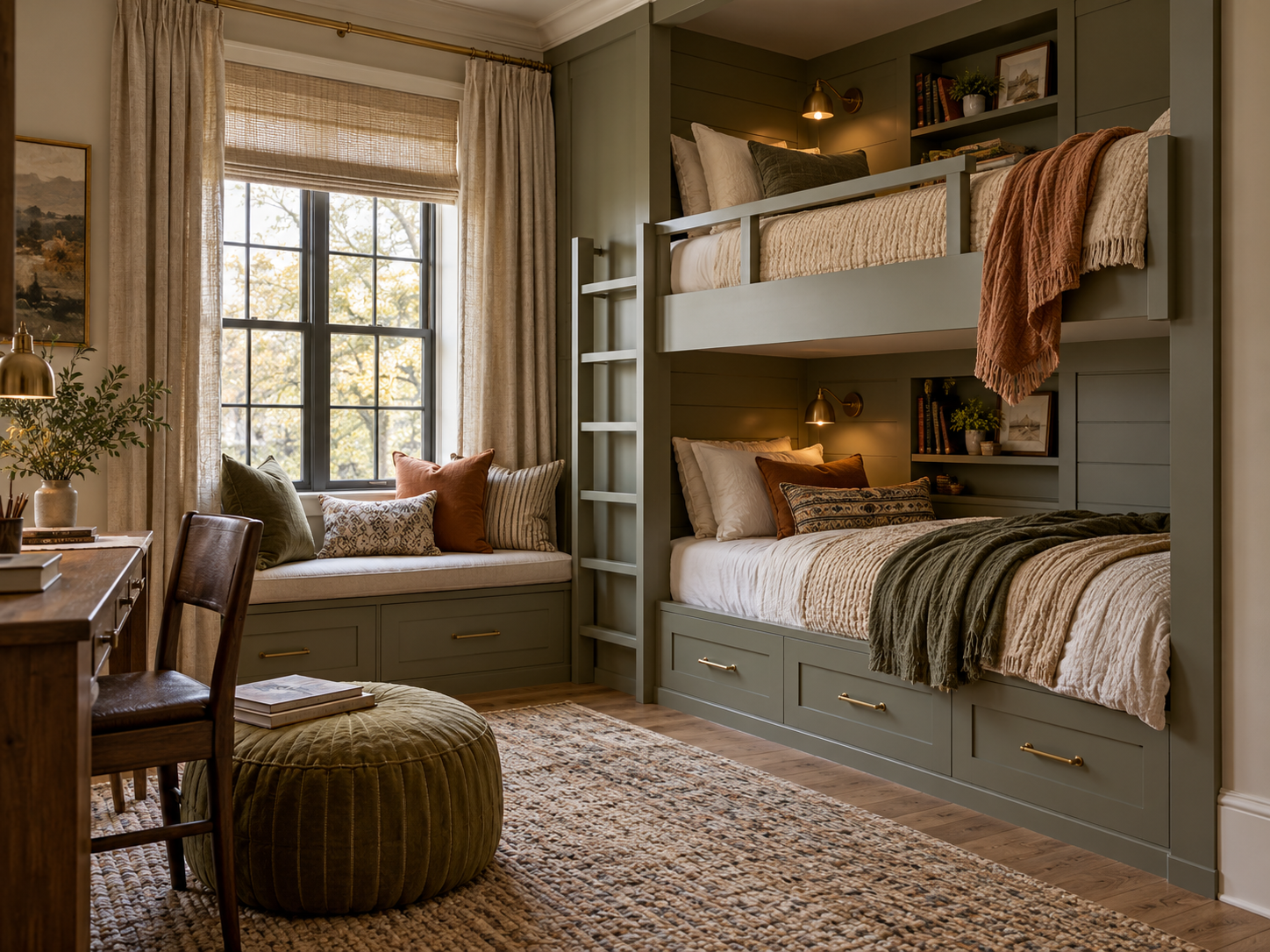
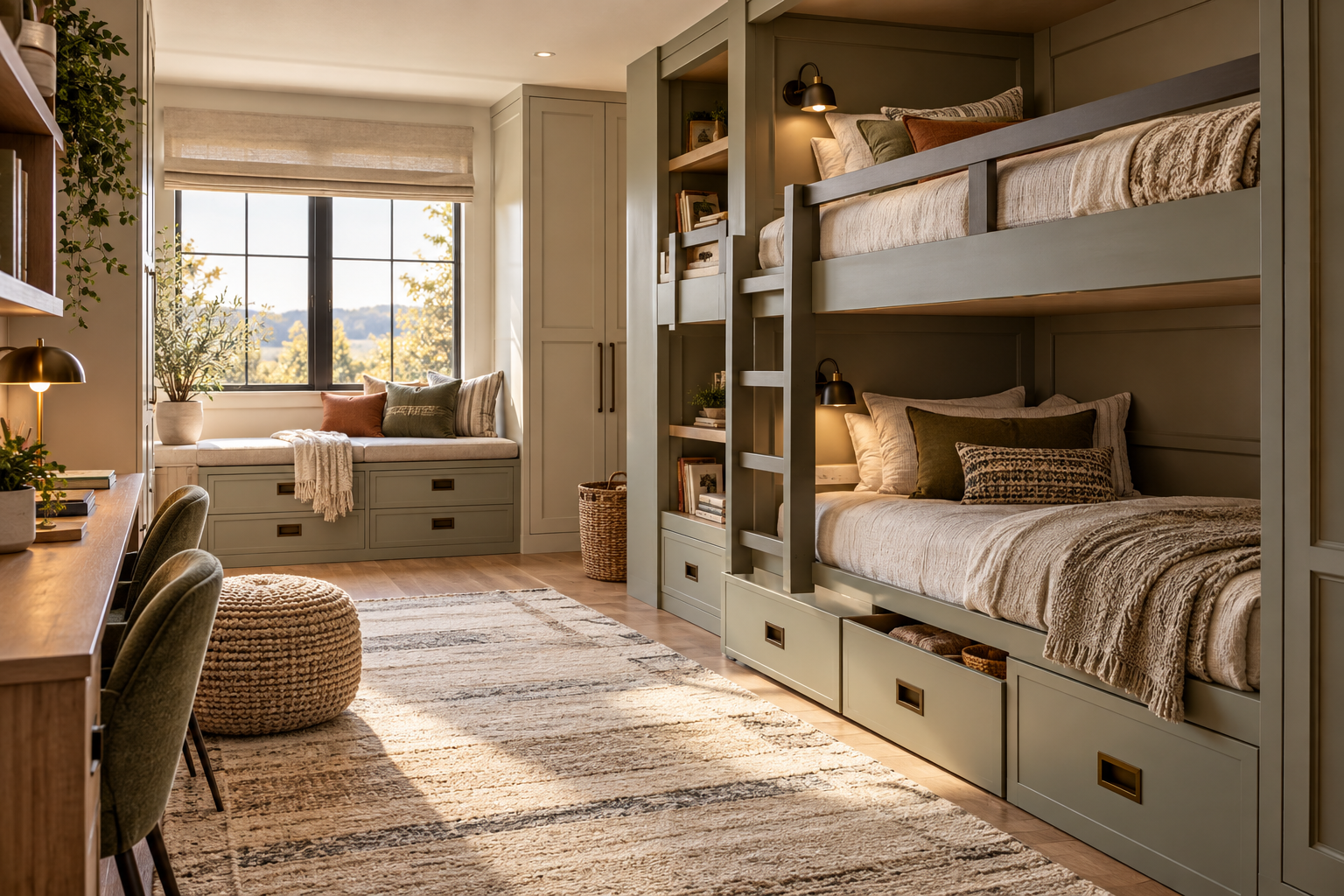
Storage is one of the best ways to make a bunk setup feel intentional. Useful options include:
- manufacturer-designed drawers under the lower bed;
- storage integrated into approved stair systems;
- a dresser beside the bed;
- wall shelves located away from the ladder and sleeping area;
- rolling bins that fit the actual under-bed clearance.
Do not add drawers, boxes or hardware where they interfere with the ladder, trundle travel or emergency exit path.
Built-in bunks need proper design
A custom built-in bunk is load-bearing furniture and a sleeping structure. Framing, fasteners, guardrails, openings, access and mattress support all matter.
Do not copy a social-media cut list or improvise guardrail dimensions. A carpenter, cabinetmaker or other qualified professional should design the structure to comply with applicable requirements and the actual wall and room conditions.
Ceiling clearance is a room-specific decision
There is no universal ceiling-clearance number that makes every upper bunk comfortable. The sleeper should be able to enter, turn and sit without striking the ceiling or nearby fixture.
Measure from the top of the manufacturer-approved mattress to the lowest overhead obstruction. Ceiling fans require particular caution because their moving blades create a different hazard from a flat ceiling.
Keep the room visually grown-up
The bed frame does not need novelty styling to feel teen-friendly. A restrained palette and better textiles can change the entire room.
Useful directions include:
- warm white, charcoal and natural wood;
- deep green with cream and black;
- navy with cognac or warm oak;
- muted clay with linen and pale wood;
- monochrome gray softened with textured bedding.
Let artwork, bedding, cushions and a rug carry the personality so those elements can change as tastes evolve.
Use wallpaper or paint around the bunk, not on the safety system
A bunk wall can support wallpaper, paneling or a strong paint color. Avoid adding decorative cladding to the bed itself if it changes openings, guardrail geometry or access.
Our bedroom wallpaper guide explains how pattern scale and placement affect the wider room.
Plan shared rooms around fairness
If two teens share the room, make sure each has:
- similar access to lighting;
- a place for personal storage;
- a charging location;
- some degree of visual privacy;
- a clear path to enter and leave the bed.
One level does not need to look identical to the other, but the room works better when both sleepers have comparable function.
Convertible bunks can extend the life of the furniture
Some bunk systems are designed to separate into two beds or convert into a loft. If future flexibility matters, verify that capability in the manufacturer’s instructions before buying.
Do not assume a bunk can be separated just because its parts appear modular.
A layout mock-up catches problems early
Mark the bunk footprint with painter’s tape. Then mark stairs, ladder projection, drawers, trundle travel and nearby furniture.
Open the closet and bedroom doors. Pull out desk chairs and drawers. Check the route to the window and exit. A bed that fits mathematically can still make the room difficult to use.
What not to add to a bunk bed
Avoid attaching:
- ropes or swings;
- hanging chairs;
- unapproved canopies;
- heavy shelves;
- large speakers;
- hooks that can catch clothing;
- electrical accessories not intended for the bed.
Personalize the surrounding room instead of turning the bed into a platform for unrelated accessories.
For related bedroom planning, continue with the Bedroom Design Guide, Bedroom Ideas, and the walk-in closet guide.