
Bedroom Furniture
The best nightstand size comes from the bed, the person and the available wall space, not from one universal dimension. Height affects reach, width affects storage and visual balance, and depth affects the bedside walking route.
The useful sequence is finished mattress height → comfortable reach → wall width → drawer movement → lamp footprint → outlets and cords → bedside passage.
1. Nightstand height should support easy reach
A practical starting point is to keep the top near the height of the finished mattress or within a few inches of it. That makes a phone, water glass or lamp control easier to reach without a large upward or downward movement.
This is not a styling law. A platform bed, very thick mattress, adjustable base or accessibility need can change the useful height.
2. Measure finished mattress height
Measure from the finished floor to the top of the mattress while the bed is made normally. Include the actual mattress and topper, but do not compress fluffy bedding into the measurement.
If you plan to replace the mattress soon, use the future setup rather than sizing a nightstand around a temporary height.
3. Width depends on both storage and the bed wall
A wider nightstand can balance a large bed and provide useful drawer space, but it can also crowd a door, window or wardrobe. Tape the width on the wall and floor before buying.
For a king bed, matching nightstands can create strong symmetry, but there is no requirement that they match or be unusually wide. The room decides.
4. Depth is often the forgotten measurement
A deep bedside chest may project beyond the mattress and reduce the walking route. Check the deepest point, including handles, trim or curved fronts.
The Small Bedroom Layout Measurements guide shows how the nightstand interacts with the bed, wardrobe and walking route.
5. Drawers need an active-use zone
Measure how far the drawer extends and where your legs stand while opening it. A nightstand can fit perfectly while closed and collide with a wardrobe or wall when opened.
6. Size the top for what actually lives there
List the everyday items before choosing width:
- lamp base;
- phone and charger;
- water glass;
- book or e-reader;
- glasses;
- alarm clock if used.
If the top is crowded in the showroom mock-up, it will probably be crowded at home.
7. Check outlets and cable paths
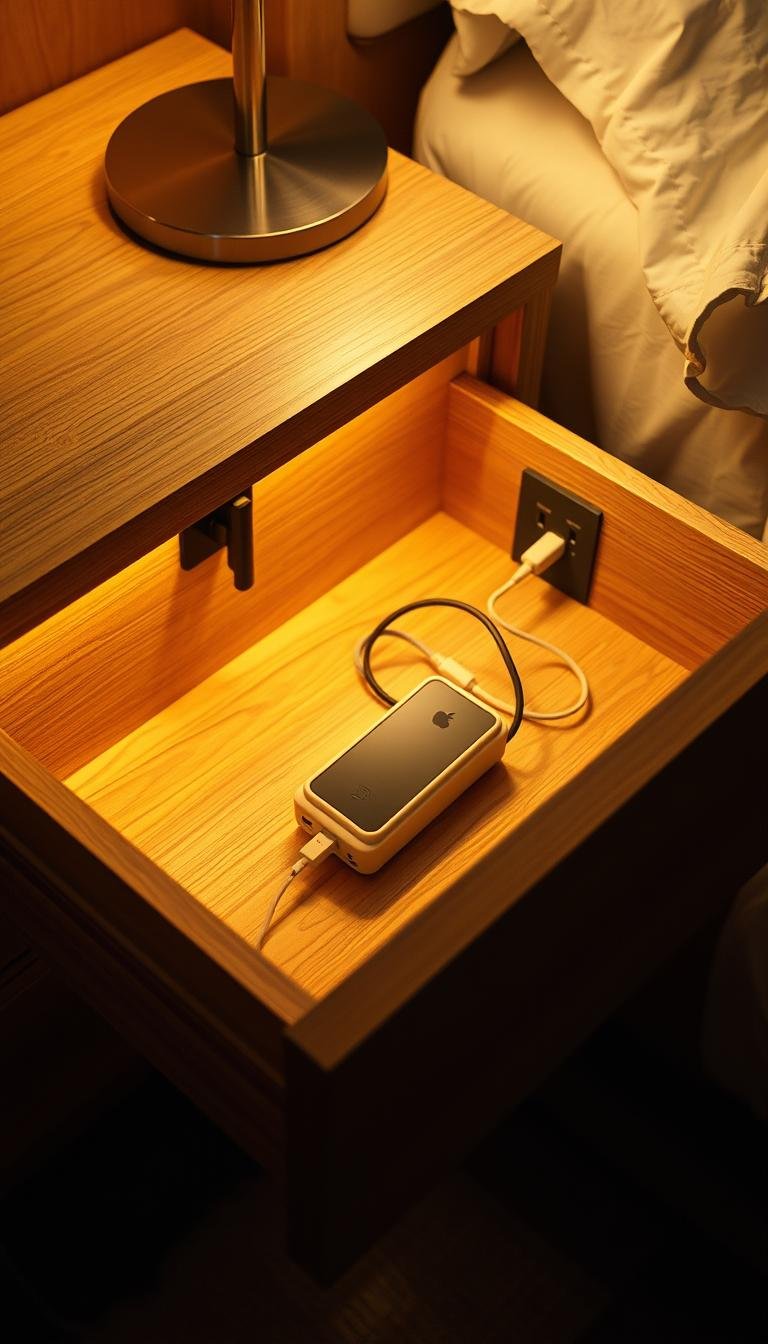
A nightstand can block a low outlet or force charging cables across a walkway. Mark outlets on the wall plan and check whether the back panel has cable access.
If you add charging inside a drawer, follow the device, power-strip and furniture manufacturer’s guidance and avoid trapping heat-producing equipment in a closed space that was not designed for it.
8. Lamps change the proportional balance
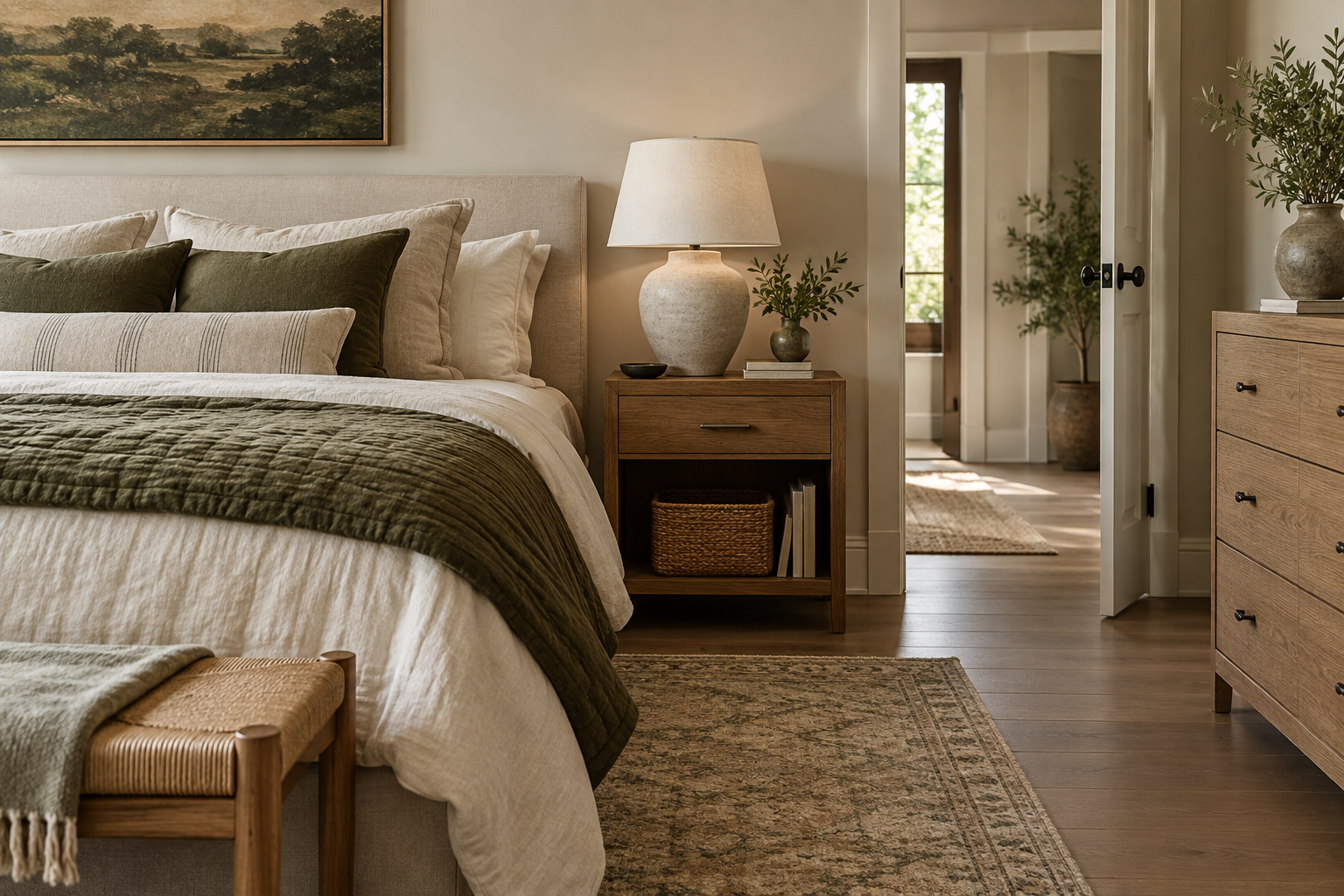
A large lamp can overwhelm a narrow top or leave little safe space around a glass. Check the lamp base diameter, shade width and switch location rather than choosing the table and lamp separately.
For the broader room lighting plan, use the Home Lighting Guide.
9. Small bedrooms may need a shelf instead
If a conventional nightstand blocks the passage, a wall shelf or narrow wall-mounted table can provide a landing surface without a full cabinet footprint. Make sure mounting is suitable for the wall and intended load.
Nightstand measurement worksheet
| Measurement | Check |
|---|---|
| Finished mattress height | Floor to top of mattress |
| Available wall width | Between bed and door/window/wardrobe |
| Nightstand depth | Deepest projection into passage |
| Drawer extension | Open drawer + standing user |
| Top surface | Lamp + daily objects |
| Outlet access | Plug, adapter and cable path |
Connect the nightstand to the whole bedroom
Use the Bedroom Design Guide for the complete bed-wall composition and the Furniture Sizing Guide for scale and circulation.

Worked example: tall mattress in a narrow room
Suppose the finished mattress top is 29 inches from the floor, but the gap between the bed and wardrobe is tight. A 29-inch-tall bedside chest may be comfortable to reach, but if it is 20 inches deep and has long drawers it could block the route. In that room, a narrower or shallower table near the mattress height may work better than a full bedside chest.
One nightstand versus two
A pair can balance a centered bed and give two sleepers equal storage, but symmetry should not override function. In a small room, one nightstand plus a wall-mounted light on the tighter side can preserve access.
Check the headboard and wall outlets together
A wide headboard can consume wall space that appears available on a floor plan. Mark the headboard width, outlet positions and nightstand widths on the same wall elevation before ordering.
Frequently asked questions
Should a nightstand be exactly level with the mattress?
No. Near mattress height is a useful starting point because it supports easy reach, but a few inches of difference can still work well depending on the user and bed.
How wide should a nightstand be?
There is no universal width. It needs enough top surface and storage for its job while fitting the wall and preserving bedside access.
Can I use a dresser as a nightstand?
Yes if its height, depth and drawer movement work from the bed. A dresser can be efficient in a small room because it combines two functions.
Are floating nightstands better for small bedrooms?
They can free visible floor area and allow custom positioning, but they require appropriate wall mounting and should be sized for the intended load.
Bottom line
Start at the mattress, test reach, then size the nightstand around real wall space and storage use. A nightstand should make the bedside easier to use without stealing unnecessary floor space.