
Small Balcony Planning
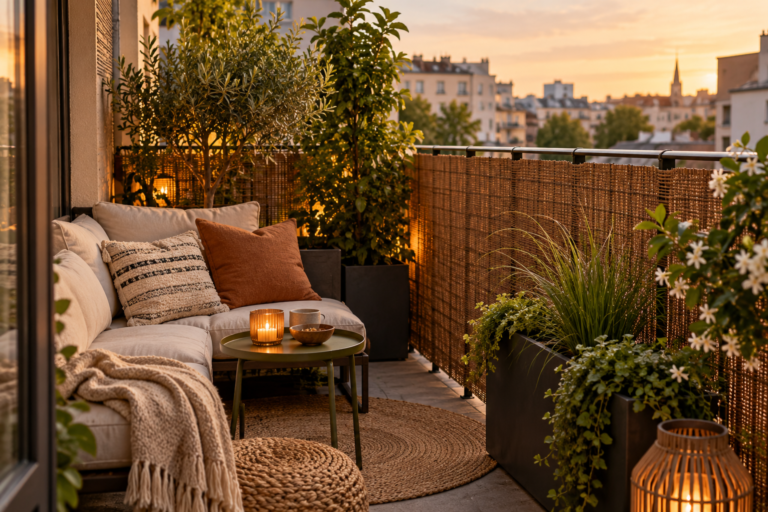
A small balcony works best when the walking route is measured first and the furniture is fitted around it. The biggest mistake is choosing pieces from their seat dimensions while ignoring chair pull-back, arm width, door swing, planters and the path from the interior door to the railing.
Measure the balcony → map the door swing → protect the main route → mark chair footprints in use → add the table → place plants only after circulation works.
1. Measure the clear floor area
Record wall-to-railing depth and the usable width between side walls, posts or built-ins. Exclude permanent planters, HVAC units and drains that need access.
Also note any slope toward a drain because a table that looks level in a product photo may wobble on the real surface.
2. Protect the door first
Open the balcony door fully and mark its movement. Sliding doors are easier to furnish around, while hinged doors can consume a surprising part of a shallow balcony.
Keep the immediate threshold clear so entering and leaving does not require moving a chair every time.
3. Test chair depth with a person in it
Measure from the back of the chair to the front of the sitter’s knees and feet, then add room to stand. A slim-looking chair with a reclined back can use more depth than expected.
Folding chairs can help when the balcony changes between everyday and entertaining use, but only if there is somewhere sensible to store them.
4. Choose table shape from the route
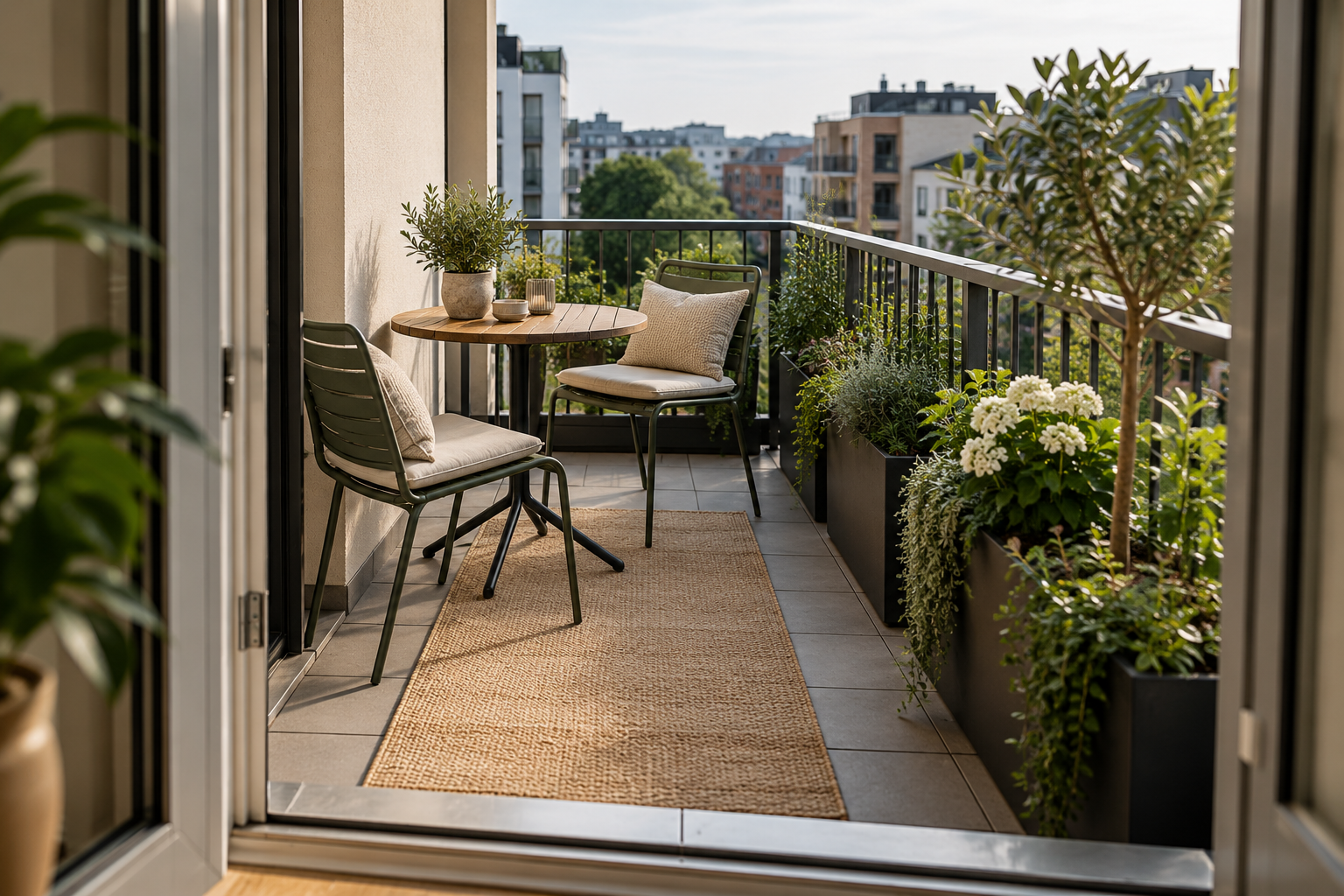
Round tables soften tight corners and make it easier to move around the edge. Narrow rectangular tables can work against a wall or railing when depth is limited.
A pedestal base may create more foot room than four widely splayed legs. Test the base as carefully as the tabletop.
5. Use the railing zone thoughtfully
Furniture pushed against the railing can free circulation, but check local building rules, child safety and whether anything creates an unsafe climbing condition.
Tall furniture can also block views from inside the room. Sit inside and check what the balcony looks like through the door before finalizing the layout.
6. Keep planters out of the traffic line
Plants are one of the easiest ways to make a balcony feel finished, but floor pots quickly consume the small amount of spare circulation. Use corners, vertical planters or railing-approved systems where appropriate.
Do not block drains or create standing-water problems around containers.
7. Plan weather and storage
Outdoor furniture needs to tolerate the balcony’s actual exposure. Wind, driving rain and intense sun can matter more on an elevated balcony than at ground level.
If cushions need to come inside, include the storage route in the plan. A beautiful chair is less useful if its cushions have no practical home.
8. Mock up the occupied layout
Tape the furniture footprints, then place boxes or stools where the chairs will sit and move through the space as if both seats were occupied.
This reveals whether the balcony supports two full chairs, one lounge chair, a café set or simply a bench better than a conventional arrangement.
Small-balcony fit check
| Zone | Measure | Question |
|---|---|---|
| Door movement | _____ | Can it open without moving furniture? |
| Main walking route | _____ | Can someone pass an occupied chair? |
| Chair active depth | _____ | Includes sitter and stand-up space |
| Table footprint | _____ | Does the base block knees or circulation? |
| Planter/storage zone | _____ | Is it outside the route and drain access? |
Before you buy or install
- Measure the balcony at floor level.
- Open the door before marking furniture.
- Use occupied chair dimensions.
- Check the table base, not only the top.
- Keep drains and service areas accessible.
- Consider wind and cushion storage.
Related Dwelanor guides
- Outdoor Living Design Guide
- Small Space Design Guide
- Rental Decorating Guide
- Outdoor Rug Mildew Guide
- No-Drill String Lights
- Multifunctional Furniture Ideas
FAQ
What furniture works best on a very shallow balcony?
Often a narrow bench, folding chairs or a compact café set works better than deep lounge seating. Test the active footprint rather than the product width alone.
Should balcony furniture sit against the railing?
It can, but check safety, local rules, views and whether the furniture creates an unsafe climbing opportunity.
How much room should I leave at the door?
Enough for the door to operate fully and for a person to cross the threshold without moving furniture. The exact zone depends on the door type.
Bottom line
Protect the door and walking route first. Once circulation works, choose chairs, table and planters that fit the remaining active space rather than filling every available inch.