
Laundry Drying Zone
A laundry hanging rod works when the longest garments clear the surface below and the rod remains comfortable to reach. That means the right height depends on shirts versus dresses, the counter or machine below, hanger length, the user’s reach and whether wet clothes need extra spacing for airflow.
List the garments → measure their hanger-to-hem drop → mark the surface below → set a clear hanging zone → check reach → check wall support and ventilation.
1. Decide what the rod is for
A rod used only for shirts and blouses needs less vertical space than one intended for dresses, trousers hung full length or wet bedding. Define the actual laundry routine before choosing the height.
If the rod is mostly a temporary transfer station from dryer to closet, reach convenience may matter more than maximum drop.
2. Measure hanger-to-hem length
Put the longest typical garment on the hanger you actually use and measure from hook to hem. This gives you a real vertical requirement instead of a generic closet figure.
Repeat with a few bulky pieces because thick hangers and shoulder shapes can slightly change where the clothing sits.
3. Protect the work surface below
Garments should not drag across a folding counter, washer lid or sink. Leave enough clear space that damp hems hang freely and do not pick up detergent or moisture from the surface.
If the rod is above a sink, also check faucet height and the way the spout moves.

4. Keep the rod within practical reach
A high rod can solve garment clearance but become annoying for everyday use. Test the height with the shortest regular user and the real hanger motion.
A pull-down wardrobe mechanism can help in some tall installations, but it adds cost and hardware depth that should be planned from the start.
5. Allow air around wet clothing
Wet garments dry better when air can move around them. Do not pack the rod tightly between upper cabinets or fill it with so many pieces that nothing can breathe.
A small fan or room ventilation may matter more than adding a longer rod if the laundry room stays humid.
6. Check the rod span and support
Long unsupported rods can sag under wet clothing. Use a rod and brackets rated for the intended span and load, and fasten the hardware to appropriate structure.
Do not rely on decorative drywall anchors for a heavily loaded drying rod unless the hardware is specifically rated and installed for that condition.
7. Coordinate shelves and cabinets
Upper shelves can coexist with a rod, but the shelf depth should not push hangers forward into the walking path. Check the hanger projection from the wall.
If cabinets flank the rod, make sure their doors can open without striking hangers or garments.
8. Test with a real laundry load
Hang several wet or heavy items, not one empty hanger, and check reach, airflow and counter clearance. The rod should still feel usable when the zone is at its busiest.
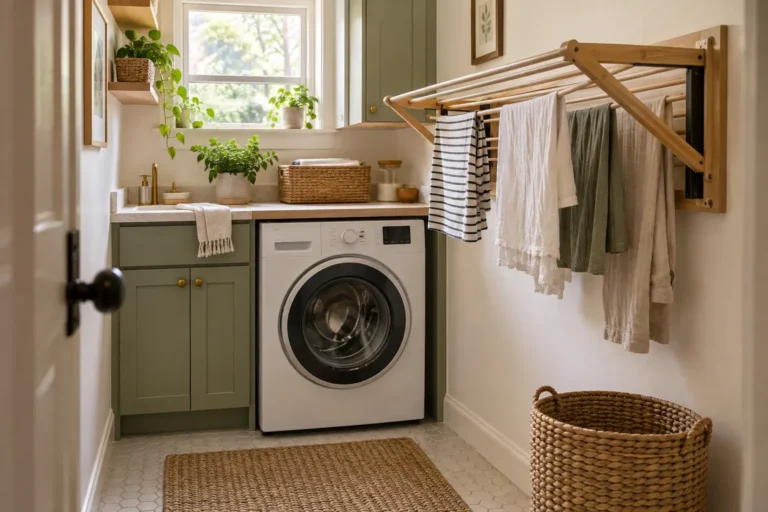
This test often reveals whether a second short rod or a wall-mounted drying rack would work better than one long bar.
Hanging-zone worksheet
| Input | Record | Use it for |
|---|---|---|
| Longest garment drop | _____ | Minimum vertical hanging zone |
| Surface below height | _____ | Starting point for rod position |
| Comfortable reach | _____ | Maximum practical rod height |
| Rod span | _____ | Bracket/support planning |
| Hanger projection | _____ | Wall and cabinet clearance |
Before you buy or install
- Measure real garments on real hangers.
- Keep hems clear of counters and machines.
- Check reach for all regular users.
- Use suitable structural support.
- Allow airflow around wet items.
- Open nearby cabinets and doors during the mock-up.
Related Dwelanor guides
- Laundry Room Design Guide
- Wall-Mounted Drying Racks
- Storage & Organization Guide
- Home Textiles Guide
- Small Space Design Guide
- Decor & Design Guide
FAQ
How high should a laundry hanging rod be?
Set it from the height of the surface below, the longest garments you hang and the user’s comfortable reach. Those variables are more useful than one universal wall height.
Can a rod go above a washer and dryer?
Yes when the machines and controls remain accessible and garments clear the appliance tops. Keep the equipment installation and service requirements intact.
How do I prevent a long rod from sagging?
Use a rod and center or intermediate supports sized for the span and the weight of wet clothing, fixed to appropriate structure.
Bottom line
Build the drying zone around garment length, reach and airflow. A rod is useful only when clothes hang freely, users can reach it and the hardware can support the real wet load.