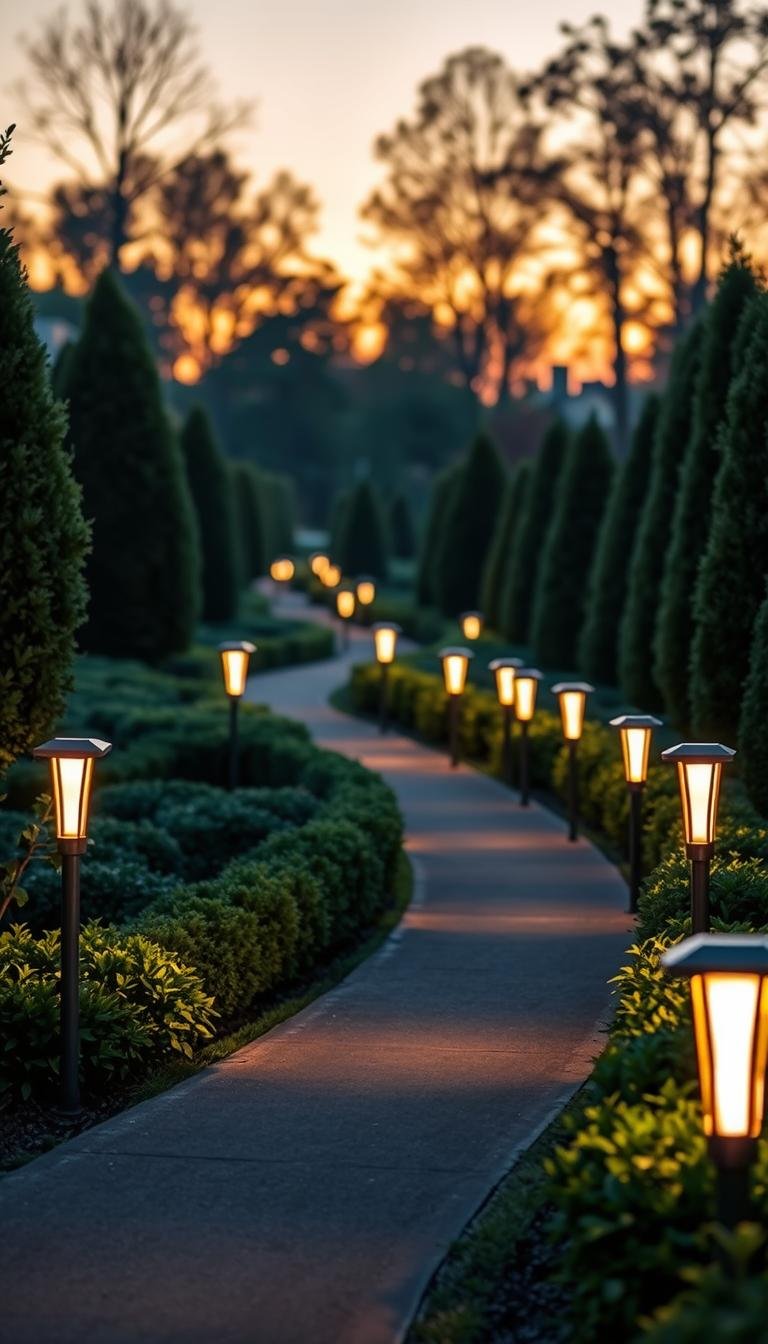
Solar path lights rarely deliver the same runtime every night. Whether they stay on until dawn depends on available sunlight, panel size and orientation, battery capacity and condition, LED output, weather, temperature, and the product’s control settings.
Instead of treating any model as a permanent “all-night winner,” compare the specifications that determine runtime and then match the fixture to the job: pathway visibility, decorative accent light, steps, or garden edging.
What “lasts all night” should mean
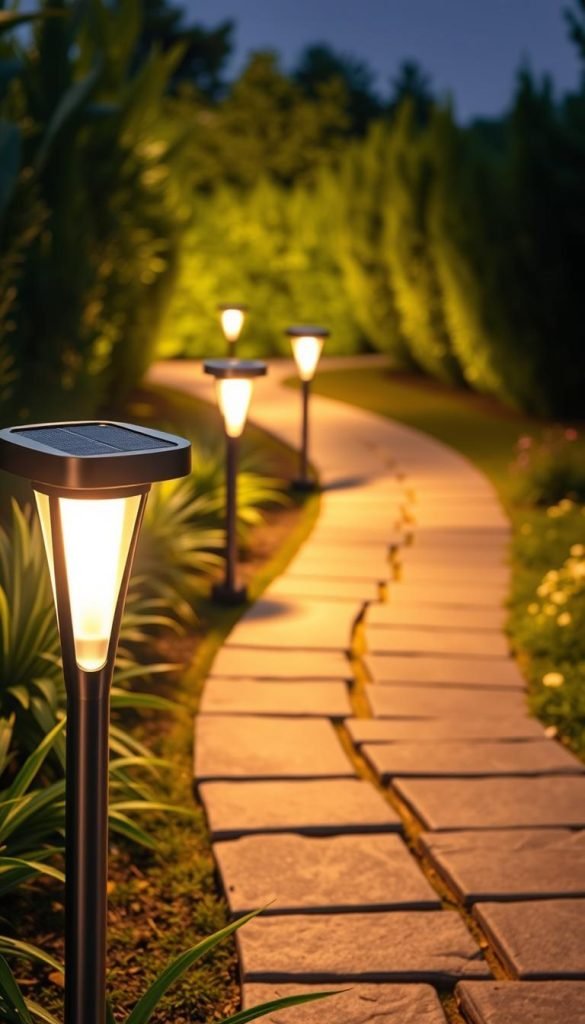
A useful claim is not simply that a light still glows at sunrise. For a pathway, it should remain bright enough to make the route easier to see through the hours you actually need it.
Manufacturer runtime figures are usually based on specific charging conditions. In real yards, shade, winter sun angle, cloudy weather, dirty panels and aging batteries can reduce those numbers substantially.
Check these specifications before buying
| Specification | Why it matters |
|---|---|
| Published runtime | Gives a starting point, but should be read with the charging conditions and operating mode. |
| Battery chemistry and capacity | More stored energy can support longer operation, but only if the panel can recharge it adequately. |
| Panel size and placement | A larger or better-positioned panel can collect more energy, especially in marginal sun. |
| LED output and modes | Higher brightness and decorative color modes generally consume more energy. |
| Weather-resistance rating | Outdoor fixtures should have a manufacturer-stated rating appropriate for rain and the intended location. |
| Replaceable battery | Can extend the useful life of the fixture when the original cell loses capacity. |
Brightness and runtime are a trade-off
Higher lumen output can make a path easier to see, but it also draws more energy. A lower-output fixture may run longer from the same amount of stored energy.
For that reason, compare beam pattern and spacing along with lumens. A well-directed lower-output light can be more useful on a narrow path than a brighter fixture that sends light sideways or upward.
Best formats by use case
Pathways and walkways
Choose fixtures with a defined downward or outward beam, a published runtime that covers the hours you need, and enough spacing flexibility to avoid dark gaps.
Steps and level changes
Use purpose-built step lights rather than assuming a decorative stake light will illuminate a tread safely. Follow the mounting instructions and use the manufacturer-approved fasteners for the surface.
Decorative garden lighting
Flame effects, patterned shades and color-changing modes are primarily decorative. They can be excellent for ambiance, but do not rely on them as the only light where safe footing matters.
Low-sun locations
If the fixture sits in shade for much of the day, look for products with a remote solar panel or relocate the panel to a sunnier position. A larger battery alone cannot compensate for inadequate charging.
How weather changes performance
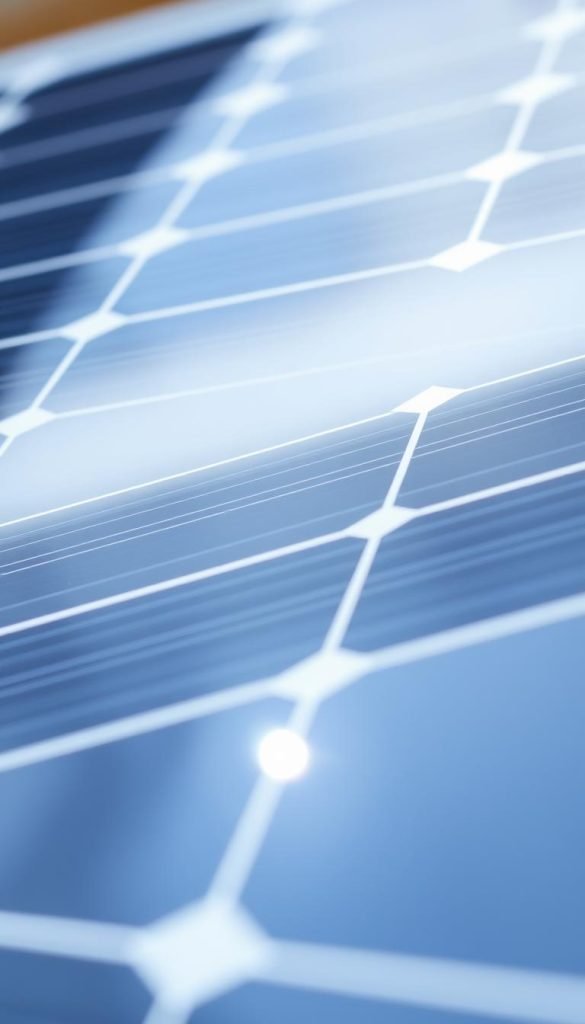
Cloud cover reduces available solar energy. Cold temperatures can also affect battery performance, while snow, leaves, dust and pollen can block the panel.
Use the product only within the temperature and weather conditions stated by the manufacturer. An outdoor label does not mean every fixture is suitable for standing water, severe freeze-thaw exposure or coastal conditions.
Placement matters as much as the product
- Place the panel where it receives the amount of sun the manufacturer specifies.
- Keep the panel clear of leaves, dirt and heavy pollen.
- Avoid placing the dusk sensor where nearby porch or street lighting prevents normal activation.
- Keep fixtures out of mowing and edging paths.
- Stake lights into soil according to the instructions rather than forcing plastic spikes into hard ground.
How to compare specific models
Product lines change, so verify current specifications on the manufacturer or retailer page before buying. For each candidate, record:
- runtime in the selected mode;
- battery type and whether it is replaceable;
- lumen output or stated use;
- panel dimensions or remote-panel option;
- weather-resistance rating;
- fixture height and beam direction;
- warranty and replacement-part availability.
That makes it easier to compare two products without relying on vague claims such as “dusk to dawn” or “ultra bright.”
Troubleshooting lights that shut off too early
- Clean the solar panel with the method recommended by the manufacturer.
- Move the light out of partial shade if possible.
- Confirm the on/off switch and operating mode.
- Check whether nearby artificial light is confusing the dusk sensor.
- If the battery is replaceable, use only the battery type and specification the manufacturer allows.
- Replace the fixture if water has entered a sealed housing or if the manufacturer says it is not serviceable.
The practical buying rule
For reliable overnight lighting, prioritize adequate solar exposure, realistic runtime, a replaceable battery where available, and the right beam pattern for the location. Treat decorative effects as a bonus rather than proof of performance.
If a path or stair needs dependable safety lighting every night regardless of weather, a hardwired or low-voltage system may be more appropriate than relying entirely on solar fixtures.
For more exterior planning ideas, browse the Dwelanor Room Guides and related outdoor-lighting articles in the Journal.