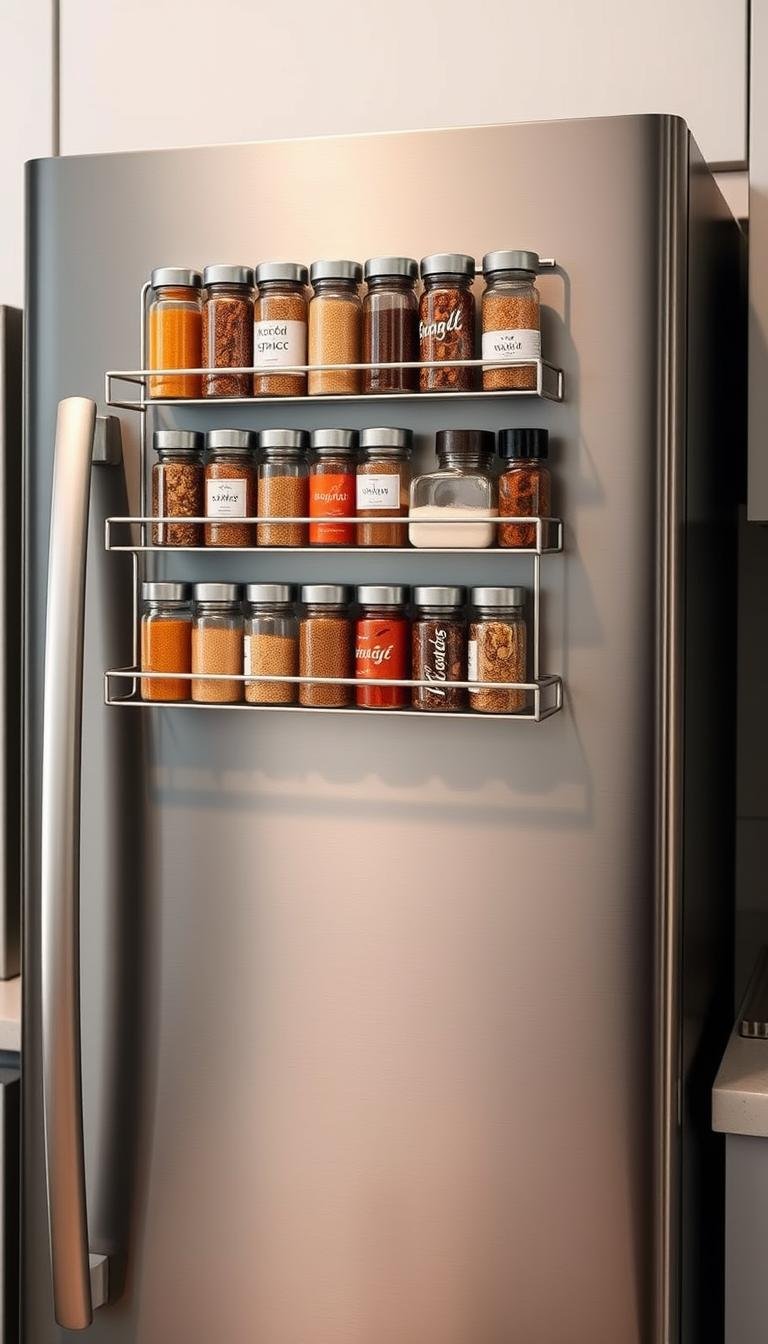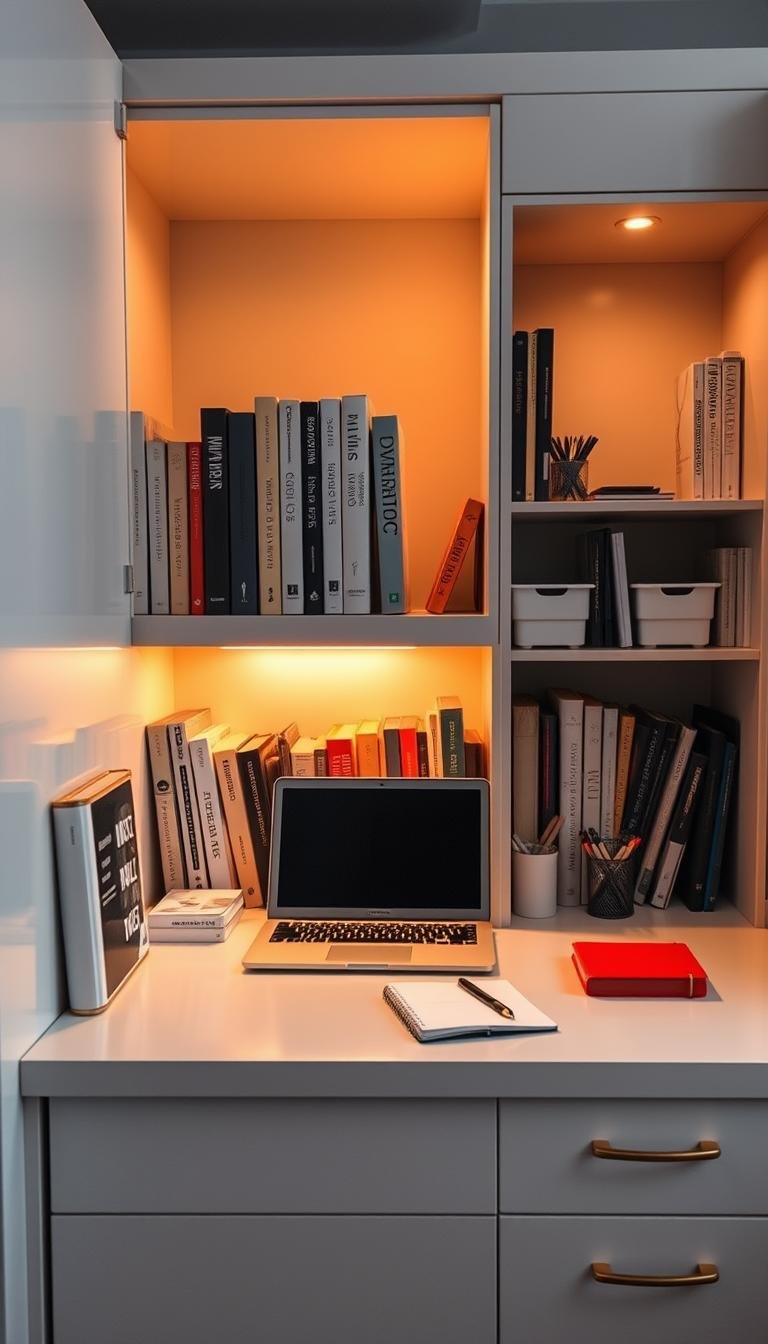
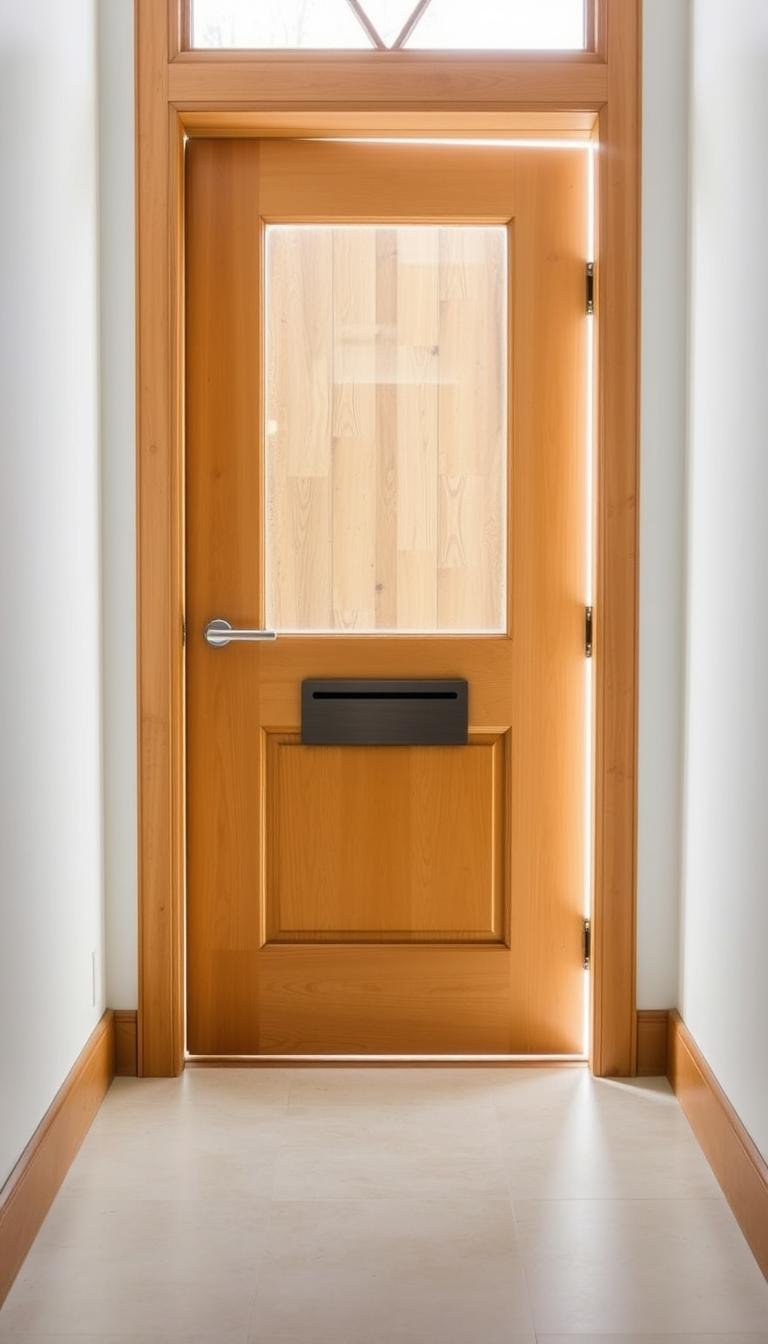
A useful key drop zone can be as small as one hook and one shallow tray. The important part is putting it exactly where you naturally stop when you come through the door.
In a narrow entry, that might mean a wall hook above a six-inch-deep shelf. In a larger one, a slim 8-inch-deep console table or bench can hold shoes, mail and a basket for smaller items. The setup should make the first few seconds after you get home easier—not create another surface that slowly fills with clutter.
This guide focuses on the simplest versions first, then shows how to add storage only if the entry actually needs it.
Key Takeaways
- A compact spot by the front door saves time and clears clutter.
- Small baskets or a tray make reliable drop zones for keys and wallets.
- Pairing storage with a bench helps with shoes and quick tasks.
- One-wall mudroom ideas scale from tiny nooks to larger rooms.
- Renter-friendly hooks and baskets keep options flexible.
Why a front-door drop zone helps

A drop zone reduces the number of decisions made at the doorway. Keys, wallet, mail, shoes, or a bag each get an obvious home close to the point of entry.
The goal is not to build a miniature mudroom by default. Start with the few items that repeatedly get misplaced, then add storage only when a real overflow problem appears.
| Problem | Quick fix | Benefit |
|---|---|---|
| Lost keys | Wall-mounted basket | Less search time |
| Piled mail | Mounted file folders | Visible, sorted papers |
| Coats in chaos | Cluster of hooks by door | Neat look, easy grab |
Plan the spot: choosing the best area by the front door
I began by watching where I naturally pause after unlocking. That simple observation helped me pick an area that fits my routine and keeps daily items within reach.
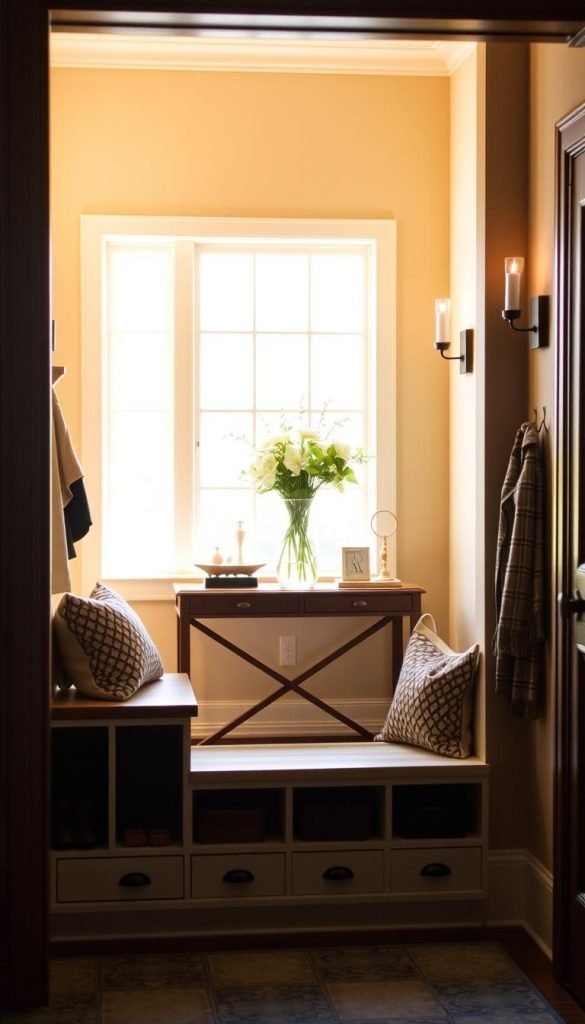
Left vs. right, line of sight, reach
I consider which side the door swings and which wall stays clear when it opens. I pick a wall that doesn’t block the path in a small room.
Tip: Hooks at different heights above a bench make items easy to reach for each family member.
Renter-friendly and low-commitment placements
I favor command hooks, a slim anchored bookcase, or a freestanding basket on a narrow console. These ideas give storage without drilling or damage.
Vertical storage is my top move when floor space is tight. Shallow shelves and pegs along walls create hanging space for jackets and bags.
- I choose a spot where I naturally stop, so dropping items becomes automatic.
- I test the flow for a week and tweak placement if I still drop items elsewhere.
- I decide whether a small basket or tray fits best, making sure it won’t bump the door or crowd the walkway when I carry work bags.
What’s the easiest way to add a key drop zone inside the front door?
With one quick setup, I gave every essential a predictable place right by the door.
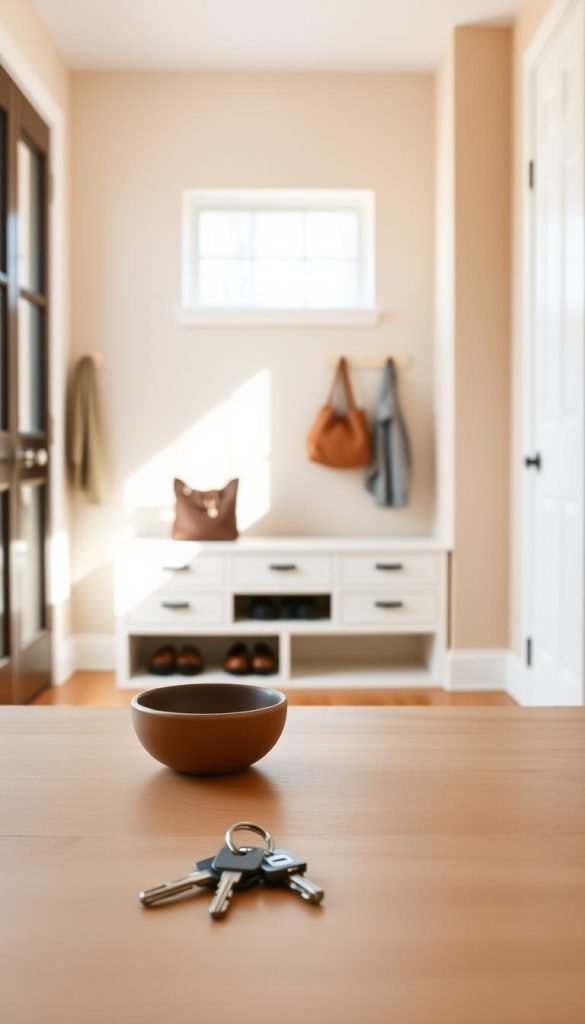
The five-minute setup: hook + tray or small basket
I stick one adhesive hook at hand height and set a shallow tray or small basket on a narrow shelf. This simple combo acts like an open cubby for wallets and keys.
Why it works: the hook keeps the keyring visible and the tray prevents coins and phones from sliding off when I’m in a rush.
Keep the first layer simple
Give the items you use every day an obvious home: one hook for keys, one tray for a wallet or earbuds, and—only if mail regularly enters through this door—a separate slot for paper. If the surface starts collecting receipts, chargers and random objects, the system has become too complicated.
| Item | Simple home | Why it works |
|---|---|---|
| Keys | Single hook | Visible and easy to grab |
| Wallet / small essentials | Shallow tray | Contains loose items without hiding them |
| Vertical file | Keeps paper off the main surface |
Simple tools that work: trays, baskets, hooks, and labels
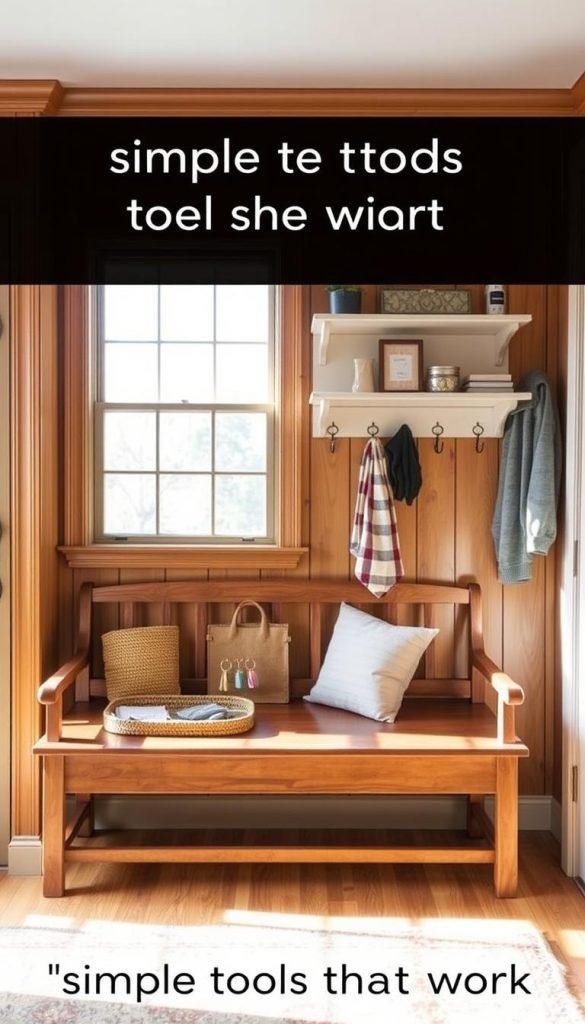
For very small entries
A shallow tray or small open basket can hold keys, sunglasses, earbuds, or loose change without taking over the surface.
For shared households
Dividers or simple labels can help separate small everyday items by person or purpose. Open storage works best for frequently used essentials; seasonal extras are usually better kept elsewhere.
When floor space is tight
Use the wall: hooks, wall files, and a shallow shelf can add function without narrowing the walkway. Any freestanding storage should be placed and secured so it does not create a tipping or circulation hazard.
| Tool | Best for | Why | Quick tip |
|---|---|---|---|
| Rattan tray | Micro spaces | Low profile, keeps items visible | Place at eye level on narrow shelf |
| Woven basket with dividers | Family | Shared storage, labeled sections | Use cloth labels for easy relabeling |
| Command hooks + wall files | Vertical storage | Maximizes wall height, sorts mail | Install above bench for grab-and-go |
| Slim bookcase + bins | Mudroom-like area or garage | Combines shallow drawers and shoe storage | Keep a small mat and low rack nearby |
Mini checklist: hang one hook, place a tray or basket, add a labeled bin, and test flow for a week. I set mine up in under 15 minutes and it stuck.
Style it so it sticks: make the drop zone look intentional
I make the entry feel complete by layering practical pieces with a few styled touches. A small, considered setup helps the space feel like part of my home instead of an afterthought.

Pairing a mirror and artwork to elevate the entryway
I hang a mirror where I can do a quick last check before leaving. Above the mirror I add one favorite piece of artwork so the area reads as a designed vignette.
“A simple mirror and art make a tiny shelf look like a planned corner.”
Color, texture, and materials that match my home
I pick materials—rattan, wicker, wood, or metal—that match my current palette. A neat basket for items keeps things tidy and feels durable in high-traffic spots.
Small footprint, big impact: slim frame, one decorative touch, and a basket that holds essentials in one place.
| Element | Material | Benefit |
|---|---|---|
| Mirror | Framed glass | Quick last check, visually expands space |
| Artwork | Small print | Makes area feel designed |
| Basket | Rattan or wicker | Durable, blends with many looks |
No mudroom? Create a compact entryway drop zone that works
I turned a tight entry into a mini mudroom that actually keeps shoes and bags in check. A small plan and a few low-profile pieces give the space function without crowding my hallway.
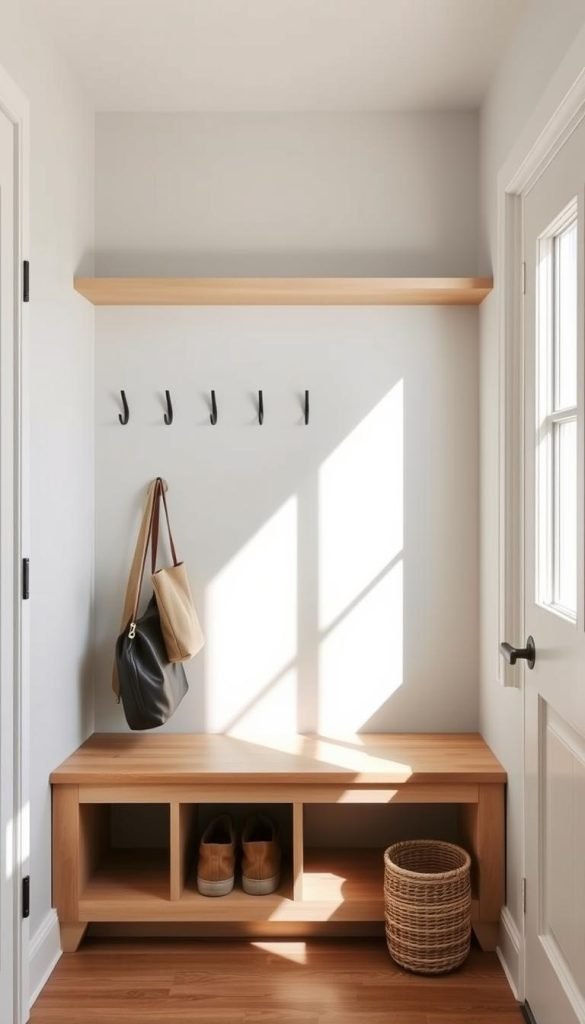
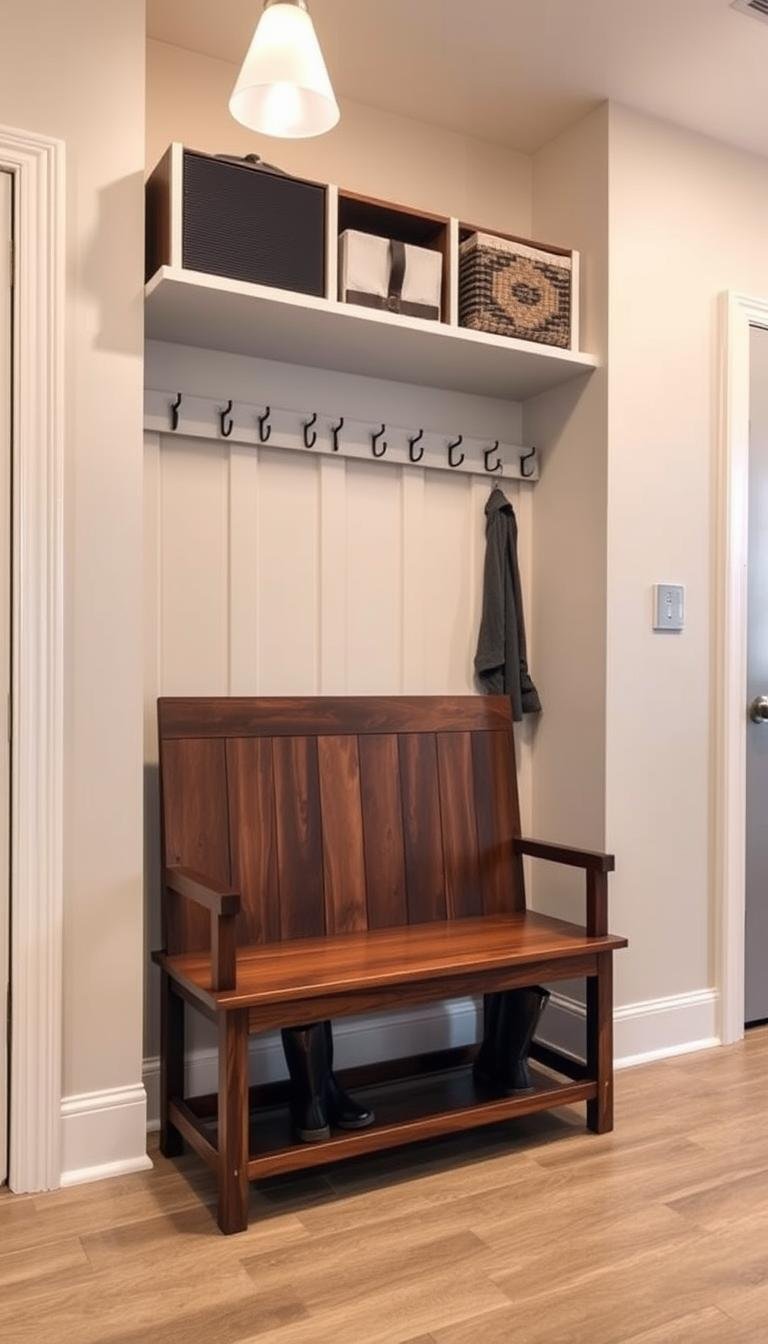
Ottoman or bench with baskets underneath
I use an ottoman with sliding baskets beneath to store shoes and daily bags. Built-in benches with open cubbies work the same way and let me store shoes and pet gear out of sight.
Quick wins: rolling benches or carpet tiles protect floors, and a nearby basket for slippers nudges everyone toward a shoes-off habit.
Slim bookcase with shallow drawers and labeled bins
A slim bookcase with shallow drawers at the bottom subdivides small items. Labeled bins corral sunglasses, gloves, and leashes so family members grab their things fast.
- I mount hooks or a peg rail above a bench for coats and backpacks at varied heights.
- This layout works equally well off the garage door, creating a mini mudroom with benches and baskets.
- I keep maintenance simple: every item has a zone so I can reset the area in under a minute.
For more compact entry ideas, see small entry organization hacks.
Add-on ideas to expand beyond keys
I leaned on budget finds to handle mail, wet shoes, and pet gear near the entry. These little upgrades keep daily stuff visible and stop clutter from migrating deeper into the house.

Mail sorter using a napkin holder
A metal napkin holder makes a tidy mail sorter. I place it by the door so letters don’t travel across the hall and pile up.
Shoe tray built from a cooling rack
On rainy days I set a metal cooling rack over a large plastic tray. Shoes sit elevated, drips collect below, and floors stay dry.
Pet gear basket and water-bottle bin
Pet leashes, wipes, and treats live in labeled baskets inside open cubbies. I keep a grab-and-go bin of water bottles on top, with acrylic inserts to keep bottles upright.
Quick tips: place add-ons where you actually enter the house—garage entry or side door works fine. Expand only as needed: one extra tray for sunglasses or a second basket for bags keeps the footprint small.
| Add-on | DIY tool | Benefit |
|---|---|---|
| Mail sorter | Napkin holder | Stops paper spread |
| Shoe tray | Cooling rack + tray | Drip protection |
| Pet gear | Labeled basket | Fast grab for walks |
Set it up step by step
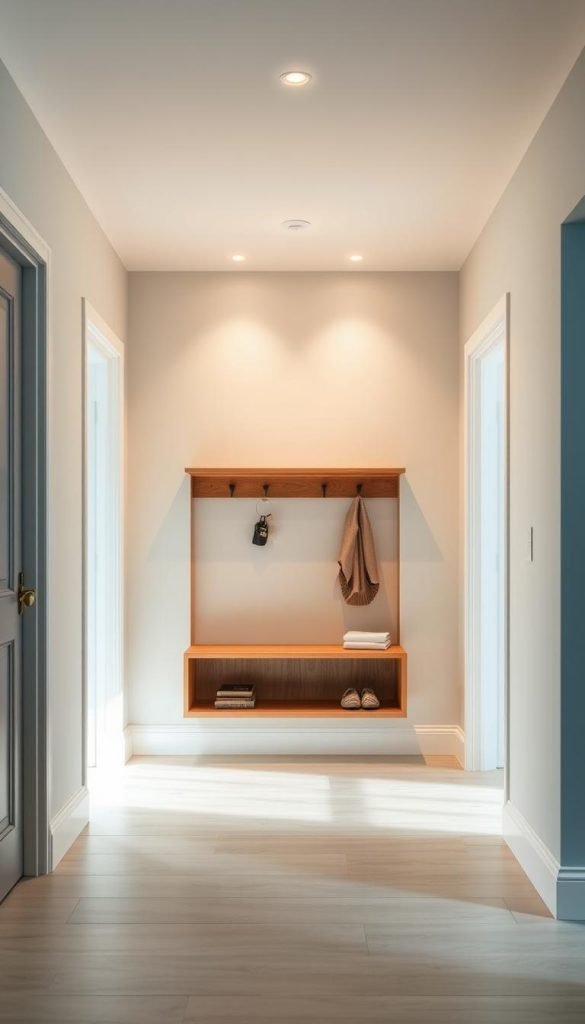
1. Measure the usable area
Mark the door swing, clear walkway, nearby switches, and the wall area that can actually hold storage without creating a pinch point.
2. Start with the smallest useful layer
Add one hook and one tray or small basket. If the household regularly brings in mail, add a vertical paper slot. Avoid adding a bench, bookcase, or extra bins until the simple version proves insufficient.
3. Mount safely
Use hardware appropriate to the wall surface and expected load. Follow the exact load and surface guidance for adhesive products, and anchor tall freestanding furniture when needed.
4. Test the routine
Use the setup for several days. If keys or bags still land somewhere else, move the storage toward the natural stopping point instead of adding more containers.
| Step | Action | Why it matters |
|---|---|---|
| Measure area | Mark hooks, shelf, basket | Prevents crowding by the door |
| Mount | Use adhesive strips; anchor bookcase | Speedy install and safety |
| Assign | Labeled baskets/cubbies | Stops mix-ups for family items |
| Test flow | Enter from garage and front | Adjust spot for real habits |
“Measure first, place second, then test — that small loop makes the zone stick.”
Keep it tidy: daily resets and seasonal tweaks
Each evening I spend thirty seconds resetting the entry so mornings run smoother.
That short habit keeps my home calm. It prevents small piles from growing into a mess and saves time the next day.

My 30-second end-of-day reset
Quick routine: keys in the tray, mail in the sorter, and any stray items returned to their place.
I do this every night. It only takes half a minute and it sticks because it is easy.
When to edit, relabel, or scale up storage
I watch for overflow. When baskets fill or mail stacks up, I either edit what lives in the entryway or add simple storage.
Seasonal swap: stackable, lidded boxes hold gloves, sunscreen, and umbrellas. Labels are easy to swap each season.
I use a magnetic board or dry-erase spot for quick notes and reminders. That cut down on morning delays and keeps errands visible.
| Action | Why | Quick tip |
|---|---|---|
| Nightly reset | Prevents morning scramble | 30 seconds, repeat every day |
| Weekly tidy | Clears mail and recycles | Two minutes, fast edit labels |
| Seasonal swap | Keeps only daily items out | Use lidded boxes and change labels |
“A tiny nightly habit beats a weekend overhaul every time.”
What makes a drop zone work
The best version is usually the smallest one that solves the actual problem. Put it where you already pause, keep the everyday items visible, and resist adding storage for things that do not belong at the door.
If you need to expand it, do so one layer at a time: a mail file, then a shoe basket, then a bench or hooks if the space can support them. That keeps the entry looking intentional instead of turning it into a miniature mudroom by default. If the hardware around the door is the visual problem, a compatible decorative doorbell cover or trim plate can tidy the entry without adding more storage.