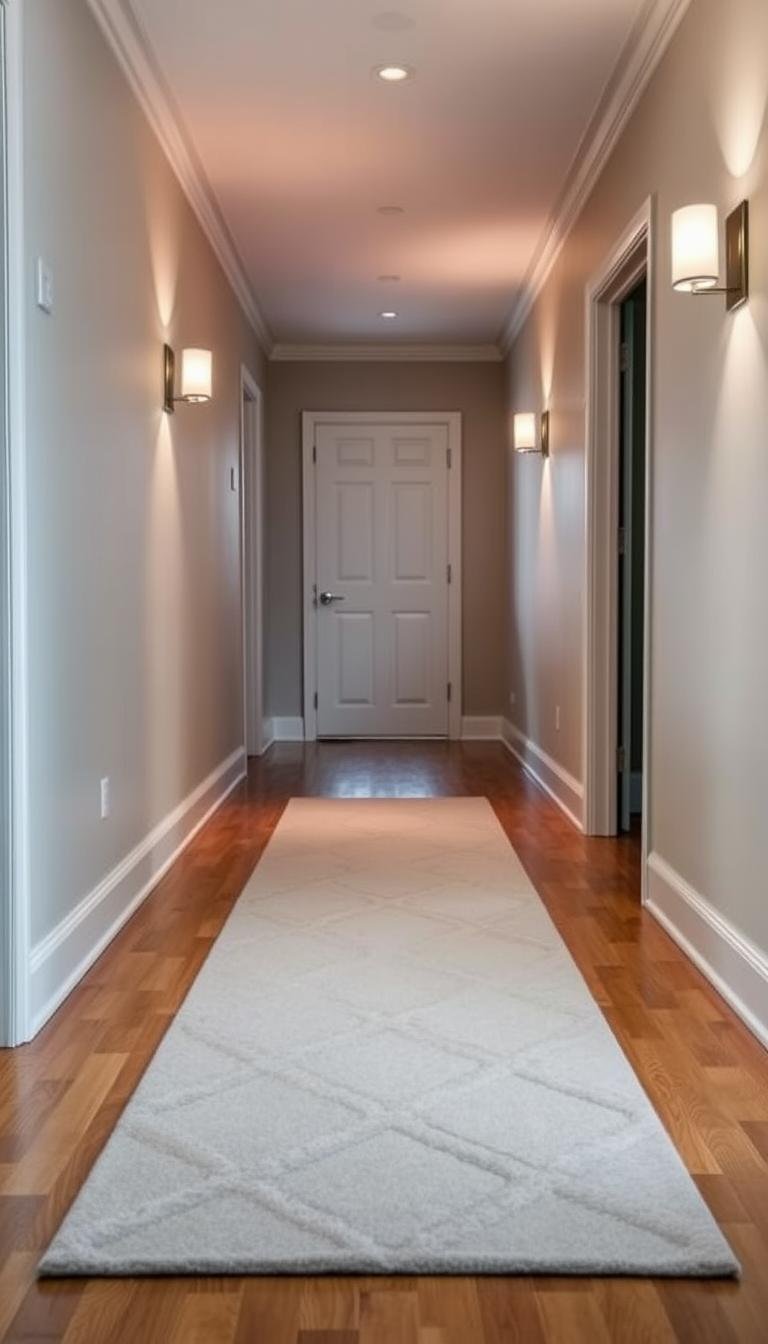
For a hallway used by older adults, prioritize a low, flat surface that cannot slide, curl or bunch. A runner can add comfort and protect flooring, but the safest choice depends on the actual hallway, door clearances, mobility aids and the flooring underneath.
Key takeaways
- Choose a flatweave or genuinely low-pile runner with finished, fringe-free ends.
- Use a rug pad specifically approved for both the runner and the flooring underneath.
- Keep corners flat and replace a pad or rug if it begins to creep, ripple or curl.
- Check every door swing, threshold and transition before buying.
- Keep the walking route well lit and free of furniture or decorative obstacles.
Start with the walking route, not a standard rug size
Measure the hallway at several points, including doorways and any narrow turns. Then mark the proposed runner with painter’s tape and walk the route normally. If a cane, walker, shoe or door catches the taped boundary, adjust the plan before ordering.
There is no universal rule requiring a specific number of inches of exposed floor at the sides or ends. The useful dimensions are the ones that keep the runner clear of door swings, thresholds and awkward transitions while leaving a comfortable walking path.
Choose the lowest practical profile
Flatweave and tight low-pile runners generally create less of a raised edge than thick or plush rugs. Avoid tassels, long fringe, deep pile and constructions that develop pronounced ripples.
Thickness also matters under doors. Measure the smallest clearance along the full door swing with the intended pad included, not just the rug itself.
Use the right pad for the floor underneath
A runner that moves is a poor choice for a mobility-sensitive hallway. Use a non-slip pad whose manufacturer explicitly approves it for the flooring finish underneath and for the type of rug above it.
Avoid assuming that generic double-sided tape is safe for a finished floor. Some adhesives can leave residue or affect coatings. If an adhesive product is being considered, verify compatibility with the floor manufacturer first.
Inspect the edges and transitions
Pay particular attention where the runner begins and ends, near thresholds, and around turns. These are the places where a raised edge is most likely to be encountered unexpectedly.
- Do not place a loose rug edge directly on a threshold transition.
- Avoid joining two runners in the main walking line if a single properly sized piece will work.
- Keep furniture legs and storage baskets away from the clear travel path.
- If the runner repeatedly shifts despite an appropriate pad, use a different rug rather than continually readjusting it.
Material matters less than stability
Wool, synthetic flatweaves and some natural-fiber runners can all work, but construction and backing matter more than the fiber name alone. A dense, flat runner that stays put is preferable to a beautiful material that curls, sheds heavily or moves underfoot.
Natural fibers such as sisal and jute can feel firm and may be harder to clean after spills, while some wool and synthetic runners offer a softer surface. Check the manufacturer’s cleaning guidance and whether the rug remains dimensionally stable in the intended room.
Make the edge easy to see
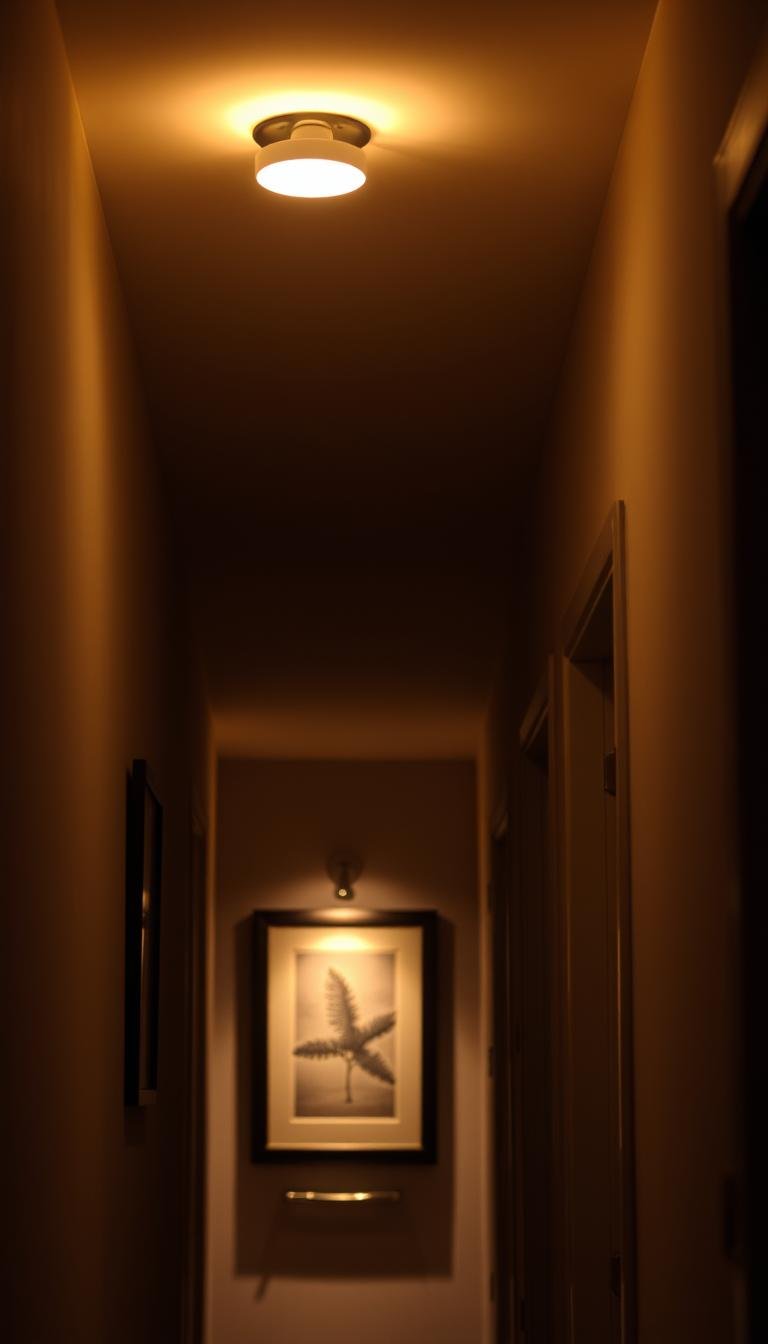
Good lighting helps users identify the runner boundary, thresholds and turns. Avoid visually busy patterns that make edges or floor-level changes harder to read. A clear contrast between the runner and surrounding floor can be useful, provided the pattern itself is not visually confusing.
Final safety check
After installation, walk the full route in daytime and at night. Check the runner again after vacuuming and after several days of normal traffic. Corners should remain flat, the rug should not creep, and doors should clear it comfortably.
If someone in the household has significant balance or mobility limitations, an occupational therapist or other qualified professional can assess the actual route and recommend modifications specific to that person’s needs.