Living Room Fit
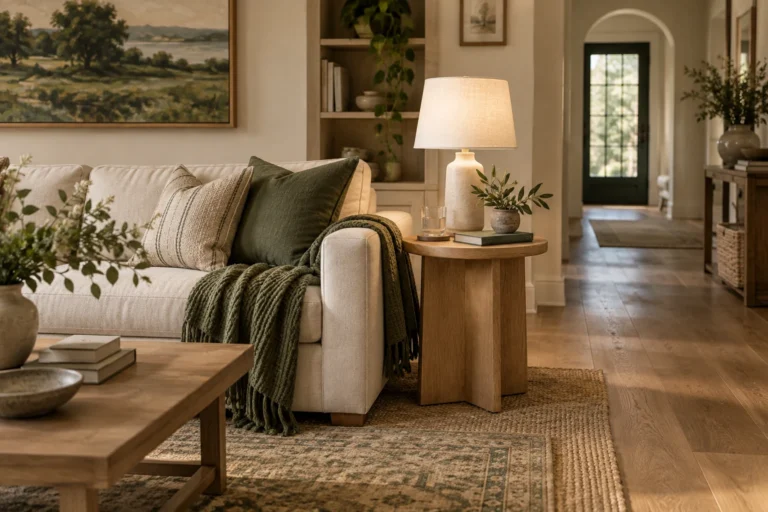
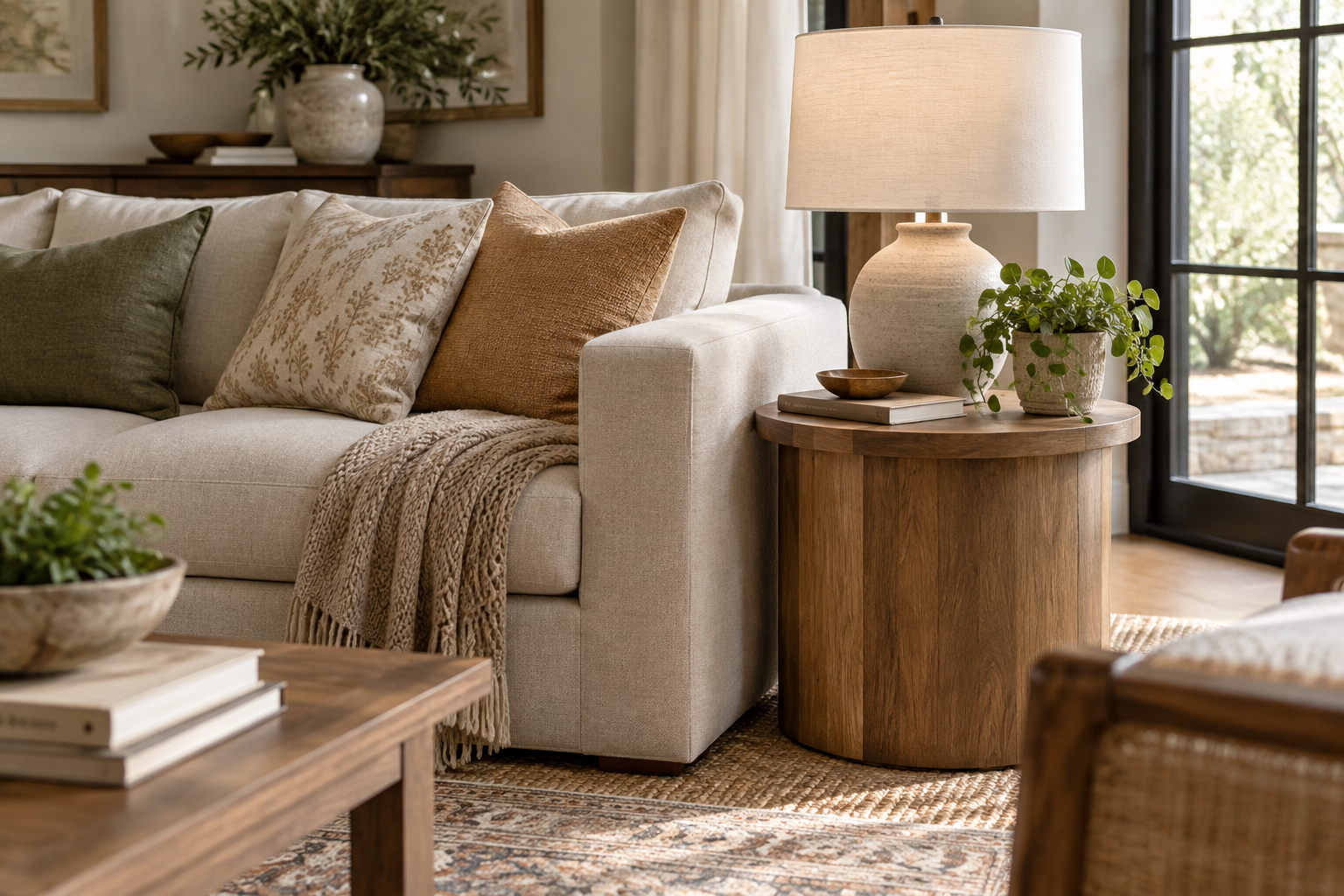
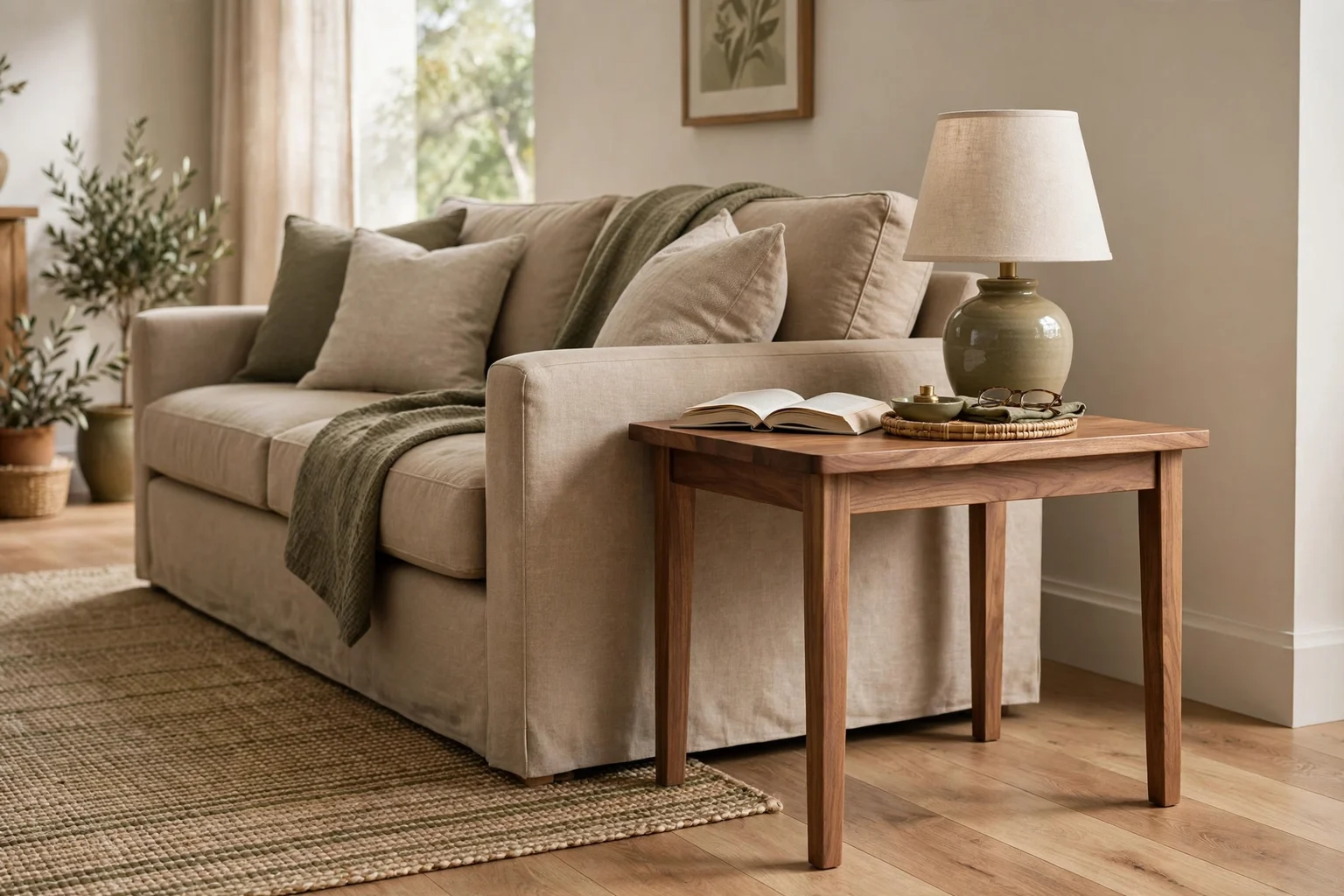
Side-table height should be chosen from the sofa arm and the person using the seat. A table can be attractive yet awkward if drinks sit too low, lamps tower overhead or the user has to lean forward every time they reach for a phone.
Measure sofa arm → sit normally → mark easy reach → compare table heights → add lamp scale → check depth and walkway → tape the footprint.
1. Measure the sofa arm
Record the finished arm height from the floor and note whether the arm is flat, sloped or heavily cushioned. A thick rolled arm changes the usable reach point.
If the sofa has no arm, use the seated elbow and hand position as the stronger reference.
2. Sit and test reach
Sit where the table will be used and reach sideways with a relaxed shoulder. Mark the zone where a drink or phone can be picked up without leaning or twisting.
This simple test is more useful than matching furniture labels such as end table or lamp table.
3. Compare tabletop heights
Use boxes or books to simulate different table heights. Try setting down a glass, lifting a mug and operating a lamp switch.
A tabletop slightly above or below the sofa arm can still work if the seated reach feels natural.
4. Add the lamp before finalizing height
Lamp base and shade height combine with the table. A tall table plus a tall lamp can put the bulb at eye level, while a low table may make the lamp too low for reading.
Test the complete lamp-table combination from the sofa, not each item separately.
5. Check table depth and width
The table needs enough surface for its real tasks without projecting into the walkway. Include the lamp base, drink, book and charging items in the mock-up.
A narrow C-table or pedestal may work better than a conventional square table in a tight room.
6. Coordinate with adjacent furniture
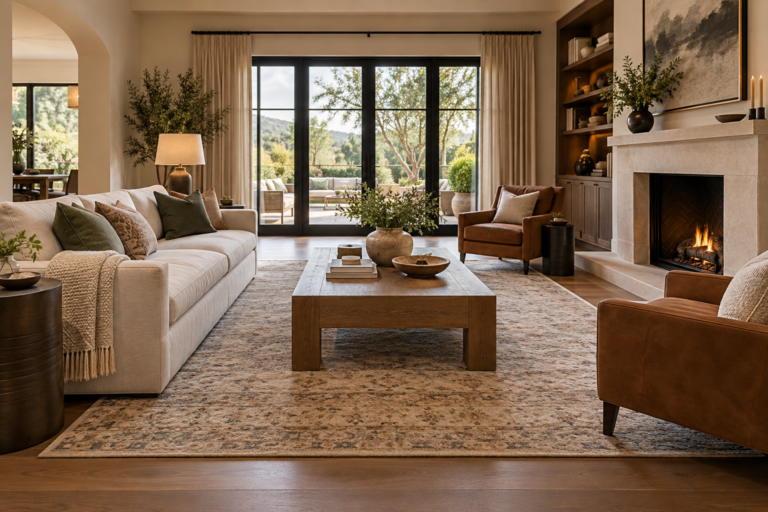
The side table should not block a recliner, chair swivel or sofa-bed movement. Open or move every nearby piece through its normal range.
In a sectional, tables at internal corners may need a smaller footprint than those at open ends.
7. Plan power and charging
If the table supports a lamp or charger, locate a safe outlet path. Avoid loose extension cords crossing the walking route.
Tables with built-in power still need a clean cable route back to the wall.
8. Tape the footprint
Mark the table base and top projection on the floor. Sit, stand, walk around it and use the sofa as usual.
If knees, feet or the main route keep clipping the table, change the footprint rather than hoping people will adapt.
Planning table
| Check | What to test | Why it matters |
|---|---|---|
| Sofa arm | Finished arm height | Sets visual and reach reference |
| Seated hand | Natural reach zone | Controls usability |
| Lamp | Base and shade height | Affects glare and proportion |
| Tabletop | Usable W × D | Supports real tasks |
| Base | Floor footprint | Protects circulation |
Related Dwelanor guides
- Living Room Design Guide — coordinate the whole seating area
- Side Table Selection Guide — compare shapes and styles
- Furniture Sizing Guide — test room fit
- Accent Chair Size Guide — coordinate chair-side tables
- Home Lighting Guide — plan lamps as task lighting
- Small Living Room Ideas — fit tables into tighter layouts
Bottom line
The best side table height is the one that works naturally from the seat. Use the sofa arm as a reference, test real reach and lamp scale, then confirm the footprint does not steal circulation.