Chair Fit
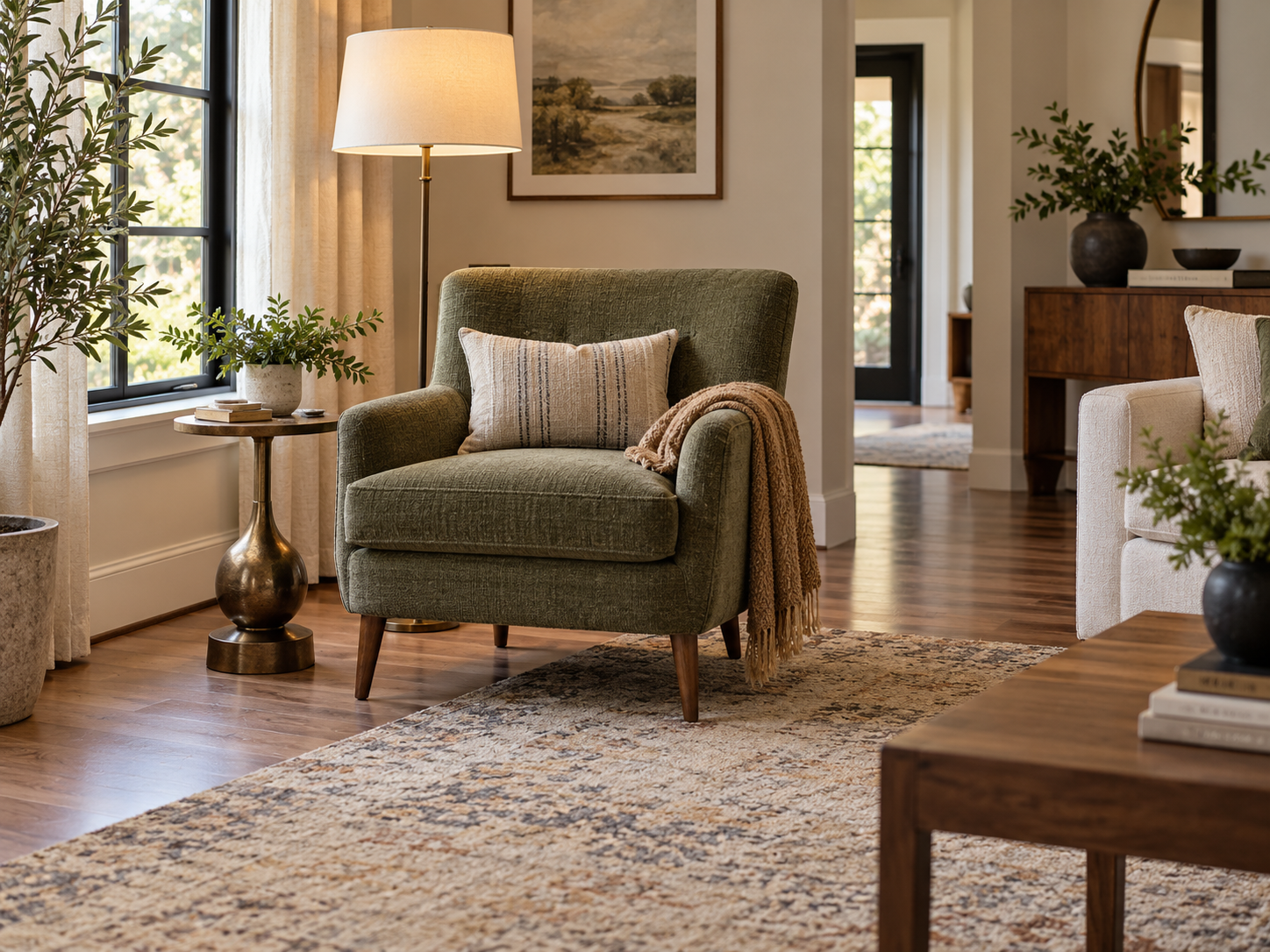
An accent chair can look compact online and still dominate a room once the arms, reclined back, sitter and walking space are included. Judge seat comfort and room footprint separately, then make sure both work with the sofa, table and main traffic path.
Measure the open floor zone → check overall chair width and depth → compare seat dimensions → test occupied leg space → protect the walkway → coordinate side table and lamp.
1. Separate seat size from overall size
Product pages often list both. The seat width tells you how much room exists between the arms, while overall width includes the arms and determines how much floor the chair consumes.
Likewise, seat depth affects posture, while overall depth includes the back angle and frame.
2. Check the back angle
A reclined reading chair may project farther behind its seat than expected. Measure the deepest point so the back does not collide with a wall, curtain or passage.
Upright occasional chairs usually use less depth but can feel less relaxed for long reading sessions.
3. Add the occupied leg zone
Sit in a comparable chair and note where knees and feet land. That active zone belongs to the chair even though it is not part of the product dimensions.
Keep this zone out of the main walking path and away from a coffee-table corner that will constantly catch shins.

4. Coordinate the chair with the sofa
The chair should feel like part of the same conversation area. Turn it slightly toward the sofa and test whether people can speak naturally without twisting.
A large chair can balance a substantial sofa, while a slim chair may suit a smaller room or a pair of matching seats.
5. Plan the side table and lamp
A reading chair may need a drink surface and task light. Add those footprints before assuming the chair fits in a corner.
Check seated reach so the side table is useful rather than decorative but inaccessible.
6. Protect circulation around the arms
Wide arms can narrow a walkway even when the seat itself looks compact. Walk past the chair with the room fully furnished.
If the route brushes the arm repeatedly, rotate the chair, choose a narrower frame or move the circulation line.
7. Consider swivel or recline movement
Swivel chairs need turning space and recliners need a moving envelope. Mark the full movement rather than the at-rest footprint.
A chair that clears a table when still may strike it when rotated or reclined.
8. Mock up before ordering
Tape the overall footprint and put a dining chair or boxes inside the outline to represent the seat. Sit there, add a side table and walk around the arrangement.
This quick simulation reveals scale problems that a two-dimensional floor plan can miss.
Planning table
| Check | What to test | Why it matters |
|---|---|---|
| Overall width | Arm to arm outside | Determines floor footprint |
| Seat width | Usable space between arms | Determines body comfort |
| Overall depth | Front to deepest back point | Affects wall and walkway fit |
| Seat depth | Back cushion to seat edge | Affects posture |
| Movement | Swivel, recline and occupied legs | Adds active-use space |
Related Dwelanor guides
- Reading Chair Guide — compare comfort considerations
- Furniture Sizing Guide — test room scale
- Living Room Design Guide — build the seating group
- Side Table Height Guide — coordinate seated reach
- Small Living Room Ideas — fit seating into tighter rooms
- Home Lighting Guide — add reading light without glare
Bottom line
Choose an accent chair by two tests: does the body fit the seat, and does the room fit the whole chair in use? When both pass, the chair can be comfortable without becoming an obstacle.