
The safest way to hide TV wires on a plaster wall without opening the wall is a paintable surface raceway. It keeps the cable route accessible, avoids blind drilling through old plaster and framing, and can look surprisingly clean when it follows an architectural line.
If you want cables completely inside the wall, separate the problem into two categories: low-voltage signal cables such as HDMI or Ethernet, and mains power. Do not run an ordinary TV power cord or extension cord inside a wall cavity. For power behind the TV, use an approved in-wall power-relocation system exactly as its instructions and local requirements allow, or have a qualified electrician install a receptacle.
What is the easiest way to hide TV wires on plaster?
For most homeowners and renters, start with one of these approaches:
| Method | Best for | Main trade-off |
|---|---|---|
| Paintable surface raceway | Clean DIY result with no wall opening | The channel remains visible at close range |
| Furniture concealment | Short drops behind a console or cabinet | Does not hide the full vertical route |
| Decorative cable sleeve | Small exposed bundles | Looks softer but not built-in |
| In-wall low-voltage route | Known, unobstructed cavity and suitable cable | More risk of damage on plaster/lath walls |
| New power point behind TV | Permanent clean installation | Electrical work may require a qualified electrician or approved kit |
Why plaster walls need more caution than drywall
Older plaster walls can contain wood or metal lath, irregular framing, fire blocking, old wiring, plumbing and repairs that are difficult to identify from the room side. Electronic stud or wire detection can help with planning, but it cannot guarantee that a proposed cavity is clear.
Plaster can also crack or break away beyond the area you intended to cut. That is why a surface route is often the better answer when the wall construction is uncertain.
Option 1: use a paintable surface raceway
A low-profile cable raceway is usually the best balance of appearance, reversibility and safety. Choose a channel large enough for the cables to sit without being crushed or sharply bent.
- Plan the route before mounting anything. A straight vertical drop or a line that follows trim usually looks more deliberate than a diagonal path.
- Check the mounting surface. Follow the raceway manufacturer’s instructions for plaster, paint and adhesive or screw mounting.
- Keep the channel serviceable. A removable cover makes cable changes easier later.
- Paint only if the product permits it. Prepare and paint the raceway according to its material instructions rather than assuming every plastic channel accepts the same coating.
For a rental, check the lease and the adhesive manufacturer’s surface guidance. “Removable” does not guarantee zero paint damage on every plaster or painted surface.
Option 2: let furniture hide the lower run
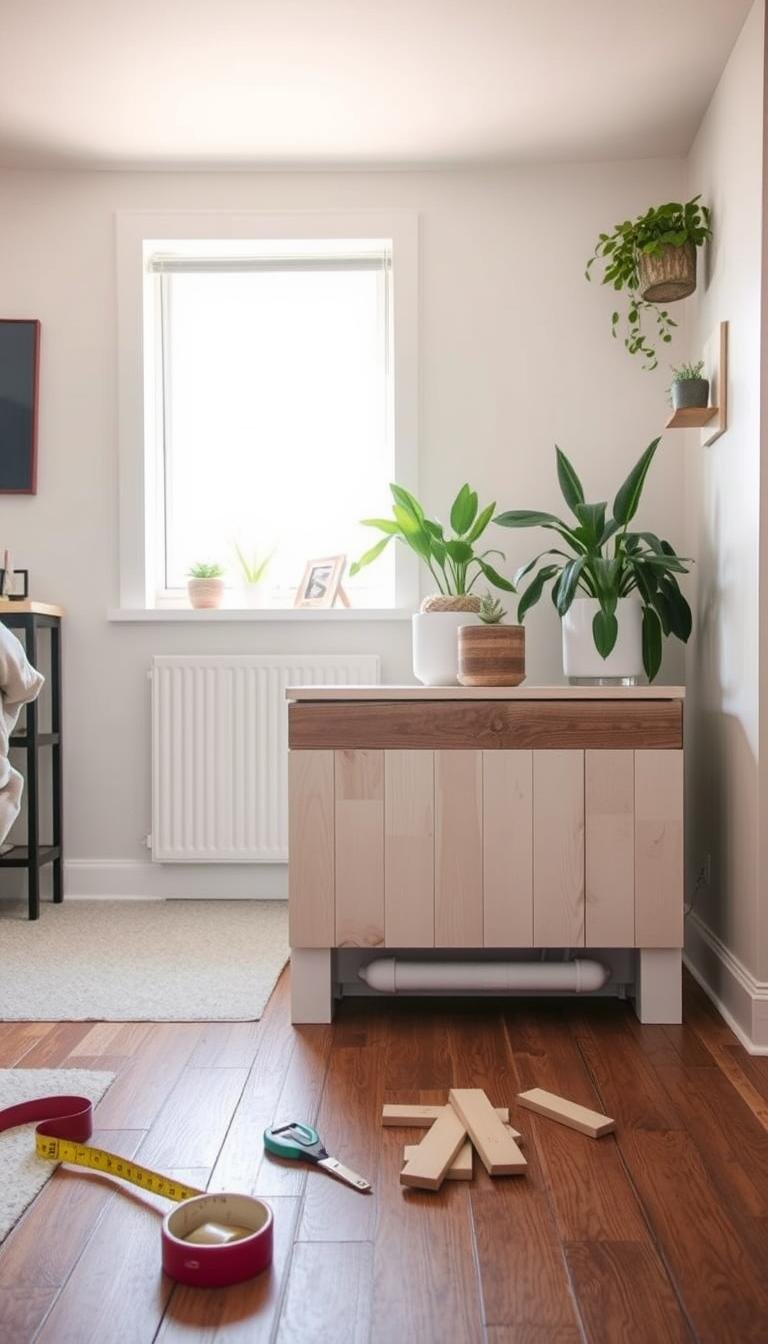
A media console, low cabinet or sideboard can hide cable slack, streaming boxes and the lower portion of the route. This is particularly useful when the outlet is already near the floor.
Keep ventilation around electronics and power equipment, and do not pinch cords behind furniture. Leave enough access that plugs can be disconnected without moving the entire installation.
Can HDMI or Ethernet go inside a plaster wall?
Low-voltage signal cable can sometimes be routed through a known wall cavity, but use cable that is specifically rated for the intended in-wall installation and follow the cable and wall-plate manufacturer’s instructions.
The difficult part is not pulling the cable—it is knowing what lies between the proposed entry and exit points. If the route encounters an unknown obstruction, dense insulation, suspected wiring, plumbing or fire blocking, do not drill blindly through it. Use a surface raceway or get professional help.
What about the TV power cord?
Do not hide a normal detachable TV power cord or extension lead inside the wall simply to make it disappear. The safe solution is a power arrangement intended for in-wall installation and permitted by the applicable electrical rules, or a properly installed receptacle behind the television.
If you are not certain whether a power-relocation product is approved for your wall, location and local requirements, use an electrician. A cleaner-looking wall is not worth improvising mains wiring.
- Signal: HDMI, Ethernet, optical and similar low-voltage cables
- Power: the mains supply feeding the television and connected equipment
Use each product only for the purpose and installation method stated by its manufacturer.
Where should the visible cable route go?
The most discreet path is usually the shortest route that aligns with something already in the room: a TV edge, a vertical trim line, the side of a fireplace surround, a cabinet edge or the route down to a media console.
A raceway painted to match the wall often disappears more successfully when it is straight and intentional than a concealed route that requires several unnecessary wall openings.
How to hide cables around a wall-mounted TV without cutting plaster
- Use one appropriately sized raceway rather than several small mismatched channels.
- Bundle signal cables neatly without crushing connectors or creating tight bends.
- Keep excess cable in an accessible location behind or inside the media console rather than forcing large loops into a narrow channel.
- Use removable cable ties or hook-and-loop straps so equipment can be serviced later.
- Label both ends of cables if several similar HDMI or Ethernet lines run together.
What if the outlet is far from the TV?
Do not solve a distant outlet by hiding an extension cord inside the wall. Instead, either keep the power route external using an appropriate visible solution, rearrange the equipment so the outlet can be used safely, or have a suitable power point installed where it is needed.
A surface-mounted power solution is different from a low-voltage decorative raceway, so follow the electrical product’s instructions and local requirements rather than treating every cable channel as interchangeable.
When an in-wall route is not worth it
Choose a surface solution when:
- you cannot confidently identify the wall construction;
- the path crosses an unknown obstruction;
- the plaster is fragile or already cracked;
- the route is near plumbing, switches, outlets or other services you cannot identify;
- the property is rented or historic and you want a reversible change;
- you expect to change equipment or cable standards frequently.
How to make a surface solution look intentional
Appearance depends more on alignment than concealment. Keep the route straight, use corners and transitions made for the raceway system, and match the finish to the wall or nearby trim where the product permits painting.
A low media console can hide the bottom transition and cable slack. If the TV wall has other visually dominant equipment, our guide to making a wall-mounted AC unit less visually dominant uses the same principle: organize the unavoidable object rather than adding clutter around it.
Common mistakes
- Running a normal TV power cord or extension cord inside the wall.
- Blindly drilling through a fire block or unknown obstruction.
- Assuming a stud finder proves a cavity is free of wiring or plumbing.
- Using cable that is not approved for the intended in-wall installation.
- Making multiple plaster openings when a surface raceway would solve the problem cleanly.
- Sealing cable routes permanently so equipment cannot be serviced or replaced.
- Pinching cords behind furniture or blocking ventilation around electronics.
The simplest safe plan
If the goal is simply to make a wall-mounted TV look cleaner, use a paintable surface raceway from the television to the media console or outlet area and keep the installation accessible.
If you want signal cables inside the wall, use properly rated low-voltage cable only through a route you can identify confidently. For mains power, use an approved in-wall power solution within its stated instructions and local requirements, or have a qualified electrician provide power behind the TV.
For more practical room fixes, browse the Dwelanor Room Guides.