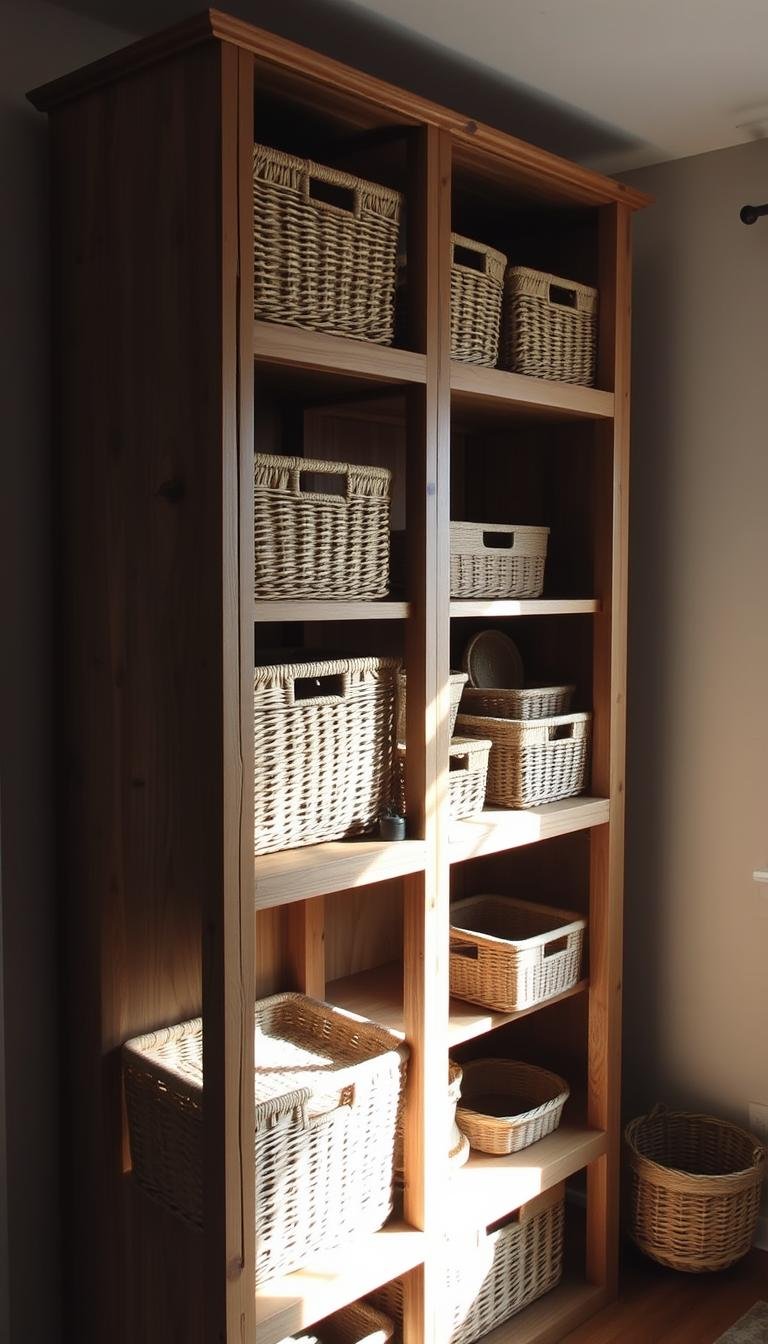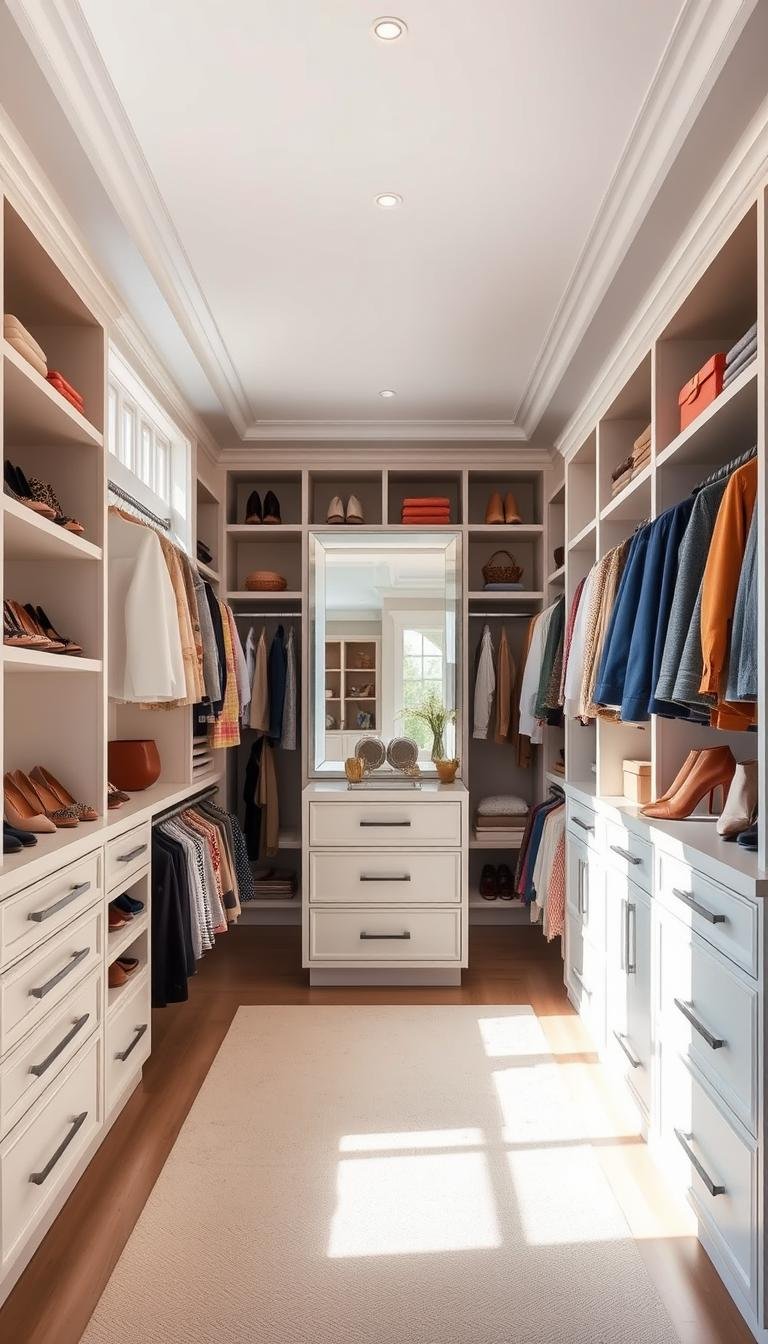
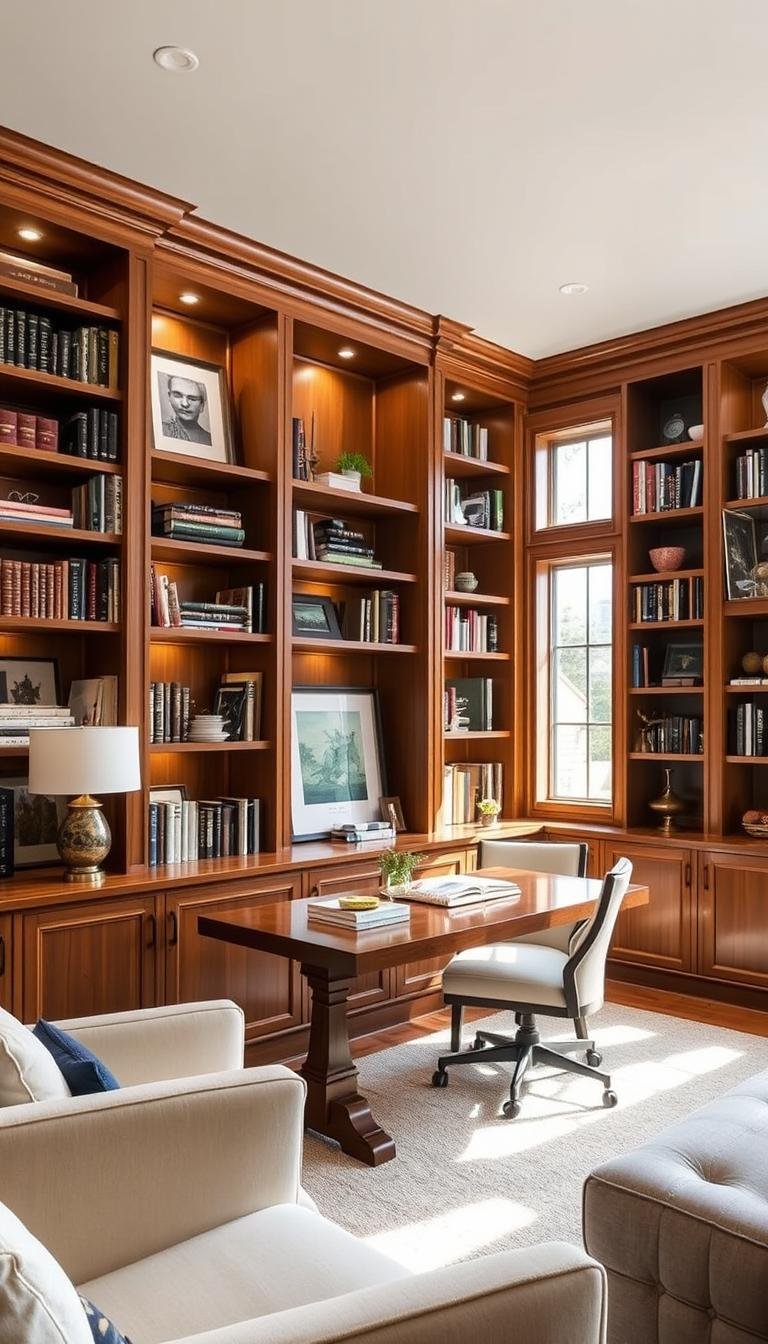
Good built-in shelving starts with what the room needs to store. Books, files, baskets, art and equipment all push the design toward different depths, shelf spacing and amounts of closed storage.
You can build from scratch or use stock base cabinets with custom shelving above. Either route can look convincing when the proportions, trim, finish and lighting relate to the rest of the room.
This guide focuses on layout, material choices, storage planning and finish details. Structural spans, wall attachment and electrical work should be sized to the actual materials, loads, hardware and local requirements rather than copied from a universal formula.
Library-style built-ins and rolling ladders
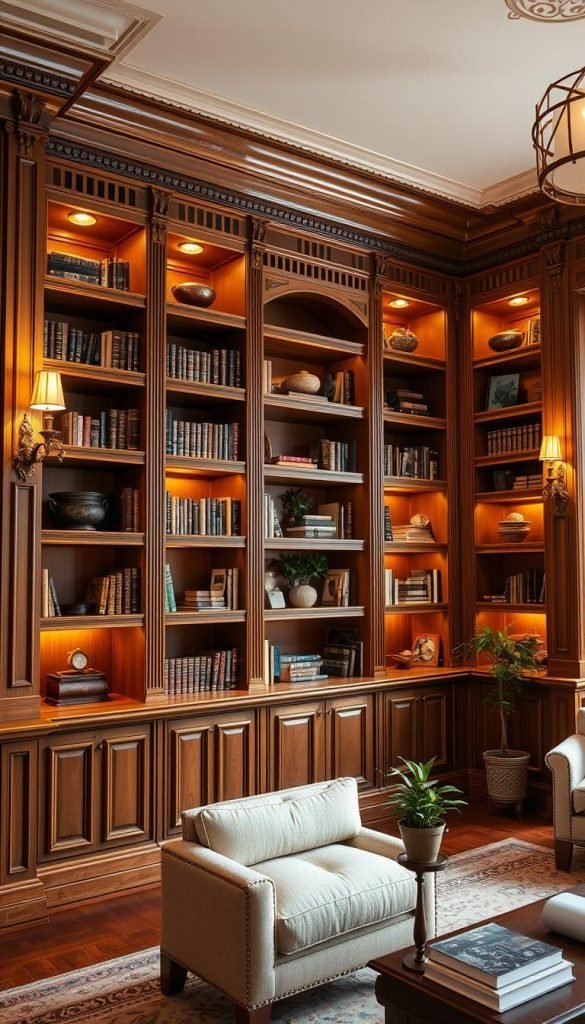
Continuous trim, aligned bays and repeated shelf lines can make a study feel architectural rather than simply furnished.

A rolling ladder can suit a tall library wall, but it is a hardware system rather than a decorative add-on. Use a complete ladder-and-rail system designed for the intended installation and have the supporting millwork sized for the loads specified by its manufacturer.
For the built-in look, carry compatible crown, base and face-frame details across the whole run. Adjustable shelves are useful in selected bays where book and display heights may change.
Wall-to-Wall Bookshelves That Transform a Room
A continuous run of shelves can change a plain wall into the room’s main attraction. I weigh openings, airflow, and door swings before committing to a full span so the result feels intentional and useful.
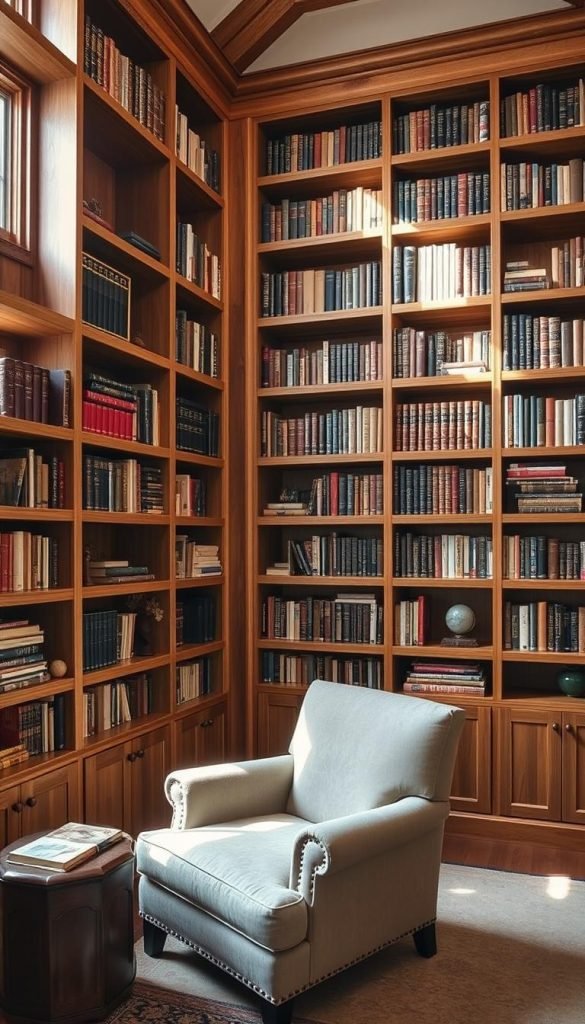
When to span the entire wall versus stopping short
When I span an entire wall, I get maximum storage and a striking backdrop that truly transforms the room. But I stop short near windows or doors to preserve sight lines and to give art or a mirror breathing room.
Balancing dense storage with light, svelte furniture
Dense bookshelves can overwhelm a living room, so I pair heavy storage with svelte-legged seating and open-base pieces. That keeps the floor visible and the overall look airy.
- I carve wider bays for big coffee-table book stacks so each book has a place.
- Lighting and paint shift the mood from academic to entertaining.
- I hide lamp cords behind millwork and use lower bins for toys or tech while reserving upper tiers for curated display.
Alcoves, Corners, and Niches: Making Awkward Spaces Work Hard
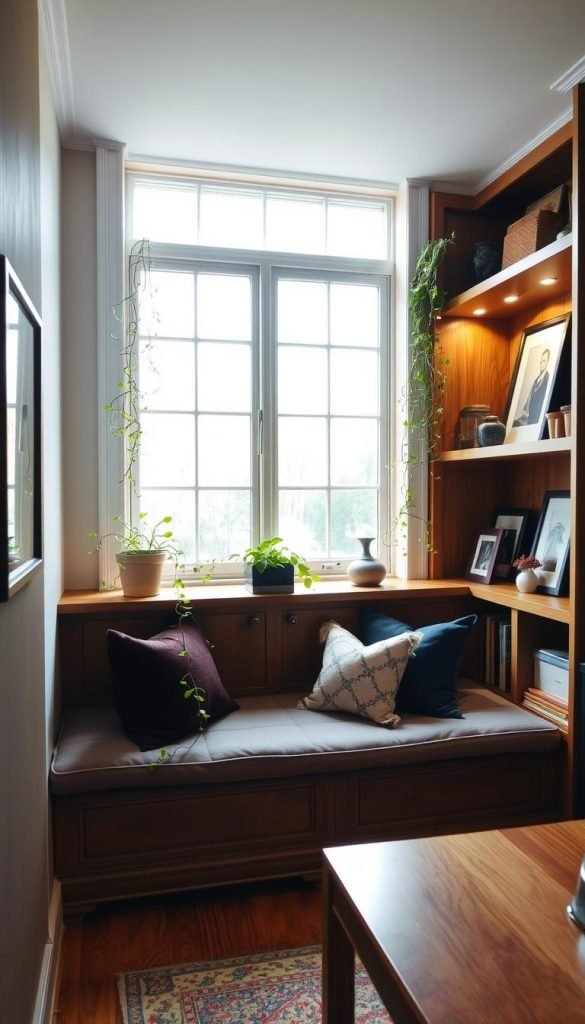
Tight corners often make the room feel unfinished, but they can become the most deliberate part of a plan. I build around seating to create inside-corner bookcases that frame a sofa and read like built-in architecture.
Continuity matters: I continue crown molding and paint across the units and walls so the composition feels calm and unified. That single color trick makes an odd nook read as intentional rather than leftover.
Practical details I use
- Case-mounted lights add warmth in tight spots; I always rough-in wiring behind the woodwork before install.
- An arched-top bookcase can turn an awkward niche into a balanced feature and ease asymmetry near a fireplace or window.
- Corner columns act like pedestals for special objects while adjacent shelves hold everyday books and decor.
- In shallow recesses I use open-back shelves to keep the area airy and avoid thick stiles so clearance stays generous.
- I ease nosings where people pass by and match base profiles around the corner so the run reads as one thoughtful wrap.
“A small corner, planned well, becomes the part of the room everyone remembers.”
Low and Light: Under-Desk and Below-Window Built-Ins for Small Studies
Keeping built-ins low lets light rule the room while still giving every item an easy home. I design low runs under desks and below windows so daylight stays strong and the space feels open.
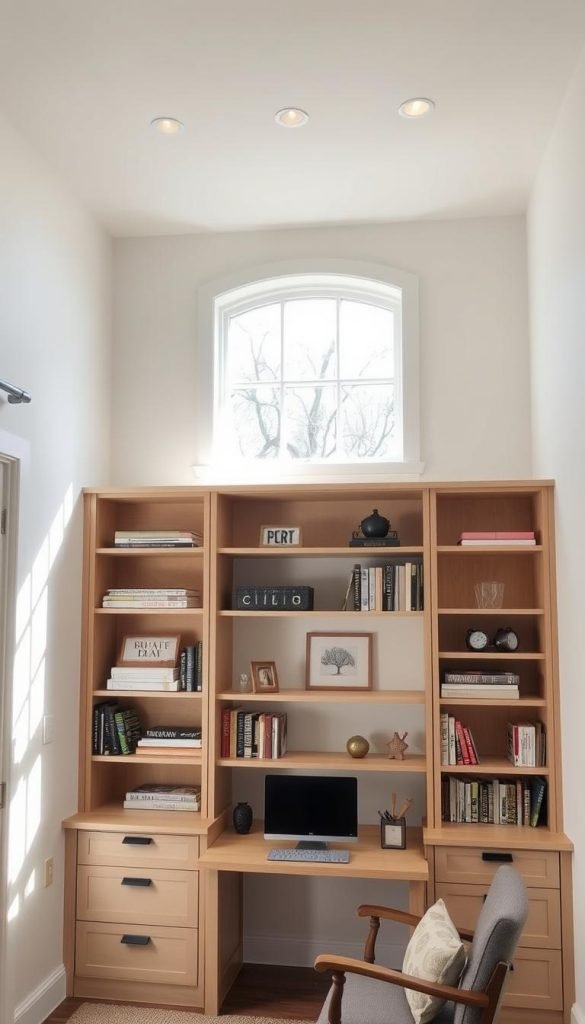
I keep the line low so sight lines and views remain sacred. That simple choice makes a small office feel larger and calmer.
I measure chair arms and knee clearance before I cut stock. I want shelf fronts to avoid everyday collisions and to be comfortable while seated.
Practical touches I use: adjustable shelves for paper, baskets, and notebooks, a narrow drawer under the desk for pens, and a cable chase behind lower bays so chargers stay tidy.
- Choose shallow depths so knees clear and items stay within arm’s reach.
- Paint lower pieces to recede; add a subtle top-edge contrast for definition.
- If a radiator is present, I include a vented grille so heat passes while storage hides the unit.
“A low run keeps the room light and gives every shelf a clear purpose.”
Cozy Reading Nooks with Window Seats and Hidden Storage
I often carve small alcoves into a plan so a cushioned seat reads like an invitation to stop and read. A seat under a large dormer becomes storage and staging at once.
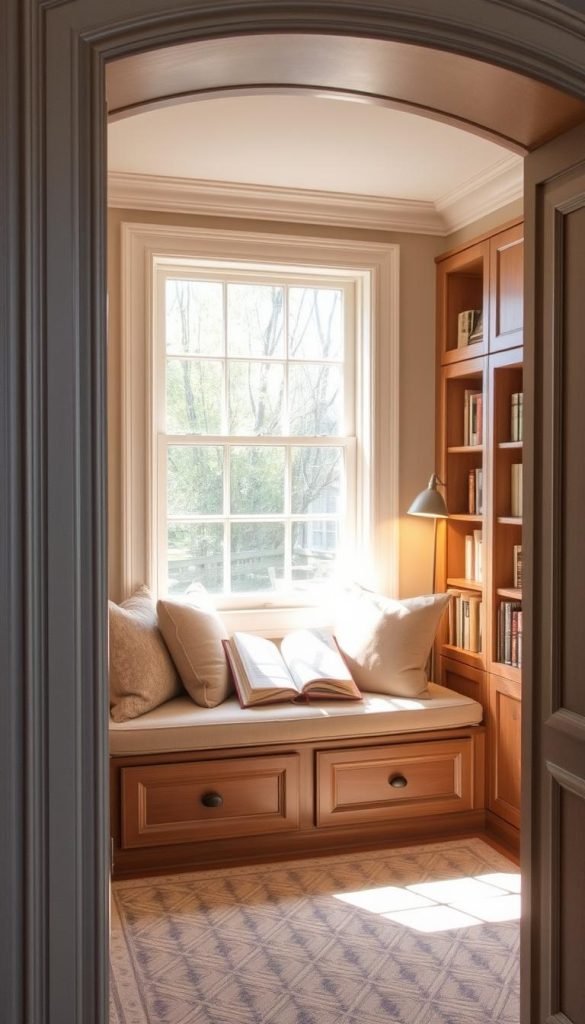
Window-seat cabinets hide controllers, games, and charging gear so surfaces stay calm. Deep drawers beneath the cushion hold blankets while baskets inside cabinets sort smaller items.
Adjustable shelves nearby flex for tall novels and photo albums. On tight landings, turning narrow units outward displays colorful spines and transforms a pass-through into a pause point.
“Pre-wire for a swing-arm lamp or case-mounted reading lights to avoid exposed cords later.”
- I match stile and rail details to existing trim in the living room so the seat looks original.
- I keep the cushion just below the sill for daylight and a snug backrest.
- For kid zones, I use durable fabric and wipeable paint for low maintenance.
| Feature | Benefit | Typical size |
|---|---|---|
| Window-seat cabinets | Conceals tech and games | 24–36″ wide bays |
| Adjustable shelves | Store books and albums | 9–12″ depths |
| Deep drawers & baskets | Blankets and small items | 12–18″ deep |
| Pre-wired lighting | Safe, tidy reading light | Dedicated 15A circuit suggested |
What Are the Best Ideas for Custom Built-In Shelving in a Study?
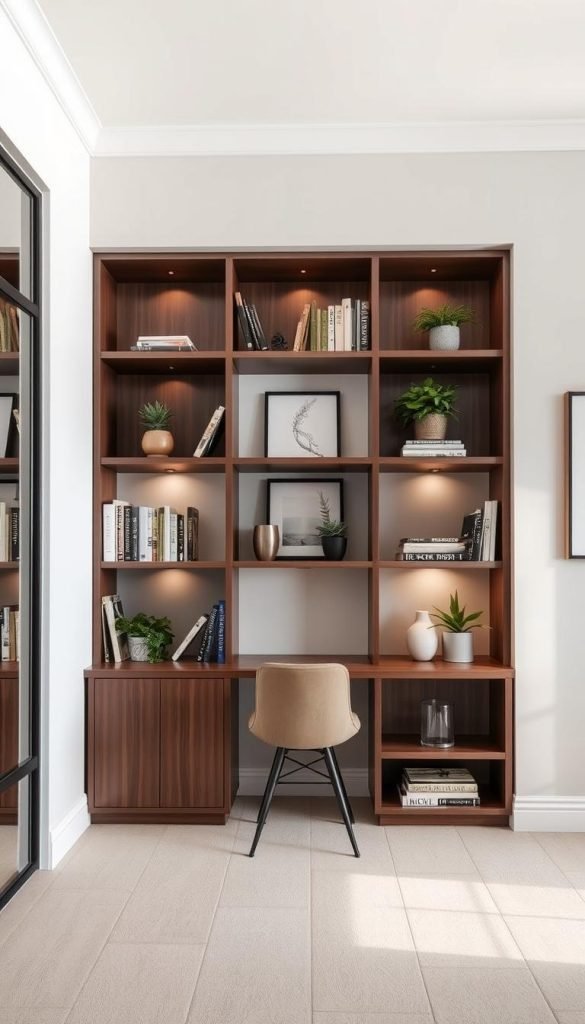
I’ve long favored designs that read as furniture and architecture at once. That stance guides the styles I choose and the order I work in. Small choices—feet, an arch, or a rail—change how shelves feel and how people use them.
Top styles I love
- Library passage with a ladder for an immersive, classic library look.
- Furniture-style cases with feet and face frames so a run reads like freestanding furniture.
- Arched-top units that add drama and fit tall collectibles.
- Modern clean-lined installs with inky stains and minimal hardware.
Planning flow I follow
I always measure room dimensions and contents first, then map wiring behind the woodwork before any cutting begins. Prewiring makes picture lights and case-mounted lamps safe and simple to install.
Next, I build, then paint samples on boards to see how color shifts from morning to night. Finally, I style shelves with a mix of vertical and horizontal stacks to create rhythm and personality.
“This planning discipline keeps work on schedule and avoids rework after paint dries.”
Furniture-Style Built-Ins: From Recess to Statement Piece
I like to treat a shallow recess as if it were furniture waiting to be uncovered. That shift in intent changes the scale and the detail I choose.
I turn an existing niche into a crafted wall by adding face frames, feet over a false toe-kick, and a simple crown that reads like furniture.
For boxes I favor birch or hardwood plywood. It keeps weight down and takes crisp trim cleanly.
Double-bead poplar trim and stepped casing give a subtle French-country character without fuss. Feet placed forward break the base line so the piece reads as an object, not a run of walls.
- I run the unit wall to wall and floor to ceiling when I want max storage that won’t block traffic.
- Lower cabinets with doors or glass hide clutter while upper shelves stay open to display books and objects.
- A modern garden green paint updates the traditional language; a satin sheen flatters profiles and resists wear.
“A furniture-minded install blends built-in function with a bookcase’s soul.”
Modern Takes: Inky Stained Wood, Clean Lines, and Minimal Hardware
When the goal is contemporary, I push for clean edges and subtle hardware that nearly vanish. I favor inky stained wood with tight reveals and minimal face frames to get a crisp silhouette that reads calm and current.
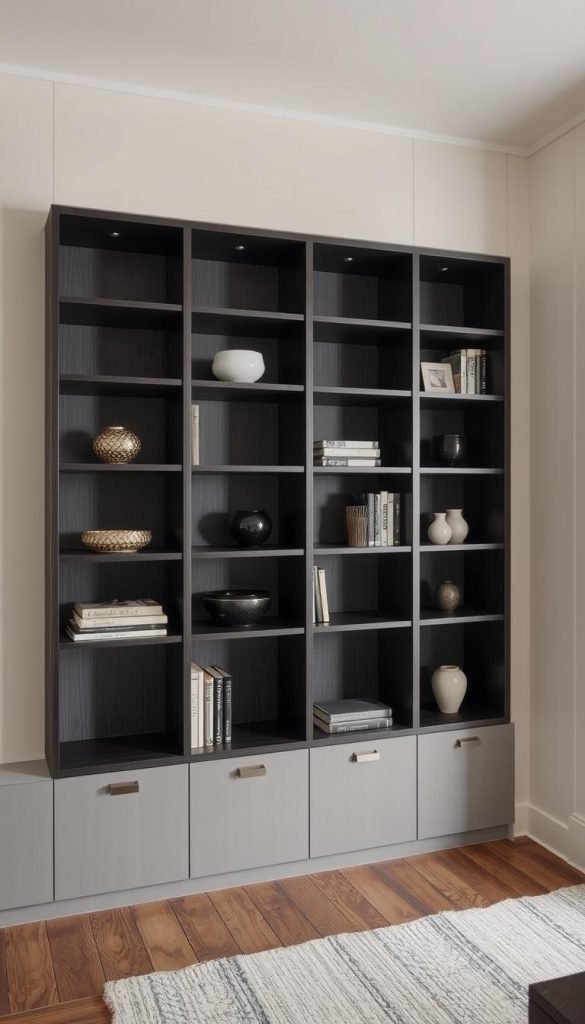
Clean-lined ladders with straight-grain veneer reinforce the modern look. I prefer continuous vertical grain so the eye travels without interruption.
Floating shelves or a recessed toe-kick lighten mass in smaller living zones. Integrated LED channels graze the backboards for subtle task light without visible fixtures.
- I use tab pulls or touch latches to reduce visual noise in the shelving.
- Styling stays minimalist: grouped objects, neutral decor, and restrained spines.
- A square edge or micro-bevel replaces heavy molding to keep language consistent across the bookshelf.
“Restraint in detail helps built-ins blend with adjacent modern furniture.”
For inspiration and designer examples, I often consult curated galleries like designer libraries to refine proportions and finishes before I build.
Size shelves around what you actually own
Measure your books, baskets, files and equipment before deciding shelf depth. A shelf only needs to be deep enough for its contents plus a little practical clearance; unnecessary depth makes a small study feel heavier.
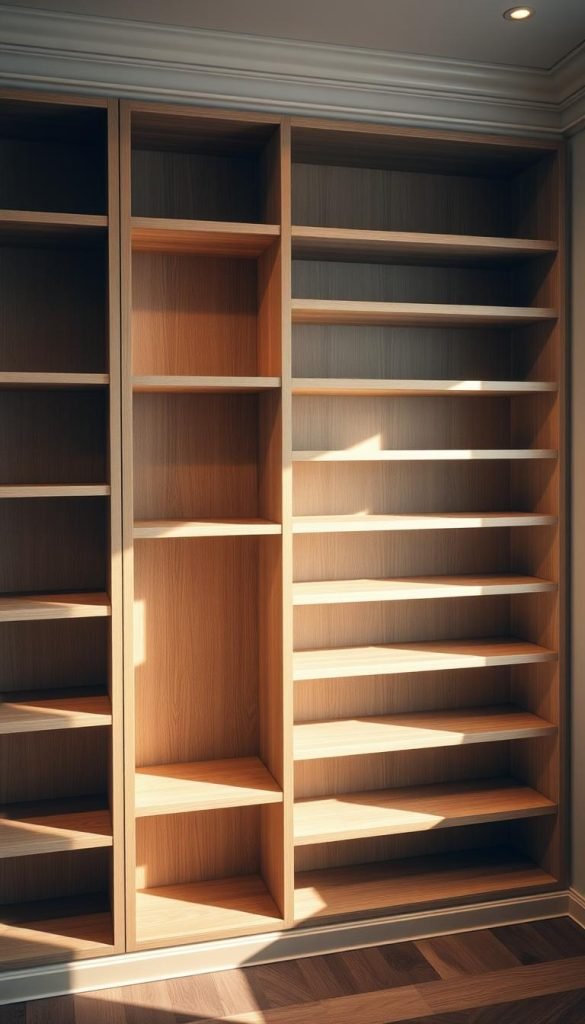
Paperbacks often fit comfortably on shallower shelves, while large hardcovers, albums and storage boxes need more depth. Measure the actual collection rather than treating one dimension as standard.
Shelf span is a structural question. Sag depends on material, thickness, edge reinforcement and load, so size long shelves using appropriate span guidance or a qualified cabinetmaker rather than a fixed rule copied from another project.
A cardboard or painter’s-tape mock-up is an easy way to test depth and reach before committing to cabinetry.
Material Choices That Matter: Solid Wood, Plywood, MDF, and More
I choose materials to match how the shelf will be used, where it sits, and how it will age. The right choice affects cost, finish, and how long the work looks great.

Solid wood offers beauty and strength for high-end showpieces, but it needs time to acclimate and a larger budget. Hardwood plywood gives stable faces and crisp edges and works well under paint or clear finish.
MDF paints smoothly and resists warping on short spans. I always back-prime cut edges and seal them so the paint stays clean and won’t fuzz.
Practical picks I use
- I choose hardwood plywood for strong carcasses and crisp shelf faces.
- MDF is my pick for painted shelf fronts or short runs that hide fasteners neatly.
- Laminate wins in mudrooms and baths where moisture and heavy use challenge cabinets and storage.
- Metal accents can modernize walls, but I use them sparingly in a quiet room.
- For long spans I thicken plywood or add a nosing to limit deflection.
- Stock kitchen cabinets make fast, sturdy bases under custom uppers for smart diy built-ins.
“Consistent grain direction and tight joinery elevate the final result.”
Pro Finishes: Paint Colors, Wood Tones, Crown Molding, and Edge Details
A single color decision can unify shelves, walls, and ceiling into one calm plane. I start with a sample board and live with it under morning and evening light before committing.
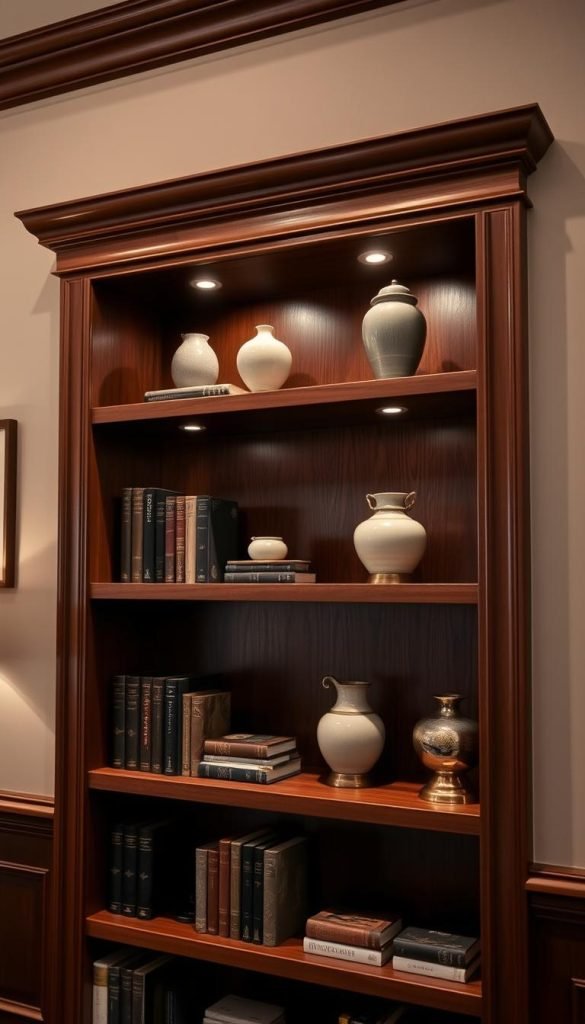
Using mint greens, deep blues, and lacquered hues to set the mood
Mint green backs bring a fresh, airy charm to cases and help objects pop. Deep-blue paint across cabinets, moldings, and adjacent walls makes a room feel cozy and composed.
For dining or display, a reflective blue lacquer lifts glass and china into a glamorous vignette. I pick UV-stable coatings where sunlight is strong so color stays true.
Edge treatments: veneer tape, wood nosing, molding, and face frames
Edge details change how a simple carcass reads. I use veneer tape for speed, solid wood nosing for a weighty shelf front, and face frames when I want a furniture-grade look.
Molding profiles add ornament or restraint depending on style. Crisp edges and matched grain direction make basic cases feel high-end.
Continuing crown and base to lock in a built-in look
Running crown and base across the run ties cabinets to ceiling and floor so the install reads permanent. Painting built-ins and adjacent walls the same color dissolves seams and calms busy decor.
- I test sheen: satin on shelves hides handling; semi-gloss on crown picks up light.
- A stained top or back panel warms painted rooms without disrupting the color story.
- For glass-front lowers, fabric panels soften tech and add pattern to living spaces.
“Cohesive color and crisp edge work make modest carpentry read like custom furniture.”
Plan lighting before the cabinetry goes in
Picture lights, integrated LED channels and small case lights can make built-ins feel finished, but the power plan should be decided before the units cover the wall.

Decide which shelves need display light, where controls should live, and whether the lighting will use a listed plug-in system or permanent wiring. Keep adjustable shelves from interfering with cords or fixtures.
Any new in-wall wiring, junction boxes or circuit changes should follow local electrical requirements and be handled by a qualified electrician where required.
Base Cabinets Plus Open Shelving: Hidden Storage Meets Display
A row of ready-made cabinets below open tiers speeds installation while keeping the wall polished. I often start with stock kitchen cabinets as the sturdy foundation, then build shelves above to create a fast, stable hybrid.
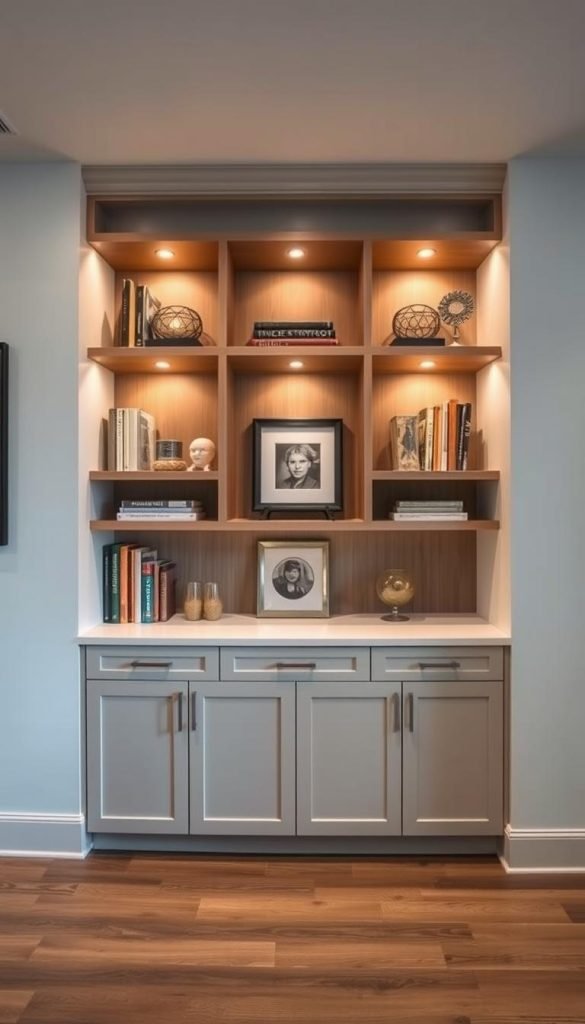
Kitchen cabinets as sturdy bases for DIY built-ins
I set and scribe the cabinets to the wall, shim them level, and fasten into studs so the platform never shifts. A continuous countertop or thick top ties the base to the verticals and adds rigidity.
Fabric-lined or glass-front enclosures to soften the look
Closed lower doors hide everyday items—printer paper, kids’ gear, and cords—while upper shelves show books and curated decor. Glass-front doors with fabric behind them soften reflections and conceal tech clutter for a cleaner display.
- I place deeper lower cabinets with shallower upper shelves so the wall reads balanced, not top-heavy.
- Adjustable shelves above let me change spacing for seasonal displays without rebuilding.
- This mix of ready cabinets and custom shelving accelerates diy built-ins while keeping a refined finish.
“A tight paint job, crown, and good lighting make stock cabinets read like custom work.”
Smart Layout Ideas I Use in Real Rooms
Small layout shifts yield big gains in how rooms feel and function. I use wraps and bridges to press storage into places that otherwise sit empty.
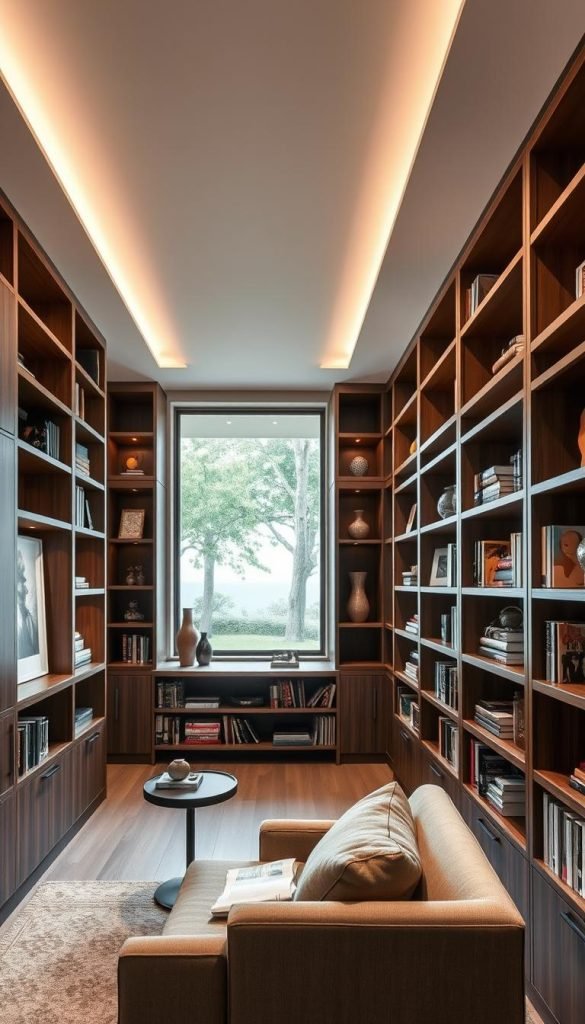
Bedroom headboard bookcase: I align shelves with the mattress top so bays repeat evenly. That rhythm calms the space and adds a useful sound buffer between bedroom and bath.
Dining and display
For dining, I build cases with drawers to store barware and china. Lacquered finishes and picture lights lift the display, and a ladder rail adds sparkle when you want it.
Wraps, bridges, and stair cubbies
Over-window bridges and door-frame cubbies turn dead walls into storage without stealing floor. Stair surrounds use small cubbies that take zero footprint and tame overflow books.
Secret access
A disguised bookshelf door gives a true library vibe. Mirrors on inner panels extend verticals and make compact rooms feel taller.
- I scale face frames to match adjacent casings so wraps read intentional.
- Balance open display with closed compartments so everyday objects have a home.
- Rails for ladders add instant library character in modest rooms.
| Use | Benefit | Placement tip |
|---|---|---|
| Headboard bookcase | Sound buffer, bedside storage | Align top shelf with mattress |
| Dining bookcases with drawers | Hidden barware, elegant display | Use picture lights and lacquer |
| Over-window bridge / door cubbies | Extra storage, saves floor | Keep clearances above openings |
| Secret-door bookshelf | Private access, dramatic library feel | Reinforce frame and hinge alignment |
“Thoughtful layout wrings value from every inch while keeping circulation clear.”
Adjustable vs. Fixed Shelves: Hardware and Joinery I Trust
I choose systems that let me shift layouts without undoing weeks of work. That flexibility matters when collections change or a room gets repurposed.
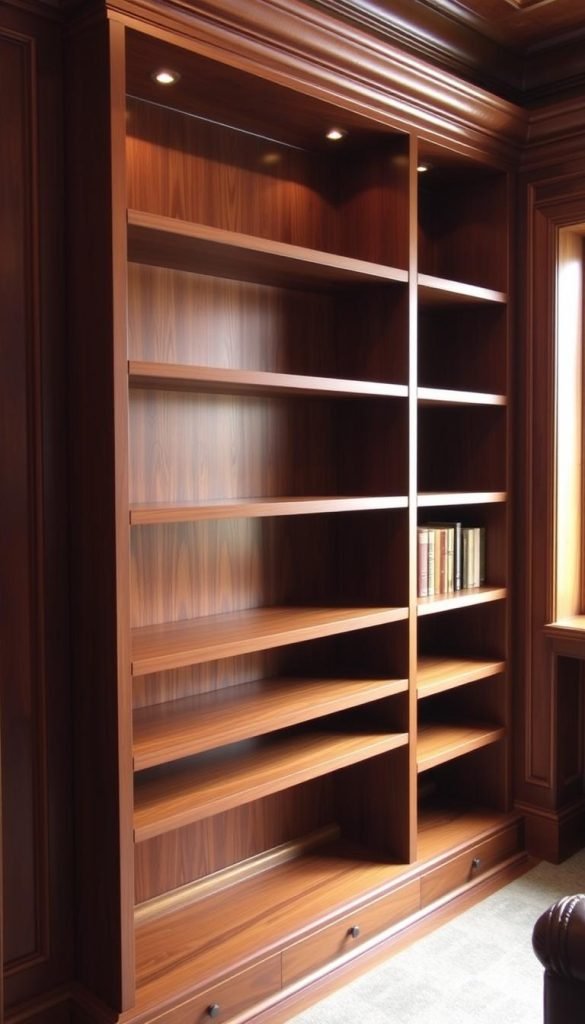
Metal standards in 5/8″ and 1/4″ widths can be recessed for a clean look. I use strong shelf clips with them so rows adjust without visual clutter.
Pin options I reach for
Pin systems stay discreet. I pick padded pins to protect finishes, flat pins for a minimal face, slotted pins with a kerf for added grip, or screw-in sleeves when I want a locked hold.
Fixed support methods
When I need rigidity I use dadoes or dovetails. Dovetails lock a shelf in place for heavy books or fragile objects. Dadoes give quick, square support for long runs.
- Cleats work fast inside cabinets and support heavier items.
- Check wall plumb so standards seat true and shelves don’t wobble.
- Long spans get thicker stock or a nosing to resist sag.
- I pre-drill pin holes with a jig so rows align and avoid tear-out.
- For painted work I fill recesses flush so hardware disappears visually.
“Mix fixed rows and adjustable bays for durable, flexible storage.”
A practical starting point
Begin with an inventory of what the study needs to hold. Use that to decide which bays should be open, which should be closed, and how deep each section actually needs to be.
Then choose a construction route—fully custom or stock bases with custom uppers—and let the existing trim, room proportions and lighting guide the finish. Structural support and electrical work should be designed for the actual project rather than assumed from a generic built-in plan.