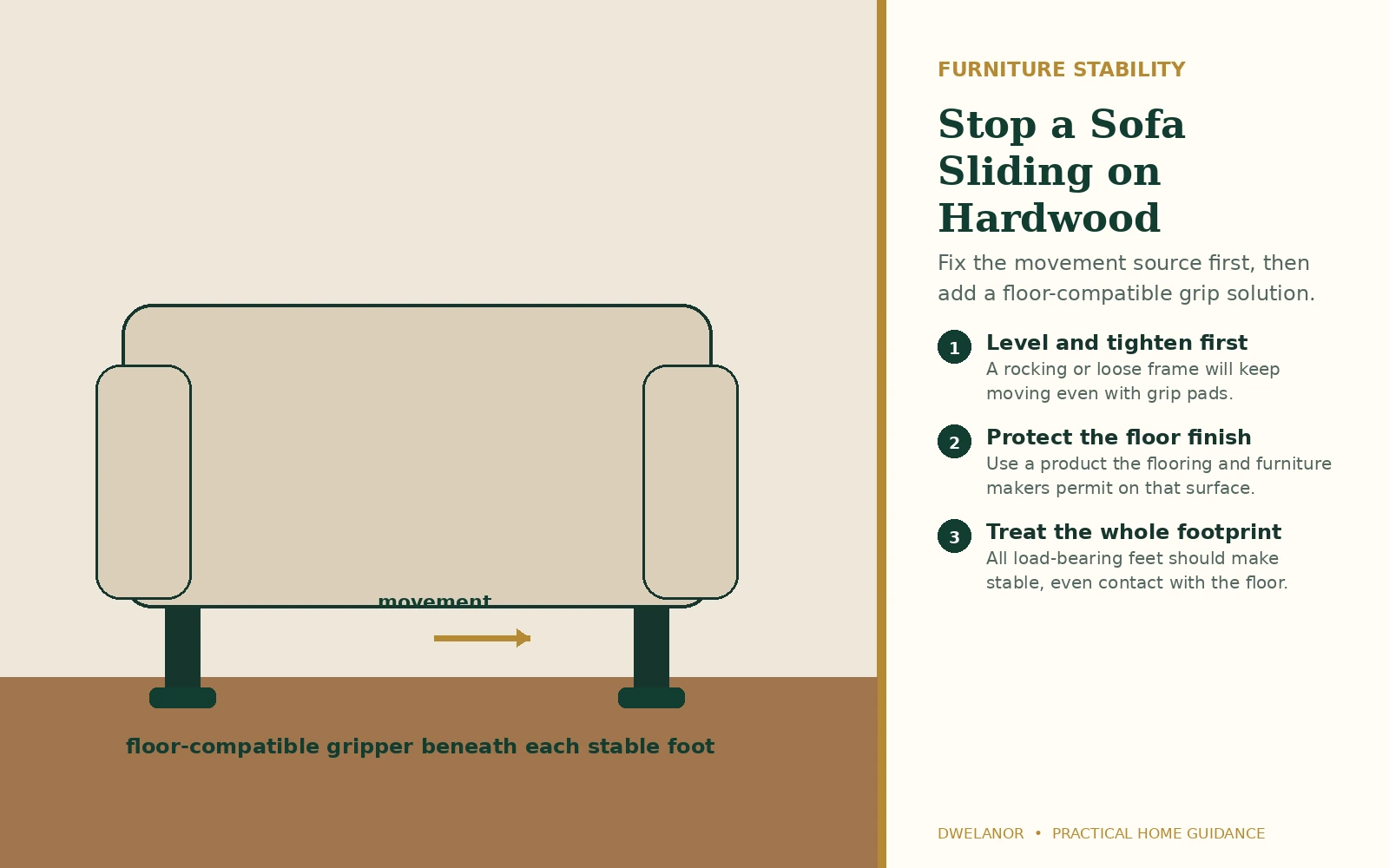
To stop a sofa from sliding on hardwood, first make sure the floor and sofa feet are clean and level, then add non-slip grippers that are explicitly compatible with the floor finish. If the seating group already uses an area rug, a suitable rug pad can stabilize the whole arrangement.
The useful relationship is hardwood finish → sofa foot material → floor contact → gripper compatibility → rug/pad system → furniture layout.
Why sofas slide on hardwood
Sliding usually comes from one or more of these conditions:
- smooth furniture feet on a smooth floor finish;
- dust or grit reducing consistent contact;
- one or more legs not carrying weight evenly;
- a lightweight sofa moving when someone sits down;
- felt protectors that reduce scratching but also make the sofa easier to move;
- a rug or rug pad shifting underneath the seating group.
Before adding any product, check which problem you actually have.
Use floor-compatible non-slip grippers
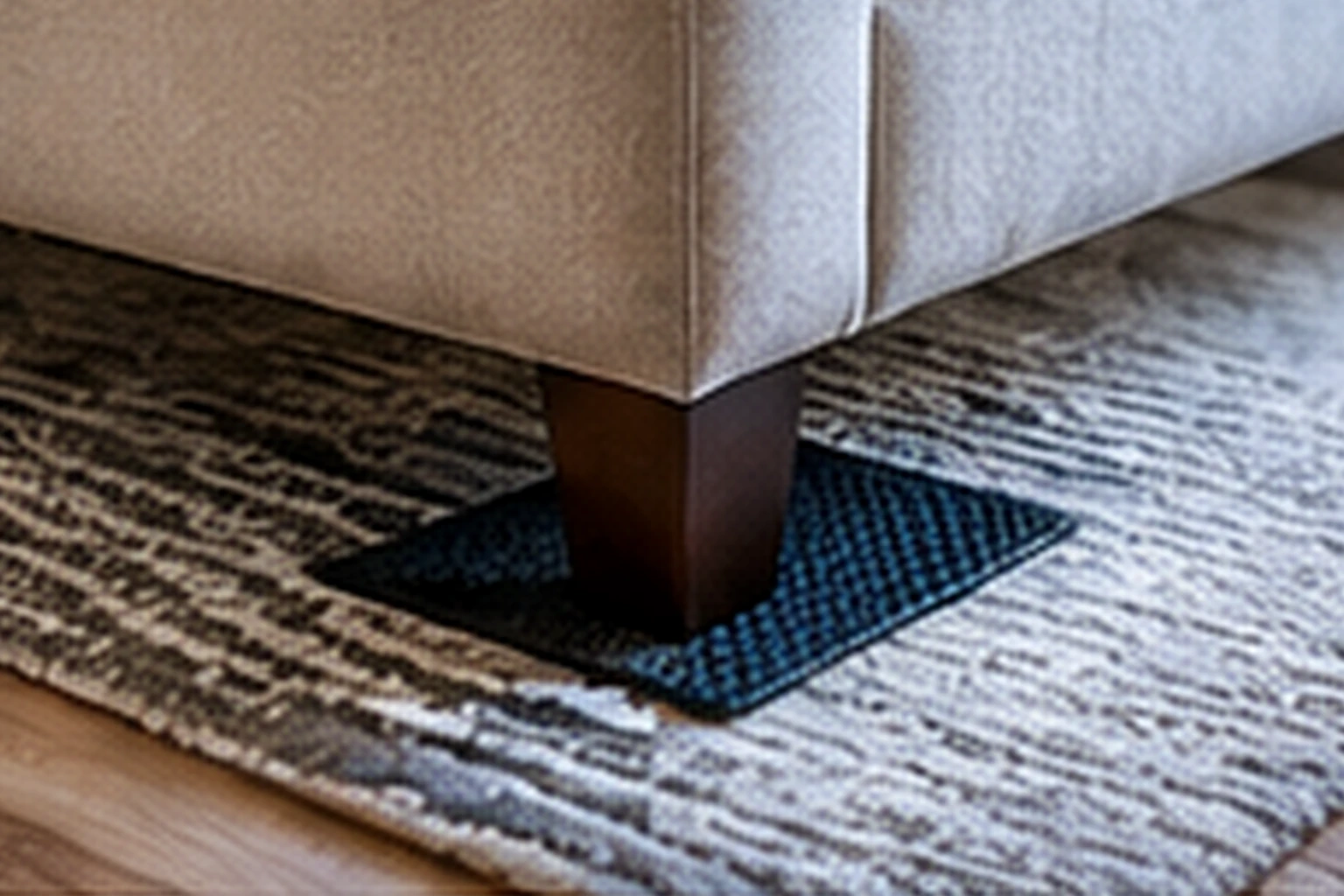
For many sofas, purpose-made furniture grippers are the simplest solution. They sit between the furniture foot and floor and increase friction without fastening the sofa permanently to the room.
Do not choose a gripper based only on the word “rubber.” Different elastomers, plasticizers and adhesives can interact differently with wood coatings and finishes. Bona’s hardwood-floor guidance likewise warns that some rug/mat backings can damage wood finishes and recommends choosing floor-compatible materials deliberately.
Check that the product is approved for:
- finished hardwood;
- your type of furniture foot;
- the expected furniture weight;
- the intended period of contact;
- your floor manufacturer’s maintenance restrictions.
If the flooring manufacturer warns against rubber, latex, PVC or adhesive-backed accessories, follow that guidance.
Match the gripper to the sofa foot
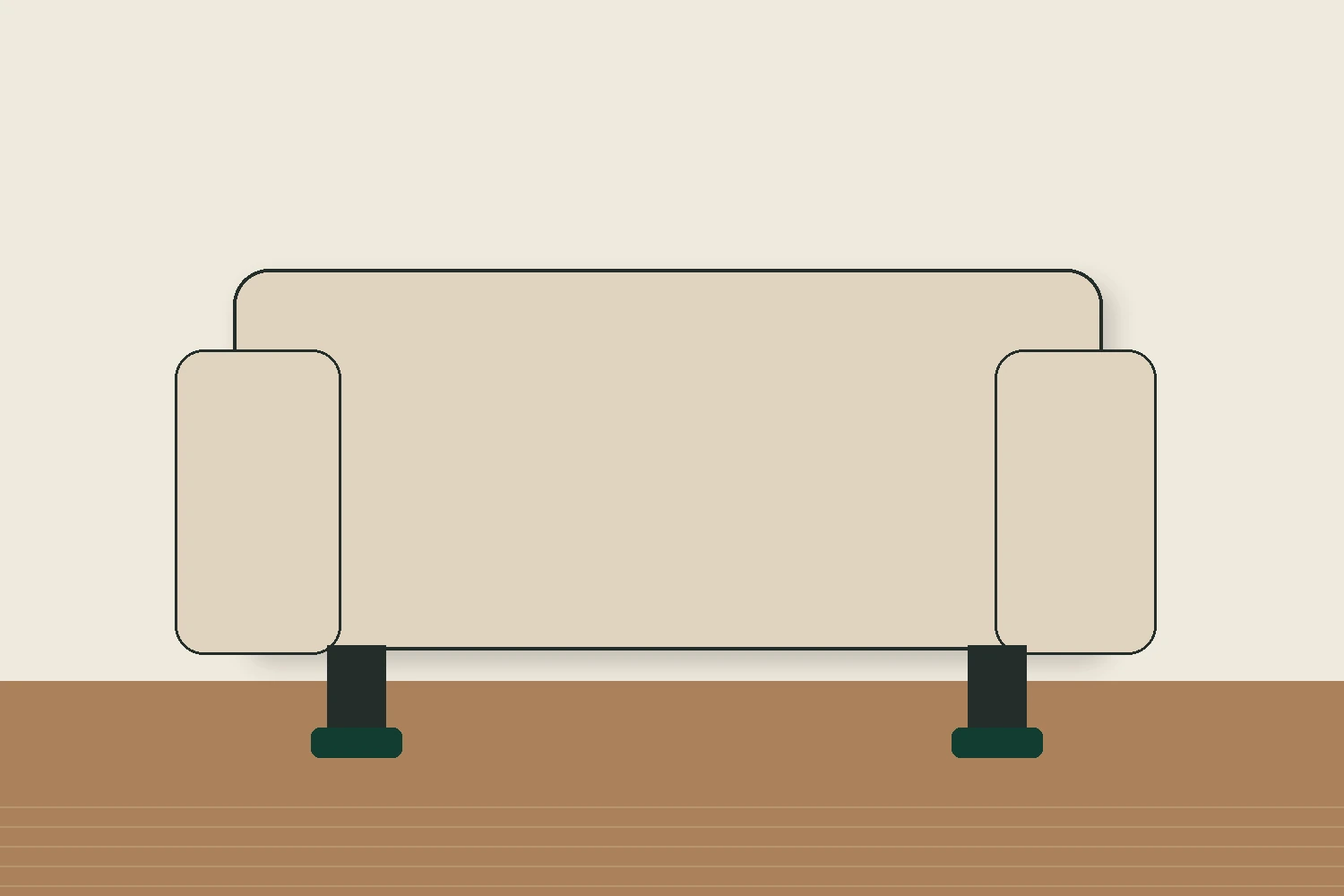
A pad works best when the entire furniture foot sits flat on it.
Common situations include:
| Sofa foot | What to look for |
|---|---|
| Wide wood block | Flat gripper sized close to the full footprint |
| Round tapered leg | Round cup or pad large enough for stable contact |
| Metal leg | Non-slip cup or insert that also prevents direct metal contact with wood |
| Hidden plinth or base | Manufacturer-approved strips or pads at the actual load points |
| Adjustable foot | Level the foot first, then add compatible grip if needed |
Do not balance a sofa on tiny pads that are much smaller than the load-bearing feet.
Felt pads protect against scratches but may not stop movement
Felt is useful when furniture needs to move occasionally, because it reduces abrasion between the foot and floor. That same low-friction behavior can make it a poor choice when the goal is to keep a sofa stationary.
If the sofa already has felt pads and slides too easily, replace them only with a product that combines floor protection and grip and is compatible with the floor finish.
Do not use random shelf liner as a permanent furniture pad
Household shelf liners are not all designed for long-term contact with finished hardwood. Some can compress, transfer material, leave patterns or react with certain finishes.
A purpose-made furniture or rug product with published floor compatibility is a better choice than cutting an unknown liner into squares.
An area rug can anchor the whole seating group
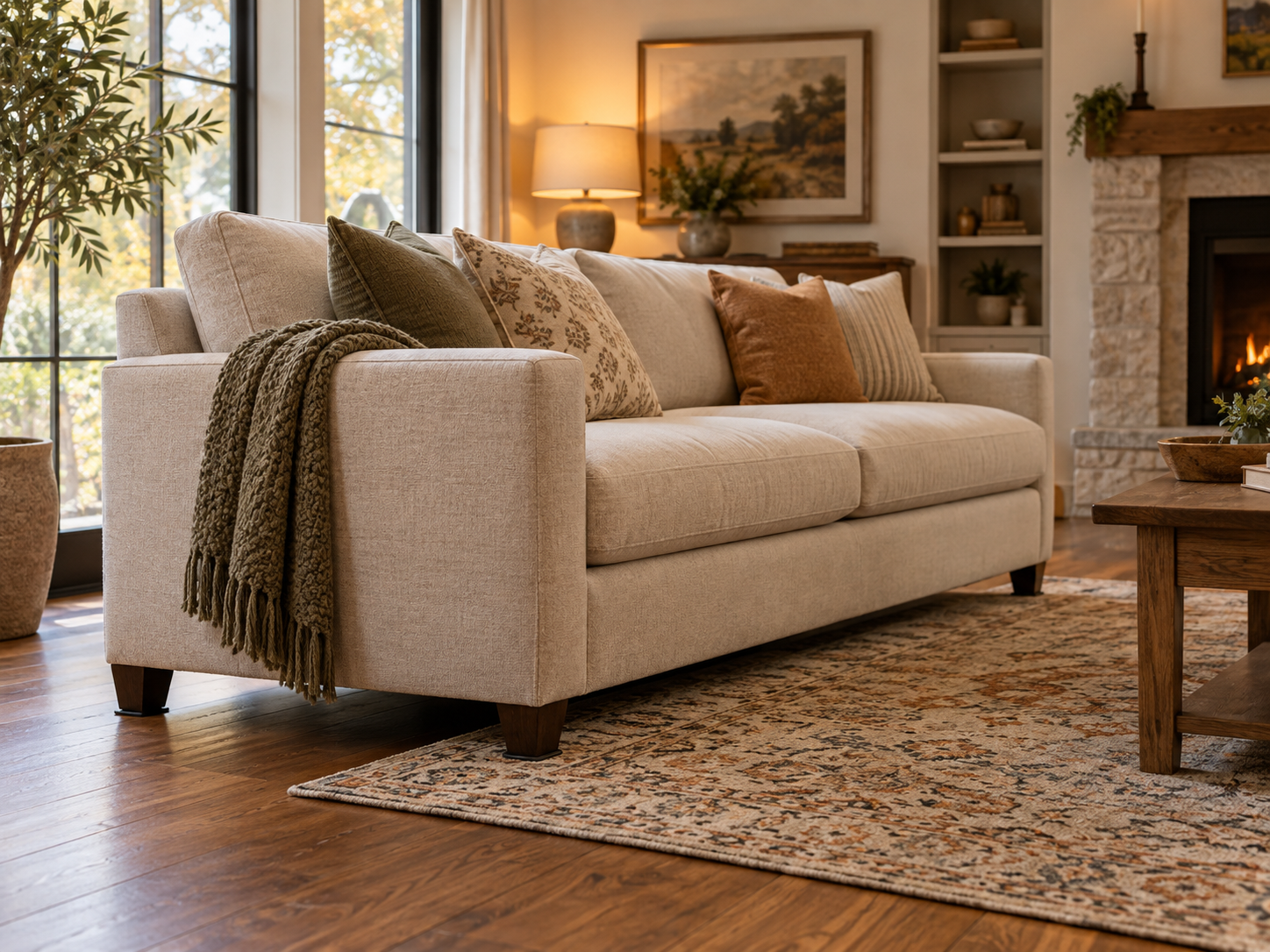
If the room already needs a rug, placing at least part of the sofa on it can reduce direct sliding and visually define the seating zone.
The rug itself still needs to stay stable. Use a rug pad appropriate for both the rug and hardwood floor.
For pad material, thickness, sizing and floor compatibility, use the Rug Pad Guide. If the floor uses radiant heat, check both the flooring and rug-pad manufacturer guidance before choosing a pad.
Check the rug layout, not just the gripper
A rug can improve stability when the furniture arrangement supports it. It can also create movement if the rug is too small, wrinkled or sitting on an unsuitable pad.
Check:
- whether the sofa feet actually rest on the rug;
- whether the rug pad is slightly smaller than the rug so it does not show;
- whether the pad is flat and free of folds;
- whether doors or traffic paths repeatedly push the rug;
- whether the rug edges are curling.
If the rug edges are curling, solve that as a separate rug-stability problem rather than using the sofa to pin them down. For broader rug material and placement decisions, see the Area Rug Guide.
Make sure the sofa itself is level
A sofa can move because one leg is slightly short or an adjustable foot has loosened. That reduces the number of stable contact points and lets the frame rock when someone sits down.
Check the manufacturer’s assembly instructions and tighten or level only the components intended for adjustment. Do not wedge random objects beneath structural legs.
Inspect loose legs and mounting plates
If a sofa foot rotates, wobbles or no longer sits square to the frame, the problem is not simply floor friction.
Turn the sofa only when it can be done safely and inspect the leg connection according to the furniture instructions. A damaged threaded insert, cracked wood rail or loose mounting plate may require repair rather than a larger anti-slip pad.
What about wall bumpers?
A bumper can protect the wall if the sofa occasionally touches it, but it should not be used as the main system for stopping furniture movement. Pushing a sliding sofa against drywall, trim, a radiator or an electrical outlet simply transfers the force somewhere else.
Create a stable floor contact first. Use wall protection only as secondary protection where appropriate.
Do not change the hardwood finish just to stop a sofa
The old version of this advice suggested choosing a different floor finish because some finishes “slide less.” That is an unnecessarily large intervention.
Use accessories designed to work with the existing floor. If the floor itself is unusually slippery, damaged or contaminated with a polish or cleaner residue, follow the flooring manufacturer’s maintenance instructions or speak with a flooring professional.
Cleaning helps only when it follows the floor-care instructions
Grit can interfere with furniture pads and scratch hardwood, so keeping the contact area clean is useful. But do not use generic detergents, vinegar, oils, waxes or cleaners simply to increase or decrease friction.
Use the floor manufacturer’s recommended routine. Residue from an incompatible cleaner can create another problem instead of solving the slide.
When to use a larger furniture cup
A broader cup can help when a narrow leg sinks into or deforms a softer grip pad. It can also spread contact over a larger area.
Choose the cup by actual foot dimensions and the product’s stated floor compatibility. Make sure the foot cannot slip out of the cup when the sofa is loaded from the side.
A practical order of fixes
- Clean the floor and sofa feet correctly.
- Check that all legs are secure and level.
- Remove worn or unsuitable glides.
- Add floor-compatible non-slip grippers.
- If using a rug, correct the rug and pad system.
- Recheck the setup after normal use.
For related living-room planning, see the Rug Pad Guide, Area Rug Guide, Living Room Design Guide, and the Dwelanor Room Guides.