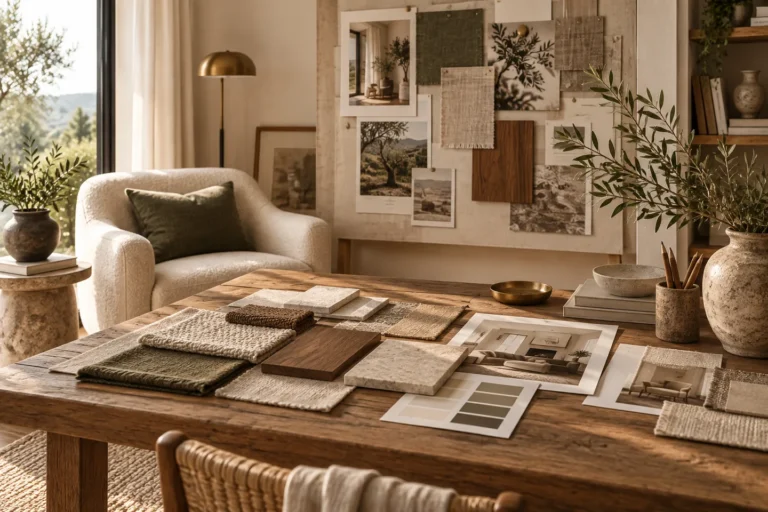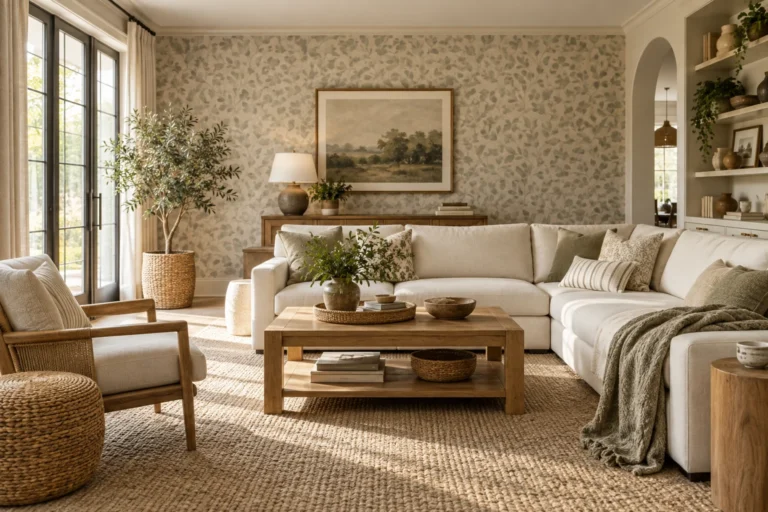
A warm Scandinavian living room is less about buying a list of Nordic-looking products and more about combining useful furniture, uncluttered circulation, soft light, natural texture and a restrained palette. On a budget, the highest-value moves are usually layout, lighting, textiles and one or two well-chosen furniture pieces rather than replacing everything at once.
The useful relationship is room function → furniture scale → circulation → daylight → lighting → color → natural materials → textiles → storage → decor.
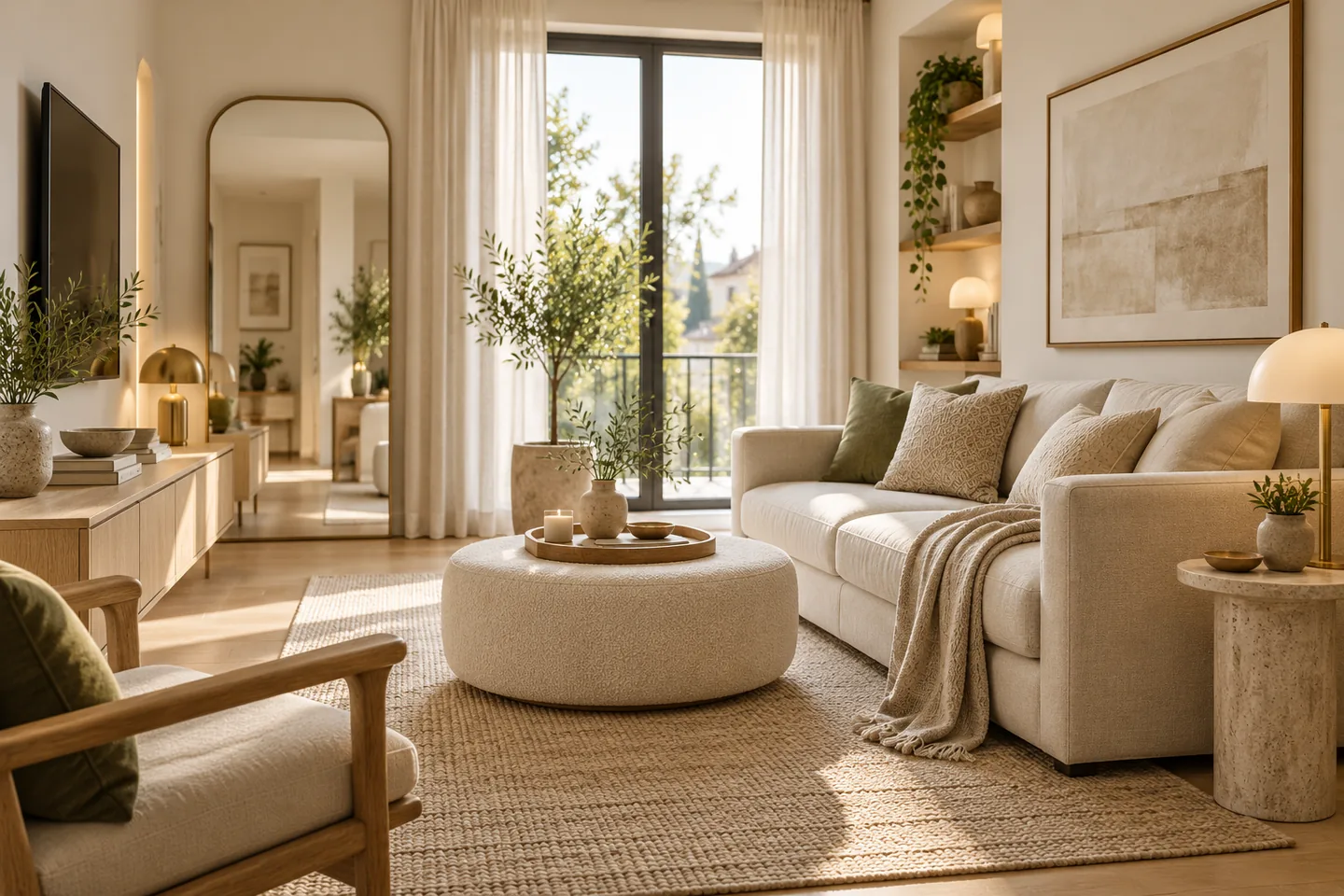
Start with function and circulation
Scandinavian interiors often feel calm because the room is easy to understand and easy to move through. Before buying decor, decide what the living room needs to support: conversation, television, reading, children, pets, entertaining, work, or some combination.
Place the largest furniture first and keep the main walking routes clear. A smaller sofa with better circulation can feel more generous than a larger sectional that squeezes every path.
Use a calm palette without making the room sterile
Warm white, soft beige, pale gray, muted green, clay, charcoal and gentle blue can all work in a Scandinavian-inspired room. The palette does not need to be completely pale.
A useful approach is to keep the largest surfaces relatively quiet, then add contrast through:
- black or dark metal lighting;
- deeper wood tones;
- muted green or blue textiles;
- one stronger artwork;
- a darker chair or side table.
Test paint in the actual room because daylight direction, lamps, flooring and nearby wood can change how a neutral reads.
Let natural materials provide warmth
Wood, wool, linen, cotton, leather, ceramic, stone and woven fibers can add texture without making the room feel busy.
You do not need every material to be expensive or solid throughout. Veneer, secondhand furniture and well-made manufactured materials can still create a convincing room when the color, texture and proportions work together.
Repeat materials selectively. For example, pale oak on a coffee table can connect with a picture frame or lamp detail without making every object match.
Lighting is part of the style, not an afterthought
A single bright ceiling light rarely creates the warm evening atmosphere associated with Scandinavian interiors.
Use several light sources for different jobs:
- ambient light for general room illumination;
- task light beside a reading chair or sofa;
- accent light for art, shelving or a quiet corner where useful.
Choose bulb color and brightness according to the room and fixture rather than relying on one fixed Kelvin or lumen rule. Dimming can make one fixture more flexible.
For a reading area, see our reading-chair guide.
Keep window treatments simple and useful
Window treatments should solve privacy, glare and darkness before they serve a style label.
Light-filtering curtains or shades can preserve daylight in a living room, while lined drapery may be more useful when glare, cold windows or street privacy are important.
Choose the treatment around the actual window and room function. A Scandinavian look does not require sheer white curtains if they fail the practical needs of the room.
Choose furniture with visual breathing room
Furniture that exposes some floor and has clear geometry often helps a room feel lighter, but slim legs are not mandatory.
Prioritize:
- comfortable seat depth and height;
- overall footprint;
- clearance around doors and walkways;
- storage where it reduces visible clutter;
- materials that can handle the household.
For side-table proportions, see our side-table guide.
Secondhand furniture can be one of the best budget moves
Scandinavian-inspired interiors benefit from simple wood furniture, and those forms are often easy to find secondhand.
Before buying used furniture, check:
- frame stability;
- drawer and door operation;
- water damage;
- loose veneer;
- odor or contamination;
- dimensions and doorway access.
A solid, correctly scaled secondhand table can contribute more to the room than several inexpensive decorative purchases.
Do not force every old piece into a DIY makeover
Changing legs, sanding finishes and painting laminate can all introduce structural or finish problems if the furniture was not designed for those changes.
Clean and repair first. Modify only when the construction and finish make the project appropriate, and follow product instructions for primers, paints and hardware.
Use textiles to create the cozy layer
Textiles are one of the easiest ways to make a restrained room feel warm.
Useful layers include:
- a rug that anchors the seating area;
- one or two throws;
- pillows with varied texture rather than many competing patterns;
- curtains or shades that soften hard window lines.
Choose textiles for care and household use as well as appearance. Homes with pets or children may benefit from washable covers and tighter weaves.
For a broader look at pillow covers, fills, throws and upholstery care, use the Home Textiles Guide.
A rug can anchor the room without becoming the main event
A simple rug in wool, a durable synthetic, or another suitable material can create a softer foundation beneath the furniture.
Choose the rug and pad for the actual floor and room. Use the Area Rug Guide to compare size, construction, pile, pad and room workload before adding another textile layer.
Storage should reduce visual noise
Closed storage is especially useful for objects that are necessary but visually busy: cables, games, papers, chargers, pet supplies and children’s items.
Use baskets, drawers, cabinets or a storage ottoman only when they improve how the room functions. Storage furniture should not crowd the circulation just to make surfaces look empty.
Plants are optional, not a requirement
Greenery can soften a room, but choose plants according to the actual light, temperature, pet safety and care you can provide.
Do not buy a plant simply because it is repeatedly described online as “low light.” Indoor light conditions vary widely. Check the species requirements and place it where it can thrive.
If live plants are impractical, a branch arrangement, dried botanical element or original artwork can provide a similar organic note without pretending every room needs houseplants.
Artwork keeps a neutral room personal
A Scandinavian-inspired room should not feel anonymous. Art, photographs, ceramics and books are where the household’s personality can show.
Instead of filling every wall, choose a few pieces that relate to the scale of the furniture and architecture.
For broader composition and scale decisions, use the Furniture Sizing Guide and Living Room Design Guide.
Use contrast to avoid a washed-out room
If everything is pale wood, cream fabric and white paint, the room can lose depth.
Add contrast through one or two deliberate elements:
- a charcoal lamp;
- a darker chair;
- black picture frames;
- a rich wood object;
- a deeper rug pattern;
- muted but saturated artwork.
Contrast gives the eye a place to land while allowing the overall room to remain calm.
How to make a small Scandinavian living room work
In a smaller room, start with furniture footprints rather than style details.
Useful moves include:
- one appropriately scaled sofa rather than too many seats;
- a compact reading chair only if circulation allows it;
- a side table that serves the seat instead of a decorative pedestal with no function;
- closed storage beneath or beside media equipment;
- lighting that does not require large floor footprints;
- a rug sized for the seating group.
For more, use our small living-room guide.
How to create the look without buying everything at once
Work in layers:
- Edit: remove furniture and decor that make circulation or storage worse.
- Rearrange: test the best seating orientation before shopping.
- Light: improve task and evening lighting.
- Anchor: add or correct the rug, sofa or main table if needed.
- Soften: add textiles and window treatments.
- Personalize: finish with art, books and a small number of objects.
This approach allows the room to improve gradually without buying placeholder furniture.
What to spend more on
Spend more where comfort, durability or replacement difficulty justify it.
That can include:
- the main sofa;
- a frequently used reading chair;
- a rug that must handle heavy daily traffic;
- window treatments that solve a major privacy or light-control problem;
- lighting that is used every day.
Decorative accents are easier to change later.
What to save on
Good budget candidates can include:
- secondhand side tables;
- frames;
- baskets;
- ceramics;
- pillow covers;
- art from independent or local sources;
- simple hardware when compatible with the furniture.
The lowest price is not always the best value. A used solid table may outperform a flimsy new one that needs replacement quickly.
A practical room plan
| Layer | Question | Budget move |
|---|---|---|
| Layout | Can people move and sit comfortably? | Rearrange before buying |
| Lighting | Can the room support reading and evening use? | Add one useful lamp before decorative lighting |
| Furniture | Does each piece earn its footprint? | Buy secondhand where quality is good |
| Textiles | Does the room need softness, warmth or sound absorption? | Use washable covers and a durable rug |
| Decor | Does it add personality rather than clutter? | Use fewer, larger pieces |