Dining Furniture Fit
A dining bench should be sized from the table and the people using it, not from a generic bench label. Seat height affects knee room, depth affects posture, length affects how many people can sit comfortably, and the space behind the bench determines whether anyone can actually get in and out.
Measure the table → check underside clearance → choose seat height → test seat depth → calculate usable length → protect pull-back space → mock up the occupied footprint.
1. Start with the table underside
Measure floor to the lowest obstruction under the table, including aprons, brackets and support rails. The bench and the seated person’s thighs must fit below that zone without feeling trapped.
Do not use tabletop height alone. A thick apron can reduce usable knee room even when the table appears standard from the outside.
2. Choose seat height from the table relationship
Use an existing dining chair that feels comfortable as a reference, then compare its seat height with the proposed bench. Upholstered benches compress under load, so consider the occupied height rather than only the unloaded product dimension.
If the bench is built in, test a temporary platform and cushion before fixing the seat permanently.
3. Test depth with real sitting posture
A shallow bench can force the sitter forward while an excessively deep seat can make the table feel far away. Sit on a mock-up and check whether the back of the legs is supported without forcing the knees upward.
If the bench has a backrest, its angle and cushion thickness change usable seat depth, so measure from the finished back surface rather than the wall.
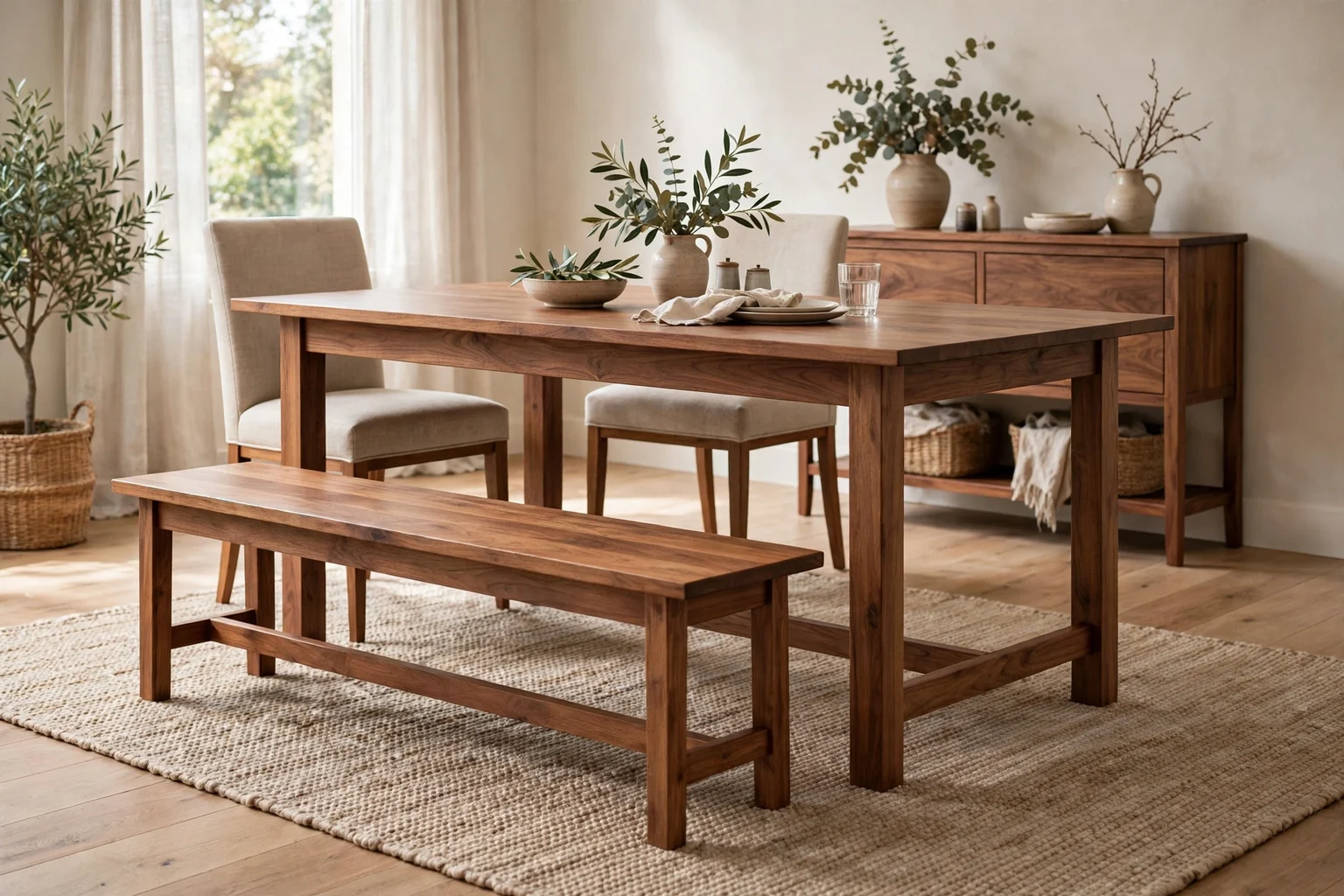
4. Set length from people and table legs
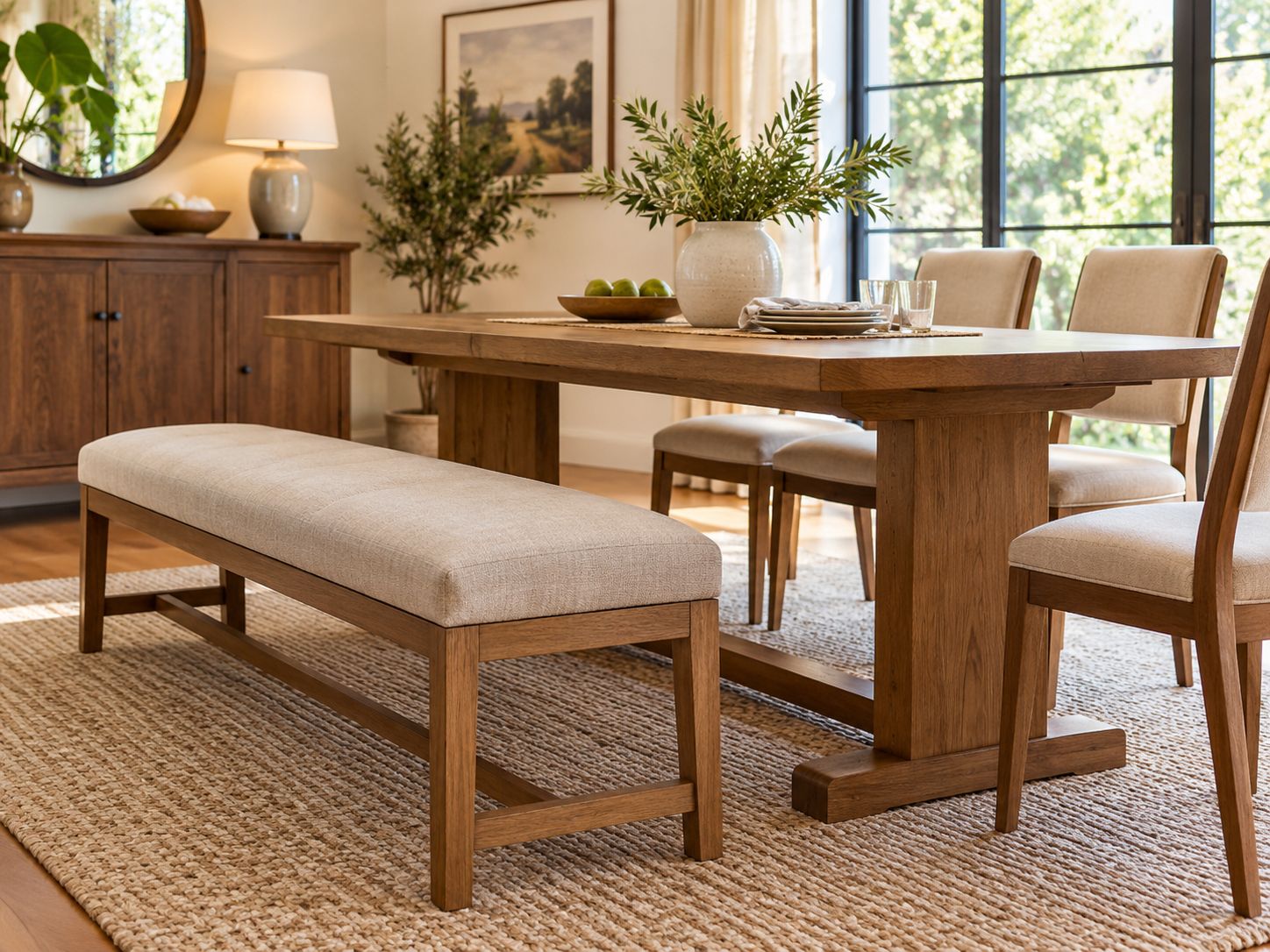
Bench length should relate to the usable span between table supports and the number of people you want to seat. Pedestal tables usually offer more flexibility than tables with corner legs.
Make sure the bench can slide or people can enter from the ends without colliding with table legs.
5. Protect the pull-back zone
A freestanding bench often moves backward when people sit down or stand. Tape the occupied position on the floor and walk behind it if that route is meant to remain open.
Against a wall, a fixed banquette can save movement depth, but then backrest thickness and table access become more important.
6. Coordinate bench and rug size
If the dining set sits on a rug, test the bench in its pulled-back position. Rear legs catching a rug edge makes everyday use awkward and can damage the edge over time.
The rug should be chosen after the table and seating movement have been tested, not before.
7. Check storage benches carefully
A lift-up storage bench needs lid clearance and safe access. Drawers require front clearance that may conflict with the table or people seated opposite.
Do not sacrifice comfortable seating geometry simply to gain storage volume.
8. Mock up before ordering
Tape the full bench footprint and place chairs, boxes or a temporary board at the intended seat height. Sit, stand, pass behind and move the table if it extends.
This catches conflicts between table legs, wall clearances and actual movement that product dimensions alone do not show.
Planning table
| Check | What to measure | Why it matters |
|---|---|---|
| Seat height | Finished occupied seat to floor | Controls knee room |
| Seat depth | Finished back to front edge | Controls posture and table reach |
| Bench length | Usable span and table supports | Controls capacity and entry |
| Rear zone | Bench in occupied/pulled-back position | Controls circulation |
| Table underside | Lowest apron or support | Prevents thigh and knee conflicts |
Related Dwelanor guides
- Kitchen & Dining Design Guide — plan the full dining zone
- Dining Table Size & Spacing Guide — coordinate table and room clearances
- Breakfast Nook & Banquette Guide — compare fixed bench layouts
- Dining Room Rug Size Formula — size the rug for moving chairs and benches
- Furniture Sizing Guide — test overall room fit
- Small Space Design Guide — manage tighter circulation
Bottom line
The right dining bench is a relationship between seat, table and circulation. Size it from the finished table underside and the occupied movement zone, then test comfort before committing to a fixed or expensive piece.