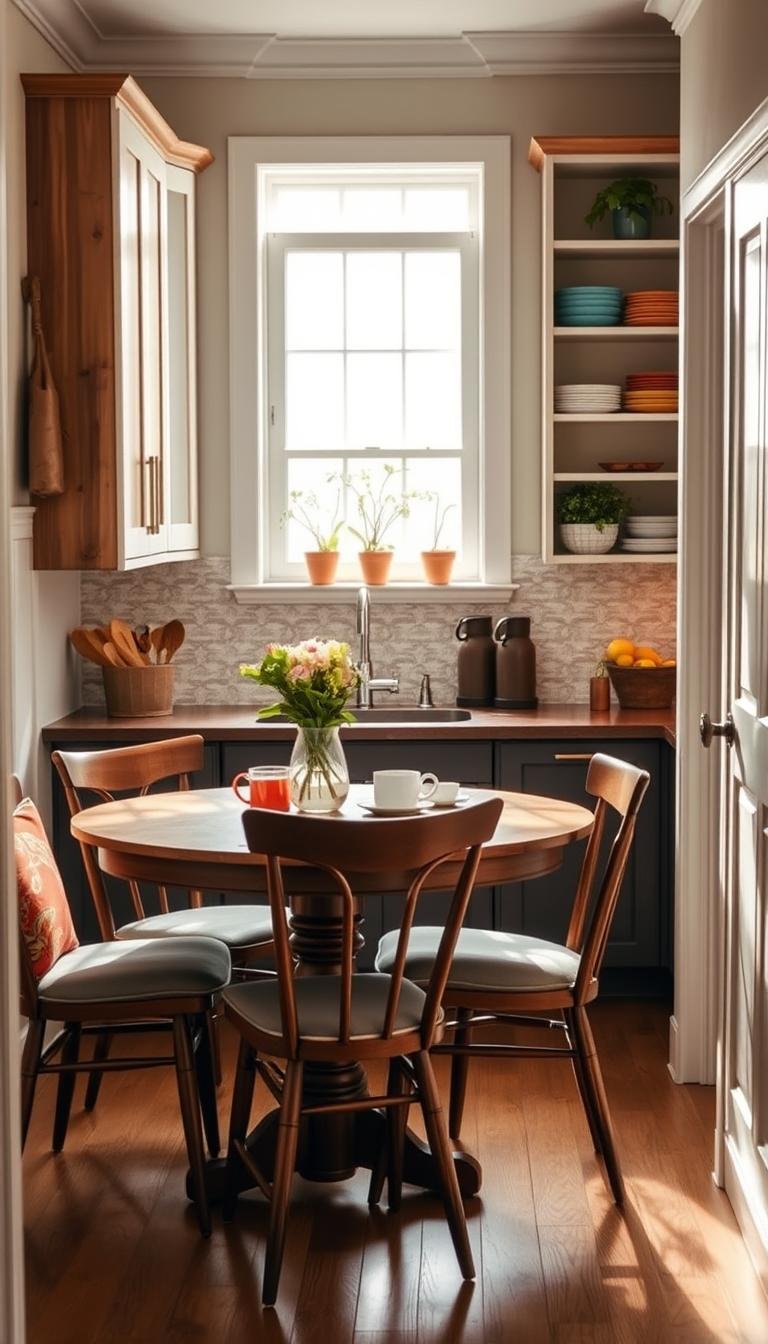
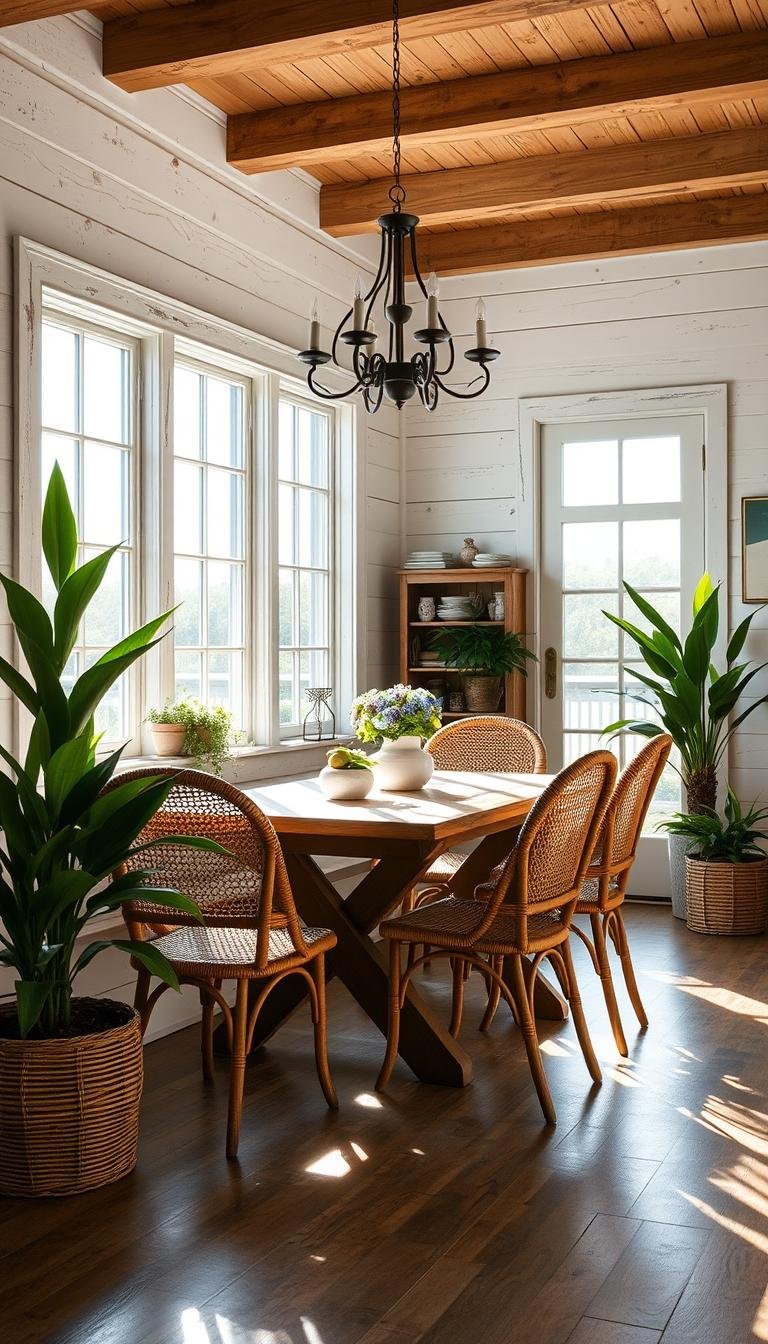
A breakfast nook works when it makes an awkward corner easier to use, not simply more decorated. Start with circulation and table access, then choose seating, storage and lighting around the way the household actually eats, talks and moves through the space.
The useful sequence is available corner → circulation → table shape → seating type → seat comfort → storage → lighting → textiles and finishes.
1. Decide whether a nook improves the kitchen
A nook is especially useful when a corner, bay window or wall recess cannot support a conventional dining arrangement comfortably. It can also create a distinct everyday eating zone without requiring a separate dining room.
If adding a bench makes the kitchen route tighter or traps people behind a table, keep the area more flexible instead.
2. Choose the table shape from the circulation
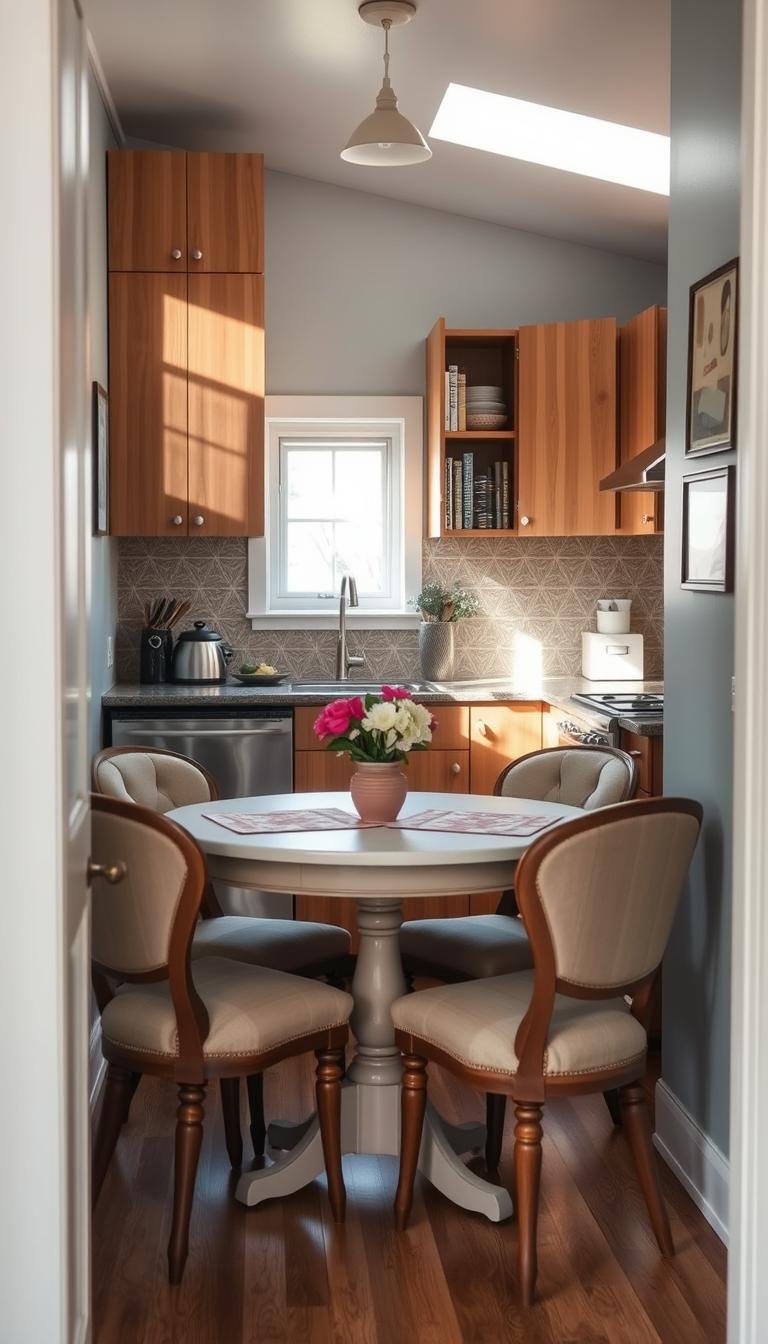
Round and oval tables can soften tight corners because they remove sharp edges from the walking path. Rectangular tables can make better use of long walls and straight banquettes. Pedestal bases often make it easier to slide along a bench because there are fewer legs to navigate.
Mock up the table at full size before purchasing. Include the chairs when testing the footprint.
3. Banquettes trade flexibility for efficiency
A built-in banquette can use wall space efficiently and can create storage below the seat. The trade-off is that it is less flexible than movable chairs and can make inner seats harder to access.
For detailed dimensional planning, see the banquette depth and storage sizing guide.
4. Comfort depends on more than seat depth
Back angle, cushion firmness, table height, leg room and the distance between seat and table all affect comfort. Use a temporary bench or boxes to test the relationship before committing to built-in joinery.
For upholstered seating, choose removable or cleanable materials when the nook will be used daily for meals.
5. Storage should be accessible with the table in place
Under-seat storage sounds useful, but hinged lids can become difficult to open when a table sits directly in front of the bench. Drawers or pull-outs can be easier in some layouts.
Store infrequently used items in the least accessible compartments and keep daily-use dining items where they can be reached without moving furniture.
6. Light the table without creating glare
A pendant can visually anchor a nook, but its size and position should suit the table and sightlines. The light should illuminate the dining surface without hanging where people hit it when entering the bench.
Natural light can make a window nook especially pleasant during the day. Add a controllable shade or curtain if direct glare or privacy becomes a problem. Use the Home Lighting Guide and Window Treatment Guide for the wider strategy.
7. Small kitchens benefit from visual calm
A nook already concentrates furniture in one area, so keep the surrounding visual language relatively restrained. Repeating cabinet color, timber or a nearby textile can make the nook feel integrated rather than added as a separate theme.
For very tight kitchens, see breakfast nook ideas for galley kitchens and the Small Space Design Guide.
8. Use cushions strategically
Bench cushions improve comfort and add color, but too many loose pillows reduce usable seat width and need constant resetting. Choose a practical seat cushion first, then add only the back cushions that improve comfort.
9. Make the nook useful beyond breakfast
A successful nook can support homework, coffee, casual work and conversation as well as meals. Add nearby power only when planned safely and appropriately for the location. Keep the table surface easy to clear so the secondary uses do not interfere with dining.
10. When freestanding furniture is better
If you rent, expect to move soon or want to change the layout, a freestanding bench and table may deliver most of the nook feeling without permanent construction. Built-ins make more sense when the geometry is stable and the storage benefit is real.
Breakfast nook checklist
- The nook improves an awkward or underused area.
- People can enter and leave the seats comfortably.
- The table shape supports circulation.
- Storage is usable with the table in place.
- Lighting suits both the table and sightlines.
- Textiles can handle everyday food and cleaning.
- The nook visually connects to the kitchen around it.
Next: continue with the Kitchen & Dining Design Guide, Kitchen Island Design Guide and Kitchen & Dining library.