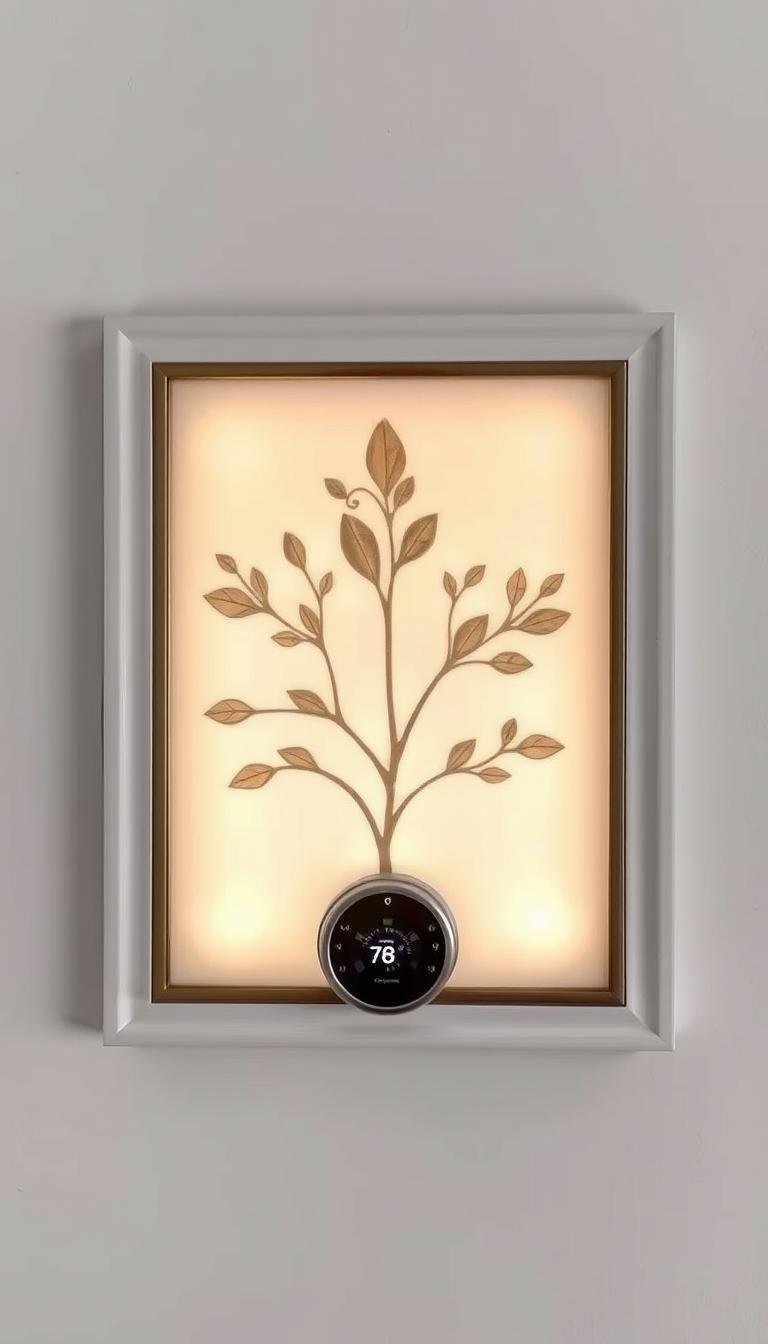
The safest way to make an ugly thermostat less noticeable is usually to design around it, not cover it. A thermostat or remote room sensor needs to read the surrounding room accurately. Enclosing it behind art, placing it inside a decorative box, or crowding it with heat sources can interfere with sensing and access.
The useful design relationship is thermostat location → room airflow → temperature sensing → wall color → nearby art and furniture → access → HVAC performance.
Why covering a thermostat can create problems
A thermostat is not just a wall control. It contains temperature sensing hardware, and some models also use humidity, occupancy, light or other sensors. The heating and cooling system responds to the conditions the thermostat reports.
Google’s current Nest temperature-sensor guidance says not to place the sensor in a partly or completely enclosed location where air may not circulate properly, and specifically gives examples such as behind a painting, inside a closet or behind books. See Google Nest temperature-sensor placement guidance.
Honeywell Home similarly instructs installers to choose an area with good air circulation and average room temperature, while avoiding drafts, hot or cold air from ducts, radiant heat, appliances and unconditioned surfaces. See Honeywell Home thermostat location guidance.
That makes decorative covers a poor default. A cover that looks open enough may still change airflow or trap a pocket of warmer or cooler air around the sensor.
Start with the existing wall before buying decor
Look at why the thermostat stands out. The problem may be less about the device and more about the contrast around it.
Check:
- wall paint color and sheen;
- old screw holes or a larger patch from a previous thermostat;
- whether the current trim plate is oversized or visually busy;
- nearby light switches and controls;
- the size and spacing of surrounding artwork;
- whether the thermostat is isolated on a large blank wall;
- whether furniture makes the device the first thing visible from the doorway.
Once you know what makes it visually dominant, the fix becomes easier.
Use a compatible trim plate when the wall around it looks unfinished
A manufacturer-approved trim plate can hide old paint outlines, screw holes or a larger opening left by a previous thermostat. It can make the installation look deliberate without interfering with the face of the device.
Choose a plate intended for the exact thermostat or mounting system. Do not cut vents, drill the thermostat housing or modify the unit simply to fit a decorative frame.
If the wall damage is small, repairing and repainting the wall may look cleaner than adding a large plate.
Match the wall color instead of disguising the device
One of the simplest visual strategies is reducing contrast around the thermostat.
If the thermostat has a light body on a dark or highly saturated wall, it will naturally stand out. A wall color closer in value to the device can make it less prominent. On the other hand, if the thermostat is part of a deliberate high-contrast wall composition, repeating its light or dark tone in nearby frames can make the device feel intentional.
Do not paint the thermostat housing unless the manufacturer specifically permits it. Paint can block openings, damage sensors or affect buttons and displays.
Build the gallery wall around the thermostat, not over it
A gallery arrangement can make a thermostat read as one element within a larger composition without restricting its airflow.
Useful approaches include:
- place frames around the thermostat while leaving clear open space immediately around it;
- align the thermostat with a shared horizontal or vertical reference line;
- repeat the thermostat shape with small rectangular frames nearby;
- use a consistent frame finish so the device feels less isolated;
- keep hanging hardware and frame edges far enough away that they cannot strike the thermostat.
Avoid hanging a picture directly over the device, even on hinges. If the thermostat needs open room air, the fact that the artwork can swing open does not solve the sensing problem while it is closed.
Use furniture to redirect the eye
You can change the visual hierarchy of the wall without touching the thermostat.
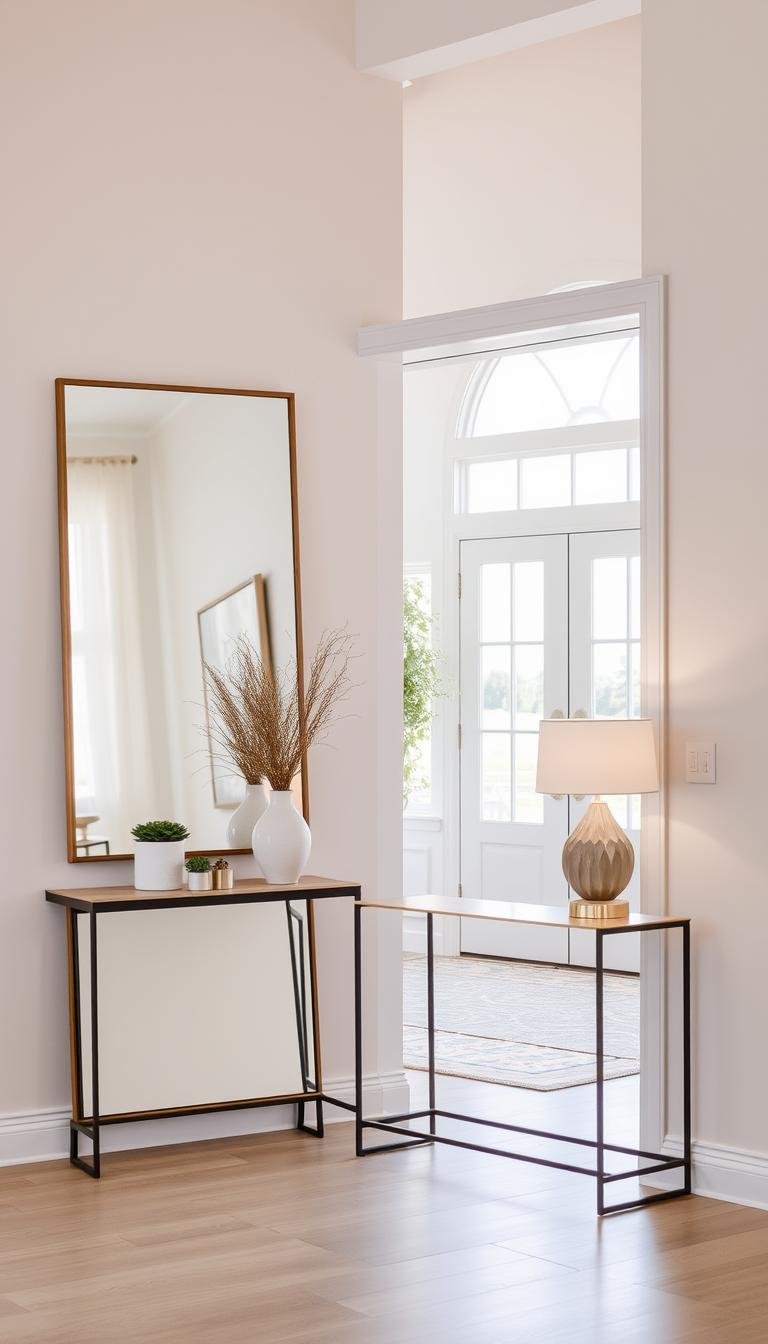
A narrow console, bench or cabinet placed elsewhere along the wall can create a stronger focal point. Add a lamp, bowl, artwork or vase to that furniture, while keeping heat-producing objects and tall decor away from the thermostat itself.
The goal is not to block the thermostat from view. It is to give the eye something more attractive to notice first.
Plants can soften the wall, but keep them out of the sensing zone
A plant can visually balance an awkward thermostat wall, but do not crowd foliage around the device. Large leaves can restrict airflow, and a planter near the thermostat can change the local temperature or humidity conditions.
Use the plant farther down the wall, on the floor beside a console, or on the opposite side of the composition.
Do not place lamps or heat sources beside the thermostat
A decorative lamp may look like an easy way to draw attention away from the control, but local heat can affect temperature sensing.
Google notes that direct sunlight can heat a thermostat sensor and affect the temperature it reports, and Honeywell also warns against radiant heat from sun or appliances. citeturn347714search6turn347714search8
Keep table lamps, fireplaces, heating vents, electronics and other heat sources away from the thermostat’s immediate area.
What about smart thermostats?
A more streamlined smart thermostat can be a legitimate visual upgrade if it is compatible with the HVAC system and installed correctly. Some designs have smaller footprints, cleaner bezels or displays that integrate more easily into a modern room.
Do not choose a thermostat on appearance alone. Compatibility, wiring, equipment type, power requirements, remote sensors and installation instructions matter first.
If you are considering replacement, confirm compatibility with the manufacturer or an HVAC professional before removing the existing control.
A smart thermostat still should not be hidden
Phone control does not make the physical thermostat irrelevant. The device may still contain the temperature sensor used to control the room.
Even when a system uses remote room sensors, the thermostat itself still needs to be installed and operated according to its manufacturer’s guidance.
When relocation is the better design solution
If the thermostat sits in the center of the only usable art wall or directly above important furniture, relocation may be worth discussing.
Do not move it simply to make the wall prettier. Thermostat position affects what temperature the system thinks the room is experiencing.
A good new location generally needs representative room conditions, suitable wiring or communication, normal airflow and distance from misleading heat, cold or drafts. The exact requirements depend on the thermostat and HVAC system.
Have the relocation assessed by an HVAC technician or another qualified professional familiar with the specific system.
What not to use as a thermostat disguise
| Idea | Why it is a poor default |
|---|---|
| Painting hung over the thermostat | Can enclose the sensor and restrict room airflow |
| Shadow box or decorative cabinet | Can trap a local temperature pocket around the device |
| Solid decorative cover | Can interfere with sensing and access |
| Deep shelf immediately above or below | Can alter local airflow or make controls awkward to reach |
| Lamp beside the thermostat | Can add local heat near the sensor |
| Dense plant foliage around the device | Can restrict airflow and complicate access |
Five design strategies that keep the thermostat functional
- Repair the wall. Patch old holes and repaint around the device if previous hardware makes it look unfinished.
- Use a compatible trim plate. Choose one intended for the exact thermostat where appropriate.
- Create a gallery composition around it. Leave the thermostat open to the room rather than placing art in front of it.
- Shift the focal point. Use furniture, lighting and decor elsewhere on the wall to create a stronger visual destination.
- Consider a cleaner thermostat design or professional relocation. Make either change only after confirming HVAC compatibility and placement requirements.
How this connects to the rest of the wall
The thermostat is part of a larger wall system that includes paint, artwork, frames, light switches, trim plates, furniture, lighting and circulation. Treating those elements as one composition usually creates a more polished result than trying to hide the control itself.
For related ideas, continue with our guides to integrating a wall-mounted AC unit into the room without blocking it, keeping gallery wall frames straight, and preventing picture frames from marking walls.