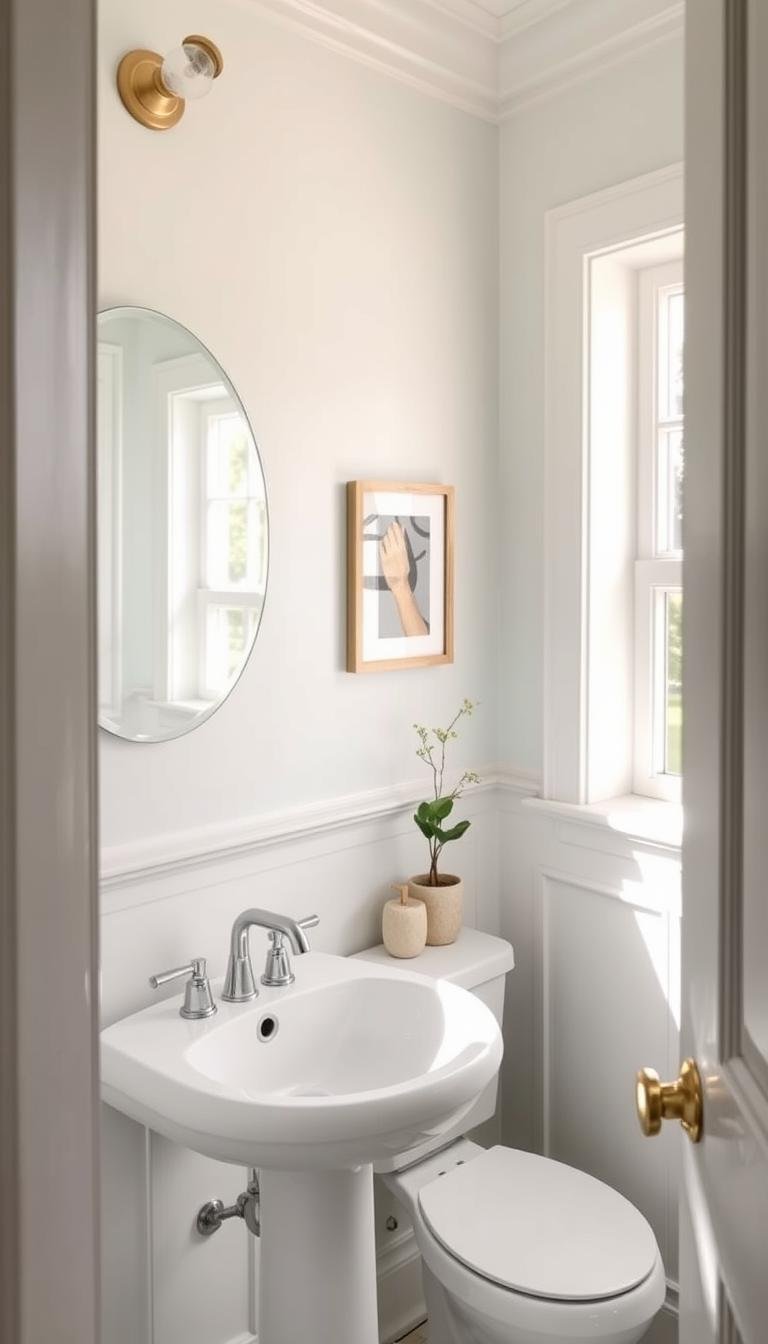
Paint can make a tiny powder room feel calmer and more visually continuous, but there is no single color that automatically makes every small room look bigger. The best result comes from reducing abrupt contrast, improving light distribution, and choosing a color that works with the room’s actual fixtures and lighting.
Start by deciding whether you want brightness or drama
Light colors can reflect more available light, which is useful in dim rooms. But a small powder room can also look intentional in a darker color if the goal is a cocooning, dramatic effect rather than maximum brightness.
Do not rule out dark paint solely because the room is small. Instead, decide what you want the room to feel like and test the color in the actual space.
Use light reflectance value as a reference, not a rule
Paint manufacturers often publish an LRV, or Light Reflectance Value, showing how much visible light a color reflects. Higher-LRV colors generally reflect more light than lower-LRV colors.
LRV can help compare colors, but it does not tell you exactly how large a room will feel. Window size, bulb temperature, mirror placement, sheen, tile color, and contrast all affect the result.
Reduce visual breaks when you want a more continuous look
Using closely related colors on walls, trim, and sometimes the ceiling can reduce strong boundaries and make the room feel visually calmer. This is often called color drenching.
You do not have to use identical paint everywhere. A wall color with a slightly different sheen on trim can preserve durability while keeping the palette cohesive.
Ceiling color can change the effect
A light ceiling can emphasize brightness, while carrying the wall color onto the ceiling can create a more enveloping, continuous look. Neither approach is universally better.
If the ceiling is low, test both treatments with large samples before committing. The result depends heavily on the room’s proportions and lighting.
Use vertical emphasis carefully
Vertical paneling, narrow artwork, or subtle stripes can lead the eye upward. If you use painted stripes, keep the contrast restrained so the walls do not become visually busy.
Strong, high-contrast striping can make a tiny room feel more segmented rather than more open.
Mirrors usually have more impact than paint tricks alone
A well-placed mirror can reflect light and extend sightlines. In a powder room, a larger vanity mirror or mirror positioned opposite a light source can make the room feel brighter and less enclosed.
Make sure the mirror scale suits the vanity and that lighting does not create harsh glare.
Lighting should support the paint color
Evaluate paint under the bulbs you actually use. Warm and cool lighting can shift how the same color looks.
- Use enough ambient light to prevent dark corners.
- Add vanity lighting that illuminates faces evenly.
- Choose bulb color temperature based on the desired mood and how it renders the paint and finishes.
- If a dimmer is used, make sure the lamps and dimmer are compatible.
Accent walls are optional, not required
An accent wall can add depth or personality, but it can also create a strong visual boundary in a very small room. If you want one, choose the wall that naturally draws attention when entering and keep the rest of the palette connected.
Wallpaper, paneling, or a darker paint can all work as an accent if the room can handle the contrast.
Sample colors in the room
Paint large sample boards or swatches and look at them in morning, afternoon, and evening light. Compare them next to the tile, vanity, flooring, metal finishes, and mirror.
Do not judge a bathroom color from a small chip under store lighting.
Choose a bathroom-appropriate finish
Powder rooms usually see less moisture than full bathrooms with showers, but walls still need a washable finish. Follow the paint manufacturer’s recommendation for bathrooms and high-touch areas.
Higher sheen can be easier to wipe clean but may emphasize wall imperfections. Matte or eggshell finishes can look softer, while satin or semi-gloss is often used where greater washability is needed.
Prepare the surface properly
Clean the walls with a method appropriate for the existing finish, repair holes or cracks, sand where necessary, and prime according to the paint system you choose. Avoid using a universal strong cleaner such as TSP unless the paint manufacturer or substrate instructions call for it.
Quick decision guide
| Goal | Paint approach |
|---|---|
| Brighter feel | Lighter walls, good lighting, larger mirror |
| More visual continuity | Closely related wall, trim, and ceiling colors |
| More height | Subtle vertical emphasis and restrained contrast |
| More drama | Darker or saturated color used intentionally |
| Less visual clutter | Simple palette with fewer abrupt color changes |
Bottom line
To make a tiny powder room feel more open, focus on light, continuity, proportion, and reflection rather than chasing a single “space-expanding” paint color. Test the paint in the room, coordinate it with the existing finishes, and use mirrors and lighting to support the effect.
How this connects to the wider powder-room plan
Paint is one layer of the room system. Its effect depends on the wall finish, trim, ceiling, mirror, vanity, floor, light source and fixture colors around it.
For the broader design decisions, continue with 15 powder room ideas, our vanity mirror styles guide, and the tiny bathroom spa guide.