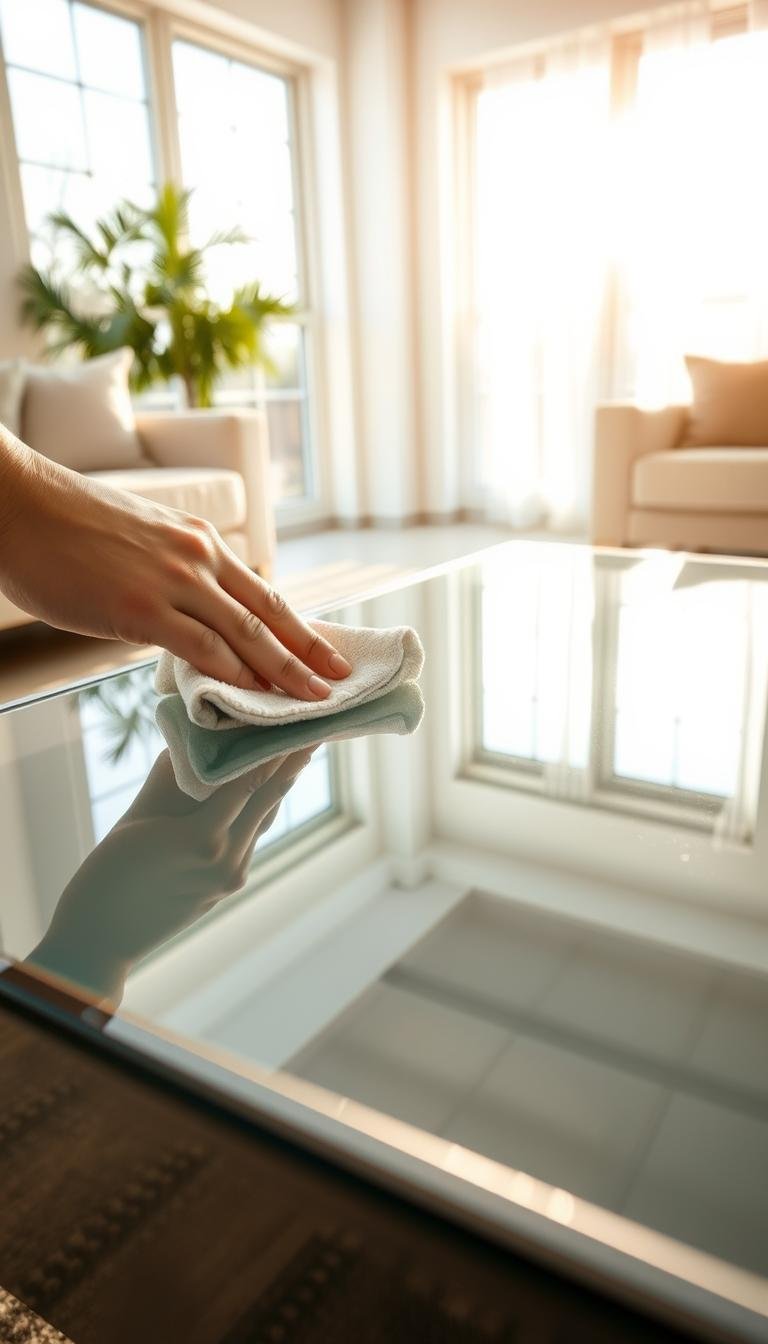
Fingerprints show on a glass coffee table because skin oils catch light differently from clean glass. The easiest way to keep them under control is to remove dust first, use a small amount of cleaner that is appropriate for the table’s actual finish, and buff with a clean microfiber cloth before residue dries.
If the glass is tinted, coated, frosted, printed, filmed or otherwise treated, follow the furniture maker’s care instructions instead of assuming that a standard glass-cleaning recipe is safe.
How do you stop a glass coffee table showing every fingerprint?
You cannot prevent people from leaving skin oils on a frequently touched glass surface, but you can make the marks easier to manage:
- Dust before wet cleaning. Loose grit can smear or scratch when dragged across the surface.
- Use less cleaner. Too much product can leave a film that makes new prints more obvious.
- Use a clean microfiber cloth. Replace or refold it when it becomes damp or dirty.
- Buff the surface dry. Do not leave cleaner to evaporate into streaks.
- Keep a tray or coasters where hands naturally land. This reduces repeated contact with the same areas.
Check the glass finish before choosing a cleaner
A plain clear glass tabletop is different from one with a factory-applied coating, tint, decorative film, painted underside or etched finish. The frame can matter too: overspray from a cleaner may affect stone, timber, metal or painted components around the glass.
Check the care label or manufacturer documentation first. If you do not know whether the surface is treated, start with the gentlest method the furniture maker permits and test an inconspicuous area before cleaning the whole top.
A simple streak-free cleaning routine
1. Clear and dust the table
Lift objects rather than dragging them across the glass. Remove loose dust with a clean dry microfiber cloth. Pay attention to the edges and the area around decorative objects, where grit tends to collect.
2. Apply a small amount of approved cleaner
For ordinary uncoated glass, use a glass cleaner or another method permitted by the table manufacturer. Applying a small amount to the cloth rather than flooding the tabletop can reduce overspray and pooling around the frame.
3. Wipe in overlapping passes
Work across the surface methodically rather than repeatedly rubbing one smudge. Fold the cloth so several clean faces are available as you work.
4. Buff with a dry section
Use a second clean dry cloth or a dry section of the first cloth to remove the remaining film. Look across the surface from a low angle; streaks that disappear from directly above often become obvious in reflected light.
Why glass sometimes looks worse after cleaning
| Problem | Likely cause | Better approach |
|---|---|---|
| Cloudy film | Too much product or cleaner residue | Use less cleaner and finish with a clean dry cloth |
| Long streaks | Dirty or saturated cloth | Refold or replace the microfiber cloth |
| Smears reappear immediately | Oil was spread rather than removed | Use a clean section of cloth and a product suitable for the surface |
| Marks around edges | Cleaner pooling near the frame or underside | Apply cleaner more sparingly and dry the perimeter carefully |
What should you avoid?
- Abrasive pads or powders: these can scratch glass or damage coatings.
- Unapproved aftermarket coatings: anti-fingerprint or water-repellent products may be unsuitable for treated furniture glass.
- Heavy overspray: cleaner can reach timber, stone, metal, adhesives or the underside finish.
- Dragging gritty objects: lift vases, trays and decorative pieces when cleaning beneath them.
- Assuming every glass tabletop has the same care requirements: decorative and coated surfaces can need different products.
How to make fingerprints less noticeable between cleans
A glass coffee table is a high-touch surface, so the goal is usually to reduce how often you need a full clean rather than make it permanently fingerprint-proof.
- Keep a clean microfiber cloth nearby for quick dry touch-ups.
- Use a tray to create a natural place for remotes, glasses and frequently handled objects.
- Use coasters so condensation and fingerprints do not build up in the same areas.
- Handle decorative objects by their bases rather than sliding them.
- Clean the table when marks become visible instead of applying more and more polish or coating.
Do table mats or runners help?
They can reduce direct contact, but they also change the look of a glass table and can trap grit beneath them. If you use a tray, runner or mat, lift it periodically and clean both the accessory and the glass underneath.
Make sure any rubber, silicone, felt or plastic backing is compatible with the tabletop and nearby finishes. Avoid leaving damp material trapped against the glass or frame.
What if the glass is scratched, chipped or cracked?
Cleaning will not fix structural damage. If a glass tabletop has a crack, a significant edge chip or damage near a support point, stop treating it as a cosmetic cleaning issue and check the furniture manufacturer’s replacement or safety guidance. Do not rely on a home coating or polish to make damaged structural glass safe.
A low-maintenance setup
For most households, the simplest system is enough: one tray for frequently handled objects, coasters where drinks normally sit, and two clean microfiber cloths reserved for the table. Dust first, clean only with a product appropriate for the surface, then buff dry.
If you are adjusting the rest of the seating area, see our guides to choosing coffee-table height and sizing a tray for an ottoman. For broader planning, browse the Dwelanor Room Guides.
The short version
Fingerprints are normal on glass. The best way to make them less annoying is to avoid residue: dust first, use a small amount of an approved cleaner, work with a clean microfiber cloth, and buff dry. Use trays and coasters to reduce repeated hand contact, and check the manufacturer’s care instructions before using anything on coated or decorative glass.