Vanity Lighting
Good vanity lighting is a placement problem before it is a brightness problem. A powerful fixture above the head can still create unhelpful shadows. Plan the mirror and face-lighting zone together, then add ambient light for the room around it.
Set mirror size → locate the face zone → reserve side-light positions → check glare in the mirror → add ambient light → test makeup, shaving and night use.
1. Plan lighting at the same time as the mirror
Mirror width determines how much wall remains for sconces. If the mirror fills the entire vanity width, side lighting may become impossible or awkward.
Tape the mirror outline and fixture backplates on the wall before ordering either element.
2. Favor broad, soft face lighting
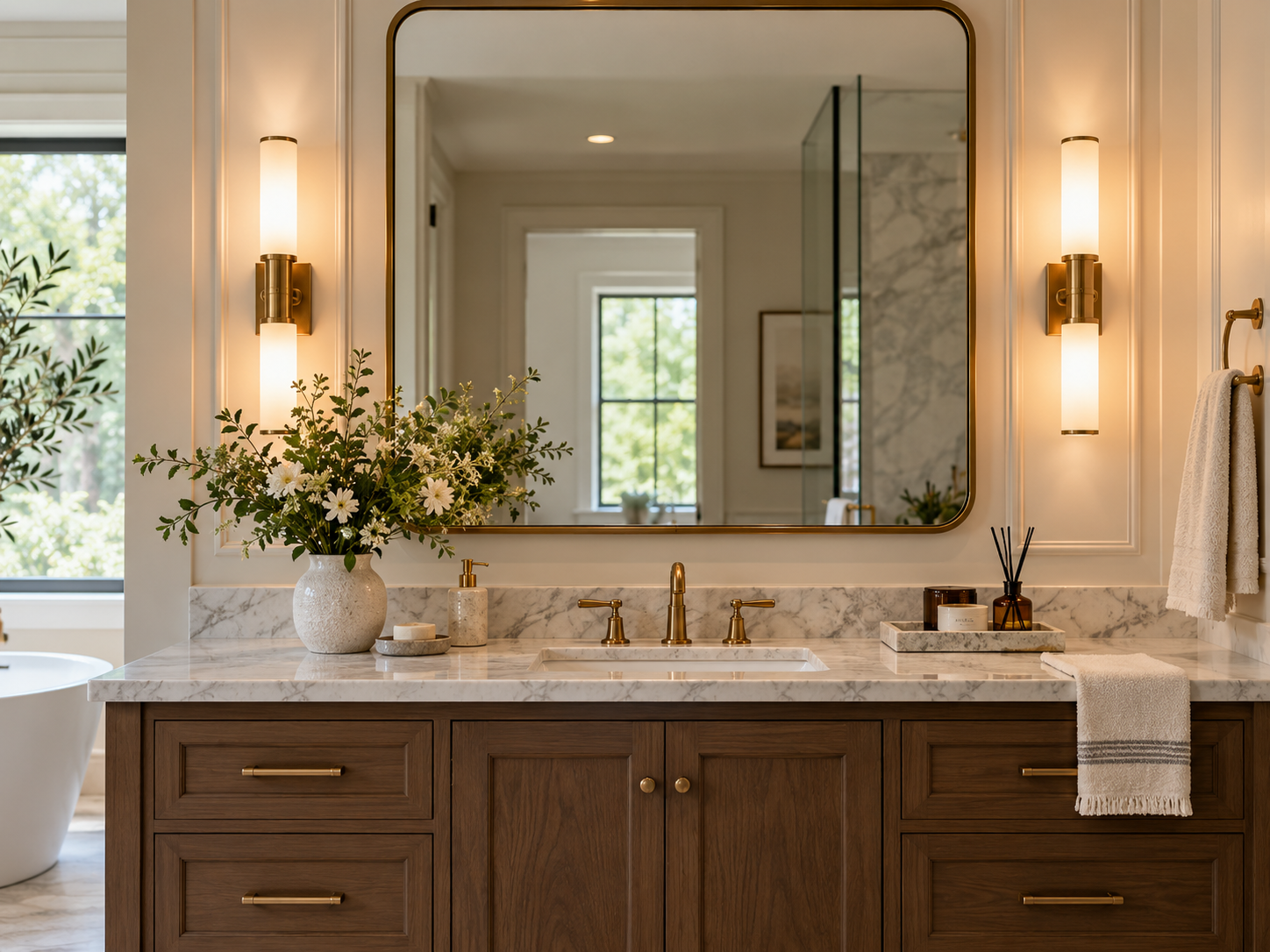
A broad diffuser or shaded vertical fixture can light the face more evenly than a small point source. The goal is useful frontal illumination without bright hotspots reflected in the glass.
Very clear shades and exposed bulbs can look decorative but may feel harsh at close range.
3. Use paired side lighting when the wall allows
Lights on both sides of the mirror can reduce the strong downward shadows created by a single overhead fixture. Keep the pair visually balanced with the mirror and sink.
If side space is limited, a well-diffused fixture above the mirror can still work, but test how it lights the eyes, cheeks and chin rather than judging it only by room brightness.
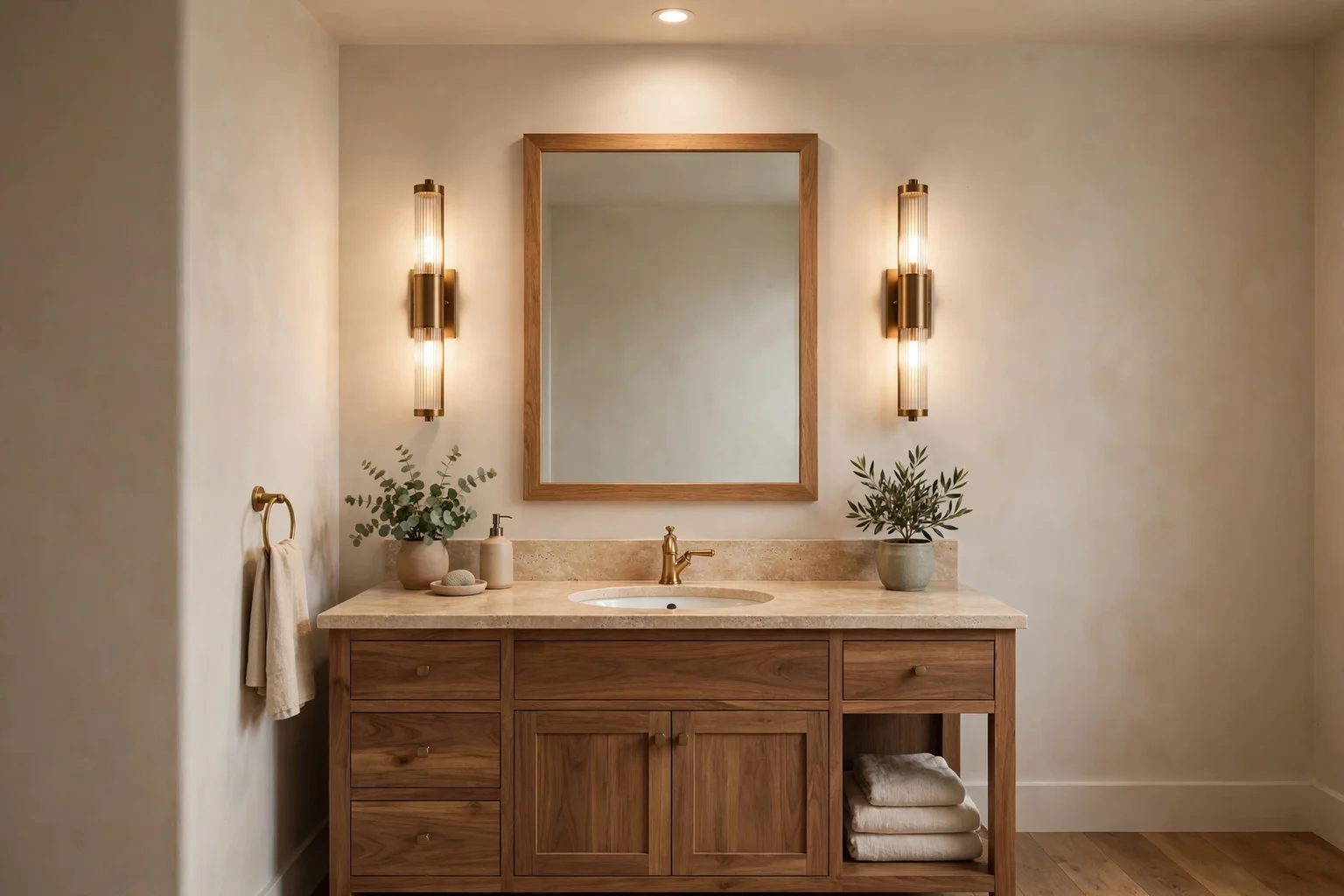
4. Check reflections from normal standing positions
Turn the proposed lights on and stand where you actually use the sink. If the bulb or bright diffuser reflects directly into your eyes, change the fixture angle, shade or position.
People of different heights can see different reflections, so test the tallest and shortest regular users.
5. Separate vanity light from room ambient light
The face-lighting layer does not need to carry the whole bathroom. A ceiling or general fixture can provide background illumination while the vanity lights handle close work.
Independent controls make early-morning and late-night use more comfortable because every light does not have to switch on at full output.
6. Coordinate color and finish
Consistency matters more than forcing every fixture to match exactly. Relate sconce finish to faucets, mirror frame and cabinet hardware while keeping the light quality suitable for skin tones.
Avoid choosing a decorative shade so dark or narrow that it defeats the face-lighting purpose.
7. Respect wet-location and electrical requirements
Bathrooms have location-specific electrical rules. Use fixtures and installation methods appropriate to the exact location, and have hardwired work completed to the applicable local requirements.
Do not assume a fixture is suitable near a shower or tub simply because it is sold as a bathroom light.
8. Test the lighting at night
Daylight can hide glare and shadow problems. Evaluate the vanity after dark with only the planned electric lighting on.
Check everyday tasks, the mirror reflection and the transition into the rest of the room before finalizing dimmer settings or bulb output.
Planning table
| Check | What to test | Why it matters |
|---|---|---|
| Mirror | Outside width and height | Determines available sconce wall |
| Face zone | Standing eye and shoulder area | Guides useful light placement |
| Fixture | Backplate, shade and projection | Affects crowding and glare |
| Reflection | View from each user’s position | Reveals hotspots |
| Controls | Separate task and ambient switches | Improves flexibility |
Related Dwelanor guides
- Bathroom Mirror Size Formula — coordinate mirror width with the lighting zone
- Bathroom Vanity Guide — plan storage, mirror and fixtures together
- Home Lighting Guide — build ambient, task and accent layers
- Bathroom Design Guide — coordinate the wider room
- Anti-Fog Smart Mirror Guide — consider integrated mirror features
- Bathroom Layout Planning — check fixture relationships across the room
Bottom line
Plan vanity lighting around the face, mirror and wall space as one system. Soft side illumination, controlled reflections and a separate ambient layer usually matter more than simply choosing the brightest fixture.