If you want a bath mat that dries quickly, start with construction rather than the label. Thin woven fabrics and rigid mineral-style mats usually release moisture faster than deep plush rugs, but ventilation, backing, and how often the bathroom is used matter just as much.
A mat that dries well in a breezy bathroom may stay damp in a small room with no window and several showers each morning. The useful question is not “Which material is fastest?” but “Which construction fits this bathroom?”
What actually controls drying speed?
- Pile height: thick plush fibers hold more water and expose less of it to moving air.
- Backing: a dense rubberized backing can slow moisture release from the underside.
- Ventilation: an exhaust fan, open door, or window can make a large difference.
- Household use: three showers in an hour is a different problem from one shower a day.
- Surface area: a mat that can lie flat and dry on all sides will usually recover faster than one bunched against a vanity.
Fabric mats
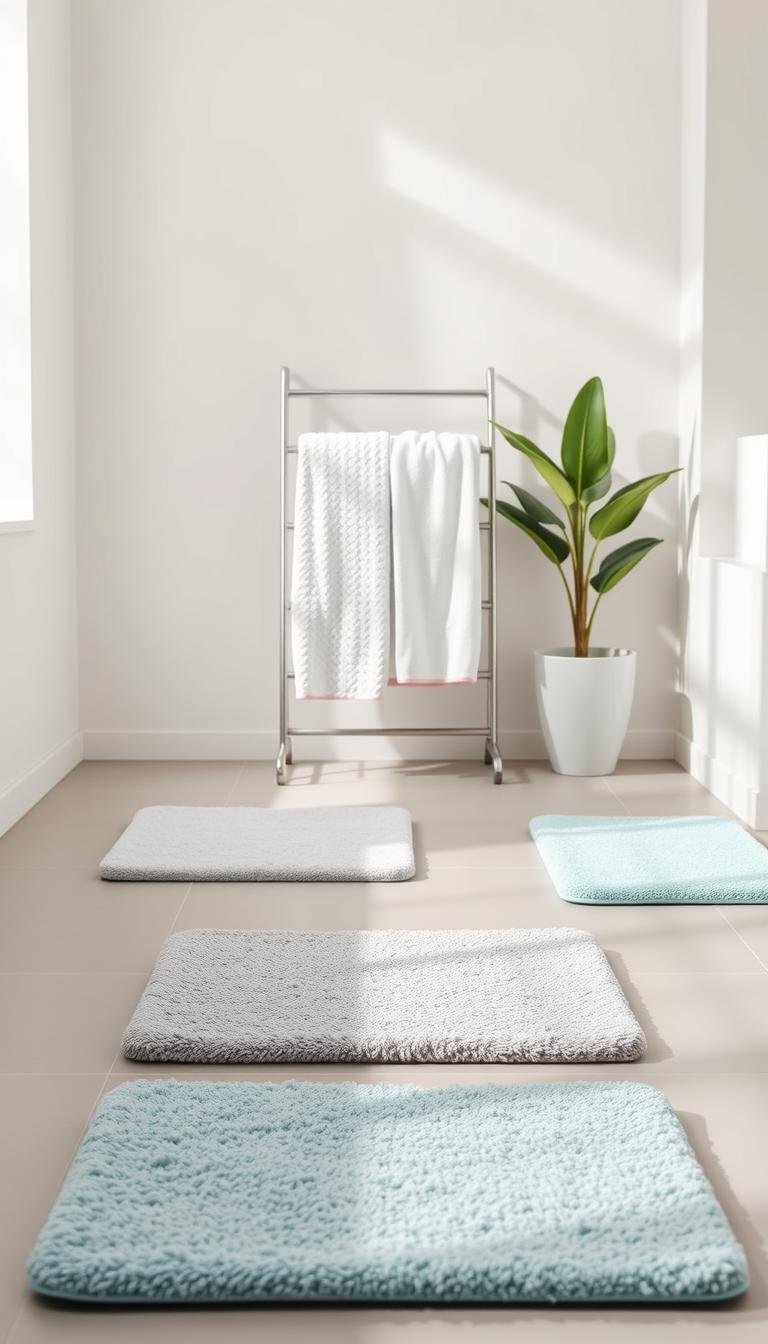
Fabric is the better choice if softness matters. For faster drying, look for a relatively low pile or woven construction rather than a thick shaggy rug.
Cotton, polyester, and blended mats can all work well; construction matters more than the fiber label by itself. Check that the mat is easy to wash and that the backing suits your floor.
Best fit
Fabric mats make sense in bathrooms with decent airflow and enough time between showers for the mat to dry fully.
What to avoid
Be cautious with very thick pile, heavy foam layers, or backings that stay wet long after the face fabric feels dry.
Rigid mineral-style mats
Rigid mineral-style mats handle water differently. Instead of soaking a pile of fibers, moisture spreads across and into a porous hard surface. They can feel dry at the surface quickly, which makes them useful in busy bathrooms.
The trade-offs are comfort and brittleness. They feel much harder underfoot than fabric, may crack if handled roughly, and can require a separate anti-slip layer. Follow the maker’s cleaning and floor-compatibility guidance.
Slip resistance is a separate decision
A mat can dry quickly and still move on the floor. Check the backing or anti-slip layer on a clean, dry version of your actual flooring.
If the floor is sealed wood, natural stone, or heated, use the manufacturer’s compatibility guidance rather than assuming every rubber or silicone backing is appropriate.
How to judge a mat at home
You do not need a stopwatch, humidity sensor, or homemade laboratory test. Use the mat normally and answer three questions:
- Does it take water off your feet without leaving a puddle?
- Does it stay flat and secure on the floor?
- Is it dry before the next typical use?
If the answer to the third question is consistently no, switch to a thinner construction or improve ventilation rather than chasing a more expensive version of the same type of mat.
Size matters more than people think
Measure the clear floor area before buying. A mat that curls against a vanity, door, or toilet is harder to keep flat and can become a trip hazard.
For a narrow bathroom, a smaller mat that can dry completely is often better than an oversized rug that remains damp along the edges.
Backing and edge construction
Look for edges that stay flat after washing and a backing that remains stable without trapping obvious moisture. Curling corners and deteriorating rubber are reasons to replace a mat even if the face fabric still looks acceptable.
Care
Follow the care label. Fabric mats may be machine washable; rigid mineral-style mats may need wiping, rinsing, or another method specified by the manufacturer.
Let the mat dry fully between uses when possible. Do not sand, seal, bleach, or chemically treat a mat unless the manufacturer specifically says that method is appropriate.
Quick comparison
| Type | Strength | Trade-off |
|---|---|---|
| Thin woven fabric | Soft, washable, generally quicker to dry than plush rugs | Still depends heavily on ventilation |
| Plush fabric rug | Most comfortable underfoot | Usually slower to dry |
| Rigid mineral-style mat | Surface can feel dry quickly | Harder underfoot; may crack; check grip |
Which type fits your bathroom?
For a humid bathroom used several times in quick succession, a low-profile fabric mat or a rigid mineral-style mat with clear floor-compatibility guidance is usually the better fit. For a quieter bathroom with good airflow, a soft washable fabric mat is a reasonable choice.
The right bath mat should stay secure, clean easily, and dry before the next normal use. That matters more than any advertised “dries in 12 minutes” claim.
For related bathroom decisions, see the Dwelanor Room Guides, tiny bathroom ideas, and the guide to peel-and-stick tile in bathrooms.