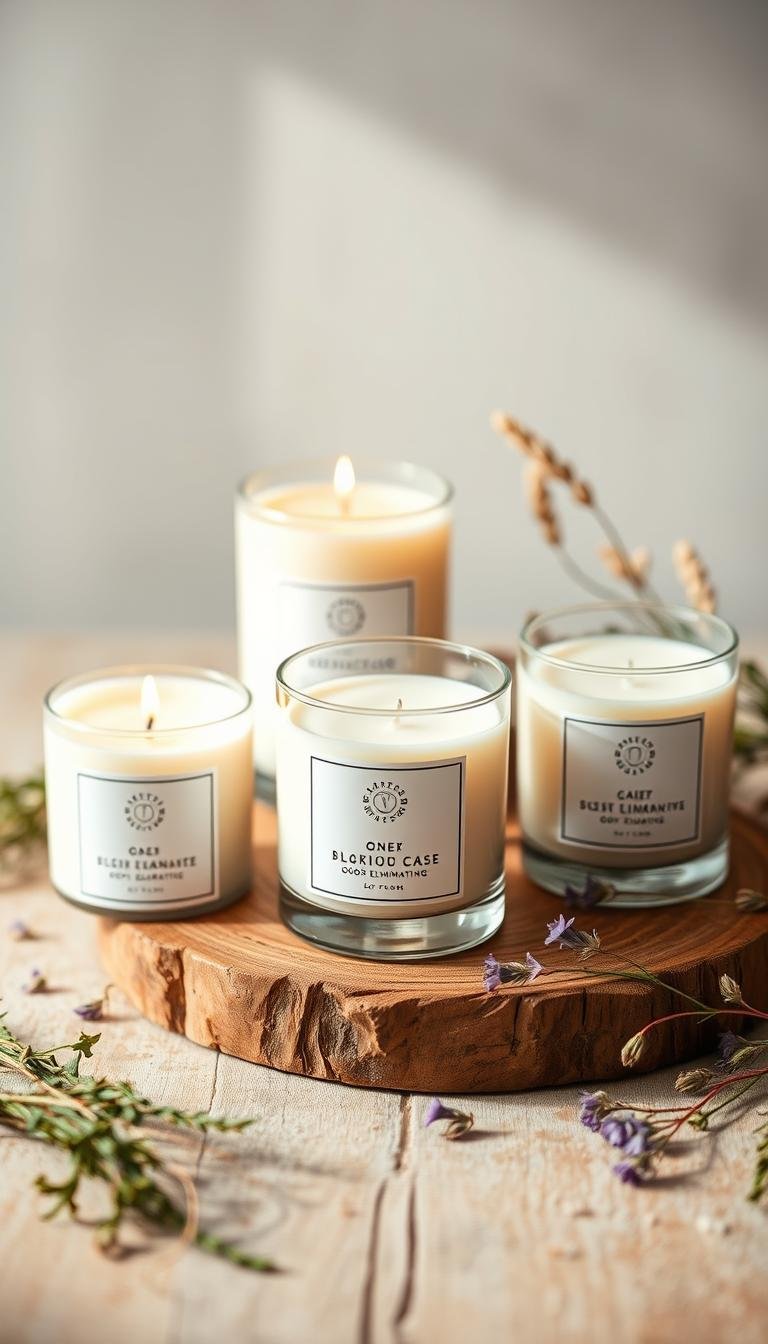
If a room genuinely smells bad, fix the source before lighting a candle. A candle can add a fragrance you enjoy, but it should not be treated as a substitute for cleaning, ventilation or appropriate filtration.
The U.S. EPA’s current indoor-air guidance puts the priorities in this order: source control, improved ventilation, then filtration or air cleaning as a supplement. That is a better framework for cooking smells, pet areas, dampness or smoke than trying to cover the problem with a stronger fragrance.
If the room is clean and you simply want it to smell pleasant, choose the candle around scent strength, room size and how long you plan to burn it.
Start with the odor source
| Problem | Better first step | Where fragrance fits |
|---|---|---|
| Cooking odors | Use an outdoor-vented kitchen exhaust when available; clean grease residue | After the air has cleared |
| Pet areas | Clean litter, bedding, upholstery and accidents | Only if household members tolerate the fragrance |
| Damp or musty smell | Find and correct the moisture problem | Do not use scent to hide persistent dampness |
| Trash or food waste | Remove the source and clean the container | Optional afterward |
| Smoke | Remove the source, ventilate when appropriate and clean affected surfaces | Do not treat a candle as smoke removal |
EPA guidance notes that source control is usually the most effective way to address indoor-air problems. See EPA: Improving Indoor Air Quality.
What does “not cloying” actually mean?
Fragrance preference is subjective, but a candle is more likely to feel overwhelming when the scent throw is too strong for the room or when a dense sweet profile is used in a small, closed space.
If you want a lighter effect, start with profiles such as:
- citrus peel;
- tea;
- herbs;
- light woods;
- green or botanical notes;
- soft linen-style fragrances.
That does not make those scents objectively “cleaner.” They simply tend to read as less dessert-like or perfumed than heavy vanilla, caramel, syrupy fruit or very dense florals.
Choose strength before choosing a brand
Think about the size and layout of the room. A candle that works in a large living room may dominate a small bathroom or bedroom.
Useful product information includes jar size, number of wicks, manufacturer burn instructions and fragrance description. Claims such as “odor eliminator” or “air purifying” deserve more scrutiny than ordinary scent descriptions.
Burn time is a value metric, not an odor-removal metric
A long advertised burn time can help you compare approximate value, but it does not prove that one candle removes odors better than another. Burn performance also depends on wick care, burn duration and how closely the candle is used according to its instructions.
Follow the maker’s guidance for trimming the wick, maximum burn session, when to stop using the candle and how much wax should remain at the end of its life.
Wax type does not automatically tell you whether a candle is “clean”
Marketing often turns wax choice into a health hierarchy that is more certain than the evidence supports. Soy, paraffin, beeswax and blends can all be used in well- or poorly-made candles.
Rather than assuming one wax solves indoor-air concerns, choose reputable products with clear ingredients and safety instructions, use them as directed, and ventilate the room if fragrance or smoke becomes irritating.
Fragrance sensitivity matters
Some people are more sensitive to fragrance than others. If a candle triggers irritation, headache, coughing or discomfort, extinguish it and ventilate the room rather than searching for a supposedly “non-toxic” version of the same strong scent experience.
In shared homes, a lighter fragrance—or no added fragrance at all—may be the better choice.
Homes with pets and children
Keep any open flame completely out of reach of children and pets, and place the candle where it cannot be knocked over by a tail, curtain, shelf item or passing person.
Do not assume a fragrance is “pet safe” because the label uses natural, botanical or essential-oil language. If an animal shows signs of irritation or unusual behavior around a fragranced product, stop using it and seek appropriate veterinary advice when needed.
Open-flame safety is part of the buying decision
Use candles only on stable, heat-resistant surfaces and keep them away from curtains, paper, bedding, plants and other combustible materials. Never leave a burning candle unattended, and extinguish it before leaving the room or going to sleep.
If the layout does not give you a safe place for an open flame, choose a flameless LED candle and use fragrance separately if you still want scent.
When a flameless option makes more sense
A flameless candle is useful when the goal is atmosphere rather than fragrance. For scent, a diffuser or another fragranced product can be considered separately according to its own instructions and household needs.
For actual indoor-air concerns, EPA emphasizes source reduction, ventilation and appropriate filtration—not fragrance products. citeturn241308search0turn241308search2
A simple candle-buying framework
- Fix the room first. Clean, ventilate and address moisture or other sources.
- Decide how much scent you want. Start lighter in small rooms.
- Read the fragrance notes. Choose profiles you actually enjoy rather than “odor-eliminating” marketing.
- Check the maker’s burn instructions. Make sure they fit how you intend to use the candle.
- Choose a safe placement. If you cannot, use a flameless alternative.
- Stop if the scent is irritating. More fragrance is not a sign of better performance.
What to skip
- Claims that a candle replaces ventilation or air cleaning.
- Permanent “best odor eliminator” rankings based on marketing copy.
- Assuming “natural,” “soy,” “essential oil” or “plant based” automatically means safer for every household.
- Buying a multi-wick maximum-throw candle for a tiny room when you prefer subtle scent.
- Burning candles near curtains, towels, paper or other combustible decor.
- Using fragrance to hide persistent dampness, smoke or sanitation problems.
The practical answer
For a room that smells genuinely unpleasant, remove or reduce the source first, ventilate when appropriate and use filtration where it makes sense. Once the room itself is under control, choose a candle because you enjoy the fragrance.
If you dislike cloying scents, start with a smaller or lower-intensity candle in a citrus, tea, herb, green or light-wood profile and stop before the room becomes saturated.
For more atmosphere and scent planning, see our guides to placing scent diffusers, candlelight for dinner ambience, and the Dwelanor Room Guides.