A kitchen wine display should be designed as storage furniture first and decoration second. The right setup depends on how long the bottles will stay there, the room’s heat and sunlight, bottle size, rack structure, access and whether the collection really belongs in climate-controlled storage instead.
The useful relationship is storage duration → room conditions → bottle/closure → rack geometry → wall or cabinet structure → access → lighting → climate control.
Decide whether you are displaying or aging wine
This is the most important distinction.
An open wall rack can create a beautiful visual feature and keep a small rotation of bottles accessible. It does not create cellar conditions simply because the bottles are horizontal or the rack is expensive.
Wine Enthusiast’s current cellar-preparation guidance recommends stable conditions around 53 to 57°F and roughly 50 to 70% relative humidity for aging wine, with protection from direct sunlight and vibration. It also recommends climate control when bottles will be stored longer than a few months.
See the current Wine Enthusiast Wine Cellar Preparation Guide.
Choose the wall by room conditions, not only by visibility
A dramatic wall beside the range may be the worst location for bottle storage. Before choosing the display wall, check:
- direct sun during the day;
- proximity to ovens, ranges and other heat sources;
- dishwasher or appliance heat;
- HVAC registers;
- vibration from appliances or doors;
- traffic where bottles could be bumped;
- children or pets who could reach the display.
A quieter interior wall, dining transition or dedicated bar zone is often better than the most visually obvious kitchen wall.
Open display works best for a small active rotation
Instead of trying to turn the whole collection into wall decor, choose a limited number of bottles for short-term access and keep long-term bottles elsewhere.
This has several advantages:
- less wall load;
- less exposure to kitchen heat and light;
- cleaner visual composition;
- easier dusting;
- less risk if the display is bumped.
A display can still feel generous with twelve carefully spaced bottles if the wall, lighting and surrounding cabinetry are composed well.
Wall-mounted racks need a real structural plan
A loaded wine rack is not lightweight wall decor. Glass bottles create concentrated loads and can cause injury or damage if the mounting system fails.
Use a purpose-built rack with published installation instructions. The correct fasteners depend on:
- rack design;
- loaded capacity;
- wall substrate;
- stud or blocking locations;
- manufacturer mounting requirements.
Do not choose generic drywall anchors from an online load chart and assume they are suitable for a completely different rack, wall or load orientation.
If the system requires structural blocking or the wall construction is uncertain, use an appropriate installer.
Design around the bottles you actually store
Wine bottles are not all the same diameter or shape. Champagne-style bottles, Burgundy bottles and other wider formats can interfere with racks designed around narrower bottles.
Before buying a rack:
- measure several of the widest bottles you expect to store;
- check the rack’s published bottle-size compatibility;
- confirm whether labels, necks or bases overlap;
- check how easily one bottle can be removed without moving its neighbors.
Capacity claims are only useful when the bottle shapes in your collection actually fit the system.
Horizontal, angled and label-out displays serve different purposes
The bottle orientation changes both the visual effect and the depth of the installation.
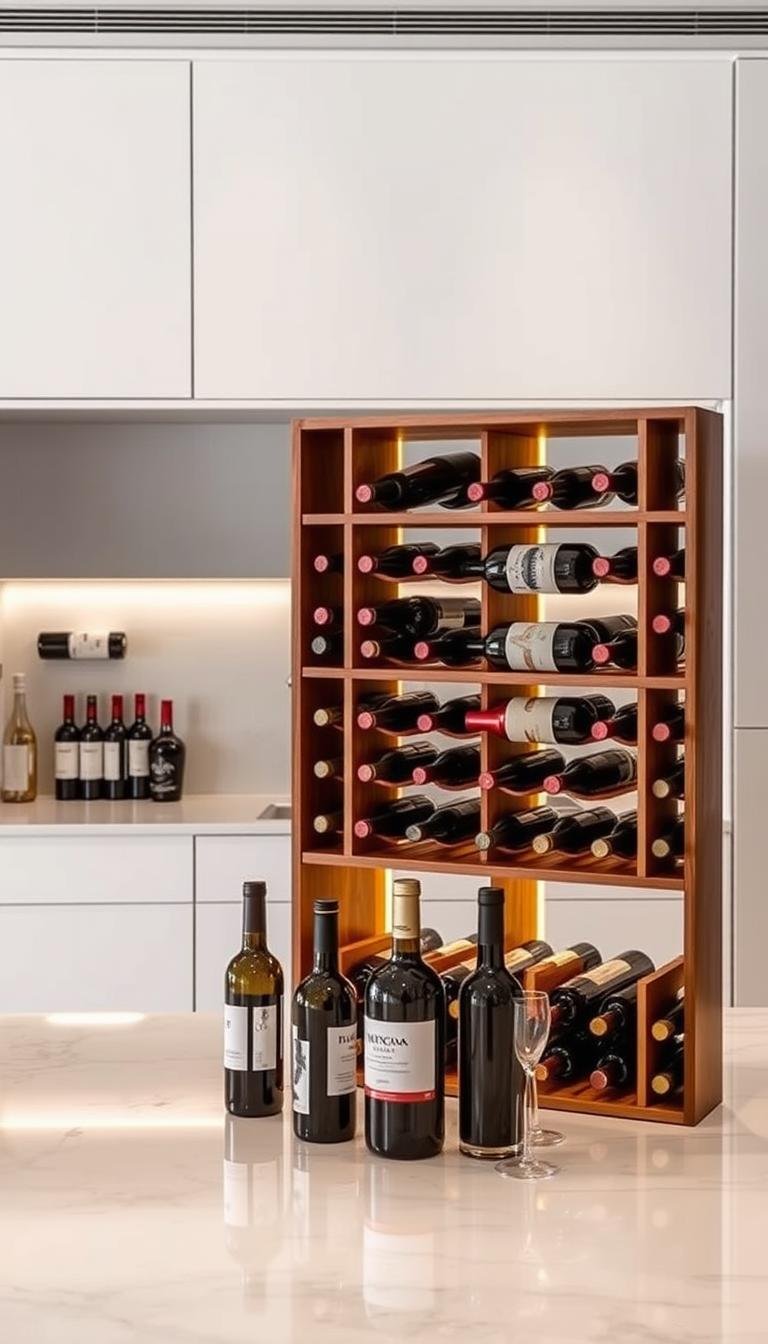
Horizontal/label-out: makes labels easy to read and creates a gallery-like display.
Cork-out or neck-out: can use less wall width, but labels are harder to scan.
Angled presentation: can make selected bottles more visible but usually projects farther into the room.
For long-term storage of cork-sealed wine, orientation should follow appropriate wine-storage guidance. Do not assume every closure or every short-term display requires the same position.
Recessed storage can look quieter than surface-mounted racks
If cabinetry is being remodeled, a recessed bottle niche or dedicated tall cabinet can integrate wine storage more subtly than hardware spread across an open wall.
Plan:
- interior depth;
- bottle diameter;
- shelf or rack support;
- door or panel swing;
- lighting;
- ventilation if a cooling appliance is included;
- service access.
A decorative cabinet should not be used to enclose a wine refrigerator unless the appliance is specifically designed and ventilated for that installation.
Undercounter wine refrigerators belong in the appliance plan
If the collection needs controlled storage, an undercounter or built-in wine refrigerator can preserve a cleaner kitchen composition than an open rack.
Before integrating one, check the exact appliance’s:
- ventilation configuration;
- required opening;
- door swing;
- electrical requirements;
- temperature range;
- service clearance.
Our appliance integration guide covers that cabinet relationship in detail.
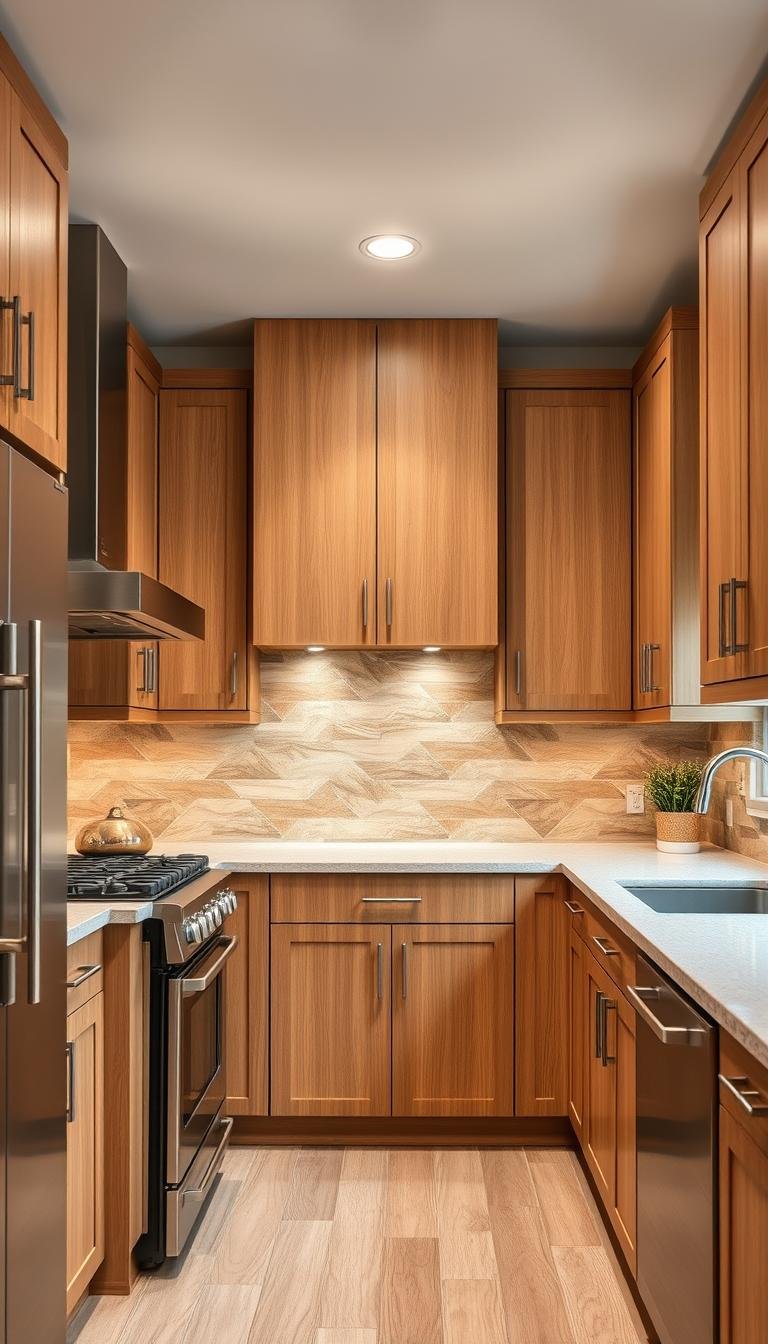
Do not place open wine storage beside the range
Heat and repeated temperature fluctuations are poor conditions for wine. The cooking zone also creates grease and cleaning demands that make an exposed bottle display harder to maintain.
If the kitchen is small, move the display toward the dining area, pantry edge, dry bar or another interior wall instead of forcing it beside the cooktop.
Sunlight should be treated as a design constraint
A bright window can make a wine display photograph beautifully while creating poor storage conditions. Wine Enthusiast advises protecting wine from direct sunlight and ultraviolet exposure.
If the only available wall receives strong sun, consider:
- a closed cabinet;
- a location farther from the window;
- a climate-controlled unit with appropriate UV protection;
- using the sunny wall for glassware, art or non-sensitive bar storage instead.
Lighting should illuminate the display without pretending to preserve the wine
Low-heat LED lighting can make labels and rack geometry easier to see. It does not turn an open kitchen wall into a cellar.
Useful lighting approaches include:
- concealed LED strip above or beside the display;
- small wall-wash fixture;
- integrated cabinet lighting;
- dimmed ambient light from the surrounding bar zone.
Keep drivers and wiring accessible and install electrical components appropriately for the location.
Avoid intense lighting that adds unnecessary heat or continuously exposes bottles to bright light.
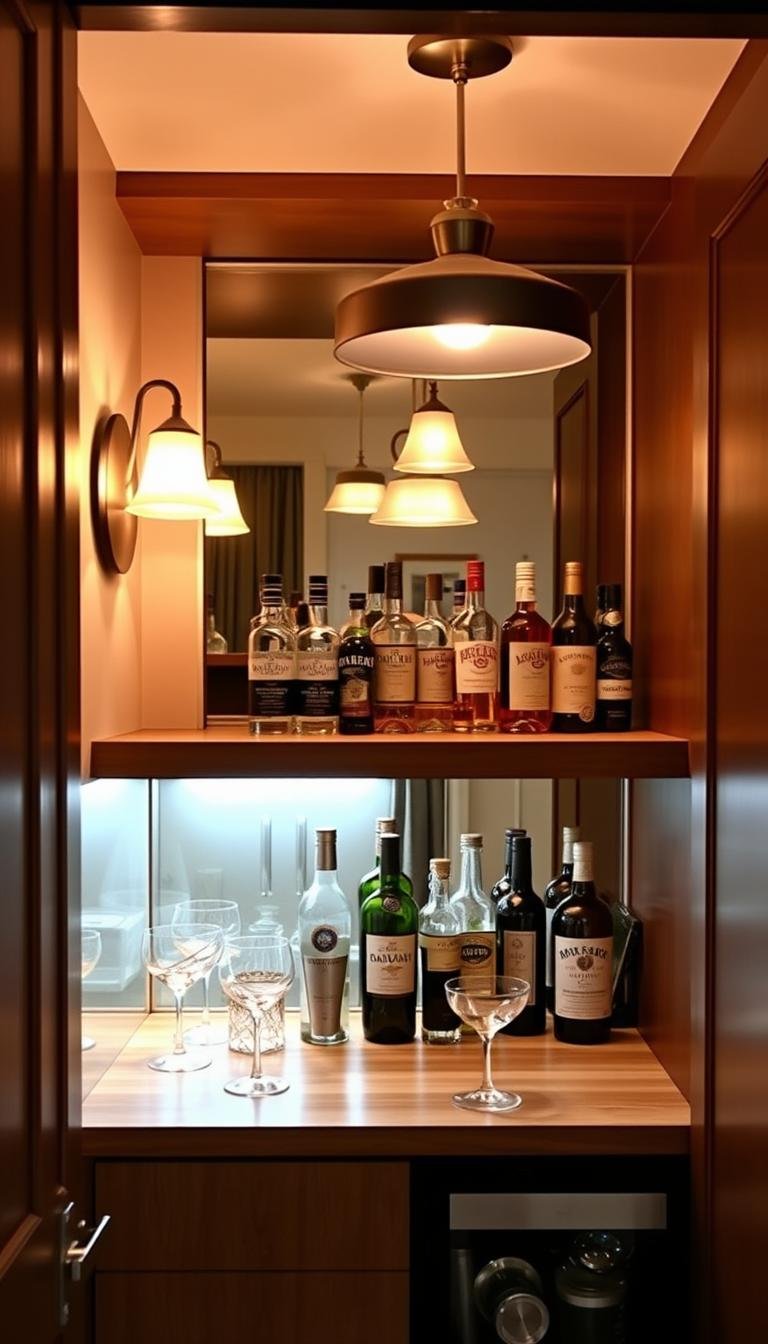
Use the display as part of a wider bar composition
A bottle rack looks more intentional when it connects to another interior element rather than floating alone on the wall.
Useful companions include:
- closed glassware storage;
- a narrow serving counter;
- bar tools stored in a drawer;
- a framed artwork or mirror;
- matching cabinet or shelf material;
- a beverage refrigerator where appropriate.
Keep the composition restrained. The bottles are already visually detailed.
Match the rack material to the room, not to a trend
Wood, metal and mixed-material racks can all work.
Wood: adds warmth and can relate to cabinetry or furniture.
Dark metal: creates a lighter visual footprint and works well with contemporary or industrial hardware.
Brass-tone or warm metal: can connect to lighting and cabinet hardware when the finish is appropriate for the environment.
The rack’s structural design and installation requirements matter more than the finish.
Keep bottle storage away from vulnerable circulation zones
Glass bottles should not project into a narrow walkway or sit where a swinging door, stool or bag can strike them.
Check the display in the context of:
- open cabinet doors;
- bar stools;
- kitchen traffic;
- children;
- pets;
- vacuuming and cleaning paths.
If the rack is low, make sure exposed bottle ends do not become shin-height obstacles.
A floor-to-ceiling display needs more than visual symmetry
Tall wine displays can be dramatic, but capacity increases load and makes upper bottles harder to access.
Use systems designed for the height, wall or floor/ceiling structure involved. Do not create a floor-to-ceiling rack from improvised posts or generic shelving hardware.
Keep frequently accessed bottles within comfortable reach. High storage is better suited to display or infrequent access only when the system is designed for it.
Closed cabinetry may be the better decorative choice
If the room already contains strong tile, stone, open shelving or patterned cabinetry, another wall of bottle hardware may add clutter.
A closed cabinet with a small open display zone can give you:
- less dust;
- less label clutter;
- better protection from light;
- more visual calm;
- space for glassware and accessories.
You do not need to display every bottle for the room to communicate hospitality.
Plan for cleaning and replacement
Kitchen displays collect dust and airborne cooking residue. Choose a rack that allows bottles and surrounding surfaces to be cleaned without dismantling the whole installation.
Also consider whether the system can be:
- expanded;
- reconfigured;
- removed without destroying the wall;
- replaced if a proprietary part becomes unavailable.
A practical wine-display planning sequence
- Separate short-term bottles from long-term storage.
- Identify walls away from direct sun and major heat sources.
- Measure the wall and surrounding circulation.
- Count the bottles you genuinely want on display.
- Measure wide or unusual bottle formats.
- Choose a purpose-built rack or cabinet system.
- Verify mounting and structural requirements.
- Mock up bottle projection and access.
- Add restrained low-heat lighting if useful.
- Keep climate-controlled storage separate when the collection requires it.
The simplest answer
For an elegant kitchen wine display, use a small purpose-built rack or cabinet in a cool, shaded, low-traffic location. Treat open storage as display and convenient access, not as a replacement for climate-controlled long-term wine storage.
Continue with our home bar ideas guide, closet mini bar guide, appliance integration guide, and the Dwelanor Room Guides.