
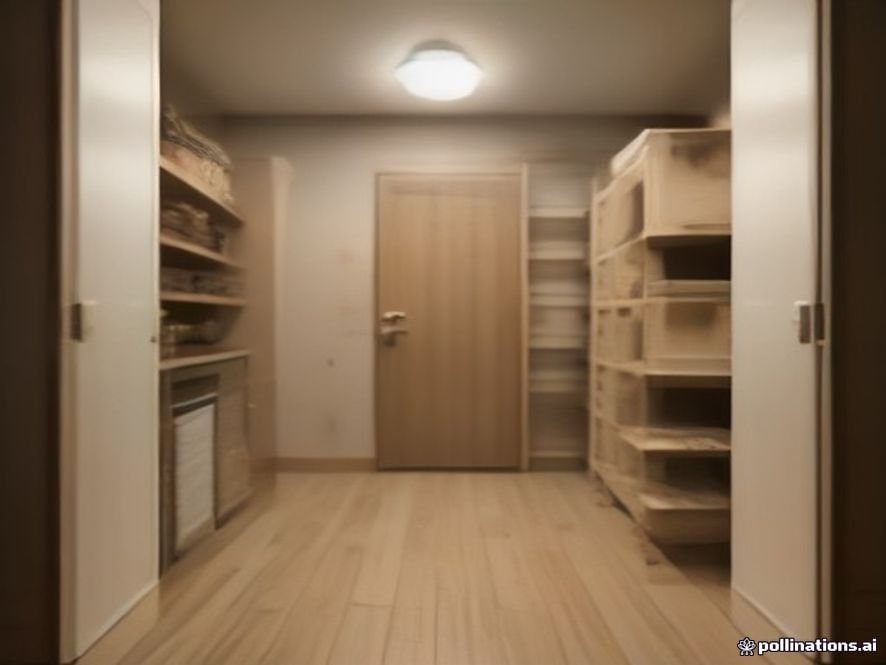
A smart pantry system for a small kitchen starts with access, not matching containers. The goal is to make everyday food visible, keep heavy items low, use vertical space safely and prevent deep shelves from becoming storage dead zones.
The useful relationship is pantry dimensions → shelf depth → food category → access frequency → container size → pull-out hardware → door clearance → lighting.
Start with the pantry you actually have
Before buying bins or organizers, measure:
- interior width, depth and height;
- door swing and hinge locations;
- fixed versus adjustable shelves;
- the narrowest opening into the pantry or cabinet;
- outlets, switches and lighting;
- any baseboard, trim or plumbing interference.
A reach-in pantry, tall cabinet, shallow closet and freestanding armoire need different storage systems. The best organizer is the one that fits the actual enclosure and the food stored inside it.
Build zones around frequency of use
Instead of sorting only by food type, combine category with access frequency.
| Zone | Best location | Examples |
|---|---|---|
| Daily use | Waist to eye level | Breakfast, snacks, cooking staples |
| Heavy | Low shelves or drawers | Bulk drinks, flour, appliances |
| Light and infrequent | Upper shelves | Seasonal serving pieces, spare paper goods |
| Small loose items | Shallow bins, drawers or door rack | Packets, bars, tea, baking decorations |
| Backstock | Secondary shelf or clearly labeled bin | Duplicates and unopened extras |
This reduces the number of items that need to be moved just to reach one ingredient.
Shallow shelves are often better than deep shelves
Deep pantry shelves look generous but can hide food behind other food. If the pantry is deep, create access with one of these approaches:
- full-extension pull-out drawers;
- purpose-built pantry pullouts;
- turntables for bottles and jars;
- tiered risers for short cans;
- shallow bins that pull forward as a unit.
Do not treat every deep shelf as a place to stack two or three rows permanently. Visibility is part of storage capacity.
Use pull-outs where depth is the problem
Pull-out hardware is especially useful for narrow cabinets beside a refrigerator or for deep base/tall cabinets. Choose a system with published cabinet dimensions, load rating and installation instructions.
The organizer, slides, cabinet structure and fasteners work as one system. Do not estimate load capacity from the drawer width alone.
A narrow refrigerator-side pull-out can work when the cabinet, slides, clearances and adjacent appliance ventilation are designed for the exact system. Treat it as part of the kitchen storage plan rather than as a generic gap-filler project. For a dedicated narrow pantry beside the refrigerator, use our pull-out pantry planning guide to check door swing, appliance clearance, cabinet depth and slide capacity.
Adjustable shelving gives the pantry more life
Adjustable shelves let the pantry change as packaging, appliances and household needs change. Set each shelf around the tallest item in that zone rather than leaving large empty gaps above every product.
A mix of shelf heights is usually more useful than identical spacing from top to bottom.
Keep enough clearance to remove containers comfortably. A shelf that technically fits a cereal box but requires tilting and scraping it out every morning is not well sized.
Door storage can be useful, but the door is not a free wall
Shallow door racks work well for light items such as packets, wraps, small bottles or snacks. The organizer must be compatible with the door construction and hinge system.
Check:
- loaded weight;
- hinge capacity;
- whether the rack collides with interior shelves;
- whether bottles can fall when the door swings;
- whether mounting hardware is suitable for the door material.
Do not load glass jars or heavy cans onto a door simply because there is physical space.
Turntables solve certain corners and bottle zones well
A turntable can make oils, condiments and small jars easier to scan. Measure the shelf depth and the turntable diameter so it can rotate without touching the wall, door or shelf supports.
Use a raised edge when containers are tall or narrow. Keep heavy containers toward the center rather than loading the outer rim unevenly.
Risers help when labels disappear behind one another
Tiered risers are useful for short cans and jars on a shelf that is too deep for one row. The goal is visibility, not stacking maximum weight.
Check that the riser sits flat and that the shelf itself is suitable for the combined load.
Decant only when it improves the system
Matching containers can look calm, but decanting is optional. Original packaging may carry ingredient, allergen, preparation, lot or date information that matters.
If you transfer dry goods:
- use containers intended for food storage;
- label the contents clearly;
- retain information from the original package when needed;
- avoid topping new food onto old food indefinitely;
- choose shapes that actually fit the shelf depth.
A pantry can be highly organized without becoming a wall of identical jars.
Drawers are often better for small items
Deep shelves are poor places for spice packets, baking decorations, wraps and snack bars. A shallow drawer or bin lets those small pieces stay visible.
Dividers can create simple zones without requiring each item to have a dedicated custom insert.
Spices belong where heat and access both make sense
Keep spices easy to identify but avoid forcing them into the hottest part of the kitchen. Penn State Extension recommends storing spices and herbs in airtight containers in dry places away from sunlight and heat, and specifically notes that storage above a stove quickly reduces quality. See its kitchen staple storage guidance. A drawer, shallow pantry shelf, adjacent cabinet or compatible magnetic system can all work. If you are considering a pull-down unit directly above the range, read our above-stove pull-down spice-rack guide before committing to the location.
Magnetic spice storage can work when the mounting surface, container weight and household use make it stable and easy to reach. Avoid putting spices or moving organizers where heat, steam, splatter or door movement makes access worse. Storage near a range should follow the appliance clearances and the organizer manufacturer’s installation requirements.
Lighting changes how usable the pantry feels
A pantry that is physically large can still function poorly if the back shelves are dark. Lighting should make labels visible without creating glare or blocking shelf access.
Useful options depend on the pantry:
- ceiling light for a walk-in or larger reach-in pantry;
- integrated cabinet lighting for tall cabinets;
- door or motion-activated lighting where the product is designed for that use;
- low-profile LED bars or strips for deeper shelving.
New wiring should be planned and installed appropriately. Do not route improvised cords through moving doors or pinch points.
High storage should be light storage
Upper shelves are useful for lightweight, infrequent items. Heavy appliances, bulk drinks and large jars belong lower where they are easier to handle.
If a step stool is needed, use a stable product designed for climbing and follow its instructions. A rolling library ladder is a specialized installation, not a generic pantry accessory. It requires appropriate structure, hardware, clearances and installation.
Freestanding cabinets can create a pantry where none exists
If the kitchen has no pantry, a freestanding cabinet, hutch or armoire can become a food-storage zone if it is stable, appropriately anchored where required, and suitable for the loads inside.
Before using one, check:
- overall depth and door swing;
- shelf capacity;
- wall anchoring requirements;
- ventilation for any appliance stored inside;
- whether food storage is separated from household chemicals.
Keep cleaning products out of food zones when possible
A small pantry can become a dumping ground for cleaners, tools and food. Separate household chemicals from food storage, especially from open food or items children may access.
If cleaning supplies must share the wider storage area, use a distinct lower or locked/controlled zone appropriate to the household and product instructions.
Do not overfill the pantry
Organization systems cannot solve permanent overcapacity. Leave enough open space to:
- see what is already there;
- remove one item without unloading the shelf;
- clean spills;
- bring in a normal grocery restock without creating piles on the floor.
A useful pantry has some empty space.
A practical pantry planning sequence
- Measure the enclosure, shelves and door swing.
- Remove expired, unwanted and duplicate excess.
- List the food categories the household actually uses.
- Assign daily, heavy, light and backstock zones.
- Identify deep shelves that need pull-outs, bins or turntables.
- Plan door storage only after checking load and collisions.
- Add adjustable shelving where fixed spacing wastes space.
- Improve lighting if labels are hard to read.
- Decant only where it genuinely improves storage.
- Leave enough open capacity for normal restocking.
The simplest answer
For a small kitchen, prioritize adjustable shelves, pull-outs, shallow bins, turntables and clear zones. Keep frequently used food easy to reach, heavy items low and infrequent light items high. The system should make inventory easier to see rather than simply making the pantry look styled.