Holiday decorating · Renters
Renter-Friendly Christmas Decor Without Drilling
Practical wreaths, windows, garlands and warm lights without relying on universal damage-free mounting promises.
By Hayat · November 3, 2026
IN THIS GUIDE
Plan before buying
QUICK CHECK
Make the decision safely
- Get permission where required and check the actual finish.
- Do not block doors, exit routes or door hardware.
- Test removal and follow each product’s mounting instructions.
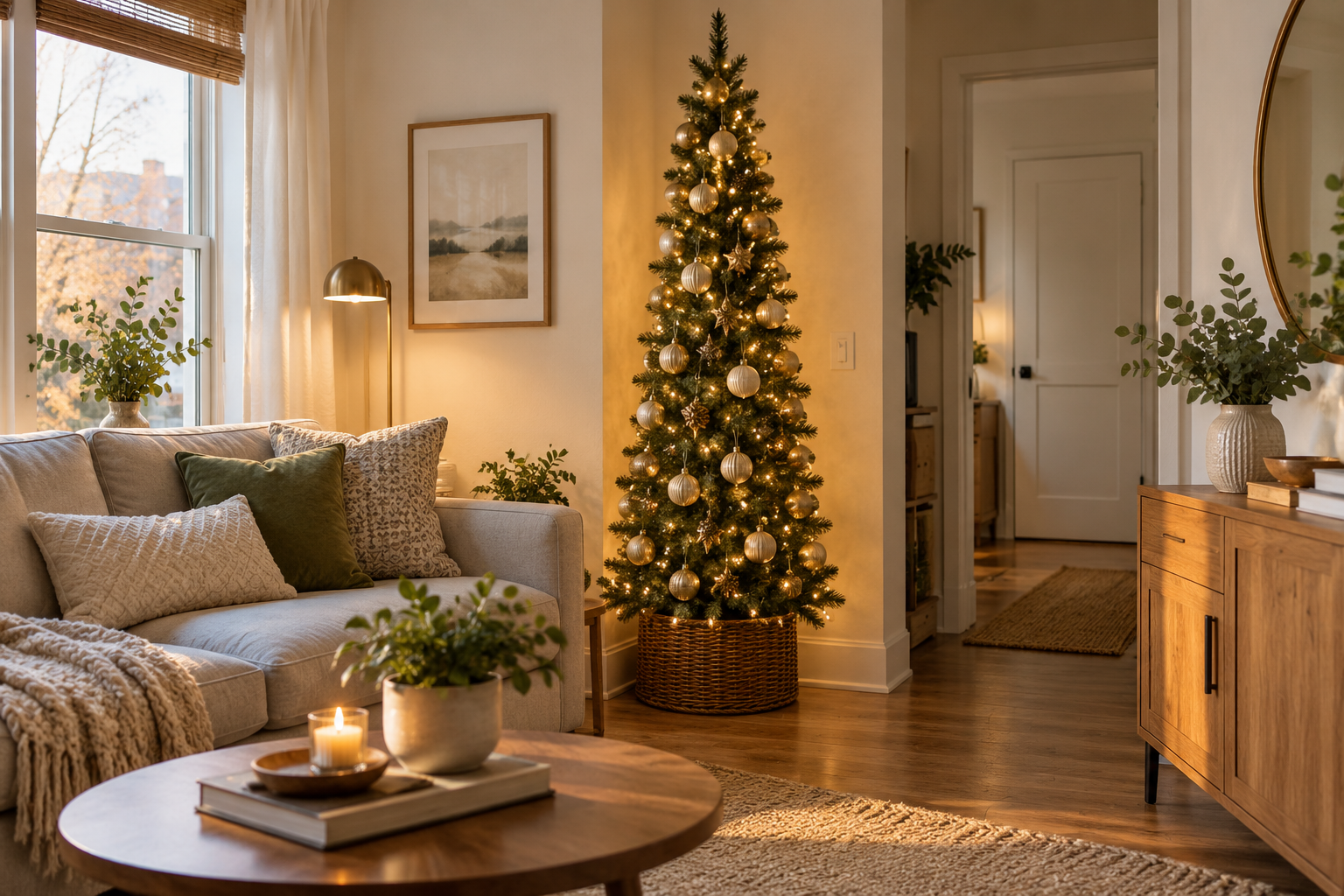
Renter-friendly Christmas decorating is about choosing lighter pieces, safer placement, and a mounting method that works with the actual surface—not promising that every hook or adhesive will come off without a mark. In a small apartment, a modest wreath, a removable window display, warm LEDs and a narrow holiday vignette can feel festive without drilling or blocking the door.
Start with three questions: What am I allowed to attach? Will the wall or door finish tolerate it? Can people still move around and leave the apartment safely? Answer those before buying garlands, wreaths or lights. Avoid treating “no drill,” “removable,” and “damage-free” as interchangeable product claims.
1. Audit the surfaces you can use
Look at the front door, interior doors, painted walls, tiled surfaces, windows and shelving. A metal door and a varnished wooden door have different mounting options. Matte paint, textured plaster and wallpaper can respond differently to adhesive products. Older paint or poorly bonded wallpaper may release when an adhesive is removed even if the adhesive is labeled removable.
Read the product’s manufacturer instructions for surface type, preparation, load limits, temperature and removal process. If the property rules restrict attachments, obtain permission or choose a freestanding arrangement that needs no wall contact.
For a general approach to nonpermanent decorating, read our Rental Decorating Guide.
2. Choose one focus area instead of decorating every wall
A small entryway can feel festive with one proportionate element: a lightweight wreath, a garland around a suitable cabinet opening, or a holiday tray on existing furniture. Too many decorations can turn an entry into a cluttered storage zone where coats and shoes catch on hanging pieces.
Keep doors fully operational. Test the swing with the decoration in place and make sure the item does not catch the jamb, block a peephole, obscure an exit sign or interfere with locks, handles or accessible controls. Apartment corridors and shared spaces may have fire-safety requirements that override personal decorating preferences.
3. Door wreaths: compare hangers by actual door construction
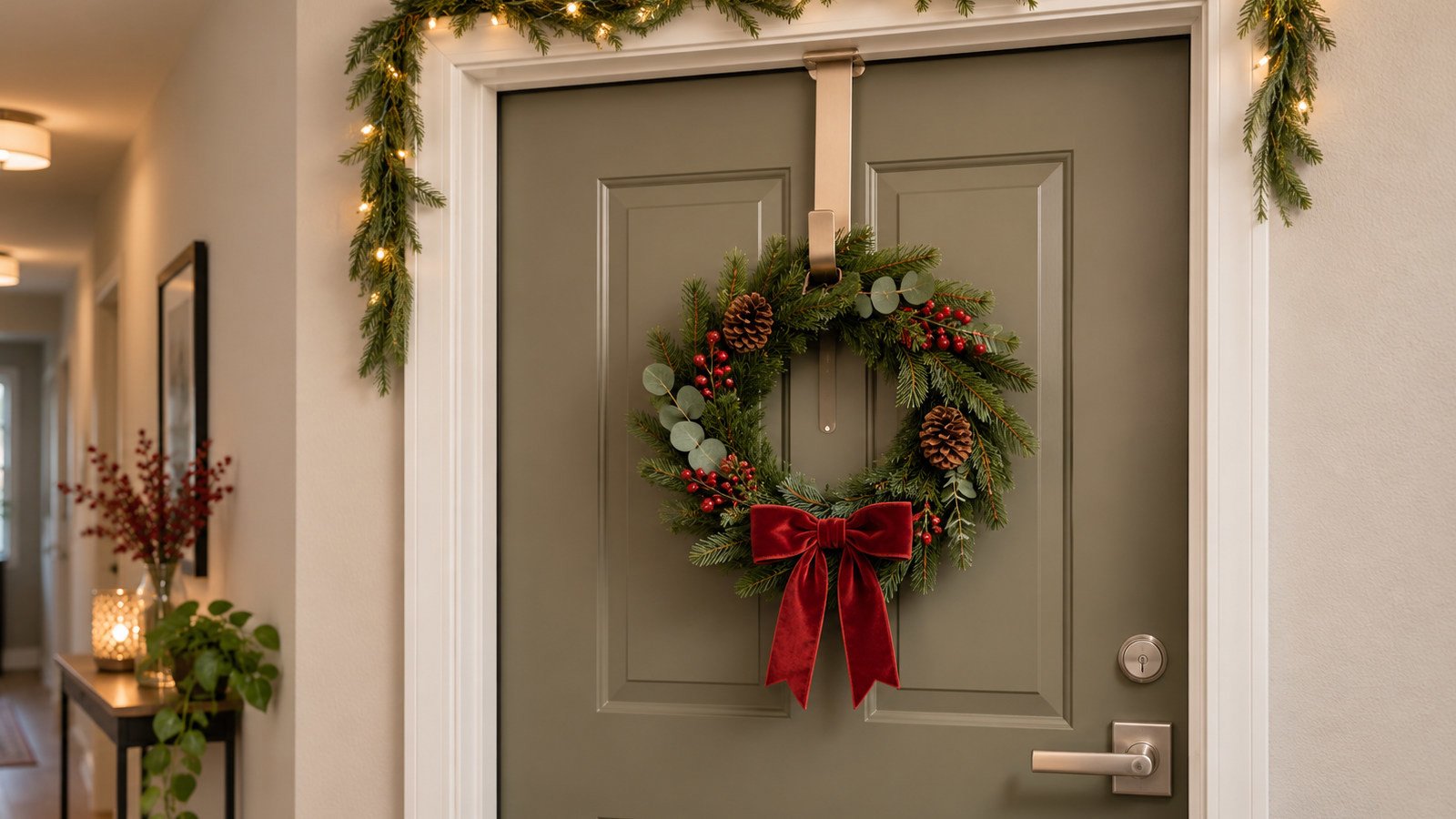
Over-the-door wreath hangers can avoid drilling, but only when the door has enough clearance at the top to close and lock properly. Measure the door thickness and the space between the upper edge and jamb before purchasing a hanger. Check whether the mounting piece could scratch the door finish or interfere with weather seals.
Magnetic wreath hangers may suit some metal doors, but a decorative metal finish does not guarantee that a magnet will hold securely. Test compatibility and manufacturer load guidance. Some doors have insulated or nonmagnetic components even when they appear metallic.
Adhesive hooks are another category to consider where the manufacturer specifically approves the surface and expected conditions. Remember that both the hook and the decoration have a total load; do not guess the weight of a large wreath. If there is no reliable mounting method, use a small wreath on a freestanding shelf or simply omit the door decoration.
4. Garland can work, but weight and placement matter
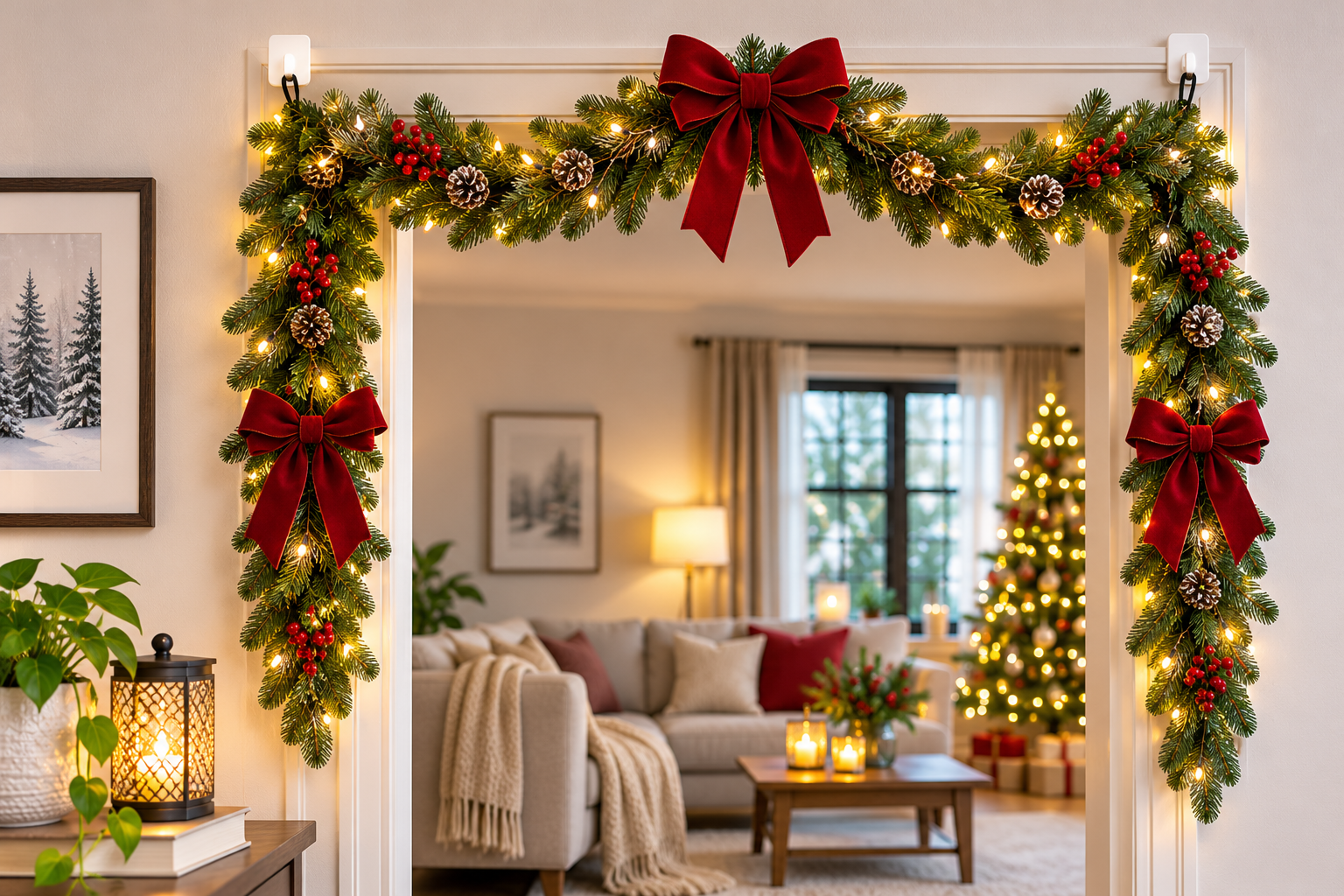
Garlands range from lightweight paper strings to heavy faux greenery with ornaments and integrated lighting. Choose the lightest format that creates the desired look. Check how the material attaches at both ends and how it behaves when a door or window opens.
Do not drape garland across a heater, radiator or air outlet. Avoid trailing branches or hanging ornaments at eye level in narrow walkways. Keep the arrangement away from cooking flames and other heat sources. The U.S. Fire Administration’s holiday fire guidance is a useful safety reference before adding seasonal materials and lighting.
If there is not enough clearance for a doorframe garland, create a compact vignette with greenery in a stable vase on a sideboard. A freestanding arrangement may be easier to remove, reuse and store than an elaborate mounted design.
5. Windows make useful seasonal space—when installations are compatible
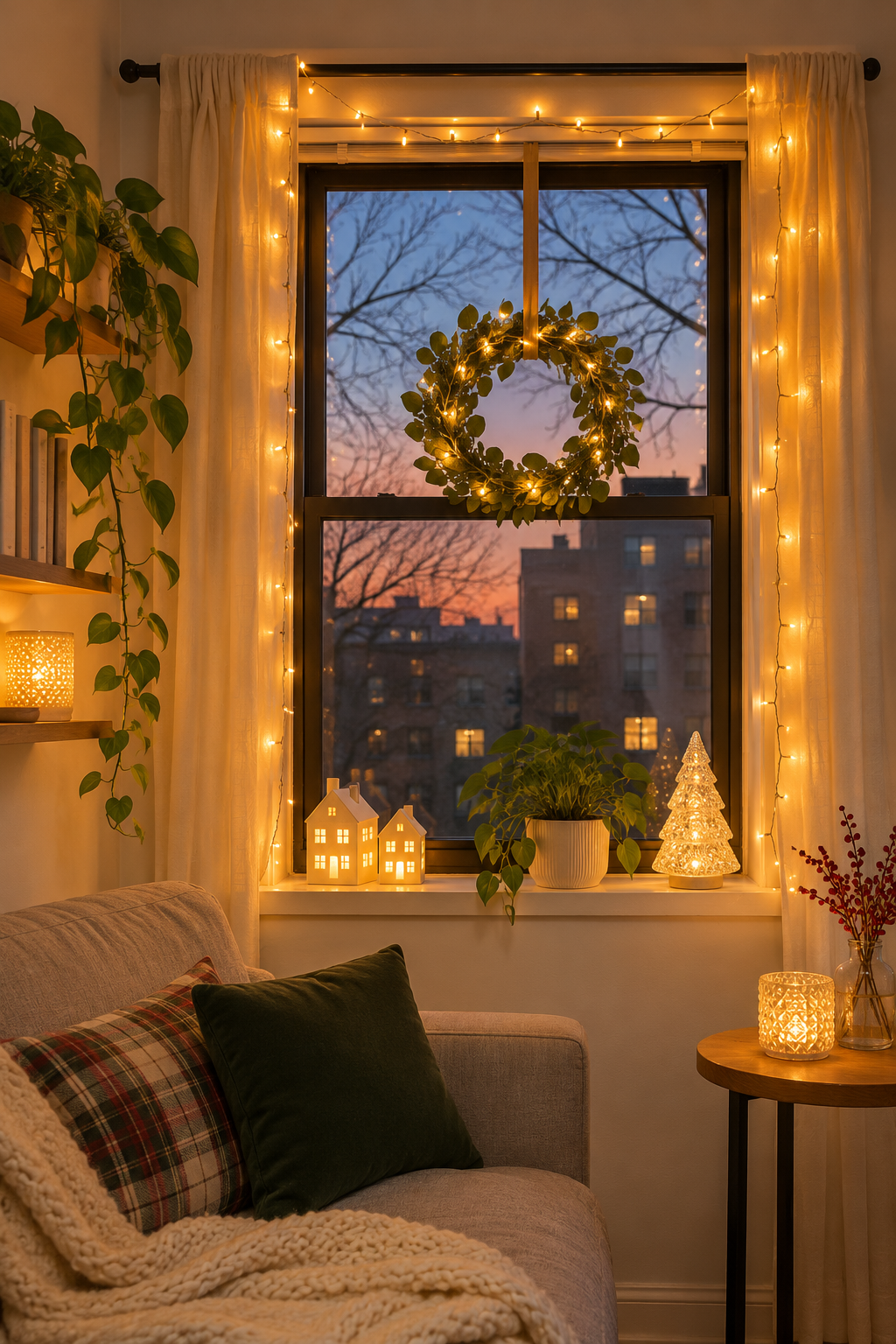
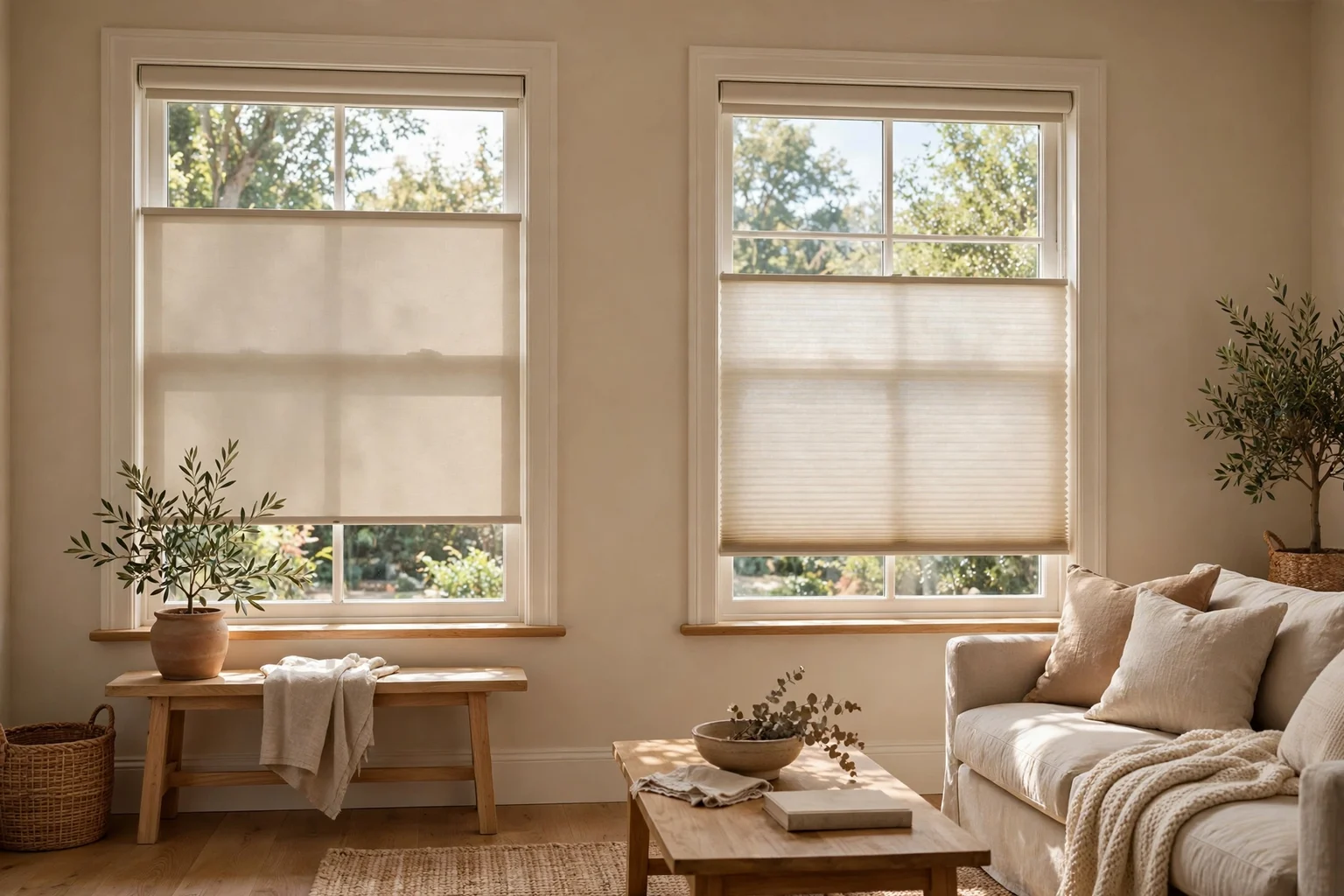
Window decorations can create an atmospheric display without consuming floor space. Consider simple paper ornaments, lightweight window clings designed for the specific glazing and small decorations on a stable window shelf. Follow manufacturer guidance for glass type and residue removal, especially where specialty coatings are involved.
Do not place bulky items where they interfere with opening, ventilation or emergency access. Do not hang cords across an opening or pinch electrical cables in window frames. If window treatments move frequently, make sure the decorations stay clear of blind controls and curtains.
Our Window Treatment Guide helps you understand how curtains and blinds need to function around an already busy window.
6. Use light thoughtfully instead of filling the room with it
Warm white LEDs can create a holiday mood around one feature rather than the entire apartment. Battery-powered fairy lights are useful where there is no practical nearby outlet, but they still need safe battery management and manufacturer-approved installation.
For plug-in lighting, check suitable certification or testing information, indoor versus outdoor rating, cord condition, and the manufacturer’s permitted number of linked sets. The CPSC’s guidance on seasonal decorative lighting explains electrical characteristics that matter.
Do not put cords under rugs, through door hinges or across a doorway. Where cords would create hazards, switch to an appropriately designed battery decoration or use a different location.
For an established permanent look, our No-Drill String Lights Guide covers mounting decisions that apply outside the holidays as well.
7. Four renter-friendly decoration formats compared
| Decor | Where it helps | What to check before buying |
|---|---|---|
| Lightweight wreath | Entry door or existing shelf | Hanger compatibility, clearance, weight and finish |
| Short faux garland | Sideboard, mantel-like shelf or permitted frame | Weight, fire safety, stable attachment and snagging |
| Window cling or paper display | Windows with few furniture surfaces | Glass compatibility, removability, opening clearance |
| Battery LED fairy lights | Small seasonal arrangement | Battery compartment, approved use, placement and storage |
Choose a single centerpiece product type and use another only when it has a distinct role. A renter does not need to buy a complete set of decorations to make a space feel seasonal.
8. Set a holiday-decor budget based on reuse
Rather than choosing a fixed amount before you know what fits, list the decorating zones you genuinely use. Give priority to any missing functional supplies such as appropriate hooks or batteries, then one reusable centerpiece. Avoid short-lived decorative packages whose storage cost is disproportionate to their impact.
Favor colors and materials that also work during winter: natural greens, warm neutrals, brass, soft red, and wood. A neutral tray or light string might be useful after the holiday. Keep the original package and hardware so you can store pieces safely for the following year.
9. Take a removal test seriously
When a mounting product advises a test patch, follow the exact procedure on a concealed compatible surface and consider the lease or building rules. Never assume a peel-and-stick claim overrides the paint manufacturer’s requirements. Some materials become harder to remove after exposure to sunlight or heat.
Take the decoration down using the manufacturer’s specified process, not by pulling quickly at an angle. For uncertain or fragile finishes, a freestanding setup often offers the least complicated solution.
10. Ten-minute pre-decoration checklist
- Read the lease or building rules for doors, windows and shared spaces.
- Measure door clearance, window operation and the remaining route through the apartment.
- Check surface compatibility and weight for each proposed hanger.
- Keep greenery, lights and decorations away from heaters, flames and exits.
- Inspect lighting and batteries and follow the product instructions.
- Arrange decorations at a height where they won’t snag bags or clothing.
- Confirm every door and window still opens, closes and locks normally.
- Identify how each item will be removed and stored after the holiday.
Bottom line
Start with one renter-friendly Christmas feature that respects the apartment’s materials and daily circulation. A lightweight wreath, modest window display or compact garland can create more atmosphere than decorating every surface. Avoid promises of universally damage-free adhesives, and treat safety, mounting instructions and removal as part of the buying decision.
Keep decorating