Window Treatment Planning
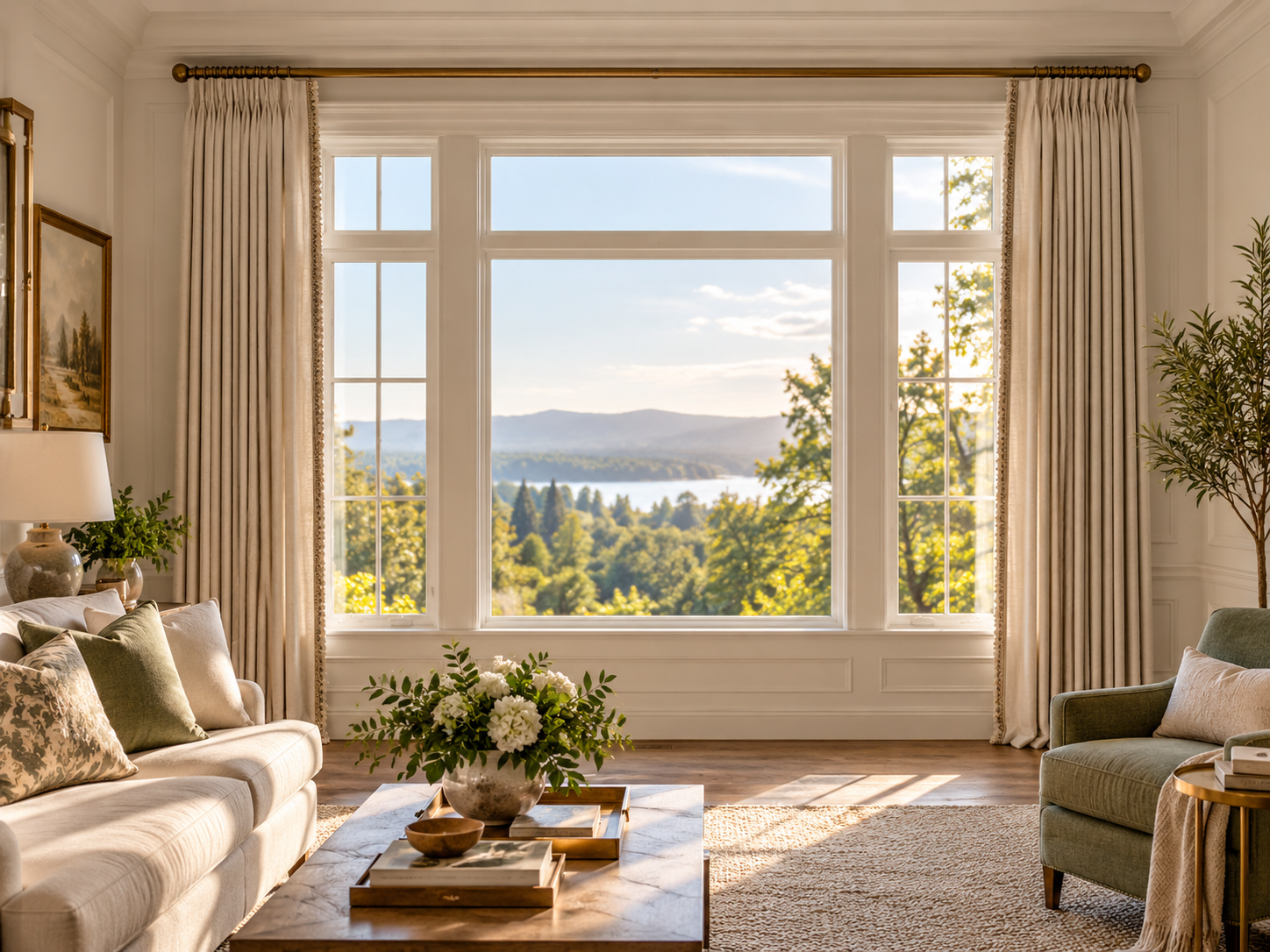
Curtain stack-back is the wall and rod space occupied by the fabric when the panels are fully open. It matters because a rod can be wide enough to cover the window when closed but still leave a large portion of the glass blocked when the curtains are open. Fabric weight, fullness, pleat style and panel count all change the result.
Measure the window and available side wall → choose heading and fullness → estimate the open fabric bundle → extend the rod beyond the glass → mock up the stack → check trim, furniture and hardware.
1. Measure the glass and the side wall separately
Record the width of the window or door you want to uncover, then measure the usable wall on each side. Do not assume the two sides are equal; a corner, cabinet, return wall or radiator can make one side much tighter.
Also note deep trim, handles and any molding that affects bracket placement. Stack-back is a three-dimensional bundle, so the wall surface around the rod matters.
2. Heading style changes the bundle
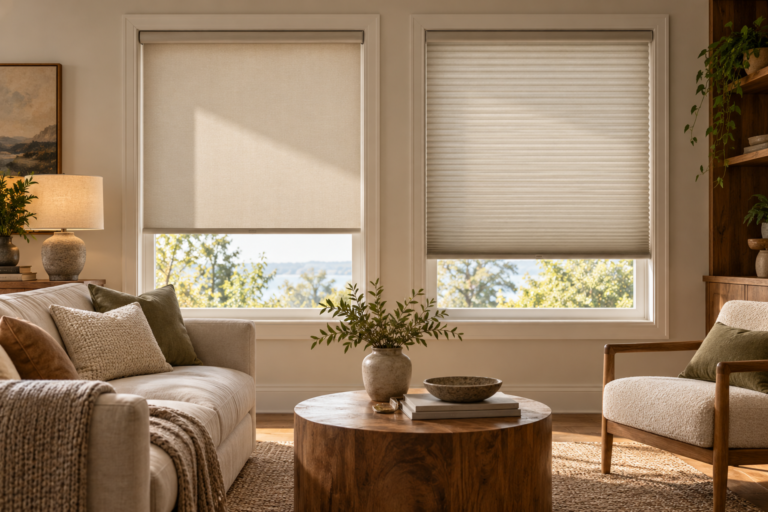
Grommet panels, pinch pleats, ripplefold and rod-pocket curtains compress differently when open. A structured pleat can create a neat but substantial stack, while lighter headings may compress more closely.
Choose the heading before final rod width. If you already own the curtains, gather one panel fully and measure the real compressed width rather than estimating.
3. Fullness increases stack-back
A fuller curtain uses more fabric across the same window. That extra material has to go somewhere when the panel is open, so dramatic fullness usually requires more side space.
This is why two windows of identical size can need very different rod extensions. The fabric construction matters as much as the opening width.
4. Heavy and lined fabrics need more room
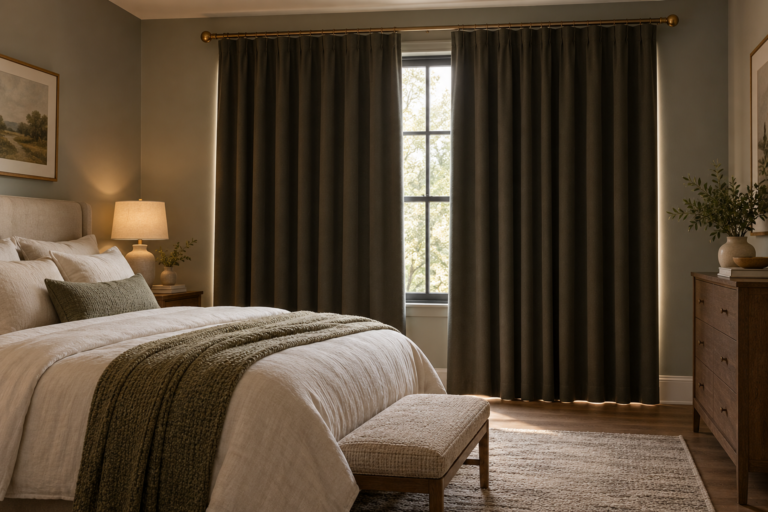
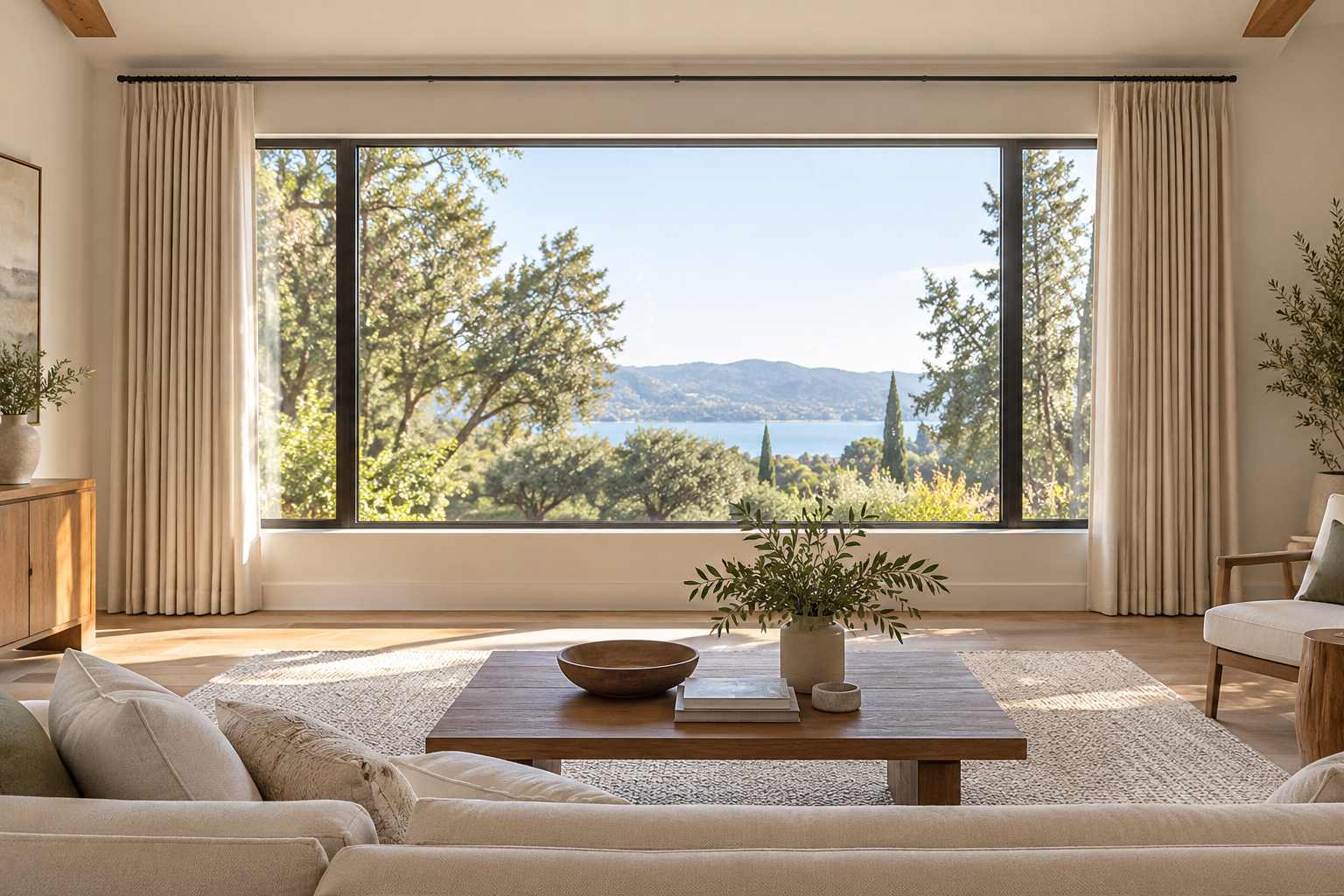
Blackout linings, interlinings and heavy velvets create a thicker bundle than an unlined linen or lightweight cotton. A room-darkening curtain can therefore block more glass when open even if the panel width is the same.
If daylight is important, mock up the open panel position before you commit to a wall-to-wall decorative rod.
5. Extend the rod only where the wall supports it
Moving brackets farther outside the trim can help curtains clear the glass, but the wall must still provide suitable fixing points and enough room for finials, returns or decorative ends.
In a tight corner, a compact return or track system may use space more efficiently than an oversized decorative rod.
6. Check furniture and door movement
A wide stack can overlap a tall bookcase, wall art, light switch or nearby door. Patio doors need special attention because the open fabric should not sit where people grab handles or move through the opening.
Treat the curtain as part of the room layout rather than a flat layer on the wall.
7. Consider asymmetric stacking
When one side has much more wall space, a one-way draw or uneven panel arrangement can be more practical than forcing equal stacks. This is common near corners and sliding doors.
The final look should still appear intentional. Align the rod and panel treatment with the architecture rather than using symmetry when the wall does not support it.
8. Mock up the rod extension
Tape the rod line above the window and mark the proposed open-panel bundle at each side. Stand at normal viewing distance and check how much glass remains exposed.
This test is especially useful before custom curtains, where the cost of changing fullness or rod width later can be significant.
Stack-back planning worksheet
| Input | Record | What it affects |
|---|---|---|
| Window/glass width | _____ | Amount of opening to uncover |
| Usable wall left | _____ | Maximum left-side stack |
| Usable wall right | _____ | Maximum right-side stack |
| Heading style | _____ | How compactly fabric gathers |
| Lining/fullness | _____ | Total fabric bulk when open |
Before you buy or install
- Choose the heading before final rod width.
- Measure usable wall on both sides.
- Check switches, furniture and door handles.
- Test heavy or blackout panels in the open position.
- Confirm bracket fixing locations.
- Mock up the full rod and stack with tape.
Related Dwelanor guides
- Window Treatment Guide
- Curtain Size & Placement Guide
- Blackout Curtains Guide
- Rental Decorating Guide
- Bedroom Design Guide
- Home Lighting Guide
FAQ
How far past the window should a curtain rod extend?
There is no single number that fits every curtain. The necessary extension depends on panel fullness, heading, lining and how much glass you want exposed when the curtains are open.
Do blackout curtains need more stack-back space?
Often yes, because lining and heavier fabric create a thicker bundle. Measure the actual panel or a comparable sample whenever possible.
Can curtains stack on only one side?
Yes. A one-way draw can be useful when one side has more wall space or when a door opening needs to stay clear.
Bottom line
Stack-back is a fabric problem as much as a window problem. Plan the curtains in their fully open position, then size the rod so the glass, wall and nearby furniture all continue to work.