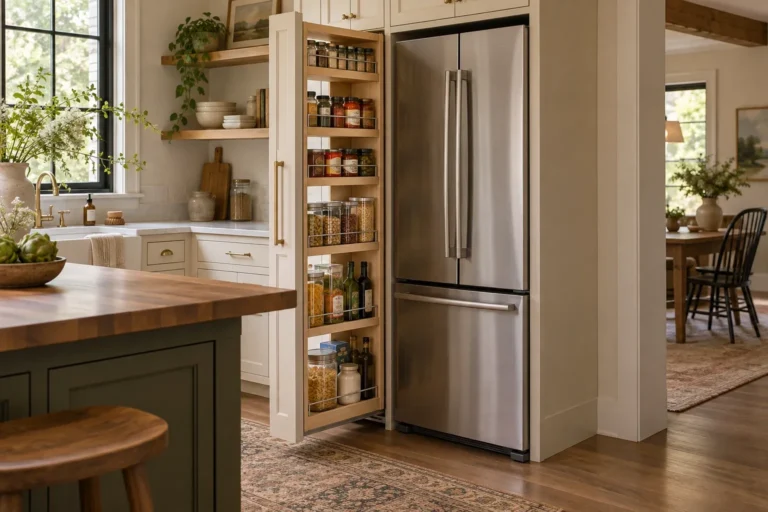
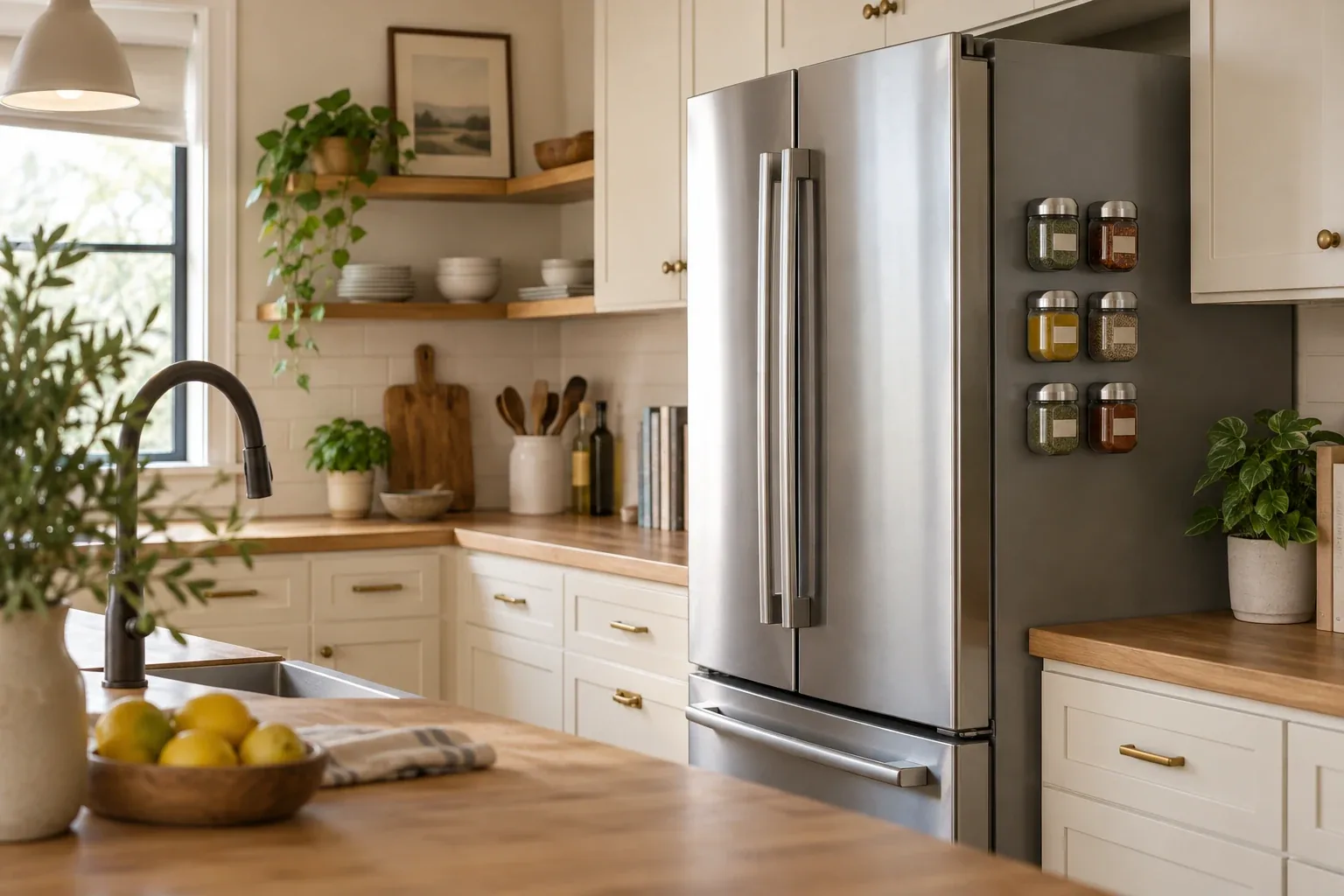
Magnetic spice jars can be a smart small-kitchen storage option when the refrigerator surface is actually magnetic, the jars stay securely closed, and the location is away from strong heat, steam, and direct sunlight.
The most important checks are not brand names. They are surface compatibility, magnet strength, jar weight, lid security, access, labeling, and storage conditions.
Start with the refrigerator surface
Refrigerators can use painted steel, stainless steel, glass, plastic trim, or layered decorative panels. Magnet behavior can vary between the front door and side panels.
Test several points because:
- the door skin and side panel may use different materials;
- curved or textured areas may reduce contact;
- handles and trim can interrupt a grid layout;
- the door may move more sharply than a fixed side panel.
If the refrigerator is not reliably magnetic, a purpose-made ferromagnetic panel can create a separate magnetic zone. For reversible-installation principles in a rental, use the Rental Decorating Guide.
Choose jars by total loaded weight, not empty weight
A jar that feels light when empty may be significantly heavier after it is filled with salt, seeds, whole spices, or dense seasoning blends.
Test one fully filled jar before committing to an entire wall of them. The jar should remain secure when the refrigerator door opens and closes normally.
Run a loaded-jar test before buying the full set
- Fill one jar with the densest spice or seasoning you expect to store.
- Attach it to the exact refrigerator location you plan to use.
- Open and close the door several times at your normal speed, including the final movement as the door seals.
- Leave the jar in place for a day and check whether it has slipped, rotated, or marked the finish.
- Remove it by lifting rather than dragging it, then inspect both the magnet face and refrigerator surface.
If the jar moves during this test, treat that location or jar design as unsuitable rather than relying on a larger grid of identical containers to improve stability.
Do not place a magnetic jar where a fall could land on a glass cooktop, hot pan, pet bowl, or frequently used work surface.
Container closure matters as much as the magnet
The strongest magnet is not useful if the lid can loosen when the jar is removed from the refrigerator.
Compare:
- screw lids for a secure closure;
- twist or rotating shaker lids for quick dispensing;
- wide-mouth jars when measuring spoons need to fit inside;
- clear lids or transparent bodies for quick identification.
Choose the closure based on how the spice is actually used. Ground pepper and dried herbs may work with a shaker lid, while coarse salt, cinnamon sticks, or whole spices may be easier to spoon from a wide opening.
Metal tins versus glass jars
| Container | Strengths | What to check |
|---|---|---|
| Metal tin | Lightweight, compact, easy to arrange in a grid | Lid seal, interior finish, food-contact suitability |
| Glass jar with magnetic base | Easy to see contents, resists flavor transfer | Higher loaded weight and breakage consequence |
| Existing spice bottle plus magnetic holder | No need to decant | Holder fit and total bottle weight |
There is no universal winner. The better choice is the container that remains secure, closes reliably, is easy to clean, and fits the amount of spice you actually keep in active rotation.
Keep spices away from strong heat and steam
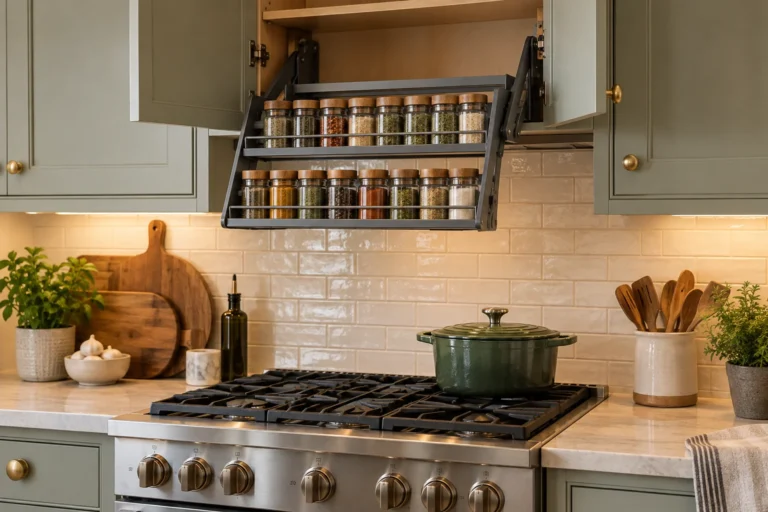
Convenience should not push spice storage into the hottest part of the kitchen. A refrigerator side can be useful when it is separated from the cooktop and direct steam. A shelf directly above a range may be convenient but exposes containers to a much harsher environment. Penn State Extension recommends keeping spices and herbs in airtight containers in a dry place away from sunlight and heat, and specifically notes that storage above a stove quickly reduces quality. See its kitchen staple storage guidance.
Keep the active spice zone away from:
- direct cooktop heat;
- steam from kettles and boiling pots;
- strong direct sunlight;
- areas that collect grease quickly;
- appliance ventilation openings.
If the refrigerator stands immediately beside a range, another storage zone may protect the spices and containers better.
Use the fridge side before the moving door when possible
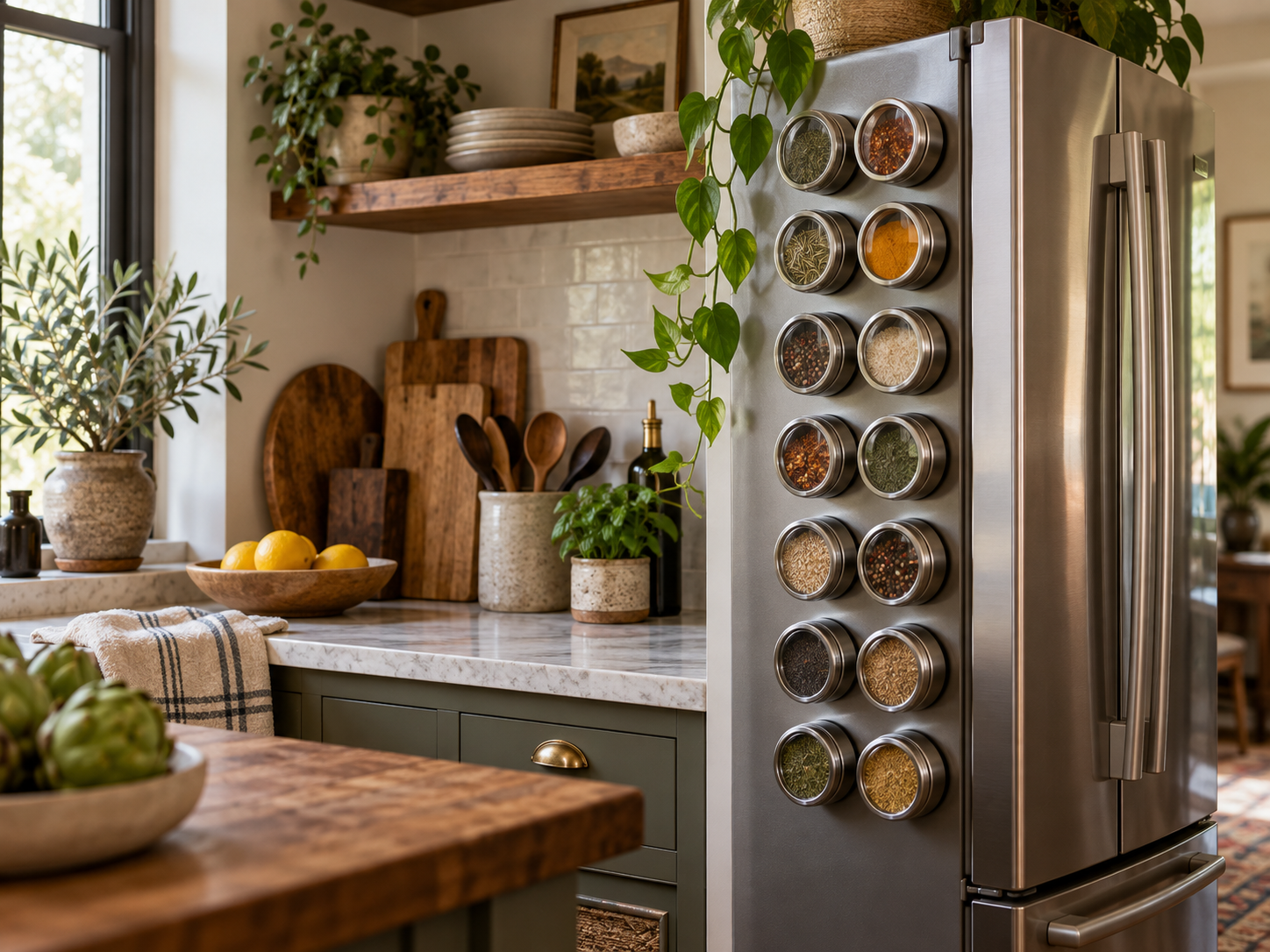
A fixed side panel is often easier to organize than a refrigerator door because it does not swing. A moving door adds acceleration and repeated vibration, which can challenge marginal magnets.
If the door is the only available magnetic surface, keep the jars:
- away from the outermost edge where movement is greatest;
- clear of handles and hand positions;
- clear of adjacent cabinets and walls when the door opens;
- high enough to avoid accidental bumps but still easy for the intended user to reach.
Test the fully loaded door through its normal opening range before treating the layout as finished.
How many spices should live on the refrigerator?
Do not move an entire spice collection onto the refrigerator just because the surface is available. A useful magnetic system usually holds the spices used most often.
A practical approach is:
- Identify the spices used every week.
- Give those jars the most accessible magnetic positions.
- Keep duplicates, bulk refills, and rarely used spices in a cabinet or drawer.
- Review the layout after a month and move anything that is rarely touched back to storage.
This keeps the magnetic zone useful instead of turning it into another crowded wall.
Label from the viewing angle
Labels should be readable without removing every jar. The most useful label position depends on whether the tins face forward, sit in a honeycomb grid, or attach flat against the refrigerator.
Useful label information can include:
- spice name;
- blend name;
- optional purchase or refill date;
- allergen or ingredient note for homemade blends when relevant.
Keep typography simple. A beautiful spice wall stops being efficient if every label requires close inspection.
Do magnetic shelves make more sense than magnetic jars?
A magnetic shelf can hold ordinary spice containers without decanting, but it introduces a larger cantilevered load. That makes manufacturer ratings, refrigerator surface compatibility, shelf depth, and door clearance more important.
A shelf can be useful when:
- you already own well-sealed spice bottles;
- the refrigerator has a strong fixed side panel;
- the shelf is purpose-built for magnetic appliance storage;
- the loaded shelf stays clear of traffic and cabinet doors.
Do not assume a shelf is safer because it has several magnets. Follow the shelf manufacturer’s load and surface instructions for the exact product.
What about magnetic clips?
Clips can work for lightweight containers when the holder is designed for the bottle diameter and loaded weight. They are less suitable when bottle shapes vary widely or when the bottle can slide out as the door moves.
Test the actual filled container rather than relying on an empty-bottle fit.
Cleaning the magnetic zone
Remove the jars periodically and clean both the refrigerator surface and magnet faces according to the refrigerator and container manufacturers’ care instructions.
Fine dust, spice particles, grease, or grit trapped behind magnets can mark some appliance finishes when the jars are slid across the surface. Lift containers away from the panel instead of dragging them when possible.
When a drawer is still the better answer
Magnetic storage is not automatically superior to a drawer or cabinet. A drawer may be better when:
- the refrigerator is beside a strong heat source;
- the door surface is weakly magnetic;
- the household has a large spice collection;
- visual calm matters more than display;
- children can easily remove glass jars;
- the refrigerator finish marks easily.
For a larger small-kitchen storage problem, continue with the Storage & Organization Guide and Kitchen & Dining Design Guide rather than asking magnetic jars to solve every storage need.
A practical buying checklist
| Attribute | What to verify |
|---|---|
| Surface | Strong magnetic hold at the exact refrigerator location |
| Loaded jar | Stays secure when filled and when the door moves |
| Lid | Closes securely and suits how the spice is dispensed |
| Material | Food-contact appropriate and easy to clean |
| Label | Readable from the installed viewing angle |
| Placement | Away from strong heat, steam, collisions, and appliance vents |
| Cleaning | Jar and magnet can be removed without scratching the appliance finish |
The practical answer
Choose magnetic spice jars only after testing the refrigerator surface. Start with a small set of frequently used spices, test each jar fully loaded, keep the system away from heat and steam, and prefer the fixed refrigerator side over a moving door when the layout allows it.
For related kitchen organization, continue with the Kitchen & Dining Design Guide, Storage & Organization Guide, and Small Pantry Organization Systems guide.