Bathroom
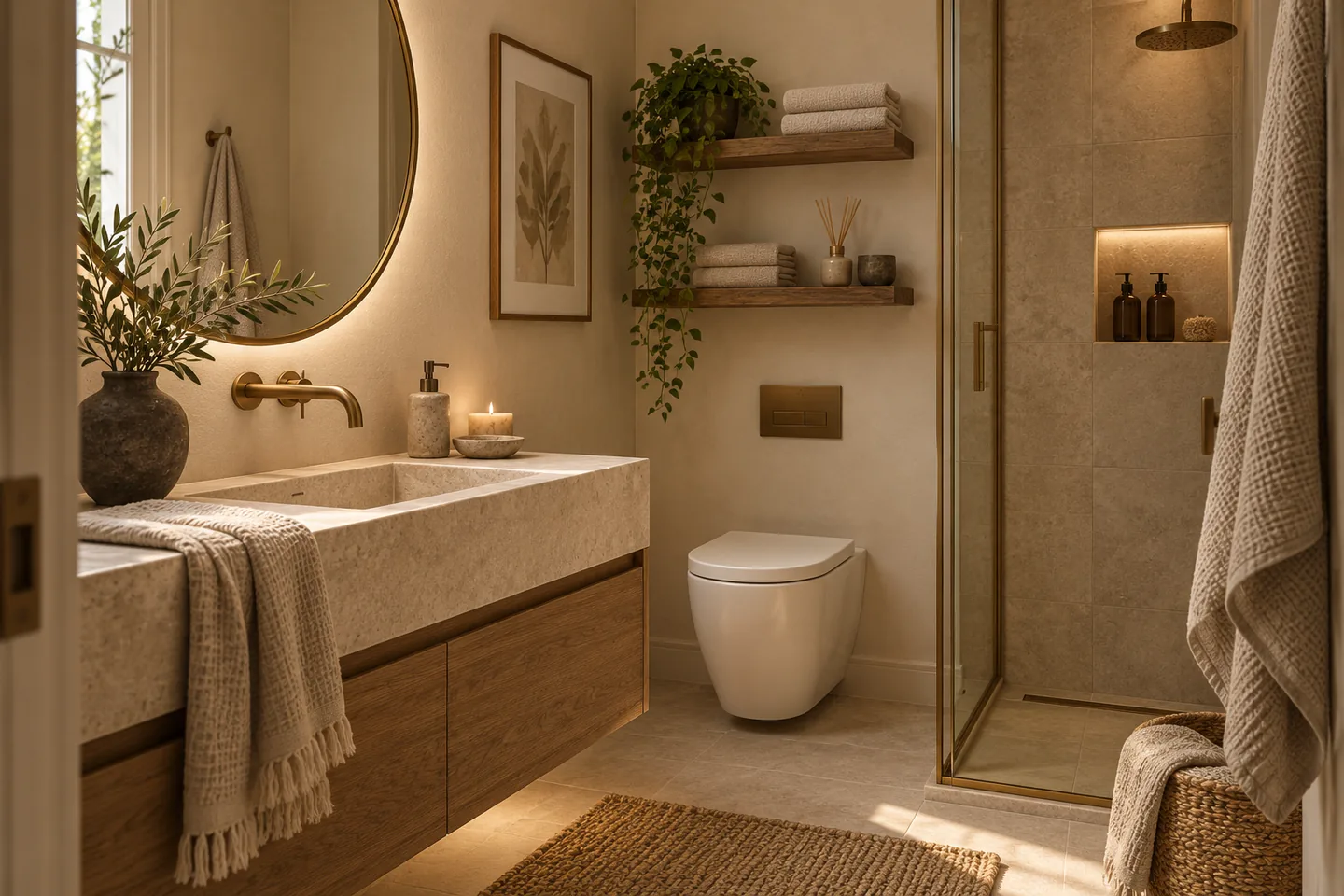
A tiny bathroom feels more spa-like when it becomes calmer, easier to use, and visually quieter—not when it is filled with “spa” accessories. The highest-impact changes are usually simple: reduce counter clutter, unify the visible textiles, improve the lighting, make wet items dry properly, and give everyday products a deliberate home.
You do not need to replace tile or fixtures to create that feeling. Start with what the room already has, then add only the pieces that solve a real visual or functional problem.
The five changes that matter most
| Priority | What to change | Why it helps |
|---|---|---|
| 1 | Clear exposed clutter | Makes the room feel larger and easier to maintain |
| 2 | Use a consistent towel palette | Reduces visual noise immediately |
| 3 | Improve warm, flattering light | Changes the atmosphere more than most accessories |
| 4 | Make wet textiles dry properly | Keeps the room fresher and more functional |
| 5 | Add one natural or tactile element | Prevents a clean bathroom from feeling sterile |
1. Edit the room before buying anything
Take a hard look at every visible surface: counter, tub ledge, shower shelf, toilet tank, open shelving and floor. If several half-used products compete for space, the room will feel busy no matter how beautiful the tile is.
Keep daily essentials within easy reach, but move backups and rarely used items into labeled storage. Medicines should be stored according to their label requirements rather than automatically kept in a humid bathroom.
A useful rule is not “hide everything.” It is: give each visible item a reason to be visible. A soap dispenser can stay out. Six backup bottles do not need to.
2. Make the counter read as one composition
Instead of scattering toothbrushes, soap, skincare and grooming tools across the vanity, group the items that stay out. A small washable tray can define one zone and make cleaning around the sink easier.
Decanting can create a cleaner look, but it should be selective. Keep products in their original packaging when the label contains directions, warnings, ingredient information or expiration details you may need. If you transfer simple products such as hand soap into another dispenser, label the container clearly and clean it before refilling.
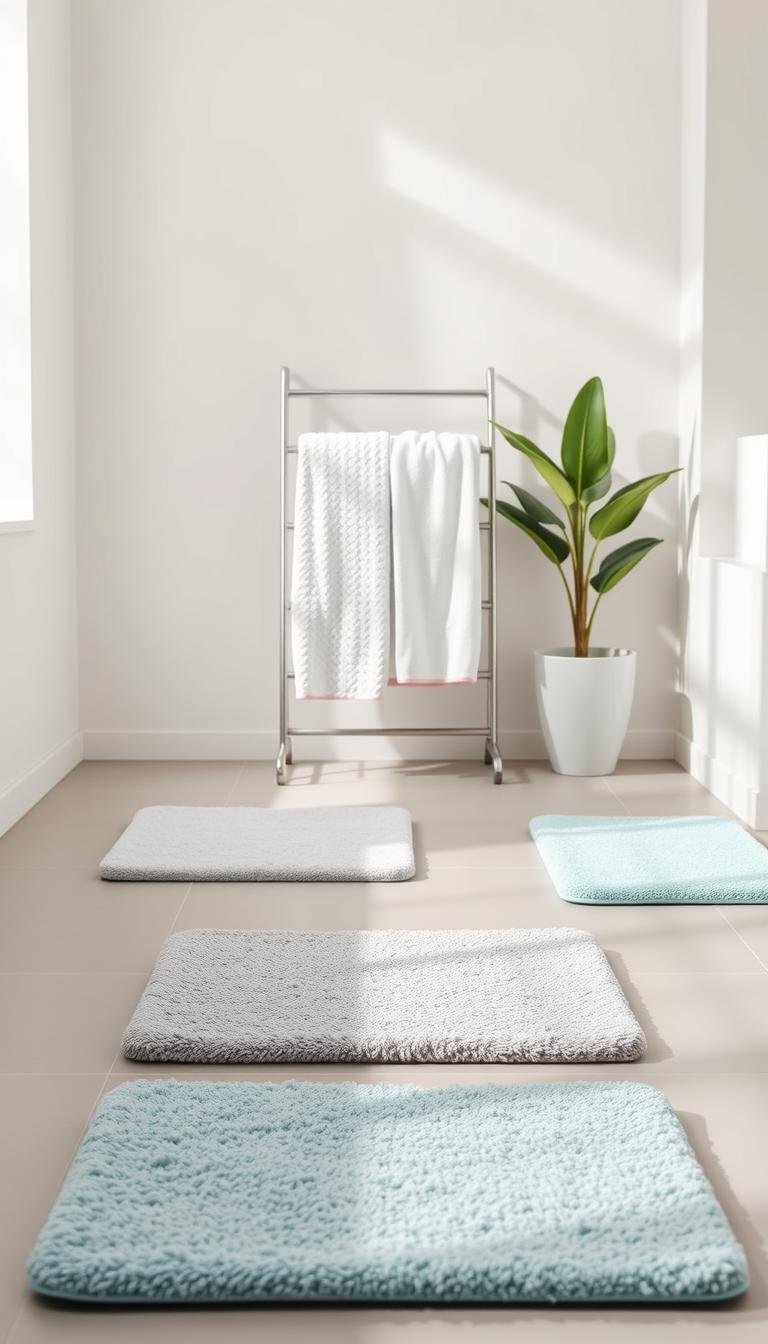
3. Use towels as part of the design
Matching does not mean every towel has to be identical forever. The goal is a restrained palette so the textiles feel related rather than accidental.
Choose the towel type around the room:
- Waffle or lightweight Turkish-style towels: useful when storage is limited and faster drying matters.
- Plush terry: better when softness is the priority and the room has enough airflow and hanging space.
- Mid-weight cotton: a practical middle ground for everyday use.
Whatever you choose, make sure towels have enough space to dry. A decorative ladder can look good, but use it only where it is stable, does not obstruct circulation, and actually lets the textiles hang rather than bunch together.
4. Improve the lighting before adding decor
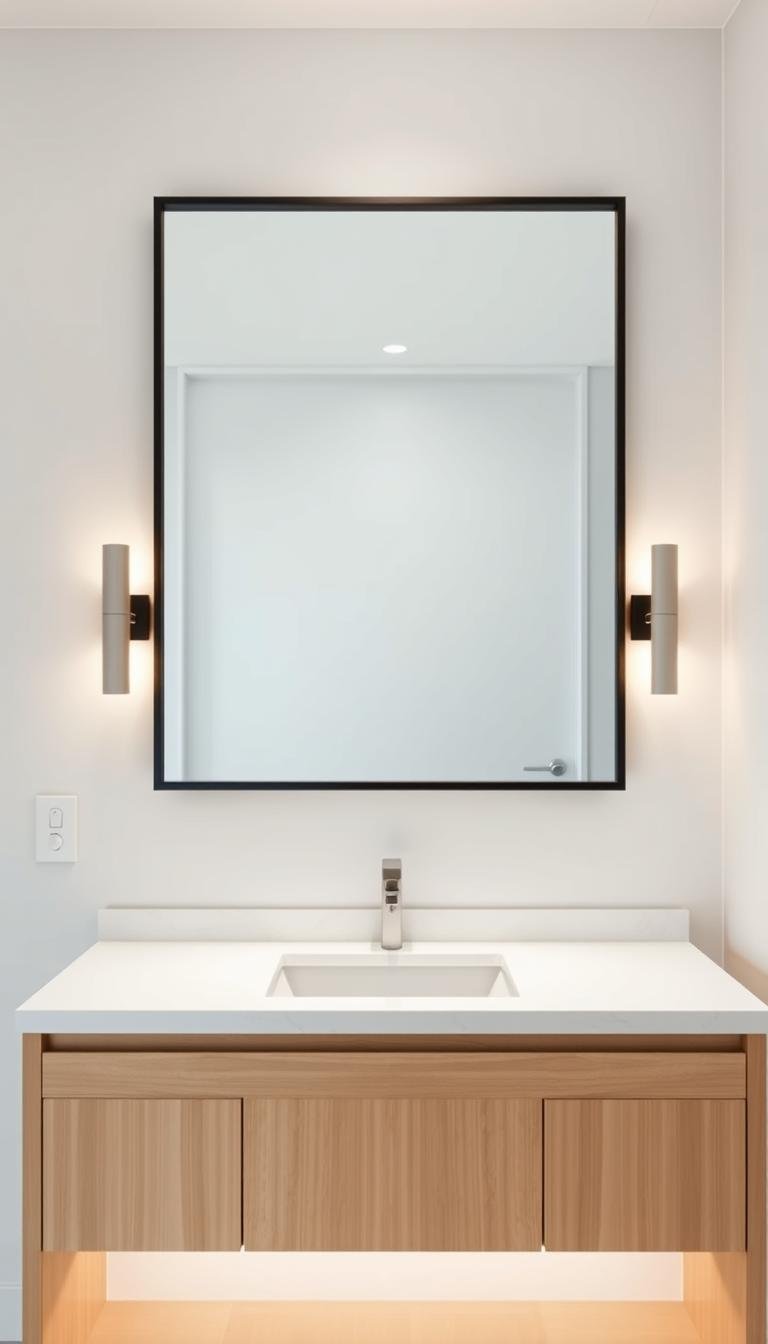
Lighting is one of the strongest atmosphere changes available without remodeling. If the fixture accepts replaceable lamps, choose bulbs that meet the fixture’s requirements and compare color temperature, brightness and color rendering rather than buying by “spa” branding.
Warm-to-neutral light often feels calmer in the evening, while brighter neutral light can be useful at a mirror for grooming. If the bathroom has multiple fixtures, separating ambient and task lighting gives you more flexibility.
Do not install a new dimmer or modify bathroom wiring casually. Bathrooms have specific electrical requirements because of moisture and proximity to water. Use compatible controls and qualified electrical help where required.
5. Add one living or natural-looking element
A plant can soften hard tile, glass and porcelain, but “bathroom plant” does not mean a plant can live without adequate light. Choose the species around the actual daylight and temperature conditions in the room.
If natural light is poor, a convincing faux stem or a vase with cut greenery can give the same visual softness without forcing a living plant into unsuitable conditions.
About eucalyptus in the shower
A small eucalyptus bundle can be used decoratively near a shower for a botanical look and mild scent, but keep it out of the direct spray and away from controls or anything it could obstruct. Treat the scent as fragrance, not a health treatment, and remove plant material if it begins to deteriorate.
6. Give the shower area one clear system
The shower is often the busiest visual zone in a small bathroom. Keep only the products used regularly and choose storage that suits the shower construction rather than forcing a generic adhesive or drilling solution.
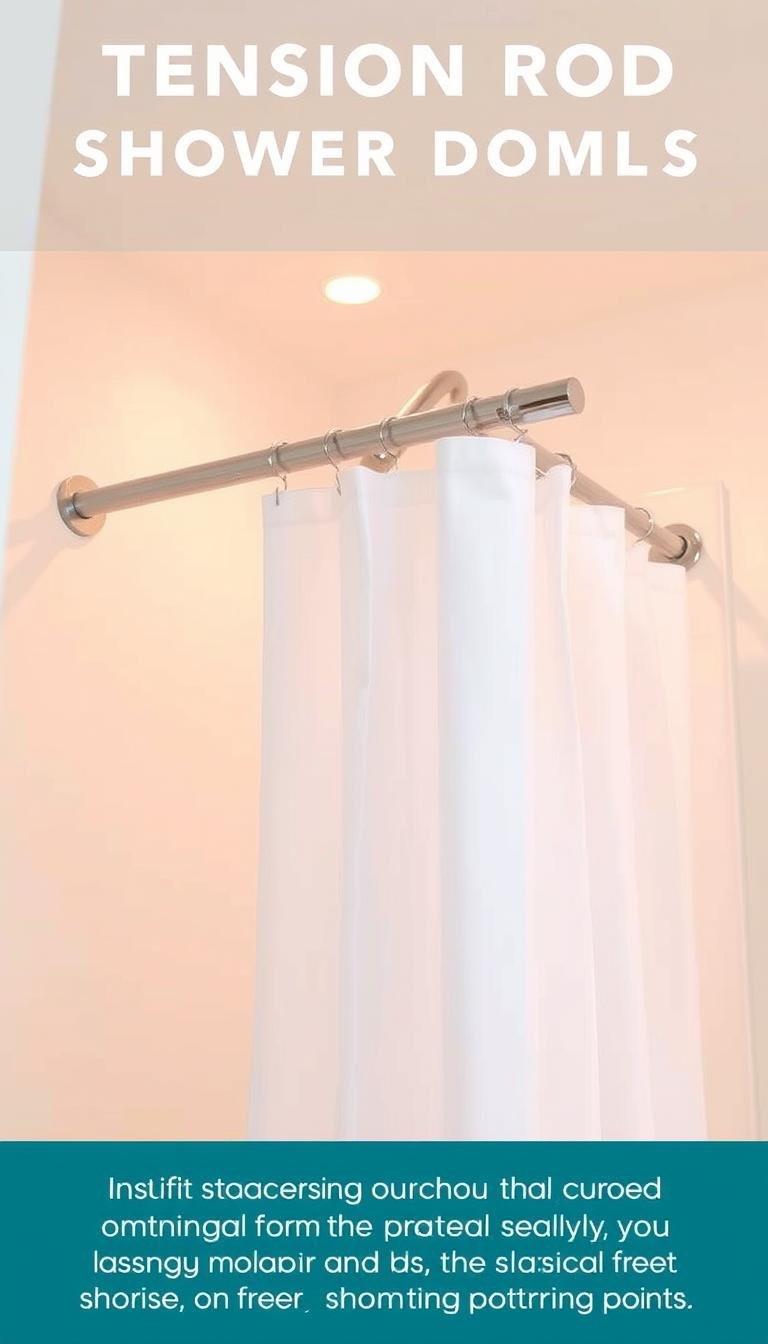
If you use a caddy, shelf or tension system, follow its surface, load and installation requirements. Keep bottles upright and avoid placing heavy items where they could fall into the tub or shower floor.
For more no-drill guidance, see the tension-rod shower guide.
7. Upgrade the shower curtain before the tile
In a small bathroom, a shower curtain can occupy a large part of the visual field. Correct sizing and a fabric that hangs cleanly can make the room look more finished without touching the walls.
Keep the outer curtain clear of standing water and use a liner suited to the wet area. For dimensions and placement, see the Dwelanor shower-curtain sizing guide.
8. Choose storage that hides visual noise, not useful things
Closed storage is valuable for backups, cleaning supplies and visually busy packaging. Open shelves work better for a small number of frequently used or genuinely decorative items.
Good small-bathroom storage tends to be shallow and easy to inspect. Deep baskets full of mixed products often create a different kind of clutter: you cannot see what you own, so duplicates accumulate.
9. Make the mirror work harder
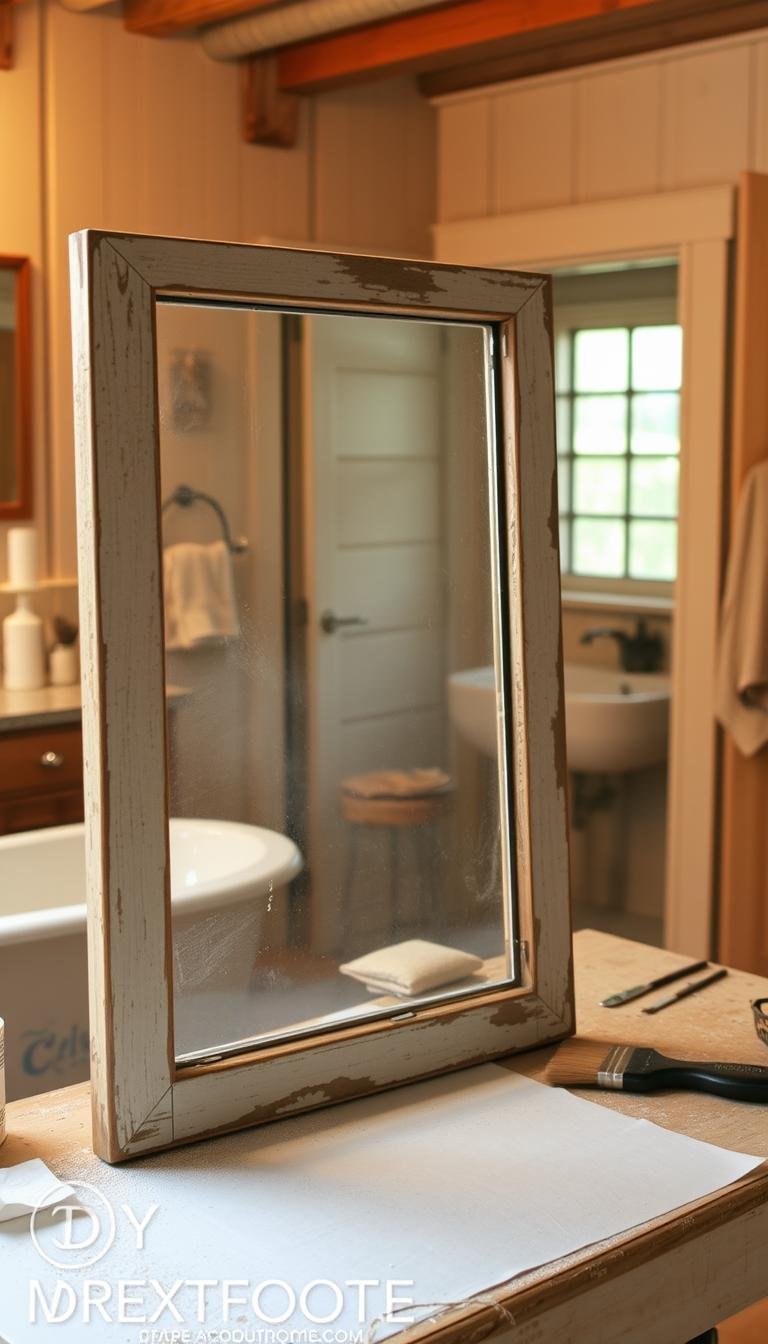
A mirror can add light and visual depth, but size and mounting matter more than whether the frame is currently fashionable. If the existing mirror is functional, consider improving the surrounding lighting or adding a compatible frame rather than layering another heavy mirror over it.
Do not lean large mirrors in locations where they can slip or be knocked, especially in a tight wet room. Wall-mounted mirrors should use a mounting method suitable for the mirror weight and wall construction.
For proportions, see our guide to sizing a bathroom mirror above a vanity.
10. Use scent lightly
A clean bathroom should not need heavy fragrance to feel pleasant. Ventilation, dry textiles and regular cleaning matter first.
If you enjoy fragrance, use a modest diffuser or another product according to its instructions and keep it away from children, pets and surfaces the product may damage. Strong fragrance is not automatically more luxurious.
What to skip
- Buying a full matching “spa bathroom” accessory set before decluttering.
- Putting candles close to towels, curtains, shelves or other combustibles.
- Assuming every low-light plant will thrive in a windowless room.
- Moving products into unlabeled containers when directions or warnings matter.
- Adding electrical controls without checking bathroom-specific requirements.
- Hanging a second heavy mirror over an existing one without a verified mounting plan.
- Filling the room with decorative storage that reduces usable floor and counter space.
A no-renovation spa bathroom plan
- Clear the counter, tub edge and floor.
- Sort daily-use items from backups.
- Choose one towel palette and improve the drying setup.
- Adjust lighting using compatible lamps or fixtures.
- Choose one natural/tactile element: greenery, wood, stone or woven texture.
- Improve shower storage and curtain fit.
- Add only the storage needed to keep visual clutter contained.
- Finish with one restrained fragrance if you enjoy it.
A small bathroom feels luxurious when every visible object earns its place and every daily task is easier—not when the room contains more things.
Frequently asked questions
How do I make a tiny bathroom look more expensive?
Start by reducing visible clutter, improving the lighting, using a cohesive towel palette and making the shower curtain or enclosure look intentional. Those changes affect the whole room. Small decorative accessories should come afterward.
Should I decant shampoo and bathroom products?
Only when it is practical and safe. Products with important directions, warnings, ingredient information or expiration details are usually better kept in their original packaging. Simple products can be transferred to clean, clearly labeled dispensers if their use is obvious and the container is compatible.
What color towels make a bathroom look spa-like?
There is no required spa color. White, oatmeal, stone, warm gray, muted green and other restrained palettes can all work. Consistency and how the towels are stored matter more than choosing one “correct” shade.
What plants work in a bathroom?
Choose around the room’s actual light, not humidity alone. Pothos, many ferns and some other houseplants can suit bright-to-moderate bathroom conditions, but a windowless room may be better served by faux greenery or cut stems.
How can I make a small bathroom feel calmer for free?
Remove everything from the counter that is not used daily, spread wet textiles so they can dry, consolidate duplicates and clean the visible surfaces. Then live with the edited room before buying anything new.